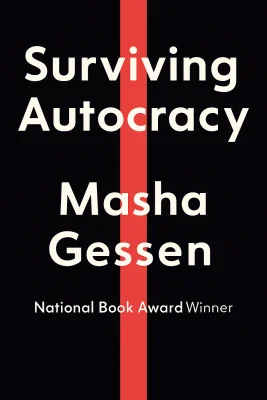
Surviving Autocracy
Categories
Nonfiction, History, Politics, Audiobook, Sociology, Essays, Political Science, American, The United States Of America, Russia
Content Type
Book
Binding
Hardcover
Year
2020
Publisher
Riverhead Books
Language
English
ASIN
0593188934
ISBN
0593188934
ISBN13
9780593188934
File Download
PDF | EPUB
Surviving Autocracy Plot Summary
Introduction
American democracy faced an unprecedented challenge when Donald Trump assumed the presidency in 2017. What appeared to be merely unconventional political behavior was actually something far more systematic and dangerous: an autocratic attempt to fundamentally transform the nature of American government and society. This phenomenon defied traditional political analysis because it represented not just policy disagreements or partisan conflict, but an assault on the basic foundations of democratic governance itself. The analysis draws upon comparative studies of autocratic transformations in post-Communist countries, particularly the work of Hungarian sociologist Bálint Magyar, to understand how democracies can be hollowed out from within. By examining Trump's presidency through this lens, we can see how autocratic attempts unfold in three stages: the initial attempt, the breakthrough moment, and eventual consolidation. Understanding this process reveals both the vulnerabilities in American democratic institutions and the potential paths for resistance and recovery.
Chapter 1: The Nature of Trump's Autocratic Attempt
Trump's presidency represented something qualitatively different from previous administrations, even those marked by scandal or controversy. Rather than working within existing democratic norms while pursuing particular policy goals, Trump systematically attacked the foundational assumptions that make democratic governance possible. His approach was not merely authoritarian in style but autocratic in structure, seeking to concentrate power while dismantling the institutional checks that constrain presidential authority. The concept of an "autocratic attempt" proves essential for understanding this phenomenon. Unlike a military coup or revolutionary overthrow, autocratic attempts work through existing legal and political structures, gradually transforming them from within. Trump exploited weaknesses already present in American democracy: the concentration of executive power, the marriage of money and politics, and the polarization that made institutional resistance difficult to sustain. What made Trump's attempt particularly dangerous was its systematic nature. This was not simply a president overstepping boundaries or making controversial decisions, but a coordinated effort to redefine the relationship between the presidency and other institutions. By claiming immunity from normal ethical constraints, attacking the legitimacy of investigations, and demanding personal loyalty from government officials, Trump was laying the groundwork for a form of governance that would be democratic in name only. The international context proved crucial for understanding this transformation. Trump's open admiration for autocratic leaders like Vladimir Putin, Xi Jinping, and Recep Tayyip Erdoğan was not merely personal preference but reflected a genuine aspiration to wield similar unaccountable power. His presidency demonstrated how autocratic methods could be adapted to the American context, exploiting constitutional ambiguities and institutional weaknesses that had never been fully tested.
Chapter 2: Language and Reality Under Assault
One of Trump's most effective weapons was his systematic assault on language itself. Autocratic leaders understand intuitively that controlling reality begins with controlling the words used to describe it. Trump's lies were not merely attempts to cover up embarrassing facts but represented a more fundamental challenge to the very concept of shared truth. By insisting that his inauguration crowd was larger than photographic evidence showed, or that he had won the popular vote despite documented results, Trump was asserting the right to define reality itself. The concept of the "power lie" distinguishes Trump's approach from ordinary political deception. Traditional political lies are designed to be believable and serve specific tactical purposes. Power lies, by contrast, are so obviously false that they force observers to choose between their own perceptions and the leader's demands. This creates a psychological dynamic where accepting the lie becomes a demonstration of loyalty, while insisting on factual accuracy becomes an act of resistance. Trump's manipulation of language extended beyond outright falsehoods to the strategic inversion of meaning. Terms like "witch hunt" and "fake news" were appropriated and deployed against their original targets. By calling investigations into his conduct a "witch hunt," Trump was not merely claiming innocence but positioning himself as the victim of persecution, despite wielding the most powerful office in the world. This linguistic jujitsu proved remarkably effective at confusing public discourse and making rational discussion nearly impossible. The assault on language had profound implications for democratic governance. Democracy depends on the possibility of meaningful dialogue across difference, which requires shared definitions of basic concepts. When words lose their meaning or can be redefined at will by those in power, the foundation for democratic deliberation collapses. Citizens find themselves unable to engage in the kind of reasoned debate that democracy requires, leaving only raw power as the arbiter of disputes.
Chapter 3: Institutions' Failure to Check Presidential Power
The hope that American institutions would automatically constrain Trump's autocratic impulses proved to be largely illusory. While the system of checks and balances had functioned reasonably well for over two centuries, it had never been tested by a president acting in systematic bad faith. Trump's approach revealed that many constitutional constraints depend ultimately on the president's willingness to accept limits on his power, rather than on external enforcement mechanisms. The Mueller investigation exemplified both the potential and the limitations of institutional resistance. Special Counsel Robert Mueller conducted a thorough investigation that documented extensive contacts between the Trump campaign and Russian officials, as well as multiple instances of presidential obstruction of justice. However, Mueller's institutional restraint prevented him from drawing the obvious conclusions from his own evidence. By refusing to make a determination on obstruction charges and declining to interview Trump directly, Mueller demonstrated how institutional norms designed for good-faith actors can be exploited by those willing to abuse them. Congressional oversight, another traditional check on presidential power, proved equally inadequate. Even when Democrats regained control of the House of Representatives and initiated impeachment proceedings, the process revealed the limitations of constitutional mechanisms in a highly polarized environment. The fact that Trump was ultimately acquitted by the Senate, despite overwhelming evidence of abuse of power, demonstrated how institutional checks can be neutralized when one party prioritizes loyalty over constitutional responsibility. Perhaps most troubling was the transformation of the Justice Department from an institution with at least nominal independence into an instrument of presidential will. Attorney General William Barr's mischaracterization of the Mueller Report and his subsequent interventions in cases involving Trump associates showed how executive branch institutions could be captured and deployed for purely political purposes. This represented a fundamental breach of the norms that had previously constrained presidential power, even during periods of significant political conflict.
Chapter 4: Redefining American Identity Through Exclusion
Central to Trump's autocratic project was a radical redefinition of American identity based on exclusion rather than aspiration. Traditional American political rhetoric, despite its often hypocritical application, had generally moved in the direction of greater inclusion over time. Trump explicitly rejected this trajectory, promising instead to return to an imaginary past when America supposedly belonged to a narrower group of people defined by race, religion, and nativity. The transformation began with seemingly technical policy changes that carried profound symbolic weight. The removal of "nation of immigrants" from the mission statement of U.S. Citizenship and Immigration Services was not merely bureaucratic housekeeping but a deliberate signal that America would no longer define itself as welcoming to newcomers. Similarly, Trump's threats to end birthright citizenship and his administration's denaturalization task force indicated that even established forms of American identity could be revoked by executive action. This exclusionary project extended far beyond immigration policy to encompass a broader assault on the idea of an inclusive American identity. Trump's response to the white supremacist rally in Charlottesville, where he found "very fine people on both sides," was not simply a failure of moral leadership but a deliberate signal about which Americans he considered legitimate members of the political community. His attacks on African American political figures, his policies targeting LGBT Americans, and his systematic rollback of civil rights protections all served the same fundamental purpose: shrinking the circle of people who counted as truly American. The COVID-19 pandemic provided a perfect vehicle for this exclusionary politics. By consistently referring to the coronavirus as the "Chinese virus," Trump was not merely deflecting blame but activating xenophobic sentiments that served his broader political project. The resulting surge in hate crimes against Asian Americans demonstrated how presidential rhetoric could directly translate into violence against vulnerable communities.
Chapter 5: Media Complicity and Resistance Strategies
The news media found itself in an impossible position during the Trump presidency, forced to cover a president whose relationship to truth was fundamentally different from that of his predecessors. Traditional journalistic norms of objectivity and balance proved inadequate when applied to a president who lied constantly and systematically. The very act of fact-checking Trump's statements often served to amplify his falsehoods, while the commitment to presenting "both sides" of every story created false equivalencies between lies and truth. Trump's genius lay in understanding how media incentives could be exploited to his advantage. His outrageous statements and tweets guaranteed coverage, keeping him at the center of public attention even when that attention was nominally critical. The media's focus on Trump's daily provocations often distracted from more substantive analysis of policy changes and institutional damage that were occurring with less fanfare but potentially more lasting effect. The traditional White House press briefing became a perfect example of how Trump transformed media coverage into a demonstration of his power. Press secretaries Sean Spicer and Sarah Sanders used the briefing room not to inform the public but to humiliate reporters and demonstrate their own loyalty to Trump. By the end of Trump's third year, briefings had been discontinued entirely, eliminating even the pretense of presidential accountability to the press. Some media outlets began experimenting with new approaches that treated Trumpism as a system rather than a series of discrete news events. Podcasts like "Trump, Inc." and "Trumpcast" avoided the daily news cycle trap by focusing on broader patterns and systemic analysis. These approaches proved more effective at helping audiences understand the coherent nature of Trump's challenge to democratic governance, rather than getting lost in the chaos of individual provocations.
Chapter 6: Moral Authority as a Counterforce to Autocracy
The most effective resistance to Trump's autocratic project came not from institutional checks or media coverage but from individuals and movements that spoke with moral authority. Figures like Representative John Lewis, who grounded their opposition in decades of struggle for civil rights, posed a unique threat to Trump's project because they could not be dismissed as merely partisan actors. Their resistance was based on principles that transcended ordinary political disagreement. The emergence of young politicians like Alexandria Ocasio-Cortez and the other members of "the Squad" represented a particularly important form of moral authority. These politicians brought not just policy proposals but a fundamentally different vision of what American politics could be. Their willingness to call things by their proper names, whether describing immigrant detention facilities as concentration camps or calling for Trump's impeachment on moral rather than merely legal grounds, provided a crucial alternative to the euphemistic language that typically characterized political discourse. Trump's instinctive hostility to figures of moral authority revealed his understanding of the threat they posed to his project. His attacks on John Lewis as "all talk, talk, talk" and his racist tweets telling the Squad to "go back where they came from" were not random outbursts but strategic attempts to delegitimize voices that could articulate alternatives to his vision of American identity. These attacks often backfired by clarifying the moral stakes involved in ways that purely institutional or legal arguments could not. The power of moral authority lay in its ability to appeal to shared values that transcended partisan identification. When political figures spoke from a position of genuine moral conviction, they could reach audiences that might otherwise be unreachable through conventional political argument. This suggested that recovery from Trumpism would require not just institutional reforms but a renewal of moral vision that could inspire Americans to recommit to democratic ideals.
Chapter 7: Recovering Democracy After Trumpism
The end of Trump's presidency, whenever it comes, will not automatically restore American democracy to its previous state. The damage done to institutions, norms, and social trust cannot be quickly repaired, and many of the vulnerabilities that Trump exploited will remain. Recovery will require not a return to an imagined pre-Trump normalcy but a fundamental reimagining of what American democracy can and should be. The concentration of executive power that enabled Trump's autocratic attempt did not begin with his presidency but reflected decades of institutional evolution that weakened congressional authority and concentrated decision-making in the White House. Any serious effort to prevent future autocratic attempts will need to address these structural imbalances, potentially through constitutional amendments or at minimum through new norms and practices that constrain presidential power. Even more important than institutional reforms will be the cultural work of rebuilding a shared commitment to democratic values. This cannot be accomplished through elite political leadership alone but will require broad-based civic engagement that reaches beyond traditional political constituencies. The moral authority demonstrated by figures like Lewis and Ocasio-Cortez points toward the kind of leadership that will be necessary: grounded in genuine conviction, speaking to shared values rather than narrow interests, and capable of inspiring Americans to see democracy as something worth fighting for. The ultimate test of American democracy's resilience will be its ability to emerge from the Trump era not merely intact but strengthened. This will require acknowledging honestly how close the country came to autocratic consolidation while maintaining faith in the possibility of democratic renewal. The stakes could not be higher: failure to meet this challenge successfully could leave American democracy permanently weakened and vulnerable to future autocratic attempts.
Summary
Trump's presidency represented the most serious challenge to American democratic governance since the Civil War, constituting what can best be understood as an autocratic attempt that came closer to success than most observers initially recognized. The systematic nature of this challenge, encompassing attacks on truth itself, the capture of institutions, the redefinition of national identity, and the degradation of political discourse, revealed vulnerabilities in American democracy that had previously been hidden by the assumption of good faith among political actors. Recovery from Trumpism will require more than electoral victory or personnel changes but a fundamental recommitment to the moral foundations that make democratic governance possible. The path forward lies not in nostalgia for an imagined past but in the hard work of building a more inclusive and resilient democracy capable of withstanding future autocratic challenges while fulfilling its promise to all Americans.
Best Quote
“Are you going to believe your own eyes or the headlines? This is the dilemma of people who live in totalitarian societies. Trusting one’s own perceptions is a lonely lot; believing one’s own eyes and being vocal about it is dangerous. Believing the propaganda—or, rather, accepting the propaganda as one’s reality—carries the promise of a less anxious existence, in harmony with the majority of one’s fellow citizens. The path to peace of mind lies in giving one’s mind over to the regime. Bizarrely, the experience of living in the United States during the Trump presidency reproduces this dilemma. Being an engaged citizen of Trump’s America means living in a constant state of cognitive tension. One cannot put the president and his lies out of one’s mind, because he is the president. Accepting that the president continuously tweets or says things that are not true, are known not to be true, are intended to be heard or read as power lies, and will continue to be broadcast—on Twitter and by the media—after they have been repeatedly disproven means accepting a constant challenge to fact-based reality. In effect, it means that the two realities—Trumpian and fact-based—come to exist side by side, on equal ground. The tension is draining. The need to pay constant attention to the lies is exhausting, and it is compounded by the feeling of helplessness in the face of the ridiculous and repeated lies. Most Americans in the age of Trump are not, like the subjects of a totalitarian regime, subjected to state terror. But even before the coronavirus, they were subjected to constant, sometimes debilitating anxiety. One way out of that anxiety is to relieve the mind of stress by accepting Trumpian reality. Another—and this too is an option often exercised by people living under totalitarianism—is to stop paying attention, disengage, and retreat to one’s private sphere. Both approaches are victories for Trump in his attack on politics.” ― Masha Gessen, Surviving Autocracy
Review Summary
Strengths: The review highlights the book's insightful analysis of Trumpism, describing it as "aspirational authoritarianism" and effectively linking it to historical authoritarian practices. It also praises the book's focus on the language and actions of Trump, comparing them to authoritarian regimes like Russia and North Korea. Overall: The review conveys a strong critical sentiment towards Trumpism, emphasizing its authoritarian tendencies and the complicity of political institutions. The book is recommended for its thorough examination of Trump's language and actions, providing a valuable perspective on the erosion of democratic norms.
About Author
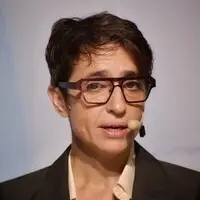
Masha Gessen
Gessen interrogates the intersection of politics, identity, and authoritarianism through incisive and fearless writing. Their work, deeply informed by personal and professional experiences in Russia and the United States, explores themes of totalitarianism and civil rights. Gessen's early book "The Man Without a Face: The Unlikely Rise of Vladimir Putin" probes the enigmatic Russian leader's ascent to power, while "The Future Is History: How Totalitarianism Reclaimed Russia" offers a profound analysis of Russia's socio-political landscape, winning the National Book Award for Nonfiction. These works demonstrate Gessen's expertise in unraveling the complexities of authoritarian regimes.\n\nFor readers, Gessen's books provide a valuable lens on global affairs and societal shifts, particularly for those interested in Russian politics and human rights. Their writing, which includes contributions to The New Yorker and other prominent publications, is noted for its clarity and depth. Gessen’s bio reflects their role as a pivotal commentator on LGBT rights and gender issues, positioning them as a leading voice in contemporary political discourse. The recognition of their contributions through awards like the National Book Award underscores their impact and influence on public understanding of critical issues.
Read moreDownload PDF & EPUB
To save this Black List summary for later, download the free PDF and EPUB. You can print it out, or read offline at your convenience.

Surviving Autocracy
by Masha Gessen
