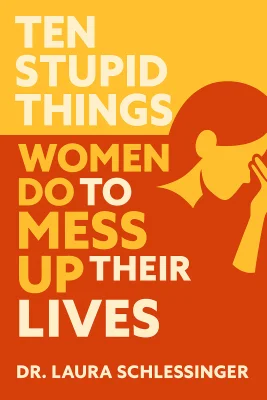
Ten Stupid Things Women Do to Mess Up Their Lives - by Dr. Laura Schlessinger
Categories
Nonfiction, Self Help, Psychology, Relationships, Personal Development, Marriage, Adult, Womens, Social Science, Love
Content Type
Book
Binding
Unknown Binding
Year
0
Publisher
Harper Perennial
Language
English
ASIN
B00NI1YCDY
File Download
PDF | EPUB
Ten Stupid Things Women Do to Mess Up Their Lives - by Dr. Laura Schlessinger Plot Summary
Introduction
Sarah sat in her car outside the marriage counselor's office, tears streaming down her face as she replayed the morning's argument with her husband. It wasn't about money this time, or the kids, or whose turn it was to take out the trash. It was about something so small she couldn't even remember what started it, yet somehow it had escalated into him sleeping on the couch again. As she watched other couples walking in and out of the building, she wondered how so many relationships that started with such promise could end up feeling like battlefields. This scenario plays out in countless homes every day, where couples find themselves trapped in destructive patterns that slowly erode the foundation of their love. The truth is that most relationship failures don't happen overnight—they're the result of small, seemingly innocent behaviors that compound over time like interest on debt.本书 reveals how ordinary people make extraordinary mistakes in their relationships, not out of malice, but out of ignorance, fear, and misguided priorities. Through real stories and practical wisdom, we discover that the path to lasting love isn't about finding the perfect partner, but about becoming the kind of person who can build and maintain a thriving relationship. The journey toward relationship success begins with recognizing the common pitfalls that trap so many couples, and learning how to navigate around them with wisdom, compassion, and commitment.
Chapter 1: The Dangerous Game of Secrets and Excuses
Mark had been married to Jennifer for five years when she discovered his secret gambling problem. Not from him confessing, but from a collection agency calling their home about unpaid debts. As Jennifer sat across from her husband in their living room, watching him fumble through explanations and justifications, she realized that the man she thought she knew had been living a double life. The Mark she loved was responsible with money, honest about his struggles, and always kept his word. But this Mark—the real Mark—had been lying for months, hiding credit card statements, and making excuses about where the money was going. What followed was a predictable cascade of defensive responses. Mark claimed he was protecting Jennifer from worry, that he had everything under control, that it wasn't really that bad. He painted himself as the victim of circumstances rather than the architect of his own deception. Each excuse built upon the last, creating an elaborate fortress around his ego that prevented him from taking genuine responsibility for the damage he had caused. The devastating power of secrets in relationships lies not just in the hidden information itself, but in the corrosive effect of deception on trust. When partners keep significant secrets, they essentially live as strangers sharing the same bed, building intimacy on foundations of sand. The compounding tragedy is how people rationalize their secretive behavior, convincing themselves they're protecting their partner when they're actually protecting their own image. True intimacy requires the courage to be genuinely known, flaws and all, rather than maintaining a carefully curated version of ourselves that we think will be more lovable.
Chapter 2: When Ego and Power Struggles Destroy Intimacy
During their weekly grocery shopping trip, Lisa found herself in yet another silent standoff with her husband David over which route to take through the store. It seemed absurd that two adults could turn something as mundane as buying milk and bread into a battle of wills, yet here they were again. David insisted on his systematic, aisle-by-aisle approach while Lisa preferred to grab items based on their meal planning list. Neither would yield, and what should have been a thirty-minute errand stretched into an hour of tension and passive-aggressive maneuvering. This grocery store drama was merely the latest symptom of a deeper disease infecting their marriage. David, a successful engineer, approached their relationship like a project to be optimized, with himself as the project manager. Lisa, feeling increasingly suffocated by his need to control every decision, had begun asserting her independence in petty ways, turning simple choices into referendums on respect and autonomy. Their home had become a battlefield where winning an argument mattered more than understanding each other's perspectives. The seductive appeal of power struggles is that they offer the illusion of strength and control, but they ultimately leave both partners exhausted and alienated. When couples make every decision a contest of wills, they transform their relationship from a partnership into a competition. The tragic irony is that the very behavior designed to protect one's autonomy ends up destroying the emotional intimacy that makes autonomy meaningful. Love cannot flourish in an atmosphere of constant warfare, and marriages cannot survive when both partners are more committed to being right than to being connected.
Chapter 3: The Perils of Mismatched Values and Priorities
Rachel and Tom met at a friend's party and felt an immediate magnetic attraction. She was drawn to his spontaneity and zest for adventure, while he was captivated by her intelligence and career ambition. They spent their courtship exploring new restaurants, taking weekend trips, and staying up all night talking about their dreams. Within a year, they were married, both believing they had found their perfect complement. The problems began to surface after their first child was born, when the fundamental differences in their values and priorities could no longer be masked by romantic excitement. Tom wanted Rachel to stay home with the baby, believing that children needed their mother's full-time attention. Rachel had worked for years to establish her career and felt that returning to work would model independence and achievement for their daughter. Tom valued tradition and stability, dreaming of a house in the suburbs with a white picket fence. Rachel craved intellectual stimulation and urban energy, seeing suburban life as a form of slow death. What they had initially viewed as complementary differences now revealed themselves as irreconcilable conflicts about how to live their lives. The brutal truth about attraction is that opposites may attract, but shared values sustain. The very qualities that create initial chemistry often become sources of profound conflict when couples try to build a life together. Physical attraction and emotional excitement can carry a relationship through the early stages, but they cannot bridge fundamental differences in beliefs about money, child-rearing, spirituality, and life priorities. The couples who thrive long-term are those who take time to discover whether their core values align before making permanent commitments, recognizing that lasting love requires more than butterflies and passion.
Chapter 4: False Happiness and Destructive External Liaisons
When Janet joined the community theater group, she told herself it was just a harmless hobby, a way to rediscover the creative passion she had set aside during years of marriage and motherhood. Her husband Steve supported her decision, happy to see her engaged in something that brought her joy. But as weeks turned to months, Janet found herself staying later and later for rehearsals, accepting invitations for drinks with the cast, and most dangerously, developing an emotional intimacy with her scene partner Marcus that she wasn't finding at home. The affair began innocently enough with text messages about their characters' motivations, then progressed to private conversations about their personal lives, dreams, and disappointments. Janet convinced herself that because nothing physical was happening, she wasn't really betraying her marriage. Meanwhile, she became increasingly critical of Steve, comparing his steady reliability unfavorably to Marcus's artistic sensitivity. She began arriving home irritated by Steve's questions about her evening, feeling like he was intruding on her newfound happiness and self-discovery. The seductive power of external liaisons lies in their ability to provide the excitement and validation that long-term relationships sometimes lack, without requiring the difficult work of addressing underlying issues. When people seek happiness through connections outside their primary relationship, they often find temporary relief from their problems while making those problems exponentially worse. The cruel irony is that the energy and attention invested in external relationships could potentially transform the primary relationship if redirected with wisdom and commitment. True happiness in marriage comes not from escaping its challenges, but from facing them together with courage and creativity.
Chapter 5: Learning to Navigate Conflict Before Breaking Up
When James announced to his wife Karen that he wanted a divorce, her first reaction was shock, then anger, then a desperate scramble to understand what had gone wrong. In James's mind, their marriage had been failing for years. Every disagreement felt like evidence of their fundamental incompatibility, every period of distance seemed to confirm that they were simply wrong for each other. He had convinced himself that divorce was the mature, honest response to their problems, the brave choice that would free them both to find happiness elsewhere. What James failed to recognize was that he had never actually learned how to fight constructively with Karen. Instead of addressing conflicts directly when they arose, he would withdraw emotionally, building resentment while maintaining surface politeness. Karen, sensing his distance but not understanding its cause, would pursue him with questions and attempts at connection, which only made him feel more trapped. Their pattern had become a dance of pursuit and withdrawal, with neither partner understanding their role in perpetuating the cycle. The tragedy of premature breakups is that they often occur just when couples are on the verge of breakthrough rather than breakdown. Many relationships end not because the problems are insurmountable, but because the partners lack the skills and patience to work through normal relationship challenges. Learning to fight fairly, communicate needs clearly, and repair ruptures quickly are learnable skills that can transform even struggling relationships. The couples who achieve lasting happiness are not those who never experience conflict, but those who develop the tools and commitment to navigate conflict together, emerging stronger and more connected on the other side.
Chapter 6: Building Relationships Through Honesty and Commitment
After nearly losing their marriage to a series of misunderstandings and poor choices, Michael and Susan made a radical decision. They would start over, not with new partners, but with new rules for their relationship. They committed to complete honesty, even when the truth was uncomfortable or inconvenient. They agreed to prioritize their marriage above all other relationships and activities, making decisions as a team rather than as individuals who happened to share a household. Most importantly, they chose to view their wedding vows not as romantic poetry, but as binding commitments that would guide their behavior regardless of their fluctuating emotions. The transformation wasn't immediate or easy. There were moments when honesty felt harsh, when commitment felt like sacrifice, and when both wondered if they were settling for less than they deserved. But gradually, something beautiful began to emerge from their intentional choices. The trust that had been shattered began to rebuild, stronger than before because it was now based on demonstrated character rather than hopeful assumptions. Their intimacy deepened as they learned to be vulnerable without being victims, honest without being cruel. The foundation of lasting love is not built on passion or compatibility, though both can enhance the experience. Instead, it rests on the bedrock of character-driven choices made daily by two people who understand that love is ultimately a decision rather than a feeling. When couples commit to honesty in their communication, faithfulness in their actions, and perseverance through difficulties, they create the conditions in which authentic intimacy can flourish. The most profound happiness in relationships comes not from finding someone who makes us happy, but from becoming someone who can create happiness through our choices, our character, and our unwavering commitment to the sacred bond we have chosen to build together.
Summary
The journey through these relationship pitfalls reveals a profound truth that challenges our culture's romantic mythology. The couples who achieve lasting happiness are not those blessed with perfect compatibility or perpetual passion, but those who develop the wisdom to recognize destructive patterns and the courage to change them. Their stories teach us that love is not something we fall into by accident, but something we build through conscious choice, daily commitment, and the willingness to grow beyond our limitations. The path forward requires both humility and hope. We must honestly examine our own contributions to relationship problems while maintaining faith that transformation is possible. Whether we are struggling in current relationships or preparing for future ones, the lessons are clear: prioritize character over chemistry, choose commitment over convenience, and remember that the greatest love stories are not about finding someone perfect, but about becoming someone worthy of the love we seek. The relationships that truly fulfill us are those where both partners choose each other not just once, but again and again, through every season of challenge and growth.
Best Quote
“And you know, when it comes to a long-term, committed relationship: Love is not enough. There are issues of honor, respect, mutuality, sacrifice, acceptance, supportiveness, similarity of life values and morality, to name only a few. They, too, don't come without struggling and striving, but, oh, are they worth it!” ― Laura C. Schlessinger, Ten Stupid Things Women Do to Mess Up Their Lives
Review Summary
Strengths: The book is described as brutally honest and direct, offering a clear perspective on how women might inadvertently ruin their own lives. It is appreciated for its candidness and the "slap in the face" it provides, which some readers find valuable. Weaknesses: The book is criticized for being condescending, insulting, and patriarchal, with a harsh tone that may not be suitable for all readers. It is seen as overly simplistic in its portrayal of relationships and potentially harmful to women with life experience, as it might lead to undue self-blame. Overall: The review presents a mixed sentiment. While some readers appreciate the book's directness and find value in its perspective, others find it offensive and overly simplistic. The recommendation level varies, with some suggesting it may not be suitable for those seeking gentle guidance.
About Author

Laura Schlessinger
Schlessinger delves into the intersection of personal accountability and traditional family values, aiming to empower individuals through practical advice. Her direct, no-nonsense approach in both her radio program and written works encourages listeners and readers to embrace responsibility and ethics. Schlessinger's background in marriage, family, and child counseling underpins her method, blending professional insights with personal anecdotes to address topics such as relationships, parenting, and character development.\n\nHer influential books, including "The Proper Care & Feeding of Husbands" and "How Could You Do That?!... The Abdication of Character, Courage and Conscience", have resonated with audiences seeking guidance on how to improve their personal lives and relationships. Meanwhile, her radio show has been a platform for sharing advice that is both accessible and grounded in moral principles, reaching millions of listeners weekly. The author’s ability to synthesize these themes into relatable narratives is a hallmark of her success.\n\nFor those who value personal growth and moral clarity, Schlessinger's work offers valuable insights and practical solutions. Her unique bio includes significant achievements, such as being the first woman to receive the Marconi Award for Network/Syndicated Personality and her induction into the National Radio Hall of Fame, underscoring her impact on both the media landscape and the lives of her audience.
Read moreDownload PDF & EPUB
To save this Black List summary for later, download the free PDF and EPUB. You can print it out, or read offline at your convenience.
Ten Stupid Things Women Do to Mess Up Their Lives - by Dr. Laura Schlessinger
by Laura Schlessinger
