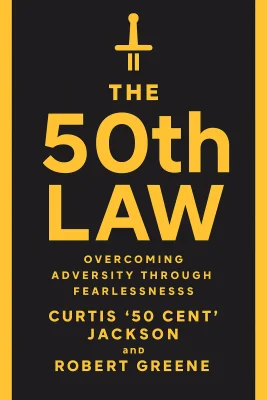
The 50th Law
Overcoming Adversity Through Fearlessness
Categories
Business, Nonfiction, Self Help, Psychology, Philosophy, Biography, Leadership, Audiobook, Entrepreneurship, Personal Development
Content Type
Book
Binding
Imitation Leather
Year
2009
Publisher
HarperStudio
Language
English
ASIN
006177460X
ISBN
006177460X
ISBN13
9780061774607
File Download
PDF | EPUB
The 50th Law Plot Summary
Introduction
In the unforgiving streets of South Jamaica, Queens, a young man named Curtis Jackson faced a choice that would define his entire existence. Orphaned at eight when his mother was murdered, he could have surrendered to the statistics that condemned children like him to cycles of poverty and violence. Instead, he chose to transform every obstacle into opportunity, every setback into strength, and every brush with death into a deeper understanding of what it means to truly live without fear. This remarkable journey from the crack-infested corners of the hood to the boardrooms of corporate America reveals a profound truth about human potential. When we strip away our comfortable illusions and face reality with unflinching honesty, we discover an incredible capacity for transformation. The principles that guided this evolution from Curtis Jackson to 50 Cent, and ultimately to a business mogul worth hundreds of millions, offer us a blueprint for conquering our own fears and limitations. Whether you're facing personal challenges, professional obstacles, or simply seeking to unlock your untapped potential, this exploration of fearless living will show you how to turn your greatest weaknesses into your most powerful assets.
Chapter 1: From Nine Bullets to Fearless Realism
On a spring afternoon in May 2000, Curtis Jackson sat in the backseat of a friend's car when a hired assassin appeared at the window and fired nine bullets into his body. One shot tore through his jaw, another through his hand, while seven more found their mark across his torso and legs. The shooter walked away, confident he had completed his assignment. But as Curtis lay bleeding, something extraordinary happened. Instead of surrendering to panic or despair, his mind became crystal clear. He observed the chaos around him with the detachment of a war correspondent, mentally cataloguing every detail of his near-death experience. During his months of recovery, while Columbia Records canceled his album and industry executives whispered that his career was over, Curtis made a decision that would transform his life. Rather than dwelling on what he had lost, he chose to see his situation exactly as it was, stripped of all illusion and self-pity. He had survived an assassination attempt, been dropped by his record label, and was facing an uncertain future with mounting medical bills and a price still on his head. But he also possessed something invaluable: an authentic story of survival that no studio gangsta could fabricate, a voice forever changed by the bullet fragments in his jaw, and a clarity of purpose forged in genuine danger. The streets had taught Curtis a fundamental lesson about survival: those who live in fantasy die young, while those who see reality with razor-sharp clarity develop the instincts necessary to thrive in any environment. This principle, born from necessity in one of America's most dangerous neighborhoods, becomes even more powerful when applied to our everyday challenges. When we stop filtering our experiences through wishful thinking and social conditioning, we begin to see opportunities that others miss and develop the kind of strategic thinking that turns obstacles into advantages.
Chapter 2: Hustler's Independence: Building Your Own Empire
Young Curtis learned the meaning of true independence when his drug-dealing operation was threatened by a more established player named Wayne. Rather than accepting the role of subordinate in someone else's hierarchy, Curtis devised an ingenious plan. He secretly hired a crew of Brooklyn stickup artists to rob all the neighborhood dealers, including himself to avoid suspicion. The resulting chaos broke up the existing power structure, allowing Curtis to emerge with his own supply of drugs and a reputation for cunning that would serve him for years to come. This early lesson in self-reliance shaped every major decision of his life. When Columbia Records offered him a contract that would have made him wealthy but powerless, he chose instead to learn the business from the inside out, treating his time at the label as a university education in music production, marketing, and distribution. He worked eighteen-hour days not because he was desperate for approval, but because he was systematically acquiring the knowledge he would need to eventually break free and build his own empire. Years later, as 50 Cent stood at the pinnacle of hip-hop success, he faced the ultimate test of independence. Record executives, managers, and business partners all wanted to control different aspects of his career, offering him increasingly lucrative deals that would have made him rich but dependent. Instead, he chose the harder path of building his own infrastructure, creating G-Unit Records, launching his own film production company, and developing business ventures that would generate income long after his music career ended. The streets teach a harsh but liberating truth: in the end, you can only depend on yourself. This doesn't mean rejecting all partnerships or assistance, but rather maintaining the inner strength and strategic vision that allows you to walk away from any situation that compromises your long-term freedom. True power comes not from accumulating resources, but from developing the skills and mindset that allow you to recreate success from nothing, again and again, regardless of external circumstances.
Chapter 3: Street Alchemy: Turning Crisis into Opportunity
When nine bullets nearly ended his life and Columbia Records dropped him from their label, 50 Cent found himself in the darkest period of his career. Most aspiring rappers would have seen this as the end of their dreams. Industry insiders whispered that he was finished, too dangerous and controversial for any major label to touch. His former allies distanced themselves, and his enemies circled like vultures, waiting for him to disappear entirely from the scene. But 50 Cent had learned a crucial principle from his days hustling on the streets: every negative situation contains the seeds of a powerful reversal. Instead of retreating, he launched one of the most audacious comeback campaigns in music history. He flooded the streets with mixtapes featuring his new sound, a harder and more authentic voice shaped literally by the bullet fragments still lodged in his jaw. The assassination attempt, rather than ending his career, became the centerpiece of his mythology, providing him with unassailable street credibility that no manufactured persona could match. He turned his industry exile into an advantage, using his outsider status to create music that was rawer and more honest than anything being produced within the major label system. The violence that had nearly destroyed him became the foundation of his legend. His scarred voice, initially a disability, became his most distinctive asset. Within two years, the same executives who had written him off were competing desperately to sign him to deals worth millions of dollars. The principle behind this transformation extends far beyond the music industry. When we face our darkest moments, we have a choice: we can focus on what we've lost, or we can recognize that crisis strips away everything non-essential, leaving us with a clarity of purpose and urgency of action that would be impossible under normal circumstances. The obstacles that seem to block our path often contain within them the very elements we need to build something stronger and more authentic than what we had before.
Chapter 4: Hood Flow: Moving Through Chaos with Purpose
In the fluid, unpredictable environment of street dealing, Curtis learned that rigid plans and fixed strategies were liabilities. The hustler who tried to control every variable ended up like Jermaine, a would-be kingpin who attempted to monopolize the local drug trade through force and intimidation. Jermaine's corporate approach worked temporarily, but his inability to adapt to changing circumstances ultimately led to his violent downfall when rival dealers, fed up with his heavy-handed tactics, eliminated him in a back alley. Curtis took a different approach, developing what he called "hood flow" - the ability to move fluidly through chaos while maintaining a clear sense of direction. Instead of trying to dominate any single corner or establish a monopoly, he ran multiple operations simultaneously, always keeping several options open. When police pressure made one area too hot, he would shift his focus elsewhere. When customer tastes changed, he adapted his product mix. When rivals emerged, he found ways to work around them rather than engaging in costly direct confrontation. This philosophy of fluid adaptation served him even better in the music industry. While other artists signed exclusive deals that locked them into single revenue streams, 50 Cent created a diversified empire spanning music, film, video games, beverages, and technology. When the traditional record industry began crumbling under the pressure of digital piracy, he was already building alternative platforms for reaching his audience directly. His website became a laboratory for experimenting with new forms of artist-fan interaction, allowing him to stay ahead of industry trends rather than being victimized by them. The modern world rewards those who can navigate complexity and uncertainty with grace and opportunism. Like water finding its way around obstacles, true power comes from maintaining forward momentum while adapting constantly to changing circumstances. The key is never to become so attached to any single strategy or position that you cannot pivot when conditions change, while always keeping your ultimate objectives clearly in sight.
Chapter 5: The Art of Strategic Aggression
When rival rapper Ja Rule ignored a confrontation at a Manhattan nightclub, 50 Cent recognized an opportunity that most people would have missed. Where others saw a non-event, he detected a crucial weakness in his competitor's carefully constructed street credibility. Ja Rule's decision to walk away rather than address the man who had robbed him revealed that his tough-guy image was more marketing than reality, and 50 Cent decided to exploit this vulnerability with surgical precision. Over the following months, he launched a calculated campaign of musical attacks, releasing a series of diss tracks that systematically dismantled Ja Rule's reputation. But this wasn't random aggression - it was strategic warfare. 50 Cent studied his target's psychological weak points, crafted attacks that would provoke emotional rather than strategic responses, and positioned himself as the authentic voice of the streets while painting his rival as a manufactured studio creation. When Ja Rule finally responded with his own tracks, they were angry and defensive rather than clever and commanding. The campaign culminated when both artists released albums simultaneously. 50 Cent's record outsold Ja Rule's by a massive margin, effectively ending his rival's career as a major force in hip-hop. The battle demonstrated that properly channeled aggression could eliminate competition more effectively than any amount of behind-the-scenes maneuvering or industry politics. By the time 50 Cent stopped his attacks, Ja Rule had been reduced to a cautionary tale about the dangers of projecting an image you cannot authentically maintain. The lesson extends far beyond personal conflicts. In any competitive environment, there are moments when passive strategies are insufficient and more assertive action becomes necessary. The key is learning to distinguish between productive aggression that advances your goals and destructive anger that undermines your position. True strategic aggression is calculated, targeted, and designed to create lasting advantages rather than temporary satisfaction.
Chapter 6: Leading from the Front Lines
When 50 Cent gathered his crew in his grandparents' house to propose their transformation from a loose collection of friends into a disciplined business organization, he understood that words alone would not be sufficient. He had to demonstrate through his actions that he possessed the vision and commitment necessary to lead them from the dangerous streets of Queens to legitimate success in the entertainment industry. Rather than asking them to take risks he wasn't willing to share, he put himself in the most vulnerable position of all. With the price still on his head from the assassination attempt, 50 Cent made himself visible throughout New York, personally distributing mixtapes and building relationships with DJs despite knowing that his enemies were looking for opportunities to finish the job they had started. He worked longer hours than anyone else, invested every dollar he earned back into the campaign, and maintained the same demanding standards for himself that he expected from his team. When record executives finally began paying attention to his music, his crew could see that their leader's success was earned through relentless effort rather than luck or connections. This pattern continued throughout his rise in the music industry and expansion into business ventures. Whether negotiating with major corporations or developing new products, 50 Cent consistently took the most challenging roles for himself while ensuring that everyone who worked with him benefited from the success they helped create. He understood that true authority comes not from titles or contracts, but from repeatedly proving that you are willing to sacrifice more and risk more than anyone else to achieve shared objectives. The most effective leaders throughout history have understood this principle: people follow those who demonstrate through their actions that they are worthy of trust and respect. When facing uncertainty or danger, team members look to their leader's behavior for cues about how to respond. If they see confidence, determination, and a willingness to share in whatever hardships lie ahead, they find the courage to exceed their normal limitations and achieve extraordinary results.
Chapter 7: Staying Connected to Your Base
In the early days of his drug dealing career, Curtis learned a crucial lesson from an older hustler named Dre about the difference between outside operators and those who work from within their community. The outside types, Dre explained, never bothered to understand their customers' needs, fears, and motivations. They saw drug users as simple transactions rather than complex human beings with their own psychology and social networks. This superficial approach made them vulnerable to changes in the market that they never saw coming. Curtis chose to move inside, developing relationships with his most reliable customers and using them as sources of both market research and street intelligence. He created a system of "testers" - free samples distributed to trusted users who would provide immediate feedback on product quality and help spread word about new offerings through their own networks. This inside knowledge allowed him to anticipate changes in demand, adjust his inventory accordingly, and stay ahead of competitors who relied on guesswork and habit. Years later, as his music career took off and he found himself increasingly isolated by fame and success, 50 Cent faced the challenge that destroys many artists: losing touch with the audience that had made them successful. He solved this problem by creating his own website, which evolved into a social networking platform that allowed him to maintain direct contact with fans around the world. He could test new music, gauge reactions to business ventures, and stay current with cultural trends without depending on industry intermediaries who often filtered information to match their own agendas. The platform became a laboratory for understanding his audience's evolving tastes and expectations. When he posted a track that received negative feedback, he would shelve it and create something that better matched what his fans actually wanted. When they responded positively to unexpected directions in his music or business ventures, he knew he was on the right track. This constant feedback loop allowed him to maintain relevance and commercial success even as the entertainment industry underwent massive technological and cultural changes.
Chapter 8: Mastering the Long Game
While other young hustlers chased immediate gratification and quick scores, Curtis developed an almost supernatural ability to endure boredom and delay satisfaction in service of long-term objectives. He showed up at his corner every morning at the same time, worked the same long hours regardless of whether business was fast or slow, and saved his money with the discipline of a monk, even as friends and rivals spent their earnings on flashy jewelry and expensive cars that marked them as targets for robbery or police attention. This patience served him even better when he transitioned into music. While other aspiring rappers rushed to get any deal they could find, Curtis spent months learning every aspect of the recording process, studying successful artists' career trajectories, and building relationships throughout the industry before making his move. When he finally signed with Columbia Records, he treated it as graduate school, spending his days in different departments learning about marketing, distribution, and production while other artists focused solely on their own immediate projects. The assassination attempt that nearly ended his life only reinforced his commitment to long-term thinking. Rather than rushing back into the music business or accepting the first offer that came along, he spent two years building his reputation through mixtapes, developing his distinctive sound, and creating demand for his music before reentering the major label system from a position of strength. By the time Eminem discovered his work and offered him a record deal, 50 Cent was able to negotiate terms that gave him unprecedented control over his career. This mastery of process over immediate results became the foundation of his business philosophy. Whether developing new products, entering new markets, or building partnerships, he consistently chose strategies that might take years to pay off but would create sustainable competitive advantages. While competitors focused on quarterly earnings and short-term publicity, he built infrastructure and developed capabilities that would generate value for decades to come, understanding that true power comes not from winning individual battles but from developing the patience and skill to win long campaigns.
Summary
The transformation of Curtis Jackson from a fatherless child in one of America's most dangerous neighborhoods into 50 Cent, one of the most successful entrepreneurs of his generation, illuminates a profound truth about human potential. When we strip away our comfortable illusions and develop the courage to see reality clearly, we discover that our greatest obstacles often contain the seeds of our most powerful transformations. The streets that could have destroyed him instead became his university, teaching him lessons about resilience, strategic thinking, and authentic leadership that no traditional education could provide. The principles that guided this remarkable journey offer us a blueprint for conquering our own fears and limitations. Whether we're facing professional setbacks, personal challenges, or simply seeking to unlock untapped potential, the path forward requires the same fearless commitment to growth over comfort, reality over fantasy, and long-term vision over immediate gratification. When we learn to view every crisis as an opportunity for reinvention and every setback as raw material for building something stronger, we discover that the only real limitations in life are those we accept in our own minds. The choice between living as victims of circumstance or architects of our own destiny remains ours to make, every single day.
Best Quote
“Understand: people will constantly attack you in life. One of their main weapons will be to instill in you doubts about yourself – your worth, your abilities, your potential. They will often disguise this as their objective opinion, but invariably it has a political purpose – they want to keep you down.” ― Robert Greene, The 50th Law: Overcoming Adversity Through Fearlessness
Review Summary
Strengths: The book offers powerful and life-altering lessons on overcoming fear, using the life of Curtis Jackson (50 Cent) as a backdrop. It provides insights into accepting mortality and confronting fear, which can lead to personal empowerment and liberation. The narrative highlights 50 Cent's resilience and business acumen, presenting him as a strategic thinker and voracious reader. Weaknesses: The book focuses solely on fear without exploring its relationship with love, which could lead to potential misuse of its content. The reviewer suggests that some readers might misinterpret the book's message. Overall: The reviewer found the book surprisingly engaging and insightful, particularly in its exploration of fear and mortality. Despite initial reservations, the book is recommended, especially for those interested in personal growth and resilience.
About Author

Robert Greene
Greene interrogates the complexities of human behavior and power dynamics through his incisive writings, aiming to provide readers with practical frameworks for understanding influence. His exploration into themes such as power, strategy, and human nature is neither simplistic nor merely academic; it draws from a rich tapestry of historical narratives and psychological insights. By combining these elements, Greene's works, such as "The 48 Laws of Power," offer profound analysis while equipping readers with actionable advice, thus aligning with his goal of demystifying the mechanisms of power.\n\nIn his method, Greene often synthesizes historical examples with contemporary applications, thereby bridging the past and present in a seamless narrative. His bio reveals a diverse career path, which informs his multifaceted approach to writing. For instance, "The Art of Seduction" and "The Laws of Human Nature" highlight his ability to dissect intricate social interactions and provide strategic tools for personal growth. Meanwhile, his collaboration with rapper 50 Cent on "The 50th Law" exemplifies his capacity to adapt these timeless themes to resonate with modern audiences. This confluence of historical depth and modern relevance is a hallmark of Greene's method, ensuring that his books remain engaging and applicable across different contexts.\n\nReaders across a wide spectrum, from business leaders to artists, find Greene's work particularly beneficial as it offers insights into the intricate dance of power and influence. His books are more than just narratives; they serve as guides for navigating personal and professional relationships, appealing to those who seek to understand and wield power effectively. While Greene’s works have sparked controversy for their candid exploration of manipulation, their popularity and widespread influence underscore their value in offering a deeper comprehension of the forces that shape human interactions.
Read moreDownload PDF & EPUB
To save this Black List summary for later, download the free PDF and EPUB. You can print it out, or read offline at your convenience.
The 50th Law
by Robert Greene
