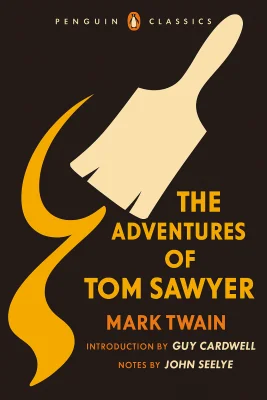
The Adventures of Tom Sawyer
Categories
Fiction, Classics, Audiobook, Historical Fiction, Young Adult, Literature, School, Novels, Adventure, Childrens
Content Type
Book
Binding
Paperback
Year
2006
Publisher
Penguin Classics
Language
English
ASIN
0143039563
ISBN13
9780143039563
File Download
PDF | EPUB
The Adventures of Tom Sawyer Plot Summary
Introduction
The fence stretched white and endless under the Missouri sun, and ten-year-old Tom Sawyer stared at it with the despair of the condemned. Saturday morning meant freedom to every other boy in St. Petersburg, but here he stood with brush in hand, sentenced by Aunt Polly to whitewash thirty yards of board fence. The Mississippi River sparkled beyond the village, calling to him with promises of adventure, while the fence mocked him with its pristine demand for labor. Yet Tom Sawyer possessed a mind too cunning for such simple defeat. As Ben Rogers approached, mimicking a steamboat with elaborate precision, Tom's brush moved with theatrical concentration, each stroke a masterpiece of pretended pleasure. "Does a boy get a chance to whitewash a fence every day?" Tom mused aloud, and Ben's curiosity ignited. Soon the fence gleamed with three coats of paint, applied by eager hands that paid Tom for the privilege. What followed would prove that in the sleepy river town of St. Petersburg, beneath the veneer of Sunday school propriety and adult authority, darker currents ran deep—currents that would sweep Tom into adventures far beyond any fence, into realms of murder, treasure, and the shadowy places where childhood meets its end.
Chapter 1: Mischief and Whitewash: The Making of a Boy
Tom Sawyer lived in that peculiar state of constant warfare between boyish mischief and adult expectation. His Aunt Polly, guardian since his mother's death, wielded discipline with a heart too tender for its own good. Her attempts at punishment crumbled before Tom's theatrical suffering or clever diversions, leaving her perpetually torn between duty and affection. The boy possessed an artist's soul trapped in circumstances that demanded conformity. Sunday school tortured him with its stiff collars and Scripture recitations, yet Tom endured because respectability opened doors to certain freedoms. When Judge Thatcher's family returned to town, bringing with them the golden-haired Becky Thatcher, Tom discovered a new form of torment—the sweet agony of first love. His courtship unfolded in the schoolhouse shadows, where Tom and Becky exchanged whispered promises and tentative kisses. They spoke of engagement with the solemnity of adults, though neither truly grasped the weight of such words. But love among children proves as fragile as morning dew. When Tom carelessly mentioned Amy Lawrence, his previous romantic conquest, Becky's hurt transformed into something harder. Their paradise dissolved in tears and accusations, leaving Tom to wander the hills in dramatic despair. The boy's pain felt cosmic in its intensity. He imagined himself dying tragically, Aunt Polly weeping over his still form while Becky mourned her cruelty. These fantasies of martyrdom sustained him through the acute suffering that only the young can feel so purely. Yet beneath Tom's theatrical temperament lay genuine emotion, and genuine consequence awaited those who played too carelessly with darkness.
Chapter 2: Midnight Terrors: A Murder in the Graveyard
Midnight brought Tom and his companion Huck Finn to the village graveyard, clutching a dead cat and nursing boyish superstitions. Huck, the town pariah with his wild hair and castoff clothes, lived free from adult supervision but paid the price in social isolation. The boys believed the cat would cure warts if properly applied during supernatural encounters, and the graveyard promised such mysteries. They crouched among the weathered headstones, whispering of ghosts and devils, when lantern light pierced the darkness. Three figures approached through the gloom—young Dr. Robinson, the town drunk Muff Potter, and the sinister half-breed Injun Joe. The men came as grave robbers, seeking a fresh corpse for the doctor's medical studies, but their transaction soured when old grievances surfaced. Injun Joe's eyes blazed with remembered humiliation as he confronted the doctor who had once spurned him, whose father had seen him jailed as a vagrant. The past erupted into violence. Potter struck at Robinson with a headboard while Joe circled like a predator, knife gleaming. When the doctor felled Potter with a mighty blow, Injun Joe saw his chance. The blade found its mark with terrible precision. Tom and Huck fled through the darkness, their hearts hammering with terror. They had witnessed murder most foul, yet who would believe two boys against a man like Injun Joe? The half-breed's cunning ran deeper than they imagined—when Potter awakened, confused by whiskey and the blow to his head, Joe convinced the man that he himself had committed the crime. The knife pressed into Potter's nerveless fingers sealed his apparent guilt, while the true killer melted into the night.
Chapter 3: Island Escape: Three Pirates Against the World
The burden of their terrible secret drove Tom to desperate measures. When adult disapproval reached its peak—Aunt Polly's disappointed sighs, Becky's cold silence—he conceived a plan both audacious and dramatic. Tom would vanish from the world that scorned him, taking his most trusted companions on an adventure that would make the adults regret their harshness. Jackson's Island lay three miles downstream, a wooded sanctuary where civilization's rules held no power. Tom convinced Joe Harper and Huck to join his band of pirates, and under cover of darkness, they commandeered a raft and sailed toward freedom. The island embraced them with wild abundance—fish leaped from the river, birds sang in ancient trees, and no adult voice called them to duty. For days they lived as nature intended, swimming naked in the shallows, feasting on their catches, and playing at being desperados. Tom christened himself the Black Avenger of the Spanish Main, while Joe became the Terror of the Seas, and Huck earned the title Red-Handed. They smoked corn-cob pipes until their faces turned green, fought elaborate battles, and slept under stars that asked nothing of them. But paradise carried its own torment. Homesickness crept through their dreams like morning mist. Even Huck, who possessed no proper home, found himself longing for familiar doorsteps and empty hogsheads. The boys heard cannon fire from the river as search parties sought their bodies, and Tom realized the magnificent opportunity before them. They would attend their own funeral, returning from the dead to claim the grief and love they had always craved.
Chapter 4: Courage in the Courtroom: Tom's Testimony
The courthouse buzzed with anticipation as Muff Potter's trial reached its climax. The evidence seemed ironclad—the knife belonged to Potter, witnesses had seen him washing blood from his hands, and his own confused admissions painted him guilty. The town demanded justice, and Injun Joe's testimony provided the final nails for Potter's coffin. Yet Tom Sawyer carried a burden heavier than any ten-year-old should bear. Each night brought dreams of Potter swinging from the gallows, an innocent man dying while the true killer walked free. The secret ate at Tom's conscience like acid, while Huck begged him to remain silent. Injun Joe's reputation for vengeance was legendary—boys who crossed him had ways of disappearing. Potter's defense attorney seemed resigned to defeat, offering no challenges to the prosecution's witnesses. The crowd murmured with dissatisfaction at such a perfunctory defense, but the lawyer harbored one final card. As the case neared its conclusion, he called an unexpected witness—Thomas Sawyer. The courtroom erupted in confusion. Every eye fixed upon Tom as he took the stand, his small frame dwarfed by the adult drama surrounding him. With trembling voice, he began to recount that terrible night in the graveyard. As his testimony unfolded, the truth struck like lightning. When Tom reached the moment of murder, naming Injun Joe as the killer, the half-breed exploded into action. The courtroom window shattered as he escaped, leaving behind a trail of broken glass and a roomful of stunned faces.
Chapter 5: Darkness and Danger: Lost in McDougal's Cave
The cave opened like a mouth in the hillside, its chambers stretching endlessly into the earth's dark heart. When Judge Thatcher organized a picnic expedition, the children explored the mysterious passages with candles and laughter, but Tom and Becky wandered too far from safety. Their romantic adventure turned to nightmare as familiar paths became alien tunnels, and their candle flames dwindled toward extinction. Lost in the labyrinth, they faced death by degrees. Hunger gnawed at their stomachs while thirst cracked their lips. Their voices echoed mockingly through stone corridors that led nowhere, and the darkness pressed against them like a living thing. Becky's strength failed first, her steps faltering as despair consumed her hope. Tom carried their remaining candle like a sacred flame, knowing that when it died, they would follow. The cave held more than limestone and shadow. In its deepest reaches, Tom glimpsed a figure that froze his blood—Injun Joe, hiding in the underground maze like some demon of the depths. The murderer had taken refuge here, but even he seemed lost in the endless passages. Tom dared not cry out, lest he draw the killer's attention to their hiding place. Three days passed in the outside world as searchers combed every known passage. Meanwhile, Tom and Becky clung to life with the desperate tenacity of youth. When Tom finally spotted a glimmer of daylight through a crack in the cave wall, it seemed like a vision of heaven itself. They crawled toward salvation with their last reserves of strength, emerging into blessed sunlight five miles from where they had entered. The cave had nearly claimed them, but they had cheated death through courage and fortune.
Chapter 6: Treasure Unearthed: The Secret of Injun Joe
The cave held its victims in embrace of stone and shadow. When Judge Thatcher sealed the entrance with iron doors, Tom realized with horror that Injun Joe remained trapped inside. The searchers found him days later, starved and desperate, his fingers worn to bone from clawing at the unyielding rock. Death had taken the murderer at last, but his demise revealed secrets that would make two boys rich beyond their wildest dreams. Before his final escape to the cave, Injun Joe had spoken of treasure hidden beneath the cross. Tom remembered those words with sudden clarity, and he convinced Huck to join him in one last adventure. Armed with picks and shovels, they returned to the cave through Tom's secret entrance, following passages lit by flickering candles. The cross carved in candle smoke marked their destination like an ancient treasure map. Beneath the stone floor lay a box containing more gold than either boy had ever imagined—twelve thousand dollars in glittering coins, the accumulated loot from Injun Joe's criminal career. The treasure that had cost a man his life now belonged to two children who had earned it through courage and suffering. Their discovery transformed not just their fortunes but their very identities. Tom Sawyer, the mischievous fence-painter, became a hero whose story would be told for generations. Huck Finn, the village outcast, found himself thrust into respectability whether he wanted it or not. The treasure bound them together as surely as their shared secrets, partners in adventure who had looked into darkness and emerged into light.
Chapter 7: Fortune's Burden: Wealth and Its Consequences
Gold changes everything it touches, and twelve thousand dollars transformed two boys' lives in ways they never expected. Tom basked in his newfound fame, his testimony having saved an innocent man while his treasure discovery made him the talk of three counties. Judge Thatcher spoke of military academies and law schools, mapping a respectable future for the boy who had once been known only for mischief. But Huck Finn found wealth a burden heavier than poverty. The Widow Douglas took him under her civilized wing, subjecting him to baths, proper clothes, and regular meals served by bell. School loomed like a prison, and church stretched endlessly with its suffocating sermons. The money that should have meant freedom instead built walls around his wild spirit. Tom discovered Huck hiding in an empty hogshead behind the abandoned slaughterhouse, having fled respectability like a caged animal returning to the wild. His friend's desperation struck deep, for Tom understood the pull between conformity and rebellion that tore at every boy's heart. Yet Tom had learned something Huck had not—that sometimes one must work within society's rules to achieve true freedom. The solution came in the form of Tom Sawyer's Gang, a band of robbers that would meet in the secret cave where they had found their fortune. To join, however, Huck would need to maintain his respectable facade, at least in public. The compromise satisfied both boys' needs—adventure and acceptance, rebellion and belonging. They had tasted both the bitter and sweet fruits of maturity, and found that growing up meant learning to balance such contradictions.
Summary
Tom Sawyer's journey from fence-painting truant to treasure-laden hero traces the eternal arc of boyhood's end. In the space of one fateful summer, he witnessed murder, faced death, and discovered that courage sometimes demands terrible choices. The gold that filled their pockets mattered less than the experiences that filled their hearts, for they had learned that true wealth lies not in what one possesses, but in what one survives. The sleepy village of St. Petersburg would remember this summer long after Tom and Huck had grown to manhood. Their story echoed the American dream itself—that ordinary children might rise to extraordinary heights through wit, courage, and a refusal to accept the limitations others would place upon them. In conquering fear, they had conquered themselves, and in facing the darkness within McDougal's cave, they had emerged into the light of possibility. The fence that once seemed an insurmountable obstacle now appeared as merely the first small barrier on a path that stretched toward adventure without end.
Best Quote
“The less there is to justify a traditional custom, the harder it is to get rid of it” ― Mark Twain, The Adventures of Tom Sawyer
Review Summary
Strengths: The review highlights the reader's early literacy and determination, showcasing a humorous and nostalgic reflection on their childhood experience with "The Adventures of Tom Sawyer." The anecdote about misinterpreting the academic foreword as the first chapter adds a relatable and amusing touch. Weaknesses: The review notes initial confusion due to the foreword and character name similarities, which could be challenging for young readers. The reader also expresses disapproval of Tom Sawyer's trickery, suggesting a disconnect with the character's actions. Overall: The review conveys a fond yet critical reflection on the book, emphasizing the reader's early perseverance and eventual understanding. It suggests that while the book may initially confuse young readers, it remains a cherished classic worth revisiting.
About Author
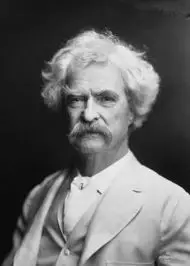
Mark Twain
Twain interrogates the complexities of American society through his incisive narratives that blend humor with social criticism. His purpose in writing extends beyond mere entertainment to provoke thought and challenge societal norms. Themes of childhood innocence, race, and societal hypocrisy are prevalent, and his use of vernacular speech adds authenticity and accessibility to his work. By weaving these elements into his storytelling, Twain effectively captures the regional culture of America while offering an insightful critique of its social mores.\n\nMark Twain's books, such as "The Adventures of Tom Sawyer" and "The Prince and the Pauper," exemplify his talent for crafting engaging stories with profound social messages. Meanwhile, his satirical work, "A Connecticut Yankee in King Arthur’s Court," highlights his ability to navigate historical contexts with a critical eye on contemporary issues. As an author, Twain utilized his experiences from various careers, including riverboat piloting and newspaper reporting, to infuse his writing with realism and authenticity. His mastery of language and narrative form earned him widespread acclaim, and his influence endures as a pivotal figure in American literature.\n\nReaders who engage with Twain's works gain more than just entertainment; they are invited to reflect on the moral complexities of society and the nature of human behavior. This exploration is relevant not only to literary scholars but also to anyone interested in understanding the cultural and social fabric of America. Twain's bio reveals a life committed to examining the world through a lens of wit and wisdom, making his contributions timeless and his narratives continually resonant with new generations.
Read moreDownload PDF & EPUB
To save this Black List summary for later, download the free PDF and EPUB. You can print it out, or read offline at your convenience.
The Adventures of Tom Sawyer
by Mark Twain
