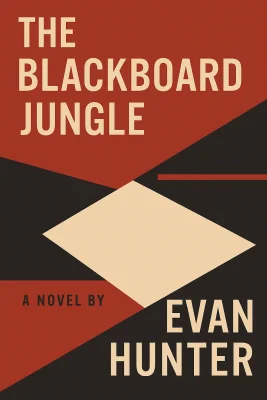
The Blackboard Jungle
Categories
Fiction, Education, Classics, Audiobook, Mystery, Historical Fiction, Literature, American, New York, Crime
Content Type
Book
Binding
Mass Market Paperback
Year
2004
Publisher
Pocket Books
Language
English
ASIN
0743493680
ISBN
0743493680
ISBN13
9780743493680
File Download
PDF | EPUB
The Blackboard Jungle Plot Summary
Introduction
# Blackboard Jungle: When Chalk Lines Become Battle Lines The switchblade gleamed under fluorescent classroom lights as seventeen-year-old Arthur West advanced on his English teacher, blood trickling from his split lip. Richard Dadier backed against the blackboard, his lesson plan forgotten, facing the moment every urban educator secretly dreaded. Six months earlier, Rick had walked into North Manual Trades High School armed with idealism and Hunter College theories about reaching troubled youth. Now he understood the brutal truth—this wasn't a school, it was a warehouse for society's discards, where survival trumped education and violence was the universal language. The knife in West's hand represented more than teenage rebellion. It was the culmination of a war that began the day Rick intervened in a sexual assault, saving teacher Lois Hammond from student Douglas Murray's attack. That act of heroism had marked him for destruction in the twisted ecosystem of the vocational school, where good deeds were punished and teachers learned to keep their heads down or face the consequences. Rick's real education was about to begin, written in blood and chalk dust on the blackboard jungle's unforgiving walls.
Chapter 1: Chapter 1: The Idealist Enters the Wasteland
Rick Dadier stepped through the mesh-covered doors of North Manual Trades High School on a crisp September morning, his briefcase swinging with the confidence of a man who believed education could change the world. At twenty-seven, fresh from Hunter College with his teaching degree and newly married to his pregnant wife Anne, Rick saw opportunity where others saw only waste. The building's scarred brick facade and barred windows should have warned him, but idealism has its own form of blindness. Principal William Small greeted the new faculty with bureaucratic enthusiasm, his own face bearing a jagged scar that told its own story of institutional violence. The veteran teachers Rick met seemed worn down, their eyes holding the thousand-yard stare of combat survivors. Solly Klein, a mathematics instructor with twenty years under his belt, pulled Rick aside with advice disguised as casual conversation: "This isn't a school, kid. It's a garbage can. Your job is to sit on the lid and keep it from blowing off." Rick's first glimpse of his students shattered any remaining illusions. These weren't children—they were young men, some nearly as tall and broad as Rick himself, their faces hardened by experiences he couldn't imagine. Gregory Miller caught his attention immediately, a handsome young Black man with an easy smile and intelligent eyes that seemed to catalog every weakness. Beside him sat Arthur West, pale and stringy-haired, his face a map of adolescent rage and resentment. The classroom became a battleground from the first day. Rick tried to establish authority by writing his name on the blackboard—"Mr. Dadier, pronounced Dad-ee-yay"—but his carefully planned lessons fell on deaf ears. These students had heard promises before, had been failed by every institution meant to help them. When Rick announced they'd be studying literature, the room erupted in laughter. "Literature?" Miller asked with mock surprise. "You sure you in the right place, teach?" The easy camaraderie in his voice carried an undertone of challenge that would define their relationship for months to come.
Chapter 2: Chapter 2: First Blood: The Stairwell Intervention
The attack happened during Rick's free period in October, swift and brutal as a pack of wolves descending on wounded prey. He was leaving the building when he heard Miss Hammond's scream echoing from the stairwell. Rick rounded the corner to find Douglas Murray, a hulking student with dead eyes, forcing the terrified teacher against the wall, one hand clamped over her mouth while the other tore at her clothes. The sight of her exposed breast, pale and vulnerable through torn silk, ignited something primal in Rick. "Hey!" he shouted, dropping his briefcase and lunging forward. He spun Murray around and drove his fist into the boy's mouth, feeling the shock rumble up to his shoulder as blood exploded across yellow teeth. Hammond's screams brought teachers and monitors flooding the scene, but the damage was done. Rick had crossed a line that couldn't be uncrossed, interfering in the brutal ecosystem where students policed their own and outsiders stayed silent. Murray's arrest on criminal assault charges sent shockwaves through the student body. In their twisted logic, Rick wasn't a hero who had saved a woman from rape—he was a traitor who had destroyed one of their own. The wall of silence that descended over his classes was more devastating than any physical assault. Students who had grudgingly participated in lessons now sat mute, their eyes filled with cold hatred. The psychological warfare began immediately. Miller orchestrated the campaign with surgical precision, using his natural charisma to turn Rick's classroom into a tomb of hostile silence. When Rick called on students to answer questions, they stared back with blank faces, refusing to acknowledge his existence. The machine shop upstairs hammered out its industrial rhythm, drowning his voice in mechanical thunder while his students watched him struggle with predatory patience. Rick realized with growing horror that he was fighting a war he didn't understand, armed only with lesson plans against an enemy that respected nothing but strength.
Chapter 3: Chapter 3: Silent War: Psychological Warfare in Room 206
Winter settled over the school like a gray shroud, and Rick's idealism began to crack under the daily assault of coordinated resistance. The students had developed an intricate system of psychological torture, arriving late to disrupt his opening remarks, talking over his lessons, treating his attempts at education like elaborate jokes. Miller emerged as the unofficial general, drawing invisible battle lines that Rick was never allowed to cross. The breaking point came during a lesson about tolerance and prejudice. Rick had prepared a speech about the dangers of hate speech, using various ethnic slurs as examples of what not to say. His intention was noble—to show how words could wound and divide communities. But someone in his class, Rick suspected Miller, complained to Principal Small that their teacher was using racist language in the classroom, twisting Rick's anti-prejudice lesson into evidence of bigotry. Small summoned Rick to his office like a defendant called before a hanging judge. The principal's scarred face twisted with righteous anger as he accused Rick of poisoning young minds with hatred, of being unfit to teach in their diverse school. Rick tried to explain the context, the educational purpose behind his lesson, but Small had already made up his mind. The complaint fit perfectly with his suspicions about this young, overeager teacher who thought he could change the world. The confrontation left Rick shaken and furious. He had been trying to teach tolerance, and now he stood accused of promoting hatred. Worse, he realized that one of his own students—someone he had been desperately trying to reach—had deliberately twisted his words to destroy him. The idealistic teacher who had walked into North Manual Trades was dying, replaced by someone harder and more cynical. Rick began to understand what Solly Klein had meant about sitting on the lid of a garbage can, but he wondered how long he could keep it closed before the contents exploded in his face.
Chapter 4: Chapter 4: Streets and Shadows: Violence Beyond School Walls
The first beating came without warning on a dark October evening, swift and merciless as urban predators claiming their territory. Rick was walking home with Josh Edwards, a fellow new teacher, when seven figures materialized from the shadows. They had been followed, watched, hunted with the patience of professionals. The trap closed around them with military precision, three blocking their path while four moved in from behind. "Hello, Daddy-oh," a voice called from the darkness, and suddenly the violence erupted. Fists and feet found their targets with brutal efficiency while Rick and Josh fought desperately back to back, their academic training useless against street savagery. "This is for Douglas Murray, you bastard," someone shouted as boots slammed into Rick's ribs and groin. The beating was methodical, personal, a lesson written in blood and bruises about the consequences of crossing invisible lines. Rick crawled home through empty streets, his face a map of violence, his body screaming with each step. Anne, heavy with their unborn child, wept as she cleaned his wounds, her gentle hands trembling as they traced the damage. The mirror showed him a stranger—swollen, broken, marked by a brutality he had never imagined possible. Yet beneath the physical pain burned something harder: the knowledge that surrender was not an option. The students' reaction to his battered appearance revealed the twisted logic of their world. The silent treatment that had tormented him for weeks suddenly ended, replaced by a grudging normalcy. They had drawn blood, settled their debt for Murray's imprisonment, and now business could resume. But Rick understood that this was not peace—it was merely a temporary ceasefire in a war that would continue until one side was completely destroyed. The real question was whether he had the strength to keep fighting when the next assault came.
Chapter 5: Chapter 5: Anonymous Poison: Marriage Under Siege
The anonymous letters began arriving at Rick and Anne's apartment like slow-acting poison, each one more specific and devastating than the last. "Watch Richard. There's another woman. At school. All day, every day. Lois Hammond." The neat typescript seemed to mock Anne with its clinical precision, arriving just as her pregnancy made her feel most vulnerable and unattractive. Anne sat in their kitchen at 8:22 PM, three letters spread before her like tarot cards predicting doom, while Rick was hours late from school. Her imagination filled the terrible silence with images of betrayal, of her husband finding comfort in the arms of the attractive newspaper advisor while she grew grotesque with their unborn child. The psychological warfare was masterful in its cruelty, weaponizing her deepest insecurities against their marriage. Each delayed homecoming became evidence of infidelity, each distracted moment proof of guilt. Anne found herself searching Rick's clothes for traces of another woman, hating herself for the betrayal of faith but unable to stop. The anonymous enemy understood exactly how to turn love into suspicion, how to poison the one sanctuary Rick thought he had left. The school had invaded their home, using their love as ammunition in a war they barely understood. Rick remained oblivious to the campaign being waged against his marriage, focused entirely on surviving each day in his hostile classroom. He saw his wife's growing distance as a natural consequence of pregnancy, never suspecting that someone was systematically destroying their relationship from the shadows. The letters were a time bomb, ticking toward an explosion that would shatter more than just their marriage. Whoever was orchestrating this campaign understood that the most effective way to destroy a man was to take away everything he held dear, leaving him with nothing but the job that was already killing him.
Chapter 6: Chapter 6: Breaking Point: Personal Loss and Professional Crisis
The call came during Rick's hall patrol duty on December 21st, cutting through the institutional noise like a blade. Anne's mother's voice crackled through the school office phone: "She's in labor. Come quickly." Rick's heart raced as he grabbed his coat and rushed to Lenox Hill Hospital, his mind filled with images of holding his newborn son, of finally having something pure and good to balance against the daily brutality of his professional life. But the baby was stillborn, strangled by his own umbilical cord before he could draw his first breath. Dr. Bradley delivered the news with professional compassion, his tired eyes reflecting the weight of having to destroy dreams instead of delivering them. Rick stood in the hospital corridor feeling hollowed out, empty in a way he had never experienced before. The anonymous letters had poisoned his marriage with suspicion during what should have been their happiest time. Anne lay in the recovery room, pale and exhausted, not yet knowing their child was dead. She spoke excitedly about seeing the baby, about how much trouble "the little stinker" had given her during delivery. Rick held her hand and lied, telling her everything was fine, that he was happy, that their son was beautiful. The truth could wait until she was stronger, though he knew it would destroy something in both of them that could never be repaired. When he finally told her the next day, Anne blamed herself with devastating completeness. She begged Rick's forgiveness as if she had failed him personally, as if losing their child was somehow her fault. Rick held her while she sobbed, his own grief mixing with rage at the faceless enemy who had made their tragedy even more unbearable. They went home to an empty nursery and an uncertain future, the anonymous letters still arriving like poison-pen reminders of how completely their lives had been shattered. When Rick finally returned to North Manual Trades in January, it was like starting over, but without the hope that had once sustained him.
Chapter 7: Chapter 7: Blades and Choices: The Final Classroom Confrontation
January brought a harder, more cynical Rick Dadier back to Room 206. The teacher who had once believed in reaching every student had been replaced by someone who just wanted to survive each day. He gave tests constantly now, using busy work to maintain order, no longer caring whether his students learned anything meaningful. The death of his son had killed something essential in him, leaving behind a man going through the motions of education without any real faith in its power. Arthur West sensed the weakness like a predator scenting blood. He pushed harder against Rick's boundaries, calling him "Daddy-oh" with increasing boldness, testing how far he could go before facing consequences. The nickname stung like a physical blow, reducing Rick's authority to a childish taunt that spread through the school like wildfire. West's pale face twisted with malicious pleasure each time he used it, knowing he was slowly driving his teacher toward a breaking point. The final confrontation began over a simple spelling test. Rick caught Belazi cheating and deducted points from his paper, a routine disciplinary action that should have ended there. But West called him "chicken" under his breath, then escalated when Rick demanded he bring his test forward. The classroom tension ratcheted up as West refused to comply, his defiance backed by the silent support of students who wanted to see their teacher finally humiliated beyond recovery. When Rick grabbed West by the collar and demanded he pronounce his name correctly, the boy's response was swift and obscene: "Fuck you, Mr. Daddy..." The slap that followed was instinctive, Rick's hand moving before his mind could stop it. Blood appeared on West's lip, and suddenly a switchblade gleamed in the fluorescent light. The knife changed everything—this wasn't just another classroom disruption or test of wills, this was life and death. Rick backed away as West advanced, the blade weaving hypnotic patterns in the air between them, while behind West, Belazi rose from his seat ready to join the attack.
Chapter 8: Chapter 8: Unexpected Allies: When Students Draw Their Own Lines
The chair caught West in the chest with devastating force, knocking the wind from his lungs and sending him sprawling across the classroom floor. Rick had grabbed it in desperation, swinging with the strength of a man fighting for his life. The knife clattered away as Rick pinned West down, but Belazi scooped up the weapon and slashed at Rick's arm, opening a long gash that immediately began bleeding onto the linoleum. Then something extraordinary happened that changed everything Rick thought he knew about his students. Miller's voice cut through the chaos like a whip: "Leave him alone, you goddamn fool!" But he wasn't talking to Rick—he was shouting at Belazi. Other students joined the fray, but not against their teacher. Morales knocked the knife from Belazi's hand while Santini stepped on it. Carter and Antoro tackled Belazi while Erin pummeled West's face with righteous fury. Rick stared in amazement as his students fought for him. These were the same boys who had tormented him for months, who had shown him nothing but disrespect and hostility. Now they were risking themselves to protect him from West and Belazi, drawing their own line between acceptable rebellion and attempted murder. The silent war that had raged for months was finally over, decided not by administrative intervention but by the students themselves choosing which side they were really on. Miller approached Rick with serious eyes, the usual mocking smile absent from his face. "Maybe we should just forget the principal, Chief," he suggested quietly. "Maybe we should just go to lunch." It was a test, Rick realized—a chance to take the easy road, to let the incident slide and maintain the fragile peace they had achieved. Miller had chosen the hard road by defending his teacher, breaking his own rules about never crossing certain lines. Rick looked at Miller, seeing the boy's internal struggle reflected in his tense posture and pleading eyes. The young man had risked everything to save his teacher's life, and now he was asking Rick to make the same kind of difficult choice. "I'm taking them down, Miller," Rick said quietly but firmly. "I have to." Miller stared at him for a long moment, then broke into a genuine smile. "Sure, Mr. Dadier," he said, and Rick knew he had passed the final test. As he escorted West and Belazi toward the principal's office, he heard a voice behind him pipe up in falsetto: "Oh Daddy-oh! You're a hero." But another voice, Miller's voice, shouted back: "Oh, shut your goddamn mouth!"
Summary
Rick Dadier survived his first year at North Manual Trades High School, though the man who emerged in June bore little resemblance to the idealistic teacher who had walked through those doors in September. His arm healed, leaving only a thin scar as a reminder of the day his students chose to fight for rather than against him. The breakthrough with Miller proved more significant than any lesson plan ever could have been—it wasn't about reaching minds through literature, but about earning respect through shared struggle and proving that some lines couldn't be crossed without consequences. The real tragedy wasn't the violence or the cruelty, but the waste of human potential trapped within the system's indifferent machinery. Behind every snarling face was a young man who might have been saved, every act of defiance a cry for help that went largely unanswered. Rick's journey from naive idealist to battle-scarred educator revealed the brutal realities lurking beneath society's surface, where good intentions collided with institutional failure and survival often trumped salvation. He would return the following September, no longer believing he could save every student, but understanding that sometimes the most important lessons couldn't be found in any textbook—they had to be written in chalk lines and battle scars on the unforgiving walls of the blackboard jungle.
Best Quote
“Do you condemn the kids for not having been blessed with I.Q.s of 120? Can you condemn the kids? Can you condemn anyone? Can you condemn the colleges that give all you need to pass a board of education examination? Do you condemn the board of education for not making the exams stiffer, for not boosting the requirements, for not raising salaries, for not trying to attract better teachers, for not making sure their teachers are better equipped to teach?Or do you condemn the meatheads all over the world who drift into the teaching profession drift into it because it offers a certain amount of paycheck every month security ,vacation-every summer luxury, or a certain amount of power , or a certain easy road when the other more difficult roads are full of ruts?Oh he’d seen the meatheads, all right; he’d seen them in every education class he’d ever attended. The simpering female idiots who smiled and agreed with the instructor, who imparted vast knowledge gleaned from profound observations made while sitting at the back of the classroom in some ideal high school in some ideal neighborhood while an ideal teacher taught ideal students. Or the men who were perhaps the worst, the men who sometimes seemed a little embarrassed, over having chosen the easy road, the road the security, the men who sometimes made a joke about the women not realizing they themselves were poured from the same streaming cauldron of horse manure. Had Rick been one of these men? He did not believe so….He had wanted to teach, had honestly wanted to teach. He had not considered the security or the two-month vacation, or the short tours. He had simply wanted to teach, and he had considred taeaching a worth-while profession. He had, in fact, considered it the worthiest profession. He had held no illusions about his own capabilities. He could not paint, or write, or compose, or sculpt, or philopshize deeply, or design tall buildings. He could contribute nothing to the world creatively and this had been a disappointment to him until he’d realized he could be a big creator by teaching. For here were minds to be sculptured, here were ideas to be painted, here were lives to shape. To spend his allotted time on earth as a bank teller or an insurance salesman would have seemed an utter waste to Rick. Women, he had reflected had no such problem. Creation had been given to them as a gift and a woman was self-sufficient within her own creative shell. A man needed more which perhaps was one reason why a woman could never understand a man’s concern for the job he had to do.” ― Evan Hunter, The Blackboard Jungle
Review Summary
Strengths: The novel is described as impactful and reflective, making it a rarity that the reviewer often recommends. It is noted for its strong plot and character development, with grounding in social concerns related to education. The presence of the character Anne is highlighted as a positive element due to her effective portrayal. Weaknesses: The review mentions a lack of impact from the novel's depiction of violence, which is perceived as light, and a writing style that is not essential. The novel's content was overshadowed by the pop music associated with its film adaptation. Overall: The reader's sentiment is mixed, with high recommendations for its impact and reflection on social issues, but some disappointment in its execution of violence and writing style. The novel is considered significant, especially in its cultural context.
About Author

Evan Hunter
Hunter delves into the complexities of human nature through the lens of crime fiction, creating narratives that are as much about societal issues as they are about mystery. Writing under the pseudonym Ed McBain, he crafted stories that delved into the intricacies of criminal psychology and law enforcement. This approach allowed him to explore themes such as justice, morality, and the human condition. While his work under the name Evan Hunter gained success, it was his crime novels as McBain that truly defined his career. By focusing on character development and realistic scenarios, Hunter's writing goes beyond the confines of traditional crime narratives, offering readers an immersive experience that prompts them to reflect on the broader implications of crime and punishment.\n\nFor those interested in deep dives into the interplay between character motives and societal pressures, Hunter's books provide a rich tapestry of insight and intrigue. His method of intertwining complex character arcs with detailed procedural elements offers a dual perspective on the unfolding narrative. This structure benefits readers who appreciate a balance of plot-driven and character-driven storytelling, as it caters to both fans of suspense and those interested in psychological exploration. The author's ability to weave intricate plots with meaningful commentary ensures that his works remain relevant and thought-provoking, offering not just entertainment but also a deeper understanding of the world.\n\nIn this brief bio of Hunter, it is evident that his mastery in crafting compelling crime stories has left a lasting impact on the genre. Readers and critics alike have lauded his skill in addressing universal themes within the confines of a detective story. Therefore, his contributions continue to be a reference point for both aspiring writers and seasoned readers who seek more than just a mystery—they seek a reflection of the human experience.
Read moreDownload PDF & EPUB
To save this Black List summary for later, download the free PDF and EPUB. You can print it out, or read offline at your convenience.
The Blackboard Jungle
by Evan Hunter
