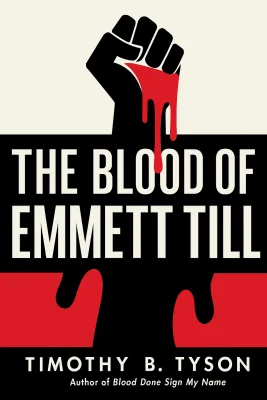
The Blood of Emmett Till
Categories
Nonfiction, Biography, History, Politics, Audiobook, True Crime, Social Justice, American History, Race, Crime
Content Type
Book
Binding
Hardcover
Year
2017
Publisher
Simon & Schuster
Language
English
ISBN13
9781476714844
File Download
PDF | EPUB
The Blood of Emmett Till Plot Summary
Introduction
# The Blood of Emmett Till: America's Racial Awakening In the sweltering heat of a Mississippi Delta summer in 1955, a fourteen-year-old boy from Chicago stepped off a train into a world governed by rules he had never learned and dangers he could not imagine. What began as a simple visit to relatives would become the spark that ignited America's conscience and transformed a nation's understanding of racial justice. The brutal murder of Emmett Till and the mockery of justice that followed exposed the violent heart of American apartheid to a watching world, forcing the country to confront the deadly contradiction between its democratic ideals and its racial reality. This story reveals three profound truths about American history that continue to shape our national character today. First, it demonstrates how white supremacy operated not merely as individual prejudice but as a systematic structure of terror designed to maintain racial hierarchy through violence. Second, it illuminates the extraordinary power of moral courage, embodied by a grieving mother who transformed private tragedy into public witness, showing the world what hatred had done to her child. Finally, it exposes how the intersection of Cold War pressures and grassroots organizing created unprecedented momentum for social change, proving that progress emerges when moral clarity meets strategic opportunity. The events that unfolded in Mississippi courtrooms and Chicago funeral homes would reverberate across decades, awakening a movement that would reshape American society and inspiring generations of activists who understood that justice delayed is justice denied.
Chapter 1: Chicago Boy Meets Mississippi Terror: The Fatal Encounter
The summer of 1955 found America balanced precariously between two worlds: the promise of racial progress embodied in the Supreme Court's Brown decision and the violent resistance of white supremacists determined to preserve their way of life at any cost. Into this charged atmosphere stepped Emmett Till, a confident fourteen-year-old from Chicago's South Side who carried with him the casual equality that Northern black youth took for granted. His great-uncle Moses Wright had warned him about the different rules that governed black life in Mississippi, but nothing could have prepared the boy for the deadly seriousness of Southern racial etiquette. On August 24, 1955, Till entered Bryant's Grocery and Meat Market in the tiny hamlet of Money, Mississippi, where his interaction with twenty-one-year-old Carolyn Bryant would seal his fate. Whether he whistled, made inappropriate comments, or simply failed to observe the rigid protocols of racial deference remains contested, but his behavior violated the sacred taboo of Jim Crow society: a black male treating a white woman as an equal. In the minds of white supremacists, this Chicago boy had committed an unforgivable sin against the racial order they were sworn to protect. The incident might have remained a local matter of gossip and intimidation, but it occurred at a moment when white Mississippi was convulsed with rage over federal challenges to segregation. The Citizens' Councils had mobilized respectable businessmen and professionals to resist integration through economic pressure, while more violent elements operated in the shadows. Roy Bryant and J.W. Milam, Carolyn's husband and brother-in-law, decided that this Northern boy needed to be taught the ultimate lesson about racial boundaries. Three days later, the two men arrived at Moses Wright's cabin in the dead of night, armed and determined to restore the racial order they believed Till had violated. They dragged the terrified boy from his bed, beginning a journey of torture and murder that would end with his weighted body dumped in the Tallahatchie River. The killers expected their crime to remain a whispered warning that would reinforce white supremacy throughout the Delta, but Till's body refused to stay hidden in the muddy waters, carrying with it the power to transform American history.
Chapter 2: White Supremacy's Last Stand: Violence as System Preservation
The Mississippi of 1955 represented the desperate last stand of a racial caste system that had dominated the South since Reconstruction's violent end. Following the Supreme Court's Brown decision, white Mississippians had mobilized with unprecedented fury to preserve what they called their "way of life," creating a comprehensive apparatus of resistance that combined legal manipulation, economic coercion, and strategic violence. This was not merely individual prejudice but a sophisticated system designed to maintain white political and economic dominance through terror. The Citizens' Councils, founded by respectable professionals and businessmen, provided ideological justification for massive resistance while maintaining a veneer of respectability. Their publications portrayed integration as a communist conspiracy designed to destroy white civilization through racial mixing, appealing to both economic interests and sexual anxieties. When economic pressure proved insufficient to maintain racial boundaries, physical violence followed with predictable regularity, creating a climate of fear that kept most black Mississippians from challenging the established order. The state's power structure had perfected the art of racial control through a combination of legal barriers, economic retaliation, and calculated brutality. Black citizens who attempted to register to vote faced immediate consequences: lost jobs, foreclosed mortgages, and severed credit lines. The murders of Reverend George Lee and Lamar Smith earlier that summer had sent clear messages about the price of political assertion, yet federal authorities remained conspicuously absent, leaving black Mississippians to face white terrorism alone. This reign of terror operated with the tacit approval of local law enforcement and the active participation of ordinary white citizens who saw themselves as defenders of Christian civilization. The brutal efficiency of the system depended on making examples of those who stepped out of line, ensuring that each act of violence reverberated throughout the black community as a warning to others. The Till lynching represented the logical culmination of this strategy, demonstrating that white supremacists would murder children to preserve their racial privileges, an excess of violence that would ultimately prove to be their undoing.
Chapter 3: A Mother's Defiance: Transforming Private Grief into Public Witness
When Mamie Till-Mobley received the devastating phone call informing her that her son had been kidnapped from his great-uncle's home, she faced a choice that would define not only her own life but the trajectory of American civil rights. Rather than accept the traditional counsel of quiet grief and private mourning that had been the lot of countless black mothers before her, she chose to transform her personal tragedy into a public crusade for justice, wielding the only weapon available to her in a society that denied her political power: the moral authority of a grieving mother. The decision to demand the return of Emmett's body to Chicago and insist on an open-casket funeral represented an act of extraordinary courage that shattered every convention of how black families were expected to respond to racial violence. When Till-Mobley looked upon her son's mutilated remains, she saw not only the boy she had raised with such love but also the brutal reality of white supremacy laid bare for all to witness. Her declaration that she wanted the world to see what they had done to her boy became a rallying cry that transcended regional boundaries and racial divisions. The funeral at Roberts Temple Church of God in Christ drew thousands of mourners from across Chicago's South Side, transforming individual grief into collective outrage. For four days, an estimated 100,000 people filed past the open casket, many of them parents who saw their own children in Till's ruined face. The viewing became a form of testimony, a bearing of witness that television cameras captured and broadcast to a national audience, making the reality of racial violence impossible to ignore or dismiss as a distant Southern problem. Till-Mobley's courage extended far beyond the funeral arrangements to her willingness to travel to Mississippi and testify at the trial, knowing that her presence would make her a target for white supremacist violence. Her dignified bearing on the witness stand, her clear identification of her son's body despite its horrific condition, and her refusal to be intimidated by hostile questioning demonstrated a form of resistance that inspired countless others. She embodied the transformation of black women from silent sufferers to active agents of social change, prefiguring the leadership that would emerge throughout the civil rights movement and showing how personal tragedy could become a catalyst for collective action.
Chapter 4: Mississippi Justice on Trial: The Theater of Predetermined Acquittal
The trial of Roy Bryant and J.W. Milam in September 1955 represented both the possibilities and the fundamental limitations of seeking justice within a system designed to perpetuate racial oppression. The proceedings in the Tallahatchie County courthouse served multiple audiences: local whites who expected vindication of their racial beliefs, national observers demanding accountability, and international critics questioning America's commitment to democratic values. Judge Curtis Swango conducted the trial with scrupulous attention to legal procedure, creating an appearance of fairness that masked the predetermined nature of the outcome. The prosecution, led by District Attorney Gerald Chatham, presented compelling evidence of the defendants' guilt, including their own admissions to kidnapping Till and the testimony of witnesses who had seen the boy in their custody. The courage of the prosecution's black witnesses stood in stark contrast to the moral cowardice of the white community that surrounded them. Moses Wright's identification of the killers, delivered with a steady finger pointed directly at the defendants, became an iconic moment of defiance against white supremacy, his simple declaration "There he is" representing a fundamental challenge to the racial hierarchy that demanded black deference to white authority. The defense strategy revealed the cynical calculations underlying Jim Crow justice, simultaneously arguing that their clients were innocent while suggesting that Till had deserved whatever happened to him. Rather than deny the defendants' involvement, the attorneys portrayed the lynching as a necessary defense of white womanhood and Southern civilization, appealing directly to the jury's racial prejudices rather than the evidence presented in court. Carolyn Bryant's testimony, delivered outside the jury's presence but preserved in the court record, provided the sexual and racial justification that white supremacists required, her claims about Till's alleged advances playing into the deepest fears and fantasies of white Southern masculinity. The all-white, all-male jury deliberated for barely an hour before returning a verdict of not guilty, though they later admitted they had taken that long only to make it appear they had given the case serious consideration. One juror callously remarked that the state had failed to prove the identity of the body, while another suggested that if Mamie Till-Mobley had tried harder, she might have managed to shed a tear. The acquittal demonstrated that in Mississippi, white men could murder black children with complete impunity, secure in the knowledge that racial solidarity would protect them from any consequences, a verdict that sent shockwaves around the world and provided the moral clarity that would fuel the emerging civil rights movement.
Chapter 5: Global Reckoning: How One Lynching Exposed American Hypocrisy
The international reaction to the Till lynching and trial verdict created unprecedented pressure on American leaders to address the nation's racial crisis, transforming a local tragedy into a global indictment of American democracy. In the context of Cold War competition with the Soviet Union, America's claim to represent freedom and human dignity rang hollow when contrasted with the brutal reality of racial violence captured in newspaper headlines around the world. Communist propagandists seized upon the Till case as evidence of American moral bankruptcy, using it to discredit U.S. foreign policy initiatives throughout the decolonizing nations of Africa, Asia, and Latin America. European allies expressed shock and disgust at the acquittal, with newspapers across the continent condemning what they saw as a mockery of justice that revealed the true nature of American society. The London Daily Herald declared that the verdict had "shamed America before the world," while French publications drew explicit comparisons between Mississippi justice and Nazi racial policies. The Vatican's official newspaper joined secular publications in denouncing the outcome, creating a chorus of international condemnation that State Department officials found impossible to counter or contain. Within the United States, the Till case catalyzed the largest civil rights protests since the Scottsboro trials of the 1930s, with labor unions, religious organizations, and civil rights groups organizing rallies in dozens of cities that drew hundreds of thousands of participants demanding federal intervention. The case created new alliances between Northern liberals who had previously ignored Southern racial violence and civil rights activists who had been fighting in isolation, providing the organizational foundation for the broader movement that would emerge in subsequent years. The global dimension of the Till case forced American leaders to recognize that racial violence was no longer a domestic issue that could be ignored, minimized, or explained away as a regional aberration. The combination of international pressure, domestic protest, and moral outrage created a new political context in which federal intervention became not just morally necessary but strategically essential for maintaining America's credibility as leader of the free world. The lynching of one fourteen-year-old boy had become a factor in global politics, demonstrating the interconnected nature of domestic justice and foreign policy in the modern world and marking a turning point in American race relations that transformed a regional system of oppression into a national and international crisis demanding resolution.
Chapter 6: Underground Networks: Courage and Resistance in Jim Crow Mississippi
Beneath the surface of Mississippi's white supremacist facade operated a clandestine network of black activists, sympathetic journalists, and courageous witnesses who risked their lives to expose the truth about racial violence and challenge the official narratives promoted by white authorities. Led by figures like Dr. T.R.M. Howard, Medgar Evers, and Amzie Moore, this "Mississippi underground" conducted its own investigation of the Till murder, locating witnesses who could provide crucial testimony about the crime and documenting the systematic efforts by local law enforcement to conceal evidence and intimidate potential witnesses. The most important witness discovered by this network was eighteen-year-old Willie Reed, who had seen Emmett Till in the back of a truck on the morning of his murder and heard the sounds of a brutal beating coming from a nearby barn. Reed's willingness to testify, knowing that it would force him to flee Mississippi forever and leave behind everything he had ever known, exemplified the extraordinary courage required of black witnesses in Jim Crow courts. His testimony provided the most damaging evidence against the defendants, directly contradicting their claims of innocence and revealing the premeditated nature of their crime. The underground network also exposed Sheriff H.C. Strider's active participation in covering up the murder, revealing how he had hidden potential witnesses in jail under false names to prevent them from testifying and had attempted to rush the body to burial before proper identification could be made. This evidence of official corruption provided additional ammunition for critics who argued that Mississippi's legal system was fundamentally compromised by racial bias and could not be trusted to deliver justice in cases involving racial violence. The work of the Mississippi underground demonstrated that even in the most oppressive circumstances, resistance was possible through careful organization, mutual support, and strategic communication with sympathetic outsiders. Their success in locating witnesses, gathering evidence, and protecting those who dared to speak truth to power showed that the white supremacist system, despite its apparent omnipotence, contained vulnerabilities that could be exploited by determined activists willing to risk everything for justice. This model of underground organizing would prove crucial in subsequent civil rights campaigns, providing a template for operating in hostile territory while building the networks necessary for sustained resistance and social change.
Chapter 7: Legacy of Blood: From Till to Civil Rights Movement
The impact of Emmett Till's lynching extended far beyond the immediate outrage it generated, fundamentally reshaping the consciousness of an entire generation of African Americans who would lead the civil rights movement and transforming the strategies and tactics that activists would employ in their struggle for justice and equality. Young people across the country identified with Emmett's story, recognizing that his fate could easily have been their own and understanding that the violence directed against him was intended to terrorize all black Americans into accepting their subordinate status in American society. Future civil rights leaders like Julian Bond, John Lewis, and Joyce Ladner later described how the Till case awakened their political consciousness and motivated their lifelong commitment to social change, with many citing the photograph of Till's mutilated body as the moment they understood the true nature of American racism. The case established new precedents for media coverage of racial violence, demonstrating the power of visual imagery to communicate truths that words alone could not convey and creating a new form of testimony that bypassed traditional gatekeepers to speak directly to public conscience. Rosa Parks explicitly cited the Till case as a factor in her decision to refuse to give up her bus seat in Montgomery, Alabama, just months after the trial, telling interviewers that she thought of Emmett Till when the bus driver ordered her to move. The connections between these pivotal moments reveal how individual acts of courage built upon each other to create momentum for broader social change, with the Montgomery Bus Boycott, the sit-in movement, and subsequent civil rights campaigns all drawing inspiration from the example set by Mamie Till-Mobley's refusal to let her son's death be forgotten or ignored. The contemporary movement for racial justice has explicitly invoked Emmett Till's name in protests against police violence and systemic racism, with activists drawing direct parallels between the impunity enjoyed by Till's killers and the failure to hold law enforcement accountable for the deaths of unarmed black citizens. The enduring relevance of Till's story demonstrates both how much has changed and how much remains the same in America's ongoing struggle with racial violence, while the courage of his mother continues to inspire new generations of activists who understand that bearing witness to injustice is the first step toward creating meaningful change.
Summary
The lynching of Emmett Till exposed the fundamental contradiction at the heart of American democracy: the yawning gap between the nation's stated ideals of equality and justice and the brutal reality of a racial caste system maintained through systematic violence and terror. This contradiction became morally and politically unsustainable when displayed on the global stage during the Cold War, forcing Americans to confront the moral bankruptcy of a society that murdered children to preserve white supremacy while claiming to lead the free world in the struggle against totalitarianism. The transformation of private grief into public reckoning, exemplified by Mamie Till-Mobley's extraordinary courage in showing the world what hatred had done to her child, created a new model for social change that combined moral witness with strategic communication and grassroots organizing. The international dimensions of the case demonstrated how domestic injustice had global consequences, providing leverage for civil rights activists who could appeal to America's Cold War interests as well as its moral conscience, while the underground networks that emerged to investigate the crime and protect witnesses showed that resistance was possible even under the most oppressive circumstances. Today's struggles against racial violence and systemic inequality require the same combination of moral courage, strategic organizing, and international solidarity that made the Till case a catalyst for transformative change. We must continue to bear witness to injustice through all available media, build coalitions that transcend racial and geographic boundaries, and maintain relentless pressure on institutions that perpetuate inequality while understanding that progress demands not just good intentions but sustained commitment to confronting the structures of oppression that continue to shape American society. The children of Emmett Till remind us that the arc of history bends toward justice only when ordinary people find the extraordinary courage to demand that America live up to its founding promises, and that the work of creating a truly democratic society remains unfinished until every citizen can live without fear of violence based on the color of their skin.
Best Quote
“Somewhere between the fact we know and the anxiety we feel is the reality we live.”5” ― Timothy B. Tyson, The Blood of Emmett Till
Review Summary
Strengths: The review highlights the book's role in educating younger audiences about Emmett Till's story and his mother's impactful actions. It suggests the book is suitable for those unfamiliar with key historical events and figures related to civil rights. Weaknesses: The review criticizes the book for lacking new insights into Emmett Till's tragedy and suggests it is redundant for readers already knowledgeable about civil rights history. It also points out the absence of new information from Carolyn, a key figure in the story, due to sealed documents. Overall: The review conveys a critical sentiment, recommending the book primarily for readers with limited prior knowledge of civil rights history. It suggests that those well-versed in the subject may find the book lacking in depth and novelty.
About Author

Timothy B. Tyson
Tyson interrogates the intricate intersections of culture, religion, and race, particularly within the context of the Civil Rights Movement and Southern history. His works extend beyond mere historical accounts, employing a unique blend of personal narrative and rigorous scholarship to shed light on the socio-political dynamics of race relations in the American South. This approach allows readers to explore the profound implications of historical events on current racial and civil rights issues.\n\nHis method of combining memoir with historical analysis is evident in his acclaimed book "Blood Done Sign My Name," which recounts the 1970 murder of Henry Marrow and its aftermath. By juxtaposing personal experiences with broader societal issues, Tyson provides a deeper understanding of the racial tensions that continue to influence American society. Moreover, his book "The Blood of Emmett Till" critically reflects on the lynching of Emmett Till, contributing to ongoing dialogues about racial justice, despite some controversy surrounding it. His earlier work, "Radio Free Dixie," profiles civil rights leader Robert F. Williams, illustrating the roots of Black Power through vivid storytelling.\n\nReaders benefit from Tyson’s work by gaining a comprehensive perspective on the historical and ongoing struggles for racial equality. His books not only offer historical insight but also encourage reflection on contemporary civil rights challenges. Awards such as the Frederick Jackson Turner Prize and the Robert F. Kennedy Book Award underscore his contributions to the field. Thus, Tyson’s books serve as essential resources for anyone seeking to understand the complexities of race and justice in America, while his scholarly yet personal approach makes these themes accessible to a wide audience.
Read moreDownload PDF & EPUB
To save this Black List summary for later, download the free PDF and EPUB. You can print it out, or read offline at your convenience.
The Blood of Emmett Till
by Timothy B. Tyson
