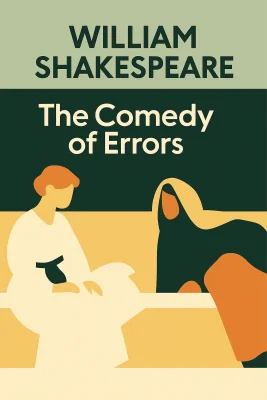
The Comedy of Errors
Categories
Fiction, Classics, Plays, Poetry, Literature, Humor, Comedy, Drama, Theatre, Shakespeare
Content Type
Book
Binding
Paperback
Year
1994
Publisher
Wordsworth Editions
Language
English
ISBN13
9781853262432
File Download
PDF | EPUB
The Comedy of Errors Plot Summary
Introduction
Beneath the surface of mistaken identities and comic mishaps lies a profound exploration of human psychology and the fundamental questions of selfhood. While often dismissed as mere entertainment, this early theatrical work reveals sophisticated insights into how identity forms through both internal essence and external recognition, challenging audiences to consider what truly makes us who we are. The seemingly simple premise of separated twins becomes a vehicle for examining the anxiety that emerges when our sense of self becomes unstable, and when the social bonds that typically anchor our identity suddenly dissolve. The playwright's genius lies in constructing a rigorous dramatic framework that allows both farcical entertainment and psychological depth to coexist. Through careful attention to classical dramatic unities and meticulous plotting, the work creates a controlled laboratory for observing human behavior under extraordinary stress. This approach invites readers to trace how comedy and tragedy share common roots in human vulnerability, and how the fear of losing oneself—whether through madness, social rejection, or supernatural interference—underlies much of our daily anxiety about belonging and recognition.
Chapter 1: The Sophisticated Architecture of Shakespearean Farce
The structural brilliance of this comedic work demonstrates how constraint breeds creativity rather than limitation. By adhering to classical unities of time, place, and action, the playwright intensifies rather than restricts the dramatic possibilities. The entire sequence of events unfolds within a single day in one location, creating a pressure cooker effect that transforms ordinary domestic tensions into extraordinary comic chaos. This compression forces every entrance, exit, and encounter to carry maximum dramatic weight. The decision to double the confusion by creating two sets of identical twins reveals mathematical precision in comic construction. Where Roman precedents offered one pair of look-alikes, this innovation multiplies the possibilities for error exponentially. Each new character introduced into the web of mistaken identity creates geometric rather than arithmetic increases in comic potential. The servant-master relationships between the Dromios and their respective Antipholuses add vertical complexity to the horizontal confusion of mistaken twins. The playwright's understanding of farcical mechanics extends beyond simple physical comedy to psychological farce. Characters begin to question not just their circumstances but their sanity, creating layers of confusion that move from external to internal. The audience experiences the peculiar pleasure of superior knowledge while simultaneously empathizing with the characters' bewilderment. This dual perspective—knowing and unknowing—creates the essential tension that sustains interest beyond mere slapstick. The carefully orchestrated revelation of the solution demonstrates how classical dramatic structure serves psychological as well as comedic purposes. The final scene's systematic untangling of confusions provides not just comic resolution but emotional catharsis, as families reunite and identities stabilize. The structural elegance ensures that every complication introduced in the rising action finds its corresponding resolution in the falling action.
Chapter 2: Duality and Self-Discovery: The Search for Identity in Ephesus
The central metaphor of the drop of water seeking another drop in the ocean captures the fundamental human paradox of individuality versus connection. Antipholus of Syracuse articulates this dilemma with remarkable psychological insight: in seeking his missing brother, he risks losing himself entirely. This image suggests that identity exists in constant tension between the desire for uniqueness and the need for recognition and belonging within a larger community. The experience of being mistaken for someone else creates a profound existential crisis that goes far beyond social awkwardness. When others insist on knowing you in ways you cannot understand, when they claim intimate knowledge of your life and relationships, the very foundations of selfhood begin to crumble. The play explores how much of our identity depends on external validation and social recognition, revealing the frightening fragility of the self when these supports disappear. The supernatural explanations characters invoke—witchcraft, sorcery, demonic possession—reflect genuine psychological phenomena. When rational explanation fails, the mind grasps for alternative frameworks to maintain some sense of coherence. The accusations of madness directed at characters experiencing impossible situations highlight how society responds to behaviors that challenge conventional reality. The fear of being declared insane adds another layer of anxiety to the already disorienting experience of misrecognition. The contrast between the two Antipholuses reveals how environment shapes identity even among biological twins. The Syracuse brother remains gentle, contemplative, and loyal to his servant, while his Ephesian counterpart has become materialistic, adulterous, and abusive. This divergence suggests that nurture contributes as much to character formation as nature, raising questions about essential versus acquired traits. The resolution brings not just reunion but psychological integration. The brothers finding each other represents the completion of fractured selves, while their recognition of difference within similarity acknowledges that identity formation involves both shared origins and individual experience. The final image of harmony suggests that healthy identity requires both self-knowledge and recognition by others.
Chapter 3: Marriage, Gender, and Power Dynamics Beyond Comedy
The relationships between husbands and wives in this work reveal profound tensions about autonomy, fidelity, and domestic power that transcend simple comic misunderstanding. Adriana's anguish over her husband's supposed rejection cuts to the heart of how marriage both creates and threatens individual identity. Her poetic expression of marital unity—describing spouses as so intertwined that one cannot be removed without destroying the other—reflects both the ideal and the terror of intimate connection. The contrast between the two sisters illuminates different approaches to gender roles and expectations. Luciana advocates for traditional feminine submission and accommodation, counseling her sister to endure even her husband's infidelity with patience and strategic silence. Her advice that wives should enable their husbands' deceptions to preserve domestic harmony reveals the psychological costs of such accommodation. Yet her own response to romantic attention suggests that her theories may not survive practical testing. Adriana's more confrontational approach reflects a refusal to accept diminished treatment without protest. Her accusations of neglect and infidelity demonstrate both emotional honesty and strategic risk—she demands recognition and respect while knowing such demands may drive her husband further away. Her willingness to publicly challenge male authority, even at the cost of social embarrassment, suggests strength that coexists with vulnerability. The Abbess Emilia's intervention introduces another model of feminine authority based on religious rather than domestic roles. Her protection of the confused husband against his wife's demands reflects institutional power that can override private relationships. Yet her ultimate revelation as the long-lost mother transforms institutional authority into maternal authority, suggesting that different forms of feminine power may ultimately serve similar protective functions. The resolution's pairing of the unmarried Antipholus with Luciana promises to test her theories against reality, while the reconciliation of the married couple leaves underlying tensions unresolved. The work suggests that comic endings in marriage represent hope rather than certainty, beginnings rather than conclusions.
Chapter 4: Directorial Interpretations: From Classical Form to Contemporary Relevance
Modern theatrical productions reveal the work's remarkable adaptability to different cultural contexts and interpretive frameworks. Directors have successfully transplanted the action from ancient Mediterranean settings to contemporary urban environments, from Wild West frontier towns to film noir cityscapes. These adaptations demonstrate how the essential conflicts transcend specific historical periods, speaking to universal anxieties about identity and belonging. The challenge of casting identical twins has led to innovative theatrical solutions that illuminate different aspects of the work's meaning. Productions using the same actor for both brothers create spectacular theatrical illusions while emphasizing the artificial nature of identity itself. The audience's awareness of the doubling technique adds a meta-theatrical dimension that makes the construction of identity visible. Conversely, casting genuinely similar actors allows for more naturalistic psychological development while maintaining the essential visual confusion. Musical adaptations have particularly flourished, suggesting affinities between the work's rhythmic structure and musical composition. The escalating pace of complications and resolutions mirrors musical forms, while the repetitive patterns of confusion and clarification create theme and variation structures. These adaptations often emphasize the celebratory aspects of resolution while maintaining the underlying tensions that drive the comedy. Contemporary directors have found rich material in the work's exploration of urban alienation and social disconnection. Modern settings allow audiences to connect the protagonist's experience of being unknown in a strange city to contemporary experiences of mobility, immigration, and social fragmentation. The fear of losing oneself in an indifferent or hostile urban environment resonates with modern anxieties about community and belonging. The work's treatment of authority figures—from the death-dealing Duke to the healing Abbess—has proven particularly relevant to contemporary audiences concerned with institutional power and justice. Productions emphasizing these elements reveal how personal identity crises intersect with larger questions of social order and individual rights within systems of authority.
Chapter 5: The Comedy's Dark Undercurrent: Family Separation and Reconciliation
The opening threat of execution casts a shadow over the entire work that transforms comic confusion into something more urgent and desperate. The condemned father's search for his lost family members creates a temporal framework that gives the lighthearted mishaps genuine stakes. The countdown toward sunset and death adds pressure that prevents the comedy from becoming merely frivolous entertainment. The backstory of family separation through shipwreck introduces themes of fate, loss, and survival that complicate simple comic expectations. The image of parents tying their children to masts as their ship breaks apart suggests the desperate measures families take to preserve their members, while the subsequent years of searching demonstrate the persistent power of family bonds. The cost of this separation—measured in years of wandering and wondering—gives weight to the eventual reunion. The psychological impact of family fragmentation extends beyond the immediate separated members to affect identity formation across generations. Children raised without knowledge of their origins or siblings develop differently than they might have within intact family structures. The work explores how absence shapes character as powerfully as presence, creating gaps in self-knowledge that influence behavior and relationships. The various substitute families that emerge—servants loyal to masters, sisters supporting each other, husbands and wives creating new bonds—demonstrate both human resilience and the inadequacy of replacement relationships. These substitute bonds provide necessary support while highlighting what remains missing. The loyal Dromios, in particular, represent how service relationships can provide stability and affection that partially compensate for missing family connections. The final reconciliation scene requires delicate balancing between celebration and acknowledgment of loss. Years of separation cannot be instantly erased by recognition, and the work suggests that true healing will require time and continued effort. The movement from confusion to clarity represents only the beginning of reconstruction rather than complete restoration, acknowledging that some experiences cannot be undone.
Chapter 6: Temporal and Spatial Unity as Dramatic Strategy
The classical dramatic structure serves psychological as well as aesthetic purposes, creating an intensified environment where ordinary social mechanisms break down. The compression of extraordinary events into ordinary time—a single afternoon—forces characters to abandon their usual coping strategies and confront confusion directly. This temporal pressure prevents the gradual accommodation that might otherwise allow characters to adjust to strange circumstances. The unified location of Ephesus functions as both specific place and symbolic space. As a Mediterranean trading city, it provides realistic context for the mercantile concerns that drive much of the plot's practical business. As a location associated with mystery and supernatural power, it provides justification for the extraordinary events that unfold. This dual nature allows the work to maintain realistic psychological development within fantastic circumstances. The careful orchestration of entrances and exits demonstrates how spatial relationships create dramatic meaning. Characters narrowly missing each other, occupying the same spaces at different times, and being separated by doors they cannot pass through all contribute to the sense of near-miss recognition that sustains suspense. The audience experiences the frustration of watching solutions pass just beyond the characters' reach. The progression from public spaces to private retreats reflects the movement from external confusion to internal resolution. Early scenes take place in the open marketplace where public identity matters most, while later scenes move toward domestic spaces where private relationships are negotiated. The final retreat into the Abbey represents a movement toward spiritual as well as physical sanctuary. The unity of action requires that every element contribute to the central pattern of confusion and clarification. Subplots must intersect with the main story, minor characters must advance the central conflicts, and even comic interludes must serve the larger structural design. This integration creates a sense of inevitability that makes the resolution feel both surprising and necessary.
Chapter 7: Performance History: Evolution from Farce to Psychological Drama
The work's reception history reveals changing theatrical and cultural values over four centuries of performance. Early adaptations emphasized musical and spectacular elements, transforming the psychological complexity into entertainment designed primarily for sensory pleasure rather than intellectual engagement. These productions suggest that audiences initially approached the work as light entertainment rather than serious dramatic literature. The nineteenth century's rediscovery of the original text coincided with growing interest in psychological realism and character development. Productions began emphasizing the emotional journey of separated family members rather than simply exploiting comic confusions. This shift reflects broader cultural changes in how audiences understood the relationship between entertainment and emotional truth. Twentieth-century productions revealed the work's potential for exploring themes of alienation, identity crisis, and social fragmentation that resonated with modern concerns. Directors found contemporary relevance in the protagonist's experience of being unknown and misunderstood in an urban environment, connecting classical themes to modern anxieties about community and belonging. The development of ensemble-based theater companies created new possibilities for the work's performance, emphasizing the collective nature of the comic confusion rather than focusing on individual star performances. These productions highlighted how social relationships create and sustain individual identity, making the community's role in both creating and resolving confusion more visible. Recent productions have particularly emphasized the work's exploration of gender relationships and power dynamics, finding contemporary relevance in the tensions between autonomy and connection within intimate relationships. These interpretations reveal how comic structures can illuminate serious social issues while maintaining their entertainment value. The evolution of performance approaches demonstrates the work's continued capacity to speak to new audiences while preserving its essential theatrical effectiveness.
Summary
The true achievement lies in demonstrating how classical dramatic forms can serve as vehicles for profound psychological insight, proving that entertainment and enlightenment need not oppose each other. Through the seemingly simple device of mistaken identity, fundamental questions about selfhood, social recognition, and family bonds receive sophisticated dramatic exploration that continues to resonate across cultural and historical boundaries. This work rewards readers interested in understanding how comedy functions as a serious artistic form, how identity develops through both internal and external forces, and how classical dramatic structures can illuminate contemporary concerns about belonging and recognition. The careful balance between farcical entertainment and psychological depth makes it particularly valuable for those seeking to understand how great art can simultaneously delight and instruct, proving that the deepest truths often emerge through the most playful means.
Best Quote
“A wretched soul, bruised with adversity, We bid be quiet when we hear it cry; But were we burdened with light weight of pain, As much or more we should ourselves complain.” ― William Shakespeare, The Comedy of Errors
Review Summary
Strengths: The review highlights the play's light-hearted and humorous nature, describing it as a "marvelous, silly absurdity" that can elicit laughter even from the cranky. The plot's complexity, involving two sets of twins and mistaken identities, is noted as a source of amusement. The review appreciates the play's ability to provide a brief escape from the world's unrest and acknowledges Shakespeare's emerging talent. Overall: The reviewer expresses a positive sentiment towards the play, appreciating its comedic elements and intricate plot. The anticipation of seeing the play performed live suggests a high level of interest and recommendation for others to experience it.
About Author
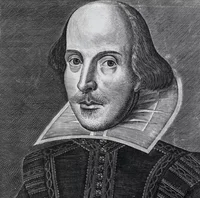
William Shakespeare
Shakespeare probes the vast spectrum of human emotion and societal dynamics through his timeless plays and sonnets. As a formidable author, his works such as "Macbeth" and "Romeo and Juliet" delve into the intricate themes of ambition and love, while his deft use of iambic pentameter and rich characterizations create a lasting impact on English literature. Beyond exploring these complex emotional landscapes, Shakespeare's narratives often highlight the tension between fate and free will, inviting readers to ponder existential questions. His ability to weave poetic imagery and explore moral dilemmas ensures that his stories resonate with audiences across different eras.\n\nShakespeare's literary genius is reflected in his capacity to craft narratives that transcend their historical context. His work captures the zeitgeist of the Elizabethan era while simultaneously offering timeless insights into human nature. In the book "The Tempest," for example, he uses themes of power and redemption to comment on human relationships and authority. By integrating psychological depth with his eloquent language, Shakespeare not only shaped the evolution of drama but also laid a foundation for future literary exploration. Readers and scholars continue to benefit from his profound insights into human behavior, ensuring his legacy as a central figure in the study of English literature.\n\nThe significance of Shakespeare's contributions to the arts is further underscored by the meticulous preservation of his plays in the First Folio of 1623. While details of his life remain partially elusive, this short bio highlights his enduring influence as the "Bard of Avon," whose works have been translated into numerous languages and performed more often than those of any other playwright. His literary legacy, marked by a seamless blend of poetic innovation and thematic exploration, continues to captivate and educate, reaffirming his position as a monumental figure in the annals of literary history.
Read moreDownload PDF & EPUB
To save this Black List summary for later, download the free PDF and EPUB. You can print it out, or read offline at your convenience.
The Comedy of Errors
by William Shakespeare
