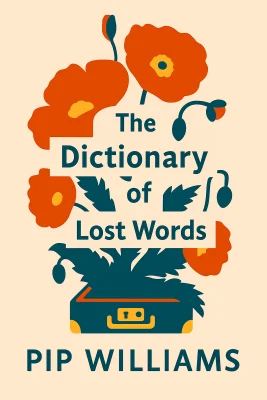
The Dictionary of Lost Words
Categories
Fiction, Audiobook, Feminism, Historical Fiction, Romance, Adult, Book Club, Historical, British Literature, Books About Books
Content Type
Book
Binding
Paperback
Year
2021
Publisher
Affirm Press
Language
English
ISBN13
9781925972597
File Download
PDF | EPUB
The Dictionary of Lost Words Plot Summary
Introduction
# The Dictionary of Lost Words: Voices from the Margins In a corrugated iron shed behind Dr. Murray's Oxford home, the greatest dictionary in history takes shape one slip at a time. The year is 1887, and six-year-old Esme Nicoll crouches beneath the sorting table where bearded scholars debate the fate of every English word. When a paper slip marked "bondmaid" flutters down like a dying moth, landing in her small lap, Esme makes a choice that will define her life. She steals it. This theft marks the beginning of a secret rebellion. As the Oxford English Dictionary grows into a monument of masculine scholarship, Esme builds her own collection in the shadows—gathering the words that fall through the cracks, the voices deemed unworthy of preservation. Her dictionary becomes a refuge for the language of women, the poor, the forgotten. Through suffragette rallies and world war, love affairs and devastating loss, Esme discovers that some truths can only be found in the spaces between official lines, where the real story of human experience waits to be told.
Chapter 1: Beneath the Sorting Table: The First Theft
The Scriptorium hums with scholarly purpose. Dr. James Murray, chief editor of the Oxford English Dictionary, presides from his high desk like a linguistic god, his white beard flowing as he examines each definition with microscopic precision. Below him, lexicographers sort through thousands of quotations, building the architecture of the English language one slip at a time. Esme has claimed the space beneath their sorting table as her kingdom. At six years old, motherless and curious, she watches the men's feet shuffle above her—polished boots, worn soles, the occasional dropped crumb from a forgotten sandwich. Her father Harry works among them, his voice joining the endless debates about etymology and meaning that echo through the iron walls. The slip arrives like fate itself. "Bondmaid" written in careful script, a quotation from some forgotten text attached below. It flutters down through dusty air, ignored by the scholars who have more important words to consider. Esme's scarred fingers close around it—scars from the time she tried to rescue burning papers from Dr. Murray's fireplace, earning her first lesson in the fragility of words. That evening, she shows her treasure to Lizzie, the young housemaid who has become her closest friend. Lizzie cannot read, but she understands secrets. Together they place the slip in an old wooden trunk beneath Lizzie's bed, creating the first entry in what will become Esme's hidden dictionary. Neither girl realizes they have just stolen from the most important linguistic project in history. The theft feels like breathing. Natural, necessary, inevitable. As weeks pass, more words find their way into Esme's collection. Words mispronounced by visitors, dismissed by scholars, or simply deemed too common for scholarly attention. Each slip represents a small rebellion against the masculine authority that determines which parts of human experience deserve preservation and which can be discarded like yesterday's rubbish.
Chapter 2: Learning the Language of Exclusion
Years pass, and Esme grows tall and awkward, her red hair refusing to be tamed, her collection expanding alongside her understanding of the Dictionary's hidden biases. At fifteen, she has earned a desk of her own in the Scriptorium, her sharp eye for detail grudgingly respected by the lexicographers who still see her as Harry's peculiar daughter. But Esme sees what they miss—the systematic exclusion of women's voices, the careful sanitization of human experience. Her friendship with Lizzie deepens into something approaching sisterhood. Lizzie, now head housemaid to the Murray family, provides access to the domestic world that Dictionary scholars ignore. Through her, Esme encounters a rich vocabulary of women's experiences—words for childbirth, domestic labor, the subtle negotiations of powerlessness that never appear in scholarly texts. The arrival of Tilda Taylor changes everything. The actress sweeps into Oxford like a golden storm, her honey hair catching light, her suffragette sympathies challenging everything Esme thought she knew about women's roles. Tilda moves through the world with casual confidence, unashamed of her body, her desires, her radical politics. When Tilda seduces Bill, a gentle young man from the local theatre, Esme watches with fascination and envy. The casual way Tilda wields her sexuality as power reveals possibilities Esme has never considered. Yet something in Tilda's performance feels hollow, as if she were playing a role rather than living authentically. The evening Esme accompanies them to the Eagle and Child, she stands at a crossroads. Tilda's easy confidence, Bill's obvious desire, the smoky atmosphere of adult pleasures—all of it beckons like a foreign country. When Bill's attention turns to her, when his hands find her body with surprising gentleness, Esme discovers that desire can be both liberation and trap. The night unfolds with inevitable consequences that will reshape her understanding of every word she has ever collected about women's experiences.
Chapter 3: Words of Women: Discovering Hidden Vocabularies
The consequences reveal themselves with biological inevitability. Esme's pregnancy forces her to confront the brutal reality behind the Dictionary's clinical definitions. Words like "confinement" and "lying-in" take on visceral meaning as her body changes and her future narrows to a single, terrifying possibility. Desperate and ashamed, she seeks help from Mabel O'Shaughnessy, an elderly woman who sells carved trinkets at the Covered Market. Mabel's weathered face holds the wisdom of someone who has survived everything life can inflict. Her vocabulary includes words the Dictionary would never acknowledge—crude, vital terms that describe female experience with unflinching honesty. Through Mabel, Esme learns about Mrs. Smyth, a respectable woman who helps girls in trouble. The visit to Mrs. Smyth's house reveals the hidden network of women who deal with the consequences of male desire and female powerlessness. Mrs. Smyth examines Esme with professional detachment, her hands probing for truth that polite society refuses to acknowledge. When Mrs. Smyth pronounces the pregnancy too advanced to terminate, Esme feels both relief and despair. Ditte Thompson, her father's scholarly correspondent, provides salvation with characteristic efficiency. The months in Bath, ostensibly for research assistance, allow Esme to carry her pregnancy to term while maintaining the fiction of respectability. The birth defies every clinical description Esme has ever read. Pain becomes a country with its own language, and Sarah Brooks—the woman who will adopt her daughter—becomes her anchor through the storm. When Esme finally holds her child, the inadequacy of words strikes her with devastating force. No definition can capture the fierce love that blooms in her chest, or the agony of knowing she must let go. The golden-haired baby disappears to Australia with her new parents, leaving Esme with an absence that has no vocabulary.
Chapter 4: The Weight of Unspoken Experience
Returning to Oxford means rebuilding her life around a void only she can feel. The Dictionary work continues, but Esme finds herself changed by motherhood in ways that have no words. She throws herself into collecting with renewed purpose, as if documenting women's experiences could somehow fill the space left by her daughter's absence. Gareth Owen enters her life quietly, like a word finding its proper place in a sentence. The compositor at Oxford University Press shapes language into physical form, setting type with the same care Esme brings to collecting definitions. Their courtship unfolds through shared appreciation for the weight and texture of words, each conversation adding layers to their mutual understanding. When Esme finally tells Gareth about her daughter, she expects judgment or withdrawal. Instead, he offers acceptance so complete it feels like absolution. Their marriage becomes a partnership of equals, two people who understand that love can be both sanctuary and vulnerability, that words can heal as well as wound. The Dictionary nears completion, its massive scope finally contained within manageable volumes. Esme's suggestions appear throughout the published fascicles, each acceptance marked with a small notch carved into her desk. She has become a lexicographer in her own right, though her true passion lies in the secret collection that continues growing beneath Lizzie's bed. But the world beyond Oxford's dreaming spires grows darker. War clouds gather across Europe, and young men speak of glory and duty with the casual confidence of those who have never seen battle. Gareth's decision to enlist as an officer means separation just as they have learned to be together, but it also gives Esme new purpose. At the Radcliffe Infirmary, she encounters soldiers whose trauma has stolen their ability to speak, young men whose minds have been shattered by experiences that have no adequate vocabulary.
Chapter 5: Healing Through Language: War and Recovery
The war changes everything with brutal efficiency. Gareth's letters from France arrive sporadically, each one a small miracle of survival in a world gone mad. Meanwhile, Esme discovers her calling among the wounded soldiers at the Radcliffe Infirmary, men whose trauma has severed the connection between experience and expression. Young Bertie arrives mute and shaking, his mind locked away from horrors that English cannot contain. Working with these silent men, Esme develops new approaches to linguistic therapy. She uses Esperanto—a constructed language designed for peace—to reach minds that English can no longer touch. Words like "sekura" for safe and "amico" for friend become bridges across the chasm of trauma. The breakthrough comes slowly. Bertie begins to speak in fragments, mixing English with the universal language that carries no weight of national hatred. Other patients follow, finding in Esperanto a neutral space where healing can begin. Esme realizes that her life's work—collecting discarded words—has prepared her for this moment of creating new connections between language and recovery. The telegram arrives on a Tuesday morning, reducing Gareth's life to bureaucratic efficiency. Killed in action at the Battle of Loos, it states with military precision. But his final gift transcends grief—a beautifully bound volume titled "Women's Words and Their Meanings," compiled from her secret collection and set in type with loving care. Every word she rescued from obscurity now exists in permanent form. The volume represents more than personal loss; it embodies a different way of understanding language and meaning. Where the Oxford English Dictionary seeks authority and standardization, Esme's collection celebrates diversity and lived experience. Words like "morbs" for temporary sadness and "knapped" for pregnant carry the full weight of women's reality, unfiltered by masculine interpretation.
Chapter 6: The Dictionary Complete: Official Histories and Secret Legacies
The completion of the Oxford English Dictionary in 1928 marks the end of an era. At the celebration dinner, 150 men gather to honor their achievement while women—including those who contributed decades of work—watch from balcony seats. Esme receives no invitation at all, but feels no bitterness. Her true legacy lies elsewhere, in the words she has preserved and the voices she has amplified. Her weekly newspaper column, "Lost Words," gives voice to ordinary people whose experiences rarely make it into official records. She becomes a chronicler of the margins, documenting how major events affect those who exist outside the sphere of historical attention. Each column adds new understanding to her evolving philosophy of language as a tool for inclusion rather than exclusion. The work at Netley Hospital in Southampton expands this mission. Treating soldiers whose minds remain broken years after the armistice, Esme refines her methods of linguistic healing. She understands that trauma can steal not just the ability to speak, but the very connection between experience and expression. Her approaches, combining traditional lexicography with innovative treatment, offer hope where conventional medicine has failed. Years pass in this work, each day adding new depth to her collection. The Dictionary of Lost Words grows beyond personal rebellion to become a comprehensive record of voices that official scholarship ignores. Esme sees herself as a translator between worlds—the realm of scholarly authority and the hidden landscape of human experience that exists beyond academic recognition. Her death comes suddenly on Westminster Bridge, struck by a lorry while interviewing a flower seller about women's suffrage. She dies as she has lived—seeking out stories that others overlook, giving voice to the voiceless. The trunk containing her life's work passes to Australia, to a daughter who never knew her mother's name but carries her legacy in ways neither could have imagined.
Chapter 7: Inheritance of Words: Preserving What Was Lost
The trunk arrives in Adelaide like a message from another world. Megan, now grown with children of her own, opens it to discover not just words but an entire philosophy of language and meaning. The slips of paper, the careful definitions, the patient documentation of women's experiences—all of it speaks to a different way of understanding human expression. Each word carries the weight of lived experience, unmediated by scholarly authority or masculine interpretation. "Dollymop" and "quim," "morbs" and "knapped"—terms that would never appear in any official dictionary but capture essential truths about women's lives. The collection represents forty years of patient rebellion, a quiet insistence that every voice matters, every experience deserves preservation. Ditte's accompanying letter explains the connections that bind them across time and distance. The woman who gave birth to her, who chose love over respectability, who spent her life collecting the words that others discarded. Megan understands that she holds more than historical artifact—she possesses a bridge between generations of women who struggled to make their voices heard. The Dictionary of Lost Words becomes her inheritance and her responsibility. In preserving these forgotten terms, Esme created something more valuable than any official dictionary—a record of human experience in all its messy, complicated, beautiful reality. Her legacy lives not in monuments or official recognition, but in the simple act of listening to voices that others chose to ignore.
Summary
Esme Nicoll's life unfolds as a quiet revolution against the tyranny of official language. From her first theft beneath the sorting table to her final interview on Westminster Bridge, she dedicates herself to preserving the words that fall through the cracks of scholarly attention. Her Dictionary of Lost Words becomes both rebellion and refuge, documenting the rich vocabulary of women's experiences that male scholars deemed unworthy of preservation. The irony of her story lies in its invisibility. While the Oxford English Dictionary stands as a monument to linguistic achievement, Esme's parallel project remains hidden, passed from mother to daughter like a secret inheritance. Yet her work proves more essential than any official record—a testament to the complexity of human experience that no authorized dictionary could fully capture. In the end, the words we choose to preserve reveal not just our language, but our souls. Esme's legacy whispers from the margins, reminding us that the most important truths often live in the spaces between the lines, waiting for someone brave enough to gather them up and give them voice.
Best Quote
“Words define us, they explain us, and, on occasion, they serve to control or isolate us.” ― Pip Williams, The Dictionary of Lost Words
Review Summary
Strengths: The review highlights the fascinating depiction of the lexicographers' work and the historical context of compiling the first Oxford English Dictionary. The characters of Lizzie, Gareth, and Esme's father are praised for their resilience and hard work. The fictional narrative intertwines well with historical elements, encouraging further research into dictionary creation. Weaknesses: The review criticizes the protagonist Esme's character for her persistent sadness and depression, which detracts from the story. Lizzie's backstory is noted as more compelling, suggesting a missed opportunity for deeper exploration. Overall: The reviewer appreciates the historical and fictional blend, finding the lexicographical aspects intriguing. However, the narrative's emotional tone, particularly Esme's portrayal, may diminish its impact. The book is recommended with reservations regarding character development.
About Author

Pip Williams
Williams synthesizes her background in social research with her passion for storytelling, creating narratives that delve into the intersections of language, history, and social justice. Her literary work often delves into how women's contributions have been overlooked, weaving historical facts with rich narratives. In her debut novel, "The Dictionary of Lost Words", she explores themes of language and women's roles, setting the stage for discussions on gender equality. This approach not only illuminates lesser-known female perspectives but also provides readers with an opportunity to engage with historical settings enriched by social justice issues like suffrage.\n\nPip Williams' writing method is deeply research-driven, a skill honed during her time as a social researcher. Her book "Time Bomb: Work, Rest and Play in Australia Today", co-authored during her academic career, investigates work-life balance in Australia. Meanwhile, her transition to creative non-fiction is marked by "One Italian Summer", a memoir that recounts her family's pursuit of a simpler life on organic farms in Italy. Readers benefit from Williams’ ability to merge personal stories with broader historical contexts, gaining insights into how individual experiences can reflect larger societal themes.\n\nWilliams’ work resonates with those interested in the social significance of words and the unacknowledged roles of women throughout history. Her narrative style appeals to readers who appreciate a blend of meticulous research and compelling storytelling. Recognition for her contributions includes critical acclaim for "The Dictionary of Lost Words", which won awards such as the General Fiction Book of the Year at the Australian Book Industry Awards. This bio captures how Williams extends her research expertise into historical fiction, offering narratives that challenge readers to consider the power of language and the stories of women who shaped history.
Read moreDownload PDF & EPUB
To save this Black List summary for later, download the free PDF and EPUB. You can print it out, or read offline at your convenience.
The Dictionary of Lost Words
by Pip Williams
