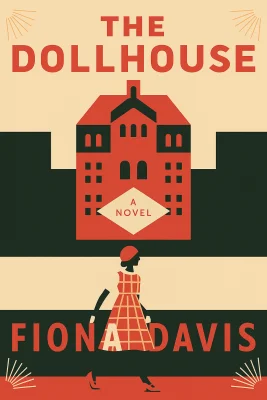
The Dollhouse
Categories
Fiction, Audiobook, Mystery, Historical Fiction, Romance, Adult, Book Club, Historical, Adult Fiction, New York
Content Type
Book
Binding
Hardcover
Year
2016
Publisher
Dutton
Language
English
ISBN13
9781101984994
File Download
PDF | EPUB
The Dollhouse Plot Summary
Introduction
# Veiled Melodies: Love and Secrets Across Two Barbizon Lives The elevator gate slammed shut with the finality of a coffin lid. Rose Lewin pressed herself against the brass buttons, studying the veiled woman across from her. Brown fabric concealed everything except those sharp, calculating eyes that seemed to dissect Rose's very soul. Neither spoke as they climbed through the floors of the Barbizon Hotel for Women, a towering brick monument to ambitious young women who had once filled its halls with dreams and laughter. Rose had come here fleeing the wreckage of her life. Her politician boyfriend had abandoned her for his ex-wife, her journalism career lay in ruins, and her father was dying in a dementia ward. What she found instead was a mystery that would consume her completely. The veiled woman was Darby McLaughlin, a recluse who had lived in the same apartment since 1952, hiding scars from a violent encounter that had claimed a young woman's life. Hidden within these walls lay secrets of love and betrayal, of dreams destroyed and identities stolen. The truth about what happened on Halloween night 1952 would shatter everything Rose thought she knew about survival, friendship, and the price of keeping dangerous secrets.
Chapter 1: Displaced Lives: Finding Refuge in a Stranger's Sanctuary
Rose's hands trembled as she fumbled with the unfamiliar keys. The hallway stretched before her like a museum corridor, lined with doors that had once opened to reveal fresh-faced girls from across America. Now most stood empty, their former occupants long gone to marriages, careers, or graves. She had nowhere else to go. Griff's betrayal still burned in her chest. Three years together, and he had chosen his ex-wife and political ambitions over their shared life. The apartment they had shared in the Village was no longer hers. When Stella Conover, one of the Barbizon's longtime residents, mentioned needing someone to watch Darby McLaughlin's dog while she recovered in the hospital, Rose had volunteered without thinking. The apartment revealed itself in layers of accumulated solitude. Faded photographs lined the mantelpiece showing young women in 1950s dress, their faces bright with possibility. Jazz records filled an entire bookshelf, their covers worn smooth by decades of handling. Everywhere, the lingering scent of loneliness mixed with lavender. Bird, Darby's ancient terrier, regarded Rose with suspicious eyes. He was a creature of rigid habits, demanding his walks at precise intervals and his meals served in the same chipped bowl. As days passed, Rose found herself settling into Darby's routines, sleeping on the narrow couch, brewing coffee in the same pot that had likely served its owner for decades. The building itself seemed to whisper with memories. Late at night, Rose could almost hear the ghost sounds of young women's laughter echoing through the halls. She began to understand why Darby had never left. The Barbizon was not just a residence but a sanctuary, a place where time had stopped and the outside world could not intrude. But Rose's presence here was built on deception. She had not asked Darby's permission, had not even tried to contact her. She was a trespasser in someone else's carefully constructed solitude, and with each passing day, the weight of that transgression grew heavier. The irony was not lost on her that she had become as reclusive as the woman whose story she was trying to tell.
Chapter 2: Hidden Histories: Discovering the Secrets Within
Curiosity proved stronger than conscience. Rose told herself she was only looking for clues about Darby's whereabouts, some indication of when she might return. But as she explored the apartment more thoroughly, she discovered treasures that spoke of a life far richer than the sparse furnishings suggested. The book of spices lay hidden on the highest shelf, its leather binding cracked with age. Inside, meticulous handwriting detailed exotic blends and their origins. Drawings of nutmeg and cardamom pods filled the margins alongside notes about flavor profiles and cooking techniques. The inscription on the first page made Rose's breath catch: "For Darby, proof of my love. Keep this safe. Sam, 1952." Each page revealed Sam Buckley's passion for his craft. He wrote of islands in distant seas where ancient spice trees grew, of flavors that could transport a homesick soldier back to his mother's kitchen. The recipes were revolutionary for their time, combinations that would not become popular in America for decades. This was the work of a culinary visionary, hidden away in an old woman's apartment. But it was the letter tucked inside Romeo and Juliet that truly shocked her. The envelope bore Sam's name and a California address, postmarked 1953. Inside, just a few devastating lines: "I assure you I won't give up your secret, however devastating it has been to me. As you wish, I won't try to contact you again." Rose's mind raced. If Sam had written to Darby in 1953, why did he think she was keeping a secret? And why had he promised never to contact her again? The letter suggested a relationship that had ended in betrayal or tragedy. She began researching the Barbizon's history, diving into newspaper archives and city records. The building had housed thousands of young women over the decades, models, actresses, secretaries, all seeking their fortunes in New York City. But it was the story of Halloween 1952 that captured her attention. A young woman named Esme Castillo had fallen from the building's roof terrace, her death ruled a suicide. The brief newspaper account mentioned she was employed as both a maid at the hotel and a hatcheck girl at a downtown jazz club called the Flatted Fifth. The pieces began forming a picture Rose could not quite grasp. Sam, Darby, and Esme, three young people whose lives had intersected in 1952 with tragic consequences. But what had really happened on that Halloween night? And why had Sam's love letter to Darby gone unanswered for over sixty years?
Chapter 3: Jazz and Shadows: The Dangerous World of 1952
The autumn of 1952 found Darby McLaughlin drowning in the suffocating propriety of the Katharine Gibbs School. She had come to New York with her mother's dreams weighing on her shoulders, to become a proper secretary, marry well, and escape the small-town shame that had followed her family since her father's death. But the endless drills in shorthand and typing felt like a slow death of the spirit. Esme Castillo burst into Darby's carefully ordered world like a tropical storm. The Puerto Rican maid worked the Barbizon's elevators with a swagger that defied her uniform, her dark eyes flashing with ambition and barely contained energy. Where other hotel employees faded into the background, Esme commanded attention. She spoke of acting classes and singing lessons, of plans to conquer Broadway and Hollywood. Their friendship bloomed in the shadows of the hotel's grand lobby. Esme would smuggle Darby down to the basement during her breaks, sharing stories of her homeland and dreams of stardom. She introduced Darby to a world beyond the suffocating rules of secretarial school, late nights at jazz clubs, conversations about art and passion, the intoxicating possibility of a life lived on one's own terms. The Flatted Fifth existed in the shadows beneath the city's gleaming surface. Located in a basement on the Lower East Side, the jazz club drew musicians, artists, and those seeking escape from the conformity of 1950s America. The air hung thick with cigarette smoke and the sweet, dangerous scent of marijuana. On stage, bebop musicians pushed the boundaries of their art, creating sounds that were aggressive, unpredictable, and thrilling. Sam Buckley worked the club's kitchen, but his true passion lay in the exotic spices he collected from Benny Kalai's shop in Chinatown. Kalai, a mysterious figure who claimed descent from Indonesian spice traders, dealt in more than cardamom and cinnamon. His real fortune came from heroin, smuggled through the same networks that brought legitimate spices to America's shores. When Darby began visiting the club, she was drawn into this dangerous web without fully understanding its implications. She saw only the excitement, the music that made her soul soar, Sam's passionate devotion to his craft, and Esme's unwavering confidence in their shared future. The three of them would escape together, Esme insisted. They would find an apartment in Greenwich Village, pursue their dreams as artists and lovers. But the drug trade was a jealous master, and those who crossed Kalai rarely got a second chance.
Chapter 4: Halloween Tragedy: When Dreams Turned to Nightmare
The newspaper article that destroyed everything appeared on Halloween morning 1952. Under the headline "Harrowing Tales of Heroin," the Herald Tribune published a detailed exposé of the drug trade in New York's jazz clubs. The article included transcripts of police interviews with informants, including one identified only as "Esme C., Puerto Rican hatcheck girl at the Flatted Fifth." The betrayal cut deep. Esme had named names, identified dealers and customers, revealed the intricate network that Kalai had spent years building. Charlie Parker, Stan Getz, and other jazz legends were implicated as drug users. The Flatted Fifth was exposed as a distribution center, and Kalai himself was identified as the operation's mastermind. Sam found Darby at the Barbizon that afternoon, his face pale with fear. Kalai's men were already hunting for Esme, and they suspected Sam of being part of the betrayal. His father had ordered him to leave the city immediately, to flee to California where his brother Malcolm was touring with a jazz band. But Sam could not leave without Darby. He begged her to come with him, to start a new life far from the violence that was sure to follow. Darby's world was already crumbling. She had been expelled from secretarial school for poor performance, her mother had disowned her after a bitter confrontation about her father's hidden homosexuality, and now the one friend who had made New York bearable had revealed herself as a police informant. The weight of these revelations left her reeling, unsure of what was real and what had been carefully constructed lies. But loyalty ran deeper than betrayal. Despite everything, Darby could not abandon Esme without at least trying to understand why she had destroyed so many lives. She agreed to meet Sam at Grand Central Station, but first she had to find her friend and hear her explanation. The confrontation came on the Barbizon's roof terrace, high above the city's glittering lights. Halloween revelers filled the streets below, their costumes and laughter a grotesque counterpoint to the tragedy unfolding above. Esme was desperate, cornered, her dreams of stardom crumbling around her. She had betrayed Kalai for money to support their shared future, she claimed, never imagining the police would leak her testimony to the press. The argument escalated quickly. Esme pulled a knife, not to threaten but to show she could protect them both. In her desperation, she slashed at Darby, opening a wound that would scar her for life. The two friends grappled on the rain-slicked terrace, their friendship dissolving into violence and terror. When Darby finally broke free and pushed back, she did not realize how close they were to the edge. The fall was instantaneous, but its consequences would echo through decades.
Chapter 5: Sixty Years of Exile: Living Behind the Veil
The official investigation was brief and perfunctory. A troubled young woman had taken her own life, driven to despair by her involvement in the drug trade. The hotel management preferred this narrative to the messier truth of what had actually occurred on their roof. Darby survived, but barely. The knife wound had carved deep grooves across her forehead and cheek, leaving scars that would never fully heal. Mrs. Eustis, the Barbizon's stern but compassionate manager, took pity on the scarred girl. She arranged for Darby to stay on at the hotel, working in the business office and helping with administrative tasks. The Katharine Gibbs School, eager to avoid scandal, helped secure her a position at a button company where she could work behind the scenes, away from public view. Sam's letter arrived months later, forwarded through a chain of addresses as he tried desperately to reconnect with the woman he loved. But Darby could not bear the thought of him seeing what she had become. In her response, she claimed to be Esme, writing that Darby McLaughlin had died in the fall. It was a lie born of shame and self-hatred, but it served its purpose. Sam stopped writing, stopped hoping, and built a new life in California. The deception became Darby's prison. She had killed her friend and stolen her identity, at least in Sam's mind. The guilt ate at her like acid, corroding any possibility of happiness or human connection. She developed routines that would sustain her for decades, work, home, solitude. The city changed around her, but she remained frozen in 1952, a ghost haunting the halls of a building that had once been filled with dreams. The other residents of the fourth floor learned to leave her alone. Some, like Stella Conover, showed occasional kindness, but most simply ignored the strange woman who never removed her veil. Darby preferred it that way. Invisibility was safety, and safety was all she had left. She attended jazz performances regularly, always alone, as if keeping vigil for something or someone lost long ago. The music that had once brought her joy had become a form of penance, a ritual of remembrance for the friend whose death had marked the end of her youth. Each night she returned to the Barbizon near midnight, her footsteps echoing through the empty corridors like the heartbeat of a dying building.
Chapter 6: Uncovering Truth: The Investigation Deepens
Rose's investigation had awakened something in the building's elderly residents. The women of the fourth floor, long accustomed to solitude, began sharing their stories with surprising candor. They spoke of the Barbizon's golden age, when ambitious young women from across America had filled its halls with laughter and dreams. They remembered the strict rules, the social hierarchies, and the constant pressure to find suitable husbands before their youth faded. Patrick, the Irish doorman with forty years of building gossip stored in his memory, painted the picture in hushed tones. The incident happened in the fifties, he explained, back when the Barbizon housed hundreds of young women pursuing careers and husbands in equal measure. A maid named Esme Castillo had fallen to her death. Darby had been cut across the face with a knife, scarred so badly she had never shown her face in public again. But it was Malcolm Buckley who provided the final piece of the puzzle. Rose and Jason found him performing at a jazz club in Lincoln Center, his drumming still sharp despite his advanced age. After the show, they met his brother Sam, older, frailer, but unmistakably the passionate young cook who had once dreamed of sharing exotic flavors with the world. Sam's story filled in the gaps that had haunted Rose for weeks. He had indeed fled to California in 1952, beaten and traumatized by Kalai's men. His attempts to contact Darby had been met with that devastating letter claiming she was dead. He had married, built a successful restaurant, and tried to forget the woman who had captured his heart in a basement jazz club. But he had never stopped dreaming of her voice, never stopped wondering what might have been. The breakthrough came from an unexpected source. Alba, a teenage girl with Esme's luminous eyes and powerful voice, had been searching for information about her great-aunt's death. She had visited Darby at the button shop, asking questions that shattered the careful equilibrium the old woman had maintained for decades. Darby's sudden departure from the Barbizon was not random but a pilgrimage to Sam's grave in California, only to discover he was still alive. Rose realized that her own circumstances mirrored those of the young woman whose story she was telling. Like Darby in 1952, she found herself caught between worlds, no longer belonging to her old life but uncertain about her future. The story she was writing became a lifeline, a purpose that justified her precarious existence in Darby's apartment. But she knew her time was running out.
Chapter 7: Second Chances: Love Reunited After Decades Apart
The reunion was Rose's idea, though she approached it with the careful planning of a diplomatic summit. She convinced Darby to meet Sam at a restaurant owned by Jason's friend, a chef who had been inspired by the spice combinations in Sam's old notebook. The evening began awkwardly, two elderly strangers trying to bridge a gap of sixty years and immeasurable pain. But love, Rose discovered, had its own memory. As Sam and Darby talked, the years seemed to fall away. He told her about his life in California, his marriage to a Vietnamese restaurant owner's daughter, his eventual success in the culinary world. She spoke of her decades at the button company, her quiet life at the Barbizon, and the young singer she had mentored, Alba, Esme's grandniece, who had inherited her great-aunt's voice and ambition. The truth about Halloween 1952 came out slowly, painfully. Darby's confession that she had pushed Esme to her death was met not with horror but with understanding. Sam had seen enough violence in Kalai's world to know that survival sometimes required terrible choices. The guilt she had carried for six decades began to lift, replaced by something she had thought lost forever, the possibility of redemption. The confrontation between Rose and Darby took place in the same apartment where Rose had been hiding, surrounded by the artifacts of a life suspended in time. Darby's anger at the invasion of her privacy gave way to something deeper when she realized Rose's own circumstances mirrored her younger self's desperation and displacement. Both women found redemption through the act of storytelling itself. Darby's willingness to share her truth allowed Rose to craft a narrative that honored both the tragedy of the past and the resilience required to survive it. The article that emerged from their collaboration became more than journalism. It was a testament to the ways women adapt and endure when the world fails to protect them. They were old now, their bodies failing, their time limited. But they had found each other again, and that was enough. Sam moved back to New York, opening a small spice shop near Rose's new apartment. Darby emerged from her self-imposed exile, walking openly through the city streets with the man who had never stopped loving her. The veil was finally lifted, revealing not the monster she had imagined herself to be, but a woman who had survived the unthinkable and found grace in her twilight years.
Summary
The Barbizon Hotel for Women stands today as a monument to dreams both realized and shattered. Its grand lobby, once filled with fresh-faced girls seeking their fortunes, now echoes with the footsteps of a few elderly survivors. But within its walls, Rose Lewin discovered that even the most carefully buried secrets eventually demand to be told. Darby McLaughlin's sixty-year exile from life was finally ending, not in death but in the unexpected grace of second chances. The story of that Halloween night in 1952 serves as a reminder that the past is never truly past, that the choices we make in moments of desperation can echo through decades. Esme Castillo's ambition had led to tragedy, but her legacy lived on in the voice of her grandniece and in the love that finally reunited two souls who had been torn apart by violence and misunderstanding. In the end, the Barbizon had kept its promise. It had been a sanctuary, a place where women could shelter from the storms of life and find the strength to begin again. Some dreams die young, but others simply wait, patient as stone, for their moment to bloom.
Best Quote
“No matter how she had suffered, Darby hadn’t retreated from life after all. In fact, she’d embraced it. Quietly, carefully, but with dignity and love.” ― Fiona Davis, The Dollhouse
Review Summary
Strengths: The review highlights the creative narrative structure, alternating between the present day and the 1950s, which effectively intertwines the stories of Rose and Darby. The suspense, mystery, and detailed depiction of life in the 1950s Barbizon hotel are praised, adding depth and engagement to the novel. The author's ability to weave two parallel lives into a cohesive story is commended. Overall: The reviewer expresses a positive sentiment towards the debut novel, appreciating its suspenseful and mysterious elements. The engaging storytelling and historical context are well-received, leading to a recommendation and anticipation for future works by the author.
About Author

Fiona Davis
Davis reframes historical narratives through a distinctive lens that focuses on the intricate roles of women within the context of New York City's architectural landmarks. Her novels, such as "The Magnolia Palace" and "The Address", skillfully weave together historical accuracy and compelling storytelling to explore themes of female independence and societal change over time. By situating her stories within iconic buildings, she offers readers a unique vantage point to examine how women's roles have evolved, thereby enriching the historical fiction genre with a nuanced perspective.\n\nHer method involves a blend of meticulously researched settings and character-driven plots, which not only provides an engaging reading experience but also invites readers to reflect on the continuity and change in women's lives across decades. As an author, Davis extends this exploration to a broader audience, appealing to those interested in the dynamic interplay between history, architecture, and gender. This approach has not only earned her novels a spot on the New York Times bestseller list but also recognition in book clubs and community reading initiatives, enhancing her impact within contemporary literature.\n\nReaders who engage with Davis's work gain more than just historical insight; they are invited to consider the broader implications of societal evolution. Her book, "The Lions of Fifth Avenue", which was a Good Morning America book club pick, exemplifies this approach, offering a narrative that intertwines personal and public histories. Therefore, Davis's contribution to historical fiction extends beyond entertainment, fostering a deeper understanding of how past narratives shape contemporary discussions around identity and gender. Her bio, marked by a transition from actress to journalist to bestselling author, underscores her multifaceted approach to storytelling and advocacy, particularly in light of her active involvement in Parkinson's disease awareness campaigns.
Read moreDownload PDF & EPUB
To save this Black List summary for later, download the free PDF and EPUB. You can print it out, or read offline at your convenience.
The Dollhouse
by Fiona Davis
