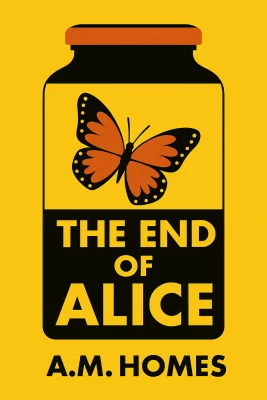
The End of Alice
Categories
Fiction, Horror, Mystery, Thriller, Adult, Contemporary, Novels, Crime, Literary Fiction, Dark
Content Type
Book
Binding
Paperback
Year
1996
Publisher
Scribner / Simon & Schuster
Language
English
ASIN
B000C4SOPC
ISBN
0684827107
ISBN13
9780684827100
File Download
PDF | EPUB
The End of Alice Plot Summary
Introduction
In a maximum-security prison in upstate New York, an aging inmate sits in his cramped cell, counting down the years of his twenty-three-year sentence. The concrete walls that confine him have become both sanctuary and torture chamber, where memories bleed through the cracks like water through stone. His crime haunts the corridors—the brutal murder of twelve-year-old Alice Somerfield in a New Hampshire motel room decades ago. But now, something has changed. A letter arrives bearing no return address, written by a young woman who claims to know exactly who he is and what he did. She lives on the same street where Alice once played. As their correspondence deepens into something twisted and electric, two damaged souls begin a psychological dance that will drag them both toward a darkness neither can escape. The predator believes he has found his confessor. The prey believes she has found her purpose. Both are terrifyingly wrong.
Chapter 1: Letters from the Outside: A Correspondence Begins
The letter arrives on ordinary paper with extraordinary weight. No return address, just careful handwriting that speaks of Catholic school discipline and buried rage. The prisoner—weathered by decades behind bars, his once-sharp mind dulled by institutional routine—feels something stir that he thought had died long ago. "Who is she that she should have this afflicted addiction," he mutters, examining the envelope. The postmark reads Scarsdale—the same town where Alice lived before that summer in New Hampshire. Coincidence has teeth. The girl writes with calculated innocence. She is nineteen, home from college for the summer, and claims a professional interest in criminal psychology. But between her academic curiosity seeps something hungrier. She knows his name. She knows his crime. She knows exactly what buttons to push. "I'm writing because I thought it might make me less afraid if I could talk to you," she writes. "What does it mean for a girl like me to write to you? Do you like it? Do you like it a lot?" The old man's hands tremble as he reads. In his cell, surrounded by twenty-three years of accumulated solitude, he feels the familiar stirring of obsession. This girl understands something that the psychiatrists and parole boards never grasped—the seductive power of acknowledgment. He writes back immediately. His response is careful, intellectual, wrapped in philosophical musings about the nature of desire and criminality. But underneath the pretense, hunger sharpens his words like a blade being honed. The correspondence begins its deadly dance.
Chapter 2: Summer Games: The College Student Pursues Her Prey
Summer heat presses down on Westchester County like a fever dream. The girl moves through her suburban landscape with newfound purpose, driven by urges she cannot name but cannot ignore. Her parents see depression where she feels awakening. At the country club tennis courts, she finds her target. Matthew is twelve, caught between childhood and something darker. He has the soft edges of innocence but carries himself with the swagger of someone testing boundaries. Perfect. "I was on the team in high school," she tells his eager mother. "I could give him lessons. Fifteen dollars an hour." The transaction is sealed with adult approval, making her predation legitimate, even praised. Their first session crackles with unspoken tension. She watches him serve, studies the way his shorts bunch when he crouches, catalogues every detail of his transformation from boy to something else. The game becomes foreplay neither acknowledges. "You're good," he says, sweat beading on his upper lip. "I haven't shown you anything yet," she replies. Later, alone in his bedroom while his parents prepare for their evening out, the boundaries dissolve. He shows her his collections—baseball cards, candy, and finally, the small white box containing his saved scabs. The intimacy of shared secrets becomes physical touch, exploration disguised as curiosity. When she leaves that first evening, her prey thinks he has discovered something wonderful. She knows she has found something necessary. Neither understands they are both being consumed.
Chapter 3: Memories of Alice: The Narrator's Haunted Past
The correspondence pulls the old man deeper into memory's undertow. In his cell, surrounded by darkness and the sounds of institutional life, he relives that summer of 1971 when he first encountered Alice Somerfield. He had rented a cabin in New Hampshire, fleeing Philadelphia and a growing awareness of his own dangerous appetites. The isolation was meant to cure him. Instead, it prepared him for his greatest sin. Alice appeared at the lake like something conjured from his deepest fantasies. Twelve years old with paint on her face and a bow in her hands, she possessed an otherworldly confidence that both attracted and terrified him. She tied him naked to a tree during their first encounter, then disappeared, leaving him bound and aroused in the New Hampshire woods. "Ruby Diamond Pearl," she told him her name. "But Gram calls me Alice." Their relationship developed with the inevitability of a fairy tale told in reverse. She came to his cabin at night, climbing through windows, making herself at home in his bed. She was knowledgeable beyond her years, hungry for experiences that should have remained forbidden. "I want you to hurt me," she would whisper in the darkness. He tried to resist, knowing even then that she was leading them both toward destruction. But Alice possessed the terrible power of the willing victim, the child who demands corruption. She made herself irresistible by making herself available. The memory burns through him now, twenty-three years later, as fresh as blood on snow.
Chapter 4: Prison Confessions: Life Behind Bars and Within Minds
The prison walls pulse with their own diseased rhythm. West Wing houses the sexual criminals, the untouchables among the untouchable. Here, the old man has learned to navigate hierarchies of horror, where child killers rank below even the most brutal murderers. His cellmate Clayton, a Princeton graduate turned serial killer, provides occasional companionship of the most degrading kind. Their relationship exists somewhere between violence and tenderness, neither man able to acknowledge what they have become to each other. "You're getting into something you won't be able to get out of," Clayton warns, watching the old man write another letter to his correspondent. But the letters have become addiction. Each exchange with the girl pulls him further from the institutional numbness that has sustained him for decades. She writes of her experiments with Matthew, describing their encounters with clinical detachment that masks deeper hungers. "Last time I took Matt with me to the prison overlook," she writes. "From there you can hear the noise inside the prison, you can hear the men." The old man realizes she has been visiting, watching, studying him from afar. The hunted has become the hunter, and he finds himself aroused by his own victimization. Prison bells mark the passage of time, but the correspondence exists outside temporal boundaries. Past and present blur together until Alice and his correspondent become one entity—eternal, hungry, inevitable.
Chapter 5: The Lake House: Where Innocence Was Lost
Memory becomes indistinguishable from confession as the old man recalls that final, terrible summer. Alice had grown bolder, more demanding, their relationship spiraling toward some predetermined conclusion. They took drives through New Hampshire, stopping at roadside stands where Alice would shoplift with brazen confidence. "I hate little children," she told him when he suggested babysitting for money. "Can't stand them." The contradiction of her statement—child rejecting childhood—should have warned him. Instead, it inflamed his desire. At the lake house, their games grew more violent. Alice insisted on being tied up, cut, hurt in ways that satisfied hungers neither could name. She began menstruating that summer, the blood marking her transition from child to woman, from innocent to accomplice. "You cut me," she accused him one night, showing him her bloodied fingers. "I didn't touch you with it," he protested, though the knife lay between them like an accusation. The end came during a thunderstorm at a roadside motel. Alice's body betraying her with its first menstruation, her mind fragmenting under the weight of premature sexualization. She attacked him with her hunting knife, demanding death as the ultimate intimacy. He gave her what she wanted. And took what he needed. Sixty-four wounds, the coroner counted later. Only five inflicted while she lived.
Chapter 6: Breaking Points: When Obsession Turns to Violence
The correspondence reaches its inevitable climax as both writer and reader approach their own breaking points. The girl's relationship with Matthew has progressed beyond experimentation into something that terrifies even her. "I don't feel like dealing with Matt," she writes. "I don't know what I've been doing with Matt. Did I hurt him? Will he tell on me? Am I completely crazy? Will I do it again? Am I the same as you?" Her questions echo across decades, linking her to Alice in ways that transcend mere coincidence. The old man recognizes in her letters the same hunger that consumed his first victim, the same need to push boundaries until they shatter. Meanwhile, his own world contracts toward a single point. A parole hearing approaches—his first in twenty-three years. The possibility of freedom mingles with the certainty of his correspondent's confessions. She has become his confessor and his damnation. In her final letters, desperation bleeds through careful prose. She describes a suicide attempt, a trip to Europe that fails to cleanse her, a growing awareness that the darkness inside cannot be escaped through geography. "I'm not afraid of you anymore," she writes in her last communication. "I'm more afraid of myself." The old man understands. He has created another Alice, corrupted another soul through mere proximity to his own sickness. The cycle completes itself with mathematical precision.
Chapter 7: The Brutal Truth: Revelations of Murder and Madness
The parole hearing arrives like judgment day. In a sterile room with three committee members and stacks of evidence, the old man faces the photographic record of his crime. Twenty-three years of institutional life crumble before images that capture the full scope of his brutality. Alice's murder was not passion but methodology. After killing her, he continued his violation of her corpse, kissing her bloody face, positioning her limbs in obscene displays. The hunting knife that ended her life became the final instrument of his necrophilia. "Can we have your attention," the committee member says, holding up another photograph. "Can I ask you to take a look?" He looks. He remembers everything now—the weight of the knife, the sound of Alice's final breath, the hours he spent alone with her body in that motel room. Memory becomes confession becomes damnation. The committee's decision arrives without drama. No parole. No freedom. The old man returns to his cell understanding that some sins create their own prisons, walls more permanent than steel and concrete. His correspondent's letters have stopped coming. Perhaps she has found her own salvation, or perhaps she has simply moved on to other obsessions. Either way, their dance is finished. In the darkness of West Wing, surrounded by the sounds of other broken men, he continues writing letters that will never be sent, confessions that serve only to feed the hunger that time cannot diminish.
Summary
"Whispers Through Prison Walls" concludes with the terrible recognition that monsters create other monsters, not through direct contact but through the mere acknowledgment of shared darkness. The old man's correspondence with his young admirer becomes a masterclass in corruption, demonstrating how evil propagates through attraction rather than revulsion. The novel offers no redemption, no possibility that understanding leads to healing. Instead, it presents evil as a virus that spreads through contact, transforming victims into perpetrators in an endless cycle of damage. The girl who began as Alice's symbolic successor ends as her spiritual twin, carrying the same hungers into a new generation. In the end, the prison walls prove inadequate to contain the true horror—the human capacity to recognize our own darkness in others and call it love.
Best Quote
“I'm nothing you can catch now. I am black powder, I am singe, I am the bomb that bursts the night.” ― A.M. Homes, The End of Alice
Review Summary
Strengths: The review highlights the book's authentic masculine voice, despite being written by a female author, and praises its detailed and bold narrative. The reviewer appreciates the balance of tenderness and danger in the storytelling and commends the author for not humanizing the convict, maintaining his monstrous nature. Weaknesses: The review does not explicitly mention weaknesses, but implies discomfort with the book's gross and uncomfortable themes. Overall: The reviewer expresses high enthusiasm for the book, considering it the author's best work. Despite its unsettling subject matter, the book is recommended for its compelling and well-executed narrative.
About Author

A.M. Homes
Homes interrogates the complex realities of contemporary American life through her fearless exploration of controversial themes and characters. Her books often delve into the psychological disparities between public personas and private realities, revealing a fascination with the grotesque and an acute awareness of societal yearnings. This method allows her to craft narratives that are both grim and comical, serving as a mirror to the moral complexities of modern existence. Her award-winning novel, "May We Be Forgiven," exemplifies this approach by dissecting familial and societal dysfunctions, while her other works, like "The End of Alice," push the boundaries of conventional storytelling by exploring unsettling themes.\n\nA.M. Homes’s literary contributions extend beyond her novels, impacting readers and writers alike through her short stories and non-fiction works. Her memoir, "The Mistress's Daughter," offers a deeply personal exploration of identity and adoption, resonating with those interested in genealogy and the complexities of familial ties. Meanwhile, her short story collections, such as "Things You Should Know," present readers with a variety of extreme situations that challenge conventional morals and provoke introspection. These narratives not only entertain but also encourage audiences to question the underlying truths of their own lives.\n\nIn addition to her writing, Homes has made significant contributions to the arts through her roles in screenwriting and opera, further expanding her impact. Her involvement in screen adaptations, like the Showtime film of her debut novel "Jack," showcases her versatility and dedication to storytelling across mediums. Through these varied endeavors, Homes continues to influence the literary landscape, inspiring both readers and aspiring writers to embrace complexity and challenge the status quo. Her recognition, including fellowships from prestigious institutions like the Guggenheim Foundation, underscores the importance and influence of her work in the field of literature.
Read moreDownload PDF & EPUB
To save this Black List summary for later, download the free PDF and EPUB. You can print it out, or read offline at your convenience.
The End of Alice
by A.M. Homes
