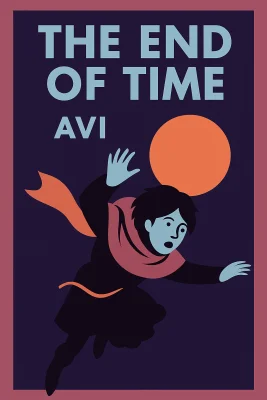
Categories
Fiction, Historical Fiction, Young Adult, Fantasy, Historical, Adventure, Childrens, Middle Grade, Medieval, Juvenile
Content Type
Book
Binding
Hardcover
Year
2010
Publisher
Language
English
ASIN
0061740802
ISBN
0061740802
ISBN13
9780061740800
File Download
PDF | EPUB
The End of Time Plot Summary
Introduction
Bear was dead. The words hit Crispin like a physical blow, leaving him hollow and directionless in the wilderness of 14th-century France. His mentor, friend, and father figure—the man who had given him a name, a purpose, and dreams of freedom—was gone. Now only Troth remained, the disfigured girl whose twisted face had made her an outcast but whose healing knowledge had saved them countless times. Together they had fled England's violence, carrying Bear's final gift: stories of Iceland, a mythical land beyond the northern seas where men lived free from kings, lords, and armies. It was their North Star, their promise of sanctuary in a world that seemed determined to crush the powerless. But as winter closed in and their meager supplies dwindled, even that hope began to fade. When they stumbled into a French convent, exhausted and starving, their paths would finally diverge—Troth choosing the safety of stone walls and sacred silence, while Crispin pressed on alone toward an uncertain destiny, driven by Bear's words and his own desperate need to believe that somewhere, somehow, true freedom could still be found.
Chapter 1: Paths Divided: Troth's Choice and Crispin's Solitude
The bells of the French convent rang out through the cold morning air, calling the sisters to prayer. Inside the guest quarters, Crispin watched Troth's face transform with each passing day. No longer did she hide her scarred features beneath her hair. Here, among these holy women, she had found something he could not give her: acceptance without condition. Sister Catherine spoke broken English, her voice carrying years of loneliness. She had been abandoned here as a child, she told them, left by a father who never returned from war. The revelation hung between them like a warning, but Troth seemed to hear only promise. The abbess, Mother Marie, suffered from crushing headaches that left her bedridden and desperate. When Troth offered her knowledge of healing herbs—feverfew and chamomile gathered from the overgrown monastery gardens—the transformation was immediate. "They need me here," Troth said one night as they sat in their small chamber. Her voice carried a certainty that made Crispin's chest tighten. "I can help them. I can learn more. And I won't have to hide." The last words were spoken so softly they barely disturbed the air between them. Crispin felt the weight of Bear's promise pressing down on him. Iceland waited somewhere beyond the northern horizon, a land of freedom that now seemed impossibly distant. Yet he understood Troth's choice even as it tore at his heart. Here she could use Aude's teachings, could heal instead of merely survive. Here she could stop running. On the morning of his departure, Crispin slipped away while the sisters sang their dawn prayers. His footsteps echoed hollowly on the stone corridors as he made his way to the heavy wooden doors. Outside, frost covered the ground like scattered diamonds, and his breath formed small clouds in the bitter air. He had left half his heart behind those walls, but his feet pointed north, toward the sea, toward whatever freedom might still exist in the world.
Chapter 2: False Sanctuary: The Musicians' Deadly Game
Winter's grip tightened around Crispin as he wandered the desolate roads of war-torn France. Villages lay abandoned, their inhabitants fled or dead from plague and violence. His stolen clothes—taken from a corpse in desperation—kept him alive, but hunger gnawed at his belly like a living thing. When he finally heard the sweet sound of music drifting through a dark forest, it seemed like salvation itself. Five figures sat around a crackling fire: Elena, the gray-haired leader with sharp eyes and a commanding presence; her sons Rauf and Gerard, both armed and dangerous; Woodeth, Rauf's battered wife who bore the marks of his fists; and young Owen, a terrified servant boy who clutched a strange creature—a monkey called Schim. They claimed to be wandering musicians heading to Calais, where an English merchant named Talbot planned a grand wedding for his daughter. "We're no different from anyone else," Elena said with a smile that didn't reach her eyes. "Just trying to survive in this godless world." She offered Crispin food and companionship, even a recorder to replace the one he'd lost. But something in their easy camaraderie felt wrong, like a melody played in the wrong key. Owen confirmed Crispin's fears in whispered warnings. These were no mere musicians but thieves and murderers who had killed his older brother when he refused to join their crimes. They kept Owen as a slave, threatening to sell him back to his father in London—for a price. The monkey, stolen along with the boy, performed tricks to draw crowds while the family picked pockets and planned larger thefts. As they traveled toward Calais, Rauf showed Crispin a leather bag heavy with gold and silver coins. "We work hard for our wealth," he laughed, his scarred face twisting with cruel humor. "Stay with us, boy, and you'll be richer than you ever dreamed." The weight of those ill-gotten gains felt like a chain around Crispin's neck, binding him to their dark purposes whether he willed it or not.
Chapter 3: Blood on His Hands: Becoming an Unwilling Accomplice
The merchant's wagon appeared like a gift from heaven to Elena's family—an elderly wool trader with his son, guarded only by a peasant guide. The attack came swift and brutal. Gerard blocked the road while Rauf struck from behind, his blade finding the young man's back with practiced efficiency. Elena stripped the old merchant of his purse while the victim's father wept and pleaded in French. "Crispin!" Rauf's voice cut through the boy's paralysis. "Search the body." The command hung in the air like an executioner's axe. When Crispin hesitated, Rauf's face darkened with rage. "Do as I tell you, or face the consequences!" With shaking hands, Crispin knelt beside the corpse. Blood seeped through the man's jerkin, warm and sticky against his fingers as he fumbled for the purse tied to the dead man's belt. The coins clinked mockingly as he handed them over, each sound a nail in his own coffin. "There," Rauf proclaimed with savage satisfaction. "Crispin has been baptized. He's one of us now." The family laughed as they fled through the forest, leaving the old merchant to cradle his dead son beside the abandoned wagon. But their mirth felt hollow to Crispin, who carried the stain of that blood on his hands like a brand. They had made him an accomplice, complicit in their murder through his forced participation. That night, Rauf tossed a silver coin at Crispin's feet. "Your wages," he said with mock generosity. "The beginning of your fortune." The coin gleamed in the firelight, thirty pieces of silver that bound Crispin to their company more surely than any chain. To refuse would mean death; to accept meant damnation. He picked up the coin, and in that moment, felt his soul slip a little further from grace. Owen watched from across their makeshift camp, his young face etched with sorrow and understanding. He had traveled this same dark path, from innocent boy to unwilling criminal. Now there were two prisoners in Elena's care, two souls trapped in a web of violence and greed that seemed to have no escape.
Chapter 4: Shattered Dreams: The Truth About Iceland
Calais rose before them like a fortress of hope and despair. Its massive stone walls and bristling towers spoke of English power in foreign lands, while the crowded port beyond promised ships to every corner of the known world. For Crispin, it represented the final stage of his journey toward Iceland and the freedom Bear had promised. For Elena's family, it meant rich pickings and easy escape. In the fish market, Crispin's heart leaped when he heard a vendor calling "Stockfish from Iceland!" The seller led him to a weathered man with a white beard and eyes like winter storms—Thorvard Hjalmarsson, a trader from Bergen who had once called Iceland home. But Thorvard's words shattered Crispin's dreams like ice beneath a hammer. "Freedom?" The old man's laughter was bitter as seawater. "Who told you such lies? Iceland bows to Norway's king like any other land. We have our lords, our armies, our endless feuds over worthless rocks and frozen fields. The place is as far from paradise as it is from here—farther, perhaps, since paradise might actually exist." Thorvard's daughter Halla tried to soften the blow. "It's a beautiful place," she said gently, seeing the devastation in Crispin's eyes. "Full of fire and ice, mountains that touch the sky. My father speaks harshly because we lost land in the feuding. The people aren't evil—just human, like everywhere else." But the damage was done. Bear's final gift—the hope that had sustained Crispin through cold nights and darker days—crumbled to nothing. His mentor had been wrong, perhaps even deliberately deceptive. Iceland was no promised land, no refuge from the world's cruelties. It was simply another place where the strong preyed upon the weak, where freedom remained as elusive as morning mist. Yet even as despair threatened to overwhelm him, Crispin clung to one truth: anywhere would be better than the gallows Elena's family had planned for him. If Iceland offered no paradise, it might at least offer life. And in that moment, life seemed precious beyond measure.
Chapter 5: The Desperate Flight: Escaping the Gallows
The wedding feast of Master Talbot's daughter painted Calais in false splendor. Musicians filled the great hall with sweet melodies while the young bride—a girl barely twelve years old—sat frozen in her chair like a beautiful doll. She would marry a man older than her father, shipped off to Bruges like another bolt of cloth in her merchant father's trade. When she met Crispin and Owen in private, her words carried bitter wisdom: "I should like to be free the way you are." "We aren't free," Crispin had replied, and her eyes grew wide with understanding. In whispered conspiracy, she revealed a smuggler's tunnel beneath the Lamb tavern, built into the city walls. "If only you could take me," she said, her voice breaking with impossible longing. But escape would prove far deadlier than Crispin imagined. In the pre-dawn darkness, as he and Owen crept from their stable prison, Rauf returned from his thievery with murder in his eyes. The confrontation exploded into violence—Schim the monkey leaping to defend Owen, Rauf's blade finding its mark, the boy's anguished screams piercing the night. "Murderer!" Owen cried as they fled through Calais's narrow streets with Elena's shouts echoing behind them. The city became a maze of death. Soldiers whom Rauf had bribed hunted them through every shadow, their torches casting dancing devils on the stone walls. When cornered atop the ramparts, Crispin made a choice that would have terrified him days before. "Jump!" he commanded, and they plunged seventy feet into the freezing moat below. The water hit them like liquid ice, dragging them down into choking darkness. Crispin thrashed to the surface, gasping and spitting, his lungs burning with each breath. Owen floated nearby, barely conscious, his small body battered by the fall. Above them, crossbow bolts whistled through the dawn air as soldiers sought their range. But the city was behind them now, and ahead lay the ships—and Thorvard's promise of passage to whatever lay beyond the northern horizon.
Chapter 6: Northern Passage: Finding Guidance in the Stars
The Stjarna rolled heavily in North Sea swells as Thorvard pointed toward the star-scattered dome of night. His weathered finger traced invisible lines between distant suns, revealing the ancient stories written in fire across the darkness. "There's a bull," he said. "There's a fish. There's Hercules." But when he showed Crispin the Great Bear and Little Bear, the boy's composure finally shattered. "I had a friend named Bear," Crispin whispered through his tears. "He died not so long ago." The admission opened floodgates of grief—for Bear's death, for his shattered dreams, for the terrible journey that had led him to this moment on a ship bound for an uncertain future. Thorvard's calloused hand settled on Crispin's shoulder, heavy as stone and twice as steady. "God doesn't make saints for us to think about their perfections," the old man said quietly. "He makes them so the rest of us can consider our sins. Mortals—like you and I—have sinned. Like your Bear." Then Thorvard showed him the North Star, that unwavering light at the tip of the Little Bear's tail. "Ancient mariners called it Cynosure," he explained. "It shows true north. Always there. Unmoving. Know that star and you shall know where you are and where to go. That star is the sailor's hope and guide." He paused, letting the ship's rhythm speak its own truth. "Crispin, follow your Bear." "Will it always be there?" the boy asked, his voice small against the ocean's vast indifference. "Until the end of time." As the Stjarna carried them north toward whatever waited beyond the horizon, Crispin fixed that star in his heart. Not Bear's false promises of perfect freedom, but Bear himself—the man who had loved a nameless peasant boy enough to give him a name and a chance at life. The star would guide him through whatever darkness lay ahead, not to paradise, but to something perhaps more precious: the knowledge of where he stood and where he might choose to go.
Summary
Freedom proved to be not a destination but a direction—not the mythical Iceland of Bear's stories but the harder truth of choices made in the face of impossible odds. Crispin had learned that paradise exists nowhere on earth, that every land bears the marks of human frailty and ambition. Yet in losing his dreams of perfect sanctuary, he had found something more valuable: the strength to choose his own path, even when that path led into unknown darkness. The boy who had once believed freedom meant the absence of masters now understood it meant the presence of choice—the terrible, wonderful burden of deciding who to become when no one else would choose for him. Thorvard's ship carried him toward an uncertain future, but it was his own compass now that would guide him through whatever storms awaited. In the end, Bear's greatest gift had not been false promises of distant shores, but the simple, revolutionary idea that a peasant boy could be worth saving—and that having been saved once, he might now learn to save himself.
Best Quote
“BEAR WAS DEAD. That sweet and kindly man, the wisest I had ever known, the one I considered friend, teacher, and even father, was gone. Would” ― Avi, Crispin: The End of Time
Review Summary
Strengths: The book is praised for its engaging storytelling and simplicity, which some readers find refreshing. The plot is described as a "nailbiter," and the characters are considered interesting and easy to care for. The reduction of religious themes is appreciated by some readers. Weaknesses: The ending is perceived as a cliffhanger and unsatisfactory by some, leaving readers hoping for a continuation. The series is described as annoying by one reviewer, and there are criticisms of character motivations and actions, particularly Crispin's moral decisions. Overall: The general sentiment is mixed. While some readers enjoyed the storytelling and character development, others were dissatisfied with the series' conclusion and certain plot elements. There is a desire for a continuation of the series, indicating a level of engagement despite the criticisms.
About Author

Avi
Avi charts a unique path in children's literature, blending historical depth with engaging narratives. Despite early struggles with dysgraphia, Avi's determination led him to write works that captivate young readers with their sense of mystery and adventure. His background in a culturally rich family set the stage for his literary ambitions, ultimately steering him from failed high school attempts to earning degrees in history, drama, and library science. Avi's career began with aspirations of Broadway but shifted towards children's literature, partly inspired by stories he created for his son. This transition proved fruitful, as he crafted approximately 70 books, including the Newbery Medal-winning "Crispin: The Cross of Lead."\n\nAvi's themes often explore historical contexts interwoven with suspense and adventure, appealing to a broad audience of young readers. His ability to connect with readers through relatable characters and thrilling plots is evident in his award-winning titles, such as "The True Confessions of Charlotte Doyle" and "Nothing But the Truth." Beyond the accolades, Avi's work offers young readers an opportunity to engage with history through fiction, fostering both education and entertainment. This impact is significant, as his stories continue to inspire and educate, ensuring his legacy as a prominent figure in children's literature.\n\nThis bio underscores Avi's role as an influential author who overcame early academic challenges to leave a lasting mark on young adult literature. His journey from an aspiring playwright to a celebrated author showcases the power of perseverance and creative adaptation. Avi's dedication to crafting compelling historical narratives has earned him numerous accolades and a place in the hearts of readers young and old, confirming his enduring influence in the literary world.
Read moreDownload PDF & EPUB
To save this Black List summary for later, download the free PDF and EPUB. You can print it out, or read offline at your convenience.
The End of Time
by Avi
