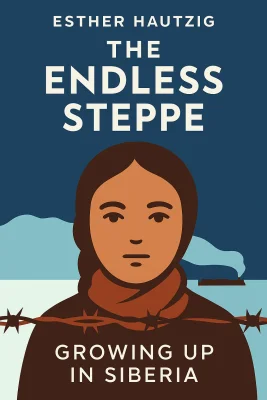
The Endless Steppe
Growing Up in Siberia
Categories
Fiction, Historical Fiction, Young Adult, School, Historical, Russia, World War II, Childrens, War, Middle Grade
Content Type
Book
Binding
Paperback
Year
2018
Publisher
HarperCollins
Language
English
ASIN
006440577X
ISBN
006440577X
ISBN13
9780064405775
File Download
PDF | EPUB
The Endless Steppe Plot Summary
Introduction
In the summer of 1941, ten-year-old Esther Rudomin was tending to her beloved lilac bush in the family garden in Vilna when Soviet soldiers arrived to arrest her family as "capitalists." Within hours, her sheltered world of privilege and security vanished forever, replaced by the harsh reality of deportation to the endless steppes of Siberia. What followed was a five-year odyssey of survival that would transform a pampered child into a resilient young woman, testing the very limits of human endurance and the power of hope. Esther's story illuminates the extraordinary capacity of the human spirit to adapt and persevere under the most brutal circumstances. Through her eyes, we witness not only the harrowing experience of Soviet deportation but also the profound ways in which exile can forge character, deepen appreciation for simple pleasures, and reveal unexpected sources of strength. Her journey offers timeless insights into the nature of resilience, the importance of education as salvation, and the complex emotions that arise when survival depends on adapting to a world that seems determined to crush you.
Chapter 1: Childhood in Vilna: The Sheltered World
Esther Rudomin's early life in Vilna represented the pinnacle of upper-middle-class Jewish prosperity in pre-war Poland. Born into a prominent family that owned substantial business interests, she inhabited a world of governesses, private tutors, and carefully orchestrated privilege. Her days followed a precise schedule: piano lessons on Mondays, dancing classes on Tuesdays, library visits on Wednesdays where she argued with librarians for access to grown-up books rather than children's literature. The Rudomin household was a bustling compound where three generations lived in separate apartments around a central garden, the pride and joy of her grandfather Solomon. This garden, with its roses, peonies, and lilac trees, served as both playground and sanctuary for young Esther. Her grandfather had taught her that "there is always some good in people who love flowers," a lesson that would resonate throughout her later ordeals. Family traditions defined every aspect of life, from the elaborate Friday preparations for the Sabbath to the strict observance of seemingly trivial customs like stepping out of bed with the right foot forward for good luck. Seven kitchens in their large house would simultaneously prepare identical Sabbath meals, filling the air with the comforting aromas of challah, sponge cakes, and chicken soup. Yet beneath this idyllic surface, the storms of history were already gathering. When Hitler's armies marched into Poland in 1939, the family's first taste of upheaval came when Esther's father was drafted into the Polish Army. Though he miraculously survived when his battalion was wiped out and managed to return home, the Russian occupation of Vilna in 1940 brought new challenges. The communist authorities confiscated the family business and property, though they remained in their home. Even as their world began to contract, Esther maintained her sense of security and privilege. She had no premonition that on that fateful June morning in 1941, when she failed to water the lilac bush because of more pressing concerns, her sheltered childhood would end forever. The garden that had seemed invulnerable to the outside world would soon become nothing more than a memory, preserved only in the hearts of those forced to leave it behind.
Chapter 2: Sudden Deportation: The End of Innocence
The morning of June 1941 began like any other for ten-year-old Esther, who was luxuriating in the privilege of sleeping late since school had ended. She had settled into bed with a mystery novel when her mother burst into the room, stripping away the bedclothes and demanding immediate compliance without explanation. The urgency in her mother's voice, the whispered instructions, and the sight of her father in handcuffs with Soviet soldiers created a surreal nightmare that shattered her understanding of safety and order. The family's arrest came without warning or comprehension. Accused of being "capitalists and therefore enemies of the people," they were given mere minutes to pack their belongings. Esther watched in bewilderment as her parents, previously figures of authority and control, became helpless captives forced to sit on their dining room floor at gunpoint. The absurdity of the charges meant nothing to a child who couldn't even understand what a capitalist was, only that the word had become her family's condemnation. The packing process revealed the cruel randomness of exile. Esther's precious photograph albums, containing the visual record of her happy childhood, were deemed too dangerous to take, as someone might question the identities of people in the pictures. Her wardrobe of party dresses and elegant clothes was replaced by a meager selection of practical items that would prove inadequate for the Siberian climate ahead. Perhaps most devastating was the separation from extended family. As trucks arrived to transport different family groups to various destinations, Esther witnessed her grandmother's anguish when she was separated from her husband of many decades. The elderly woman's wails of desperation echoed the breaking of bonds that had sustained the family through generations of shared history and tradition. The journey to the railway station through familiar streets of Vilna became a funeral procession for their former lives. Neighbors and friends watched from sidewalks as the trucks carried away people they had known and respected, some racing after the vehicles with outstretched arms and flying hair, crying out names that would never be answered. The transition from citizen to exile, from person to cargo, was accomplished in a matter of hours, leaving behind everything that had given meaning and identity to their existence.
Chapter 3: Surviving Siberia: Adaptation and Hardship
The cattle cars that transported the deportees to Siberia introduced Esther to a level of degradation she could never have imagined. Forty people crammed into a space designed for animals, with only four small holes for light and air, and a V-shaped opening serving as both toilet and washing facility. The six-week journey became a masterclass in human adaptability, as former middle-class professionals learned to share a single cup of water and accept cabbage soup as sustenance. Arrival at the gypsum mine in the Altai Territory revealed the true scope of their exile. The flat, treeless steppes stretched endlessly in every direction, a landscape so barren it seemed like the edge of the world. The housing consisted of mud huts that baked in summer and froze in winter, while the work assignments reflected Soviet bureaucratic madness: engineers drove horse carts, women operated dynamite, and children tended potato patches under the blazing sun. Esther's introduction to manual labor came through weeding potato crops that would determine their winter survival. Her grandfather's gardening lessons proved invaluable, but the responsibility was overwhelming for a child who understood that mistakes meant starvation. The other children in her work group became both companions and competitors, united in their determination not to let carelessness doom them all to hunger. The harsh climate presented constant challenges that tested every aspect of survival. Summer brought scorching heat, swarms of insects, and drought that withered their crops. Winter arrived early with temperatures that froze water glasses overnight and winds that could kill anyone caught outside without proper protection. Esther learned to steal coal and wood shavings from railway yards, activities that would have horrified her former self but became necessary skills for staying warm. Food scarcity dominated every aspect of daily life. Their rations of thirty grams of bread per day and occasional sheep's cheese barely sustained life, leading to constant hunger that made every crumb precious. Esther's family developed elaborate systems for rationing their meager supplies, while the occasional gift of watermelon slices from sympathetic local girls became treasured memories of human kindness in an increasingly dehumanized world.
Chapter 4: Coming of Age in Exile
The transition from child to adolescent in Siberian exile stripped away any remaining innocence while forcing rapid maturation under the harshest possible circumstances. When Esther's father was conscripted into a labor brigade near the front lines in 1942, she faced the terrifying prospect of being the family's primary breadwinner at age twelve. The responsibility of earning money through knitting and needlework transformed her from a protected child into a calculating entrepreneur who learned to drive hard bargains with customers who could afford her services. School became both refuge and challenge as Esther struggled to master Russian while keeping up with demanding coursework. Her teachers, many of them evacuated professors from prestigious universities, maintained high standards despite the primitive conditions. The village library, housed in a small log cabin, became her sanctuary where she could escape through literature into worlds far from the harsh realities of her daily existence. Social dynamics in her new environment proved particularly complex for a former privileged child. Her classmates initially viewed her with suspicion and curiosity, uncertain how to relate to someone from what seemed like a fairy-tale background. Esther's transformation from outsider to belonging required not just learning the language and customs, but developing the psychological resilience to rebuild her identity from scratch in an entirely alien culture. The constant struggle for survival accelerated her emotional and intellectual development in ways that peaceful childhood never could have achieved. She learned to navigate the black market, negotiate with adults on equal terms, and make decisions that affected her family's welfare. Her ability to find beauty and meaning even in the bleakest circumstances revealed a strength of character that her sheltered upbringing had never needed to develop. Perhaps most significantly, Esther began to understand the arbitrary nature of fate and the thin line between civilization and barbarism. The experience of watching educated, cultured people reduced to scrambling for basic necessities taught her that survival often depends more on adaptability and determination than on social position or previous advantages.
Chapter 5: Finding Identity Between Worlds
The years in Siberia created a profound identity crisis for Esther as she struggled to reconcile her privileged past with her harsh present reality. The girl who had once demanded silk underwear to match her classmates now fought for the right to wear the same humble clothing as her Siberian peers, seeing conformity as the path to acceptance. Her successful campaign to cut off her long braids represented more than a change in hairstyle; it symbolized her desperate desire to shed her outsider status and become truly one of them. Language became both barrier and bridge in her quest for belonging. Mastering Russian opened doors to friendship and academic success, but also marked a gradual distancing from her Polish Jewish heritage. Her growing fluency allowed her to excel in literature classes and even win the editorship of the school newspaper, achievements that built confidence while simultaneously making her feel like a traitor to her original culture and family. The question of loyalty became increasingly complex as Esther found herself genuinely caring for Siberian friends and teachers while maintaining love for her family and memories of home. Her affection for the vast steppes, initially terrifying but eventually comforting in their endless space and solitude, created an emotional attachment to the land of her exile that would complicate her eventual departure. Cultural adaptation required constant negotiation between old values and new necessities. Esther learned to steal coal while maintaining her family's moral standards, to bargain aggressively in markets while preserving her inherent politeness, and to accept charity when pride demanded independence. These contradictions forced her to develop a more nuanced understanding of right and wrong than her sheltered childhood had ever required. The process of finding identity between worlds ultimately strengthened rather than weakened her character. By learning to value both her aristocratic heritage and her hard-won survival skills, Esther developed a complex, mature perspective that would serve her well in future challenges. The girl who emerged from Siberian exile possessed both the cultural refinement of her upbringing and the practical wisdom of someone who had faced life's harshest tests and survived.
Chapter 6: Education as Salvation
Throughout her years in exile, education remained Esther's most reliable source of hope and dignity, offering an escape from physical hardship into realms of beauty and meaning. Despite the primitive conditions of Siberian schools, where students sat in coats and mittens during lessons, the quality of instruction proved remarkably high. Many teachers were themselves refugees from the German invasion, university professors who brought sophisticated knowledge and passionate commitment to their remote classrooms. The village library became Esther's sanctuary, a small log cabin that contained an extraordinary collection of world literature. Here she discovered the great Russian novels that would become lifelong companions, works by Pushkin, Tolstoy, and Dostoevsky that transported her from the harsh realities of Siberian life into worlds of beauty and complexity. The ritual of waiting patiently for her turn to read, sometimes for months to obtain a desired book, taught her that literature was not merely entertainment but a precious privilege worth any sacrifice. Anna Semyonovna, her Russian literature teacher and former Moscow University professor, became a crucial mentor who recognized Esther's potential and refused to lower standards despite their circumstances. Under her guidance, Esther mastered not only the Russian language but also sophisticated analytical skills, writing research papers that compared historical facts with literary interpretations. This intellectual rigor provided both mental stimulation and proof that her mind remained sharp despite physical deprivation. The school's cultural activities, from declamation contests to wall newspapers, offered opportunities for creative expression and social connection that helped maintain Esther's sense of self-worth. Her participation in these events, despite setbacks like appearing barefoot at her first poetry recitation, demonstrated resilience and determination to succeed despite disadvantages. Perhaps most importantly, education provided Esther with tools for understanding her experience and placing it in broader historical and literary contexts. The ability to read about other people's struggles and triumphs helped her process her own trauma while maintaining faith that knowledge and culture could survive even the most brutal attempts to destroy them.
Chapter 7: The Long Journey Home
The announcement in 1945 that Polish deportees would be repatriated created complex emotions for Esther, who had spent her formative years adapting to Siberian life. While her mother and grandmother celebrated the prospect of freedom, Esther felt genuine anxiety about leaving the only world she had known as a teenager. Her request to her father to return to Siberia rather than go to Poland revealed how thoroughly she had internalized exile as her normal state, finding security in the familiar hardships rather than risking unknown challenges. The actual journey back to Poland in cattle cars similar to those that had brought them to Siberia became a celebration of survival despite continuing hardship. The deportees who had endured five years of exile now sang and laughed during the long train ride, their joy making physical discomfort irrelevant. Yet this happiness was tempered by the knowledge that they were returning to a world forever changed by war and genocide, where most of their extended families had perished in the Holocaust. Esther's preparation for the return journey focused on acquiring the symbols of her Siberian identity: sapogy (leather boots) and a green fufaika (quilted jacket) that represented her adaptation to local culture. These garments provided psychological armor for facing an uncertain future, tangible proof that she had not merely survived but had claimed a place in the harsh world of her exile. The crossing into Poland brought a shocking reminder that survival did not guarantee acceptance. Polish villagers who screamed "Go back to Siberia, you dirty Jews" demonstrated that antisemitism had survived the war, making the returning deportees question whether they truly had a home anywhere. This hostile reception reinforced Esther's complex feelings about belonging and identity, suggesting that her Siberian exile might have been safer than Polish "freedom." The reunion with her father in Lodz marked both the end of exile and the beginning of a new phase of uncertainty. His appearance in Western clothing and his immediate concern about her Siberian garments highlighted the cultural gap that five years had created between them. Yet their embrace represented the triumph of family bonds over the forces that had tried to destroy them, proving that love could survive even the most determined attempts at separation and dehumanization.
Summary
Esther Rudomin's journey from privileged child to resilient survivor demonstrates that the human spirit's capacity for adaptation and growth often emerges most powerfully under the harshest conditions. Her transformation during five years of Siberian exile reveals how adversity can forge character, deepen appreciation for simple pleasures like books and friendship, and develop inner resources that no external circumstances can destroy. Her story offers profound lessons about resilience, identity, and the power of education to preserve dignity even in the face of systematic dehumanization. For anyone facing seemingly impossible challenges or struggling to find their place between different worlds, Esther's experience suggests that survival often requires not just endurance but the courage to adapt while maintaining core values, and the wisdom to find meaning and beauty even in the bleakest circumstances.
Best Quote
“Remember that there is always some good in people who love flowers.” ― Esther Hautzig, The Endless Steppe: Growing Up in Siberia
Review Summary
Strengths: The review highlights the book's extraordinary and haunting narrative, which is based on the author's first-hand family accounts. It is praised for being well-written, descriptive, and moving, capturing the harsh climate and conditions of Siberia vividly. The book is noted for its candid portrayal of the author's experiences, making it educational and insightful for both young adults and adults. Overall: The reader expresses a strong positive sentiment, recommending "The Endless Steppe" for its educational value and emotional depth. It is suggested as an important read for remembering the suffering endured by those transported to Siberia, suitable for both teenagers and adults.
About Author

Esther Hautzig
Hautzig explores the depths of human resilience through her profound literary work, primarily influenced by her traumatic experiences during World War II. Her best-known book, "The Endless Steppe," vividly recounts her family's forced exile to Siberia, shedding light on the stark realities of survival in harsh conditions. While her early life in Vilna, Poland, was idyllic, the Soviet invasion of eastern Poland in 1941 marked a significant turn in her life, leading to five challenging years in Siberia. This period not only shaped her identity but also became the central theme of her autobiographical narratives.\n\nIn her writing, Hautzig demonstrates a commitment to cultural and linguistic diversity, evident in her multilingual series and the promotion of Jewish heritage through works like "Remember Who You Are: Stories About Being Jewish." Her approach to literature is deeply rooted in a dual perspective on childhood, juxtaposing the serene pre-war Jewish life with the brutal wartime survival. Hautzig’s career in children's literature also included practical craft books, enabling readers to engage creatively with limited resources. Readers gain insight into perseverance and cultural understanding, making her work impactful for those interested in history, culture, and personal resilience.\n\nMoreover, Hautzig's contributions have been recognized with significant awards, such as the gold medal from the Association of Jewish Libraries. Her work has achieved international success, translated into numerous languages and captivating diverse audiences. Her literary journey offers a testament to the enduring spirit of overcoming adversity, making her an influential author in the realm of children's literature and beyond. This short bio captures Hautzig's dedication to bridging cultures through her storytelling, leaving a lasting legacy that continues to inspire readers globally.
Read moreDownload PDF & EPUB
To save this Black List summary for later, download the free PDF and EPUB. You can print it out, or read offline at your convenience.
The Endless Steppe
by Esther Hautzig
