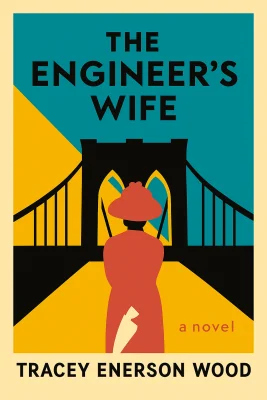
The Engineer's Wife
Categories
Fiction, Audiobook, Historical Fiction, Adult, Womens, Book Club, Historical, Adult Fiction, New York, Biographical Fiction
Content Type
Book
Binding
Hardcover
Year
2020
Publisher
Sourcebooks Landmark
Language
English
ASIN
149269813X
ISBN
149269813X
ISBN13
9781492698135
File Download
PDF | EPUB
The Engineer's Wife Plot Summary
Introduction
# The Woman Who Built the Brooklyn Bridge The ballroom reeked of carbolic acid and broken dreams. Emily Warren smoothed her magenta silk gown, trying not to stare at the wounded soldiers propped against the walls like discarded marionettes. She had come to this makeshift dance hall in a repurposed clothing factory to see her brother, General Gouverneur Warren, but found herself captivated by his aide—a honey-haired captain with ice-blue eyes who spoke of building bridges that would heal a fractured nation. What began as a wartime romance would evolve into something far more extraordinary. When Washington Roebling's father, the legendary John Roebling, died from tetanus after a ferry crushed his foot, the son inherited an impossible task: spanning the treacherous East River with the world's longest suspension bridge. As Washington's health crumbled under the deadly pressures of underwater construction, Emily found herself thrust into a role no woman had ever held—becoming the invisible chief engineer of America's greatest engineering marvel, fighting prejudice, corruption, and the river itself to complete what many believed could never be built.
Chapter 1: From Ballroom to Blueprint: A Civil War Romance
The captain raised his whiskey glass with theatrical flair, his voice cutting through the din of wounded men and waltzing couples. "Build bridges. Blow them up," he declared to his audience of junior officers. "There are only so many places to build a bridge, and sometimes we have to blow up an old, rickety bridge to make room for a new one." Emily stepped closer, intrigued despite herself. This man spoke of healing America with spans of wire and stone, of connecting Kentucky and Ohio, then attempting something even grander—linking New York and Brooklyn across the treacherous East River. His confidence carried the weight of a man who had seen the world bend to his will. When General Warren finally appeared, his aide stepped forward nervously. "Miss Emily Warren, allow me to introduce Captain Washington Roebling. I owe my life to this captain and my sense of purpose to this charming sprite." As Washington took her gloved hand, Emily saw recognition dawn in his crystal-blue eyes. The woman he had been watching dance with abandon was his commander's sister. His grip was firm, steady—the hands of a man who built things that lasted. The war would end, but their partnership was just beginning. Years later, Emily would follow that same steady hand through the mud of Cincinnati riverfront construction sites, watching the Ohio River bridge take shape like a mechanical ballet. Washington and his father John worked with Germanic precision, spinning cables across impossible distances while Emily hid among towering spools, absorbing the intricate dance of engineering. When she suggested replacing solid stone railings with iron cables to preserve the view, Washington studied her crude sketch with genuine interest. "Brains and beauty," he said, knocking her playfully on the head. "Fabulous combination."
Chapter 2: Inheriting the Impossible: The Roebling Legacy
The ferry came at them like a runaway locomotive, its paddle wheel churning the East River into froth as it careened toward the pier. Emily watched in horror as the boat slammed into the wooden pilings, trapping John Roebling's foot in the twisted wreckage. The sound of splintering wood mixed with his anguished cries as Washington and the foremen fought desperately to free him. Blood soaked through the old man's boot, but the crushed toes were nothing compared to the invisible enemy already coursing through his system. Within days, lockjaw seized his powerful frame, contorting his face into a permanent grimace while his brilliant mind remained trapped inside a paralyzed shell. Emily poured water over his mangled foot day and night, following his emphatic written instructions, though they all knew it was futile. The great John Roebling died as he had lived—fighting. His final act was to press the bridge drawings against Washington's chest, his stiff finger demanding a promise. "Yes, Father. I'll build your bridge," Washington whispered, and with those words, inherited a burden that would consume them both. The committee's ultimatum arrived on official letterhead, crisp and unforgiving: if Washington Roebling could not resume his duties within two weeks, construction would cease until a suitable replacement was found. Emily stared at the document while her husband sat hunched in his leather chair, his legs propped on pillows, his once-powerful frame reduced to a shell of twisted joints and constant pain. The East River project loomed ahead, more dangerous and complex than anything attempted before. The bridge required massive underwater foundations, built inside watertight chambers called caissons that would be sunk to bedrock. Washington would have to descend into these pressurized chambers himself, breathing air thick enough to crush a man's lungs.
Chapter 3: Into the Depths: Washington's Descent and Emily's Rise
The caisson work began immediately. Washington descended daily into the massive wooden box that would form the bridge's foundation, working in compressed air forty feet below the river's surface. The strange environment played tricks on the senses—sounds became muffled and distorted, the lime lights cast eerie shadows, and the constant hiss of air compressors provided an ominous soundtrack to the dangerous work below. Emily watched her husband change with each descent. His hands developed a tremor, his legs stiffened, and his eyes took on a hollow quality that reminded her of shell-shocked soldiers. The workers called it caisson disease, but no one understood its cause or cure. Men emerged bent double in pain, some never to walk normally again. Five had already died, though the company blamed other ailments. When fire broke out in the caisson, Washington stayed below to fight the flames while others fled. The explosion that followed sent debris five hundred feet into the air and left him unconscious, his body wracked with paralysis. As Emily nursed him back to consciousness, she realized with growing dread that the bridge had claimed its chief engineer just as surely as it had claimed his father. "I can work from here," Washington insisted, but they both knew it was impossible. The bridge required constant supervision, split-second decisions, and the physical presence of authority that he could no longer provide. The caisson disease had stolen more than his mobility—it had taken his ability to tolerate light, sound, and the very act of being around other people. Emily found herself becoming his messenger, riding horseback between their Brooklyn Heights home and the construction site multiple times each day. She carried his detailed instructions in a leather journal, translating his engineering expertise into language the foremen could understand. At first, the workers treated her with bemused tolerance, but as her knowledge grew and her decisions proved sound, they began to rely on her judgment.
Chapter 4: Breaking Barriers: A Woman in a Man's World
The bloomer costume Washington designed for her was a masterpiece of practicality and beauty—a golden-yellow skirt that ended at mid-thigh, embroidered with delicate violets and peonies, worn over matching pantaloons that gathered at the ankles. Emily admired his handiwork as she prepared for another day at the construction site, marveling at how her husband could shift from bridge engineering to garment design with equal skill. The workers' reactions ranged from whistles of appreciation to muttered disapproval, but Emily had learned to ignore both. She had more pressing concerns than fashion—the Brooklyn caisson was nearly complete, but troubling signs of fire damage threatened to delay the project indefinitely. She needed to inspect the damage herself, which meant descending into the compressed-air chamber that had nearly killed her husband. The caisson entrance was guarded by Einar, a burly Scandinavian who crossed his arms at her approach. "I'm sorry, ma'am, I can't let you go down there. It's no place for a woman, even if you are the boss's wife." Emily fixed him with her sternest glare. "Is there a law against it?" "Probably." When she tried to squeeze through the narrow hatch in her full skirt, the stiff fabric trapped her halfway through, one leg dangling into the chamber below while the other remained topside. Einar had to pull her free, both of them struggling not to laugh at the absurdity of the situation. The bloomer costume was Washington's solution—feminine enough to avoid arrest for impersonating a man, practical enough for construction work. The transformation was gradual but undeniable. Emily learned to read the stress patterns in the massive stone towers, to calculate the loads that cables could bear, and to spot the subtle signs of structural weakness that could spell disaster. She studied Washington's engineering texts late into the night, absorbing decades of knowledge with desperate intensity. The neighborhood women began crossing the street to avoid her, and whispered conversations died when she approached. She was becoming something new, something the world wasn't ready to accept—a woman with real power in a man's domain.
Chapter 5: Trials of Steel and Heart: Corruption, Scandal, and Choice
The wire scandal broke like a thunderclap in the summer of 1878, threatening to bring down not just the bridge but everyone connected to it. Emily discovered the deception by accident, finding a piece of cable that crumbled in her fingers like chalk. The contractor, J. Lloyd Haigh, had been substituting inferior wire for the high-grade steel specified in the plans, pocketing the difference while endangering every soul who would cross the bridge. Standing before the bridge committee in their mahogany-paneled boardroom, Emily felt the weight of their skeptical stares. Benjamin Stone, the committee's most vocal critic, leaned forward with predatory interest. "Mrs. Roebling," he said, his voice dripping with condescension, "surely you don't expect us to take the word of someone with no engineering credentials whatsoever." Emily placed the defective wire sample on the polished table, then bent it until it snapped with a sharp crack. "Gentlemen, this wire was woven into the main cables of your bridge. Would you care to explain to the citizens of New York why their safety was sacrificed for profit?" The room erupted in angry voices, but Emily pressed on, her voice cutting through the chaos. "I have documentation of the wire substitution, testimony from workers, and chemical analysis proving the deception." The investigation revealed a web of corruption reaching into the highest levels of city government. Emily found herself at the center of the storm, her reputation as the bridge's unofficial chief engineer making her both a target and a crucial witness. She redesigned the cable anchorage system to compensate for the defective wire, adding extra stays and supports that would ensure the bridge's safety. Meanwhile, P.T. Barnum had entered their lives, the charismatic showman whose circus provided skilled riggers for the dangerous high-wire work of cable spinning. His invitation to Connecticut arrived on cream-colored paper, promising escape from the endless pressures of bridge construction. For a few precious hours, Emily remembered what it felt like to be simply a woman in the company of a charming man who offered her the world. "I can't," she whispered, the words tearing at her throat. "I won't abandon him. I won't abandon the bridge." The choice between love and duty would haunt her, but Emily had learned that some bridges could never be crossed.
Chapter 6: Spanning the Divide: Engineering Triumph and Personal Sacrifice
The panic struck on a warm May afternoon in 1883, just days before the bridge's scheduled opening. Emily was in her office reviewing final preparations when the screams began, a sound like nothing she had ever heard. Thousands of people had crowded onto the bridge for an unofficial preview, and someone shouted that the structure was collapsing. Terror spread through the crowd like wildfire. Emily ran toward the bridge, fighting against the tide of fleeing people. Bodies lay crushed in the narrow stairwells, trampled by the panicking mob. A woman clutched a lifeless child to her chest, her eyes wild with grief. Men with blood streaming down their faces stumbled past, some carrying the injured, others simply running in blind terror. Twelve people died in the stampede, with scores more injured, and Emily felt the weight of every casualty like stones in her chest. The newspapers were merciless in their coverage. Headlines screamed about the "lady engineer" whose incompetence had led to tragedy. Political cartoons showed Emily as a foolish woman playing with deadly toys, while editorials questioned whether the bridge should ever be opened. Benjamin Stone called for Washington's immediate removal and Emily's prosecution for criminal negligence. The ultimatum came on a moonlit night as Emily and Washington stood together on the empty bridge, the city lights twinkling below like fallen stars. Months of tension over her friendship with Barnum had finally reached a breaking point, Washington's pride wounded by whispers and speculation about his wife's loyalty. "Choose," Washington said, his voice barely audible above the wind whistling through the cables. "Come with me to Trenton and never see him again, or leave me." The words hung between them like a chasm, threatening to destroy everything they had built together. "I chose you eighteen years ago," Emily said, her voice steady despite the tears on her cheeks. "I choose you now and forever." They made love on the bridge that night, surrounded by steel and stone, sealing their commitment with passion that had survived every trial.
Chapter 7: Opening Day: The Bridge Between Two Worlds
May 24, 1883, dawned clear and bright, the East River sparkling like hammered silver beneath the soaring span of the completed Brooklyn Bridge. Emily stood at her bedroom window, watching the early morning light illuminate the granite towers and steel cables that had consumed fourteen years of her life. Today, the bridge would finally open to the world, and she would take her place in history as the first woman to oversee a major engineering project. The ceremonies began with a grand parade, Emily riding in an open carriage alongside dignitaries and politicians who had once questioned her competence. President Chester Arthur himself shook her hand, acknowledging her crucial role in the bridge's completion. The crowds that lined the streets cheered as she passed, their earlier hostility transformed into admiration for the woman who had defied convention to achieve the impossible. As Emily walked across the bridge for the official opening, she felt the solid deck beneath her feet, heard the musical hum of wind through the cables, saw the magnificent vista of New York Harbor spreading to the horizon. Every rivet and cable represented a battle fought and won, every stone a testament to human determination. The bridge was more than an engineering marvel; it was proof that barriers could be overcome, that the future belonged to those bold enough to seize it. The celebration reached its climax with Barnum's elephant parade, twenty-one massive animals led by the famous Jumbo thundering across the span to demonstrate its strength. Emily watched from the reviewing stand, remembering her final conversation with Barnum, the choice she had made between love and duty. He caught her eye as he passed and tipped his hat with characteristic flair, their shared history acknowledged in that brief gesture. Washington joined her for the evening's fireworks display, his health improved enough to witness their triumph. They stood together on the promenade as rockets burst overhead, painting the sky in brilliant colors that reflected off the river below. "We did it," he said simply, his hand finding hers in the darkness. "We actually did it." The newspapers that had once vilified Emily now praised her as a pioneer, the woman who had shattered barriers and opened new possibilities for her gender. Letters poured in from around the world, from women who saw in her example the promise of their own liberation from society's constraints.
Summary
Emily Warren Roebling's transformation from a sheltered general's sister to America's first female field engineer represents one of the most remarkable stories of the Gilded Age. When fate thrust her into the role of chief engineer for the Brooklyn Bridge, she faced not only the technical challenges of the world's most ambitious construction project but also the social barriers that sought to confine women to domestic spheres. Her success came at enormous personal cost—a marriage strained by illness and responsibility, friendships sacrificed to duty, and a society that whispered accusations behind her back while celebrating her achievements in public. Yet Emily's legacy extends far beyond the magnificent span that still carries traffic across the East River today. She proved that expertise could be acquired through determination rather than formal credentials, that leadership could emerge from unexpected quarters, and that the most revolutionary act might simply be a woman refusing to accept the limitations others placed upon her. In bridging the gap between New York and Brooklyn, she also bridged the chasm between what women were thought capable of and what they could actually achieve. The bridge stands not just as a triumph of engineering, but as a monument to the power of one woman's refusal to let others define the boundaries of her world. The East River no longer divided two cities but united them, and Emily Warren Roebling had played the crucial role in that transformation, proving that the greatest bridges are built not just of steel and stone, but of courage and unwavering will.
Best Quote
“Alas, wisdom is often gained after we first have need of it.” ― Tracey Enerson Wood, The Engineer's Wife
Review Summary
Strengths: The book provides an insightful look into the historical significance of Emily Warren Roebling's role in the construction of the Brooklyn Bridge. It portrays the challenges faced by Emily and her husband, highlighting the impact on their marriage and family life. The narrative attempts to showcase the sweetness and struggles within their relationship. Weaknesses: The writing style is described as pedestrian, with wooden characters that fail to engage the reader. The pacing is uneven, with important events rushed and the bridge construction overly detailed. Characterization is criticized as bland, and liberties taken with historical facts, such as a fictitious affair, detract from the story's authenticity. Overall: The reader finds the historical context intriguing but is disappointed by the execution. The novel's potential is undermined by its lack of engaging writing and character depth, leading to a lukewarm recommendation.
About Author

Tracey Enerson Wood
Tracey Enerson Wood explores the untold stories of remarkable women through her historical fiction, casting light on their resilience and accomplishments in male-dominated arenas. As an author, she synthesizes her diverse life experiences—from working as a Registered Nurse to founding an interior design company, and living as a military spouse—to craft narratives that blend vivid historical settings with compelling personal stories. This multifaceted background enriches her works, allowing her to authentically depict the challenges and triumphs of women who have been largely forgotten by history. \n\nWood's books, including "The Engineer's Wife", "The War Nurse", and "The President’s Wife", showcase her dedication to highlighting women who have played pivotal roles in historical events. Her ability to intertwine factual accuracy with imaginative storytelling not only captivates readers but also serves as a conduit for exploring broader themes of sacrifice, courage, and perseverance. Meanwhile, her anthology "Homefront Cooking", co-authored with other writers, supports military heroes by donating all authors' profits to veteran organizations, reflecting her ongoing commitment to honoring those who serve.\n\nReaders who delve into Wood's bio and literary works will find themselves immersed in a world where historical figures come alive with modern relevance. Her novels not only entertain but also educate, providing insight into the complex lives of women who defied societal norms to achieve greatness. This makes her work particularly appealing to those who appreciate rich historical narratives that challenge conventional perspectives, offering both an enlightening and inspiring reading experience.
Read moreDownload PDF & EPUB
To save this Black List summary for later, download the free PDF and EPUB. You can print it out, or read offline at your convenience.

The Engineer's Wife
by Tracey Enerson Wood
