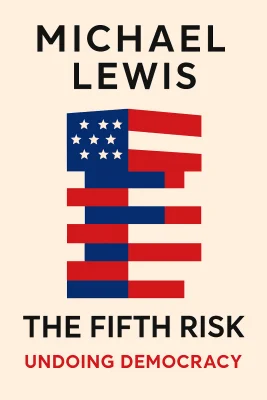
The Fifth Risk
Undoing Democracy
Categories
Business, Nonfiction, Science, History, Economics, Politics, Audiobook, Political Science, Government, Current Affairs
Content Type
Book
Binding
Paperback
Year
2019
Publisher
W. W. Norton & Company
Language
English
ASIN
0393357457
ISBN
0393357457
ISBN13
9780393357455
File Download
PDF | EPUB
The Fifth Risk Plot Summary
Introduction
On a quiet November morning in 2016, hundreds of dedicated civil servants sat in government offices across Washington, ready to brief the incoming Trump administration about the most critical responsibilities of American governance. They had prepared thousands of pages of briefing materials, cleared schedules, and arranged secure meeting rooms. They waited with binders full of essential knowledge about nuclear weapons, food safety, weather forecasting, and countless programs that protect American lives. But as the hours ticked by, nobody came. This scene, repeated across dozens of federal agencies, reveals a troubling truth about modern American governance. The peaceful transfer of power, long considered one of democracy's greatest achievements, had broken down not through violence or conspiracy, but through something far more dangerous: willful ignorance. When those entrusted with protecting the nation choose not to understand what they're protecting it from, every citizen becomes vulnerable to risks they can't even imagine. 本书takes us inside the hidden machinery of American government, where brilliant scientists track nuclear materials, meteorologists save lives with precise storm warnings, and agricultural experts prevent food-borne disasters. Through the eyes of dedicated public servants who rarely receive recognition, we discover that the greatest threat to American prosperity and safety isn't foreign enemies or natural disasters—it's the fifth risk that emerges when government expertise is dismissed, data is suppressed, and institutional knowledge walks out the door.
Chapter 1: The Lost Transition: Trump's Troubled Takeover of Government
Chris Christie thought he understood politics, but nothing had prepared him for the scene unfolding in Trump Tower on election night. While television anchors announced that Donald Trump would become the 45th President of the United States, the candidate himself sat staring at the screen like a man whose bluff had been called. His campaign hadn't even prepared an acceptance speech. When Pennsylvania was finally called, Mike Pence moved to kiss his wife Karen, who turned away sharply. "You got what you wanted, Mike," she said. "Now leave me alone." For months, Christie had been preparing for this moment, leading what should have been a thorough transition to power. He had assembled teams of experts, vetted hundreds of candidates for senior positions, and created detailed briefings about every aspect of federal governance. But Trump had seen a newspaper article about the transition fund and erupted in fury, screaming at Christie: "You're stealing my fucking money!" The president-elect couldn't understand why anyone needed to plan before actually becoming president. After the election, Christie discovered that all his careful preparation meant nothing. Steve Bannon took him aside and delivered the news in two words: "You're out." The entire transition team was fired, their work literally thrown in garbage cans. The lists of qualified candidates, the briefing materials, the institutional knowledge—all of it was discarded. Trump would handle the transition himself, despite having no understanding of what the federal government actually did. Across Washington, career civil servants waited in empty rooms for Trump representatives who never arrived. At the Department of Energy, thirty desks sat empty. At the Department of Agriculture, gorgeous offices had been prepared, complete with a mini-fridge stocked with Pepsis for the incoming team leader who had once worked as a PepsiCo lobbyist. But days passed, then weeks, with no sign of the new administration. The Obama officials who had spent a year preparing comprehensive briefings found themselves talking to silence. This wasn't mere incompetence—it was a fundamental misunderstanding of what governing actually requires. Every previous administration, Republican and Democratic alike, had recognized that running the federal government demands deep expertise and careful preparation. But Trump's team seemed to believe that government was like a corporate takeover, where you could simply fire everyone and start fresh. They didn't grasp that when you're responsible for nuclear weapons, pandemic preparedness, and the safety of America's food supply, ignorance isn't just dangerous—it's potentially catastrophic.
Chapter 2: Tail Risk: Nuclear Arsenal and The Consequences of Ignorance
John MacWilliams had spent his career making sense of complex financial risks on Wall Street, but nothing had prepared him for what he discovered when he became the Department of Energy's first-ever Chief Risk Officer. The DOE wasn't really about energy at all—it was about managing the deadliest materials on Earth. Roughly half of its $30 billion annual budget went toward maintaining America's nuclear arsenal, a responsibility so sensitive that even discussing it required the highest security clearances. MacWilliams learned about "Broken Arrows"—military terminology for nuclear accidents that don't lead to nuclear war. In 1961, a damaged B-52 bomber broke apart over North Carolina, releasing two hydrogen bombs, each more than 250 times more powerful than the bomb that destroyed Hiroshima. One bomb disintegrated on impact, but the other floated down under its parachute and armed itself. Three of its four safety mechanisms failed. Had the fourth switch flipped, vast sections of eastern North Carolina would have been destroyed, and radioactive fallout might have reached Washington and New York. The people responsible for preventing such disasters were leaving government service with their knowledge unshared. When Trump's transition team finally arrived at the DOE, they consisted mainly of a single climate change skeptic who spent his time demanding the names of employees who had attended climate conferences. The intricate systems designed to keep nuclear weapons from exploding accidentally—systems that required constant maintenance and deep expertise—suddenly had no one in charge who understood them. Meanwhile, at weapons facilities across the country, career employees watched in horror as institutional knowledge walked out the door. The Los Alamos scientist who had helped design safety mechanisms for nuclear weapons retired without training a replacement. The expert who tracked weapons-grade uranium around the globe found herself briefing people who didn't want to hear what she knew. An 82-year-old nun had already demonstrated how easily someone could breach the security at a facility housing weapons-grade nuclear material—she simply cut through the fence. MacWilliams had catalogued these risks in detailed briefings that were never given to anyone in the Trump administration. He knew which nuclear facilities were most vulnerable, which safety systems needed immediate attention, and which expertise was about to be lost forever. But the new administration wasn't interested in his warnings. They had come to Washington not to learn about the government's awesome responsibilities, but to prove that government itself was the problem. In their eagerness to tear down the institutions they inherited, they risked unleashing dangers they couldn't even imagine.
Chapter 3: People Risk: The Undervalued Champions of Rural America
Ali Zaidi discovered the truth about American government by accident. As a young budget analyst in the Obama White House, he was handed the Department of Agriculture's financial documents and expected to make sense of $164 billion in annual spending. He had assumed the USDA was about farmers growing crops—instead, he found an agency that quietly sustained rural American life in ways that would astonish most citizens. The USDA had subsidized the apartment where Zaidi's Pakistani immigrant family lived when they first arrived in rural Pennsylvania. It had financed the hospital where they received care, the fire department that protected them, the town's water supply, and the electricity that powered their home. It had even paid for the free school lunches that helped feed Ali when his family struggled financially. None of this was visible to the people it helped—the department's work flowed through local banks and community organizations, carrying no federal logos or recognition. Kevin Concannon understood this invisibility better than anyone. For eight years, he had overseen the USDA's nutrition programs, controlling nearly 70 percent of the department's budget and feeding millions of Americans every day. His programs provided school lunches to 30 million children, nutrition assistance to pregnant women and new mothers, and food stamps to families facing hunger. Yet he remained virtually anonymous, known only to the small community of people who worked on food policy. When Trump won the presidency, rural America celebrated—these were the communities that had voted most strongly for him. But Trump's first budget targeted the very programs that sustained rural life. His administration proposed cutting food stamps by 25 percent, eliminating nutrition standards for school meals, and gutting rural development programs that provided essential infrastructure to small towns. The people who had voted for Trump would be hurt most by his policies, but they would likely never realize the connection. Concannon had spent five decades in public service, moving from state to state to help implement programs that reduced suffering and expanded opportunity. He had never earned the wealth that his private-sector equivalents enjoyed, but he had never sought it either. His modest home in Maine contained plaques honoring his contributions to public health—so many awards that he stored most of them in his garage for lack of wall space. He represented a vanishing breed: people who chose government service not for power or profit, but because they believed in the mission. As the Trump administration took power, career public servants like Concannon faced a stark choice: remain and watch their life's work be dismantled, or leave and take their expertise with them. Either way, the intricate systems that fed America's hungry, protected its food supply, and sustained its rural communities would lose the knowledge and dedication that made them work. The people who had spent decades learning how to serve their fellow citizens were being replaced by political appointees whose primary qualification was loyalty to a president who didn't understand what they were supposed to be doing.
Chapter 4: Data Risk: Weather Forecasting and The Price of Privatization
DJ Patil had discovered something remarkable hidden in the vast data systems of the U.S. government. As America's first Chief Data Scientist, he found that federal agencies possessed information treasures that could transform how the country understood everything from disease outbreaks to traffic safety. But the most valuable data of all came from an agency most Americans had never heard of: the National Oceanic and Atmospheric Administration, buried deep within the Department of Commerce. NOAA collected more information each day than the entire Library of Congress contained in books. Its weather satellites, radar stations, and thousands of observers around the globe generated the raw material for every weather forecast in America. Without this government infrastructure, no private weather company could exist. AccuWeather, the Weather Channel, and every weather app on every smartphone depended entirely on data collected at taxpayer expense and shared freely with the world. Kathy Sullivan had seen weather prediction evolve from educated guessing to precise science during her career from astronaut to NOAA administrator. In 1993, the National Weather Service had predicted a massive storm five days before it struck the Eastern Seaboard—the first time such long-range accuracy had ever been achieved. By 2016, a five-day forecast was as accurate as a one-day forecast had been just a decade earlier. American meteorologists could now see hurricanes forming off the coast of Africa and track their paths across the Atlantic with remarkable precision. But Barry Myers, CEO of AccuWeather, had spent decades trying to privatize this public good. He lobbied Congress to forbid the National Weather Service from communicating directly with citizens, arguing that taxpayers should have to pay private companies for weather information their taxes had already funded. When the Weather Service wanted to create an app to better warn people about tornadoes, Myers stopped it. When other companies offered to help make government weather data more accessible to researchers, Myers threatened lawsuits. The Trump administration nominated Myers to run NOAA, putting the fox in charge of the henhouse. Myers had never been a meteorologist—he was a lawyer who had dropped out of college because, in his own words, he was "never interested in learning." His nomination represented the ultimate privatization scheme: give control of America's weather data to someone whose business model depended on restricting access to it. The implications were profound and disturbing. Weather data saved lives—during Hurricane Harvey, precise forecasts allowed millions of people to evacuate safely. But in Myers's vision of the future, only paying customers would receive lifesaving information. When a tornado struck Moore, Oklahoma, AccuWeather had sent warnings to its corporate clients twelve minutes before impact, but never broadcast the alert publicly. While the tornado destroyed homes and threatened lives, AccuWeather's television network was showing videos of swimming hippos. The message was clear: if you couldn't pay, your life didn't matter.
Chapter 5: The Fifth Risk: Project Management and Long-term Accountability
At Hanford, Washington, John MacWilliams confronted the most expensive environmental cleanup in human history. This vast nuclear reservation, once the source of plutonium for America's atomic arsenal, now contained enough radioactive waste to contaminate the Columbia River for centuries. Underground, 56 million gallons of high-level nuclear waste sat in aging tanks, some of which had already begun leaking deadly materials toward the groundwater. The site epitomized MacWilliams's concept of the "fifth risk"—not the dramatic disasters that grab headlines, but the slow-motion catastrophes that result from poor project management and short-term thinking. For 44 years, from 1943 to 1987, Hanford had produced two-thirds of America's weapons-grade plutonium. During the Cold War rush, workers had simply dumped 120 million gallons of high-level waste into the ground, along with 444 billion gallons of contaminated liquid. They had buried uranium in unlined pits and dug trenches for solid radioactive waste without keeping proper records. Now the government was spending $3 billion per year—10 percent of the Energy Department's entire budget—trying to clean up the mess. The work would take at least a century and cost over $100 billion, assuming nothing went wrong. But things regularly went wrong at Hanford. A contractor had packed radioactive waste with organic kitty litter instead of inorganic kitty litter, causing a barrel to burst and spread contamination throughout a storage tunnel. The mistake shut down the facility for three years and cost $500 million to fix. Worse still, many of the underground storage tanks were emitting hydrogen gas that could cause massive explosions. Some had already leaked their contents into the soil. If the wrong combination of factors came together, Hanford could experience "Fukushima-level events," releasing millions of curies of deadly radiation across the Pacific Northwest. Yet the people responsible for preventing such disasters were being systematically ignored and defunded. The Trump administration's approach to Hanford revealed the deeper problem with American governance. Instead of grappling with the complex, long-term challenges of managing radioactive waste, the new administration focused on short-term political gains. They proposed cutting the programs that funded cleanup work and ignored the career scientists who understood the risks. This wasn't mere incompetence—it was a deliberate choice to prioritize ideology over expertise, politics over science. MacWilliams had tried to warn them. He had prepared detailed briefings about every major risk facing the Energy Department, from nuclear accidents to cyber attacks on the electrical grid. But his warnings were never heard. The people taking over the government didn't want to know about problems they couldn't solve quickly or risks they couldn't spin politically. They preferred the comfort of ignorance to the burden of knowledge, leaving America vulnerable to catastrophes that could have been prevented if anyone had been listening.
Chapter 6: The Human Factor: Understanding Behavior in Crisis Response
Kim Klockow had spent her life studying the deadliest riddle in meteorology: why people die in storms when they've been warned in advance. As NOAA's first social scientist, she investigated the human side of natural disasters, trying to understand why excellent weather forecasts so often failed to save lives. Her research revealed a troubling truth about risk perception that went far beyond tornadoes and hurricanes. The Joplin tornado of 2011 had been perfectly predicted. The National Weather Service issued warnings 19 minutes before the mile-wide twister struck the Missouri city, killing 158 people—more than any single tornado since the government began issuing warnings. Yet most Joplin residents had ignored the alerts, continuing their daily routines until it was too late. The problem wasn't that people didn't hear the warnings; it was that they didn't believe the warnings applied to them. Kim's fieldwork in tornado-damaged communities revealed a consistent pattern. People who had lived through multiple tornado warnings without experiencing a direct hit developed what she called "false confidence." They created elaborate explanations for their immunity: tornadoes never crossed rivers, never hit cities, never struck old Indian burial grounds. These beliefs were entirely false, but they felt true because they matched people's limited personal experience. In El Reno, Oklahoma, Kim witnessed the deadly consequences of this psychology. When a massive tornado threatened Oklahoma City in 2013, a television meteorologist told viewers that anyone not underground was doomed. Tens of thousands of people fled in their cars, creating massive traffic jams directly in the tornado's path. Only the storm's sudden dissipation prevented a catastrophe with thousands of casualties. Kim realized that better forecasts weren't enough—meteorologists needed to understand human behavior as deeply as they understood atmospheric physics. People didn't respond to raw data; they responded to trusted voices in their communities. They couldn't translate wind speeds into personal danger, but they could understand when someone they respected told them their lives were at risk. Her insights came too late to influence national policy. When AccuWeather's Barry Myers was nominated to lead NOAA, he explicitly questioned whether the government should be studying human responses to weather warnings. He called such research "marketing" rather than science, apparently believing that understanding how to save lives was somehow inappropriate for a government agency. The broader pattern was unmistakable. Across American government, the people who had dedicated their careers to serving others were being replaced by those who saw public service as an opportunity for personal gain. The institutional knowledge that had taken decades to develop was walking out the door, leaving the country vulnerable to dangers that could have been managed if anyone had bothered to listen and learn. In dismissing expertise and embracing ignorance, America was gambling with risks it couldn't afford to lose.
Summary
The peaceful corridors of federal agencies may seem distant from our daily lives, but they house the expertise that keeps us safe, fed, and informed. When institutional knowledge disappears—whether through deliberate dismissal or willful neglect—entire populations become vulnerable to risks they never see coming. The most dangerous threat to any democracy isn't external enemies or natural disasters; it's the internal decision to stop learning, stop listening, and stop caring about the complex responsibilities that governance requires. These stories of dedicated public servants reveal a profound truth about the nature of expertise and service. Behind every weather forecast that saves lives, every food safety inspection that prevents illness, and every scientific breakthrough that expands human knowledge stands someone who chose mission over money, service over self-interest. Their work may be invisible, but their impact touches every American life. When we lose their knowledge and dedication, we don't just lose government efficiency—we lose the careful attention to detail that prevents catastrophes and the deep understanding that solves problems before they become crises. The fifth risk teaches us that in our complex, interconnected world, ignorance isn't bliss—it's the most dangerous gamble we can make.
Best Quote
“There was a rift in American life that was now coursing through American government. It wasn’t between Democrats and Republicans. It was between the people who were in it for the mission, and the people who were in it for the money.” ― Michael Lewis, The Fifth Risk
Review Summary
Strengths: The book effectively highlights the systematic and bureaucratic failures of the Trump administration, focusing on the competency of governance rather than political biases. Michael Lewis employs a compelling narrative style by using interesting individuals as guides to explore complex governmental areas, making the content engaging and informative. Weaknesses: The book is noted to be short and lacks depth, leaving the reader wishing for a more comprehensive exploration of the topics discussed. Despite its relevance, it is not considered top-tier work by the author. Overall: The reader finds the book both frightening and saddening due to its portrayal of governmental risks under the Trump administration. It is recommended for those interested in understanding the intricacies of governmental operations and transitions, though it may leave some desiring more detailed analysis.
About Author
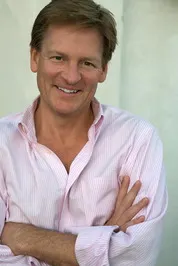
Michael Lewis
Lewis interrogates the complexities of finance, economics, and human behavior with a distinctive narrative style that combines investigative journalism and storytelling. His early experiences on Wall Street during the 1980s provided the backdrop for his debut book, "Liar's Poker", which revealed the excesses of investment banking. Lewis’s exploration of finance extends to his work "The Big Short", where he demystifies the 2008 financial crisis by focusing on the individuals who foresaw the collapse. These themes of risk, systemic flaws, and human ingenuity are recurrent across his works, offering readers insights into the intersection of economics and psychology.\n\nWhile Lewis is renowned for examining financial systems, his writing transcends traditional economic narratives by emphasizing human stories within complex systems. "Moneyball" shifts the focus to sports, illustrating how data analytics revolutionized baseball. Meanwhile, "The Blind Side" goes beyond a sports biography to explore themes of social mobility and opportunity. Lewis's method of connecting abstract concepts with compelling stories ensures his books are accessible to a broad audience, bridging gaps between technical jargon and everyday understanding. His bio reflects a commitment to elucidating intricate subjects with clarity and wit, making his works valuable for readers seeking both entertainment and enlightenment.\n\nThe author has earned critical acclaim, with multiple titles reaching the New York Times Best Seller List and adaptations into major motion pictures. His work is recognized not only for its storytelling prowess but also for its impact on popular culture and the public's understanding of economic phenomena. Lewis’s contributions continue to illuminate the forces shaping modern finance and society, providing a nuanced lens through which readers can view the world.
Read moreDownload PDF & EPUB
To save this Black List summary for later, download the free PDF and EPUB. You can print it out, or read offline at your convenience.
The Fifth Risk
by Michael Lewis
