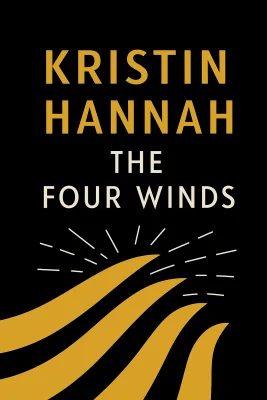
The Four Winds
Categories
Fiction, Audiobook, Historical Fiction, Adult, Family, Book Club, Historical, Novels, Adult Fiction, Literary Fiction
Content Type
Book
Binding
Hardcover
Year
2021
Publisher
St. Martin's Press
Language
English
ISBN13
9781250178602
File Download
PDF | EPUB
The Four Winds Plot Summary
Introduction
# From Dust to Dignity: A Mother's Sacrifice in America's Darkest Hour The dust storm rose like a black wall across the Texas horizon, swallowing farms and dreams with equal hunger. In 1934, Elsa Martinelli pressed her face against the kitchen window, watching her world disappear grain by grain. Behind her, two children coughed through makeshift masks while dirt rained from the ceiling like ash from hell itself. This was the Dust Bowl, America's ecological apocalypse, where families faced an impossible choice: stay and suffocate, or flee into an uncertain future with nothing but hope. What began as one woman's desperate flight from dying land became an odyssey through the darkest corners of the American Dream. Elsa would discover that California's promised fields held their own form of bondage, that survival demanded sacrifices no mother should make, and that sometimes the greatest act of love is knowing when to fight back. In the cotton fields and migrant camps of the Golden State, she would transform from an unwanted daughter into an unlikely warrior, her voice rising above the machinery of exploitation to demand dignity for the forgotten.
Chapter 1: The Unwanted Daughter: From Outcast to Beloved
The Texas Panhandle stretched endlessly under a merciless sun in 1921, its wheat fields golden with prosperity. But inside the grand Wolcott house, twenty-five-year-old Elsa felt like a ghost haunting her own life. Too tall, too plain, too bookish for marriage prospects, she watched her beautiful sisters wed and escape while she remained trapped by an old illness that had supposedly weakened her heart. Desperation drove her into the night before her twenty-fifth birthday. She cut her waist-length hair into a scandalous bob, sewed herself a red silk dress, and walked into Dalhart's darkness. There, under starlight, she met eighteen-year-old Raffaello Martinelli. Dark-eyed and restless, he whispered promises in the bed of his truck beneath the vast prairie sky. For the first time, Elsa discovered passion. She also discovered its price. The morning sickness came like a verdict. Her parents, horrified by their daughter's disgrace, drove her to the Martinelli farm and abandoned her there with nothing but contempt. "You're no daughter of mine," her father spat before disappearing into the dust. The Martinellis were Italian immigrants who had built prosperity from nothing. Tony's weathered hands spoke of decades wrestling wheat from stubborn soil. Rose's small frame contained iron will forged in the old country's hardships. They looked at this pale, pregnant stranger their son had ruined and saw obligation, not welcome. Rose's dreams of college for her beloved Raffaello crumbled as she watched him marry this unwanted woman in a ceremony that felt more like a funeral. But the land had a way of transforming people. As Elsa learned to milk cows and make pasta from scratch, something unexpected happened. Her hands grew strong, her back straight. When daughter Loreda was born screaming and perfect, Rose placed the family's lucky penny in Elsa's palm and whispered, "Welcome to the family." For the first time in her life, Elsa belonged somewhere.
Chapter 2: When the Land Betrays: Drought, Dust, and Abandonment
By 1934, the rains had been gone for three years. The wheat fields that once stretched golden to the horizon now lay brown and broken, soil turned to powder that rose in clouds with every step. Elsa stood in her dying garden, watching precious vegetables wilt under a sun that showed no mercy. The temperature climbed past one hundred degrees day after day, and the well was running dry. Twelve-year-old Loreda had inherited her father's restless dreams and her mother's stubborn will, but none of Elsa's acceptance of their fate. She climbed the windmill platform with Rafe, listening to his stories of Hollywood and New York while Elsa hauled water bucket by bucket to keep their animals alive. The girl's anger burned as hot as the sun, directed at the drought, their poverty, but most of all at her mother's refusal to abandon this dying land. The dust storms came without warning now, great walls of dirt that turned day to night and filled their lungs with grit. They wore gas masks like soldiers in a war against the earth itself. Birds fell dead from the sky. Cattle wandered the roads, abandoned by farmers who could no longer feed them. The government man came with his charts and explanations, telling them they'd broken the prairie with their plows, that this disaster was their own making. Then came the morning that shattered everything. Elsa woke to find Rafe's note on the kitchen table, his clothes gone from their bedroom. He had taken his dreams and jumped a westbound train, leaving behind only words that cut deeper than any blade: "I'm dying here. You are strong. You love this land in a way I never could. You are all better off without me." Loreda's scream shattered the morning quiet as she ran to their special place on the windmill, weeping for the man who had filled her head with adventure stories and then abandoned her to the dust.
Chapter 3: The Great Migration: Journey into False Promise
Seven-year-old Anthony began coughing up mud. The dust storms had grown worse, lasting days at a time, turning their world into a brown hell where breathing became an act of courage. Elsa watched her son grow thinner, his bright eyes dulling as silica-laden dirt filled his small lungs. The doctor's words echoed like a death sentence: "If you want to save him, get him out of Texas." But leaving meant abandoning everything. The land Tony and Rose had built with their bare hands. The graves of their lost children. The only home Elsa had ever truly known. She stood in the family cemetery, surrounded by broken picket fence and dying flowers, feeling the weight of impossible choices. Stay and watch her son die, or flee into an uncertain future with no money and no guarantees. The bank came calling with foreclosure notices. Their last horse collapsed and had to be shot. Loreda, barely thirteen, pulled the trigger herself with a steadiness that broke Elsa's heart. The girl was growing hard, her father's abandonment and their desperate circumstances forging her into someone Elsa barely recognized. When the nine-day dust storm finally ended, they emerged like survivors of an apocalypse, coughing dirt and squinting at a sun that promised only more punishment. Tony stood at the edge of his dead wheat fields, a broken man staring at broken dreams. Rose packed their few remaining possessions with the efficiency of someone who had lost everything before and survived. They loaded their battered truck with everything they owned: a wood-burning stove, barrels of preserved food, bedding, and the remnants of a life that had once seemed so solid. As they prepared to join the great migration west, Elsa walked through the farmhouse one last time, her footsteps echoing in rooms that had witnessed the full arc of human experience compressed into thirteen years of marriage and motherhood.
Chapter 4: Fields of Exploitation: California's Cruel Harvest
The highway stretched endlessly ahead, a ribbon of cracked asphalt cutting through landscape that looked like the surface of Mars. Elsa gripped the steering wheel with white knuckles as their truck joined the exodus. Hundreds of families fled the Dust Bowl in whatever vehicles could still run, a river of desperate Americans seeking salvation in California's promised valleys. The desert crossing nearly killed them. Their truck overheated in the Mojave, steam billowing from under the hood as temperatures soared past 110 degrees. Elsa poured their precious water into the radiator and prayed to every saint she could remember while her children waited in whatever shade they could find. When the engine finally turned over, she wept with relief. But when they crested the mountains and saw California spread below them, green fields stretching to the horizon, orange groves heavy with fruit, Elsa felt something she hadn't experienced in years. Hope. They had made it to the Golden State. Surely their luck was about to change. The first sign that California might not welcome them came at a gas station outside Bakersfield. The clerk took one look at their dusty clothes and hollow cheeks, his face hardening like concrete. "You'd best control those kids," he snarled, reaching under the counter. The word he used was new to Elsa's ears but the hatred behind it was ancient: "Okies." They drove deeper into the San Joaquin Valley, past fields where workers bent over crops under the blazing sun. At every farm, long lines of desperate families waited for work that might pay fifty cents for a twelve-hour day. Elsa pulled into what she thought was a campground, only to discover a sprawling slum of displaced Americans living like refugees in their own country. Tents and makeshift shelters stretched beside an irrigation ditch, filled with children in rags and men sitting idle with defeat in their eyes.
Chapter 5: Awakening the Warrior: Love, Leadership, and Resistance
Cotton picking season brought brutal labor under the merciless sun. Elsa's hands bled from the sharp bolls, her back ached from bending over endless rows, but the work meant survival. Even Loreda and Anthony had to pick alongside her, their childhood sacrificed to necessity. The company store kept them trapped in debt, charging inflated prices while paying wages that barely covered rent for their cramped cabin. Winter brought new horrors. With no crops to pick, families survived on government relief and whatever work they could find. Disease swept through the camps like wildfire. Elsa watched her friend Jean give birth in a tent, only to lose the baby to malnutrition and neglect. The local hospital refused to treat migrants, and the baby died in Elsa's arms, wrapped in a lavender blanket that became a shroud. They buried the tiny body in unmarked ground, one more casualty of a system that valued profits over human dignity. Jack Valen arrived like a spark in dry tinder. The Communist organizer spoke of workers' rights, of dignity, of the power that came from standing together. Loreda, now a fierce teenager, embraced his message with the passion of youth. She had inherited her grandfather's stubborn pride and refused to accept the injustices she witnessed daily. While Elsa feared the consequences of rebellion, Loreda burned with righteous anger. The breaking point came when the growers cut wages again, citing oversupply of workers. Families already surviving on scraps faced starvation. Elsa watched her neighbors' children grow skeletal, saw proud men broken by hopelessness, witnessed women aged beyond their years by constant worry. The night before Jack called for a strike, Elsa found her voice in his arms. For the first time since Rafe's abandonment, she allowed herself to love and be loved. Jack saw in her not the plain, unwanted daughter her father had rejected, but a warrior capable of leading others.
Chapter 6: The Ultimate Sacrifice: A Mother's Stand for Justice
October sixth dawned clear and hot. Hundreds of workers gathered at the cotton fields, their faces set with grim determination. When the moment came to act, Elsa stepped forward first, leading her children into the field where they sat down among the cotton rows. Her courage inspired others to follow, and soon the entire workforce had joined the peaceful protest. For the first time, the pickers had stopped the machinery of exploitation. The growers' response was swift and violent. Armed vigilantes arrived with tear gas and clubs, determined to break the strike through intimidation. When that failed, they brought in strikebreakers, desperate families willing to work for any wage. The confrontation escalated as police joined the vigilantes, turning a peaceful protest into a battlefield. Elsa climbed onto a truck bed and took up a megaphone, her voice carrying across the crowd as she spoke of dignity, of rights, of the American dream they had come west to find. Her words electrified the strikers, giving them courage to stand firm despite the violence surrounding them. She had found her voice at last, the strength that had been building through years of hardship finally breaking free. But as tear gas canisters exploded around them and gunshots rang out, Elsa felt a burning pain in her side. She had been shot, her blood staining the truck bed as she collapsed. Even as life ebbed from her body, she whispered the words that had become their battle cry: "No more." The sight of a dying mother, shot for demanding fair wages, finally shamed the authorities into backing down. Her sacrifice had broken something in the hearts of those who witnessed it, forcing them to confront their own humanity.
Chapter 7: Legacy of Courage: The Inheritance of Unbroken Spirit
Elsa died in a hospital that had once refused to treat migrants, her sacrifice forcing them to open their doors. Jack held her as she slipped away, promising to take her children home to Texas where they belonged. Loreda, now eighteen and shaped by her mother's courage, felt no shame when she robbed the company store at gunpoint to get money for the journey home. She was stealing from those who had stolen so much from her family. The drive back to Texas was a funeral procession, Elsa's coffin in the truck bed as they crossed the desert under stars that seemed dimmer without her presence. They buried her in the family cemetery behind the farmhouse, where Tony and Rose waited with arms wide open. The dust storms had finally ended, and green wheat grew again in fields that had once seemed dead forever. The land had healed, just as the family would heal, carrying Elsa's memory like a torch. Years later, as Loreda prepared to leave for college in California, she stood beside her mother's grave and felt the weight of inherited courage. The headstone bore a single word that captured everything Elsa had become: Warrior. She had found her voice in the cotton fields and used it to speak for those who couldn't speak for themselves. Her sacrifice had not been in vain. The strike she led became part of a larger movement that eventually won basic rights for farmworkers. Love, Elsa had written in her journal, is what remains when everything else is gone. In her daughter's heart, in the lessons she had taught, in the courage she had passed down like a sacred flame, Elsa's love would indeed remain. The penny that Rose had pressed into her palm, that talisman of hope carried across an ocean and a continent, would continue its journey in Loreda's pocket, a reminder that some things endure even when everything else falls apart.
Summary
Elsa Martinelli's journey from unwanted daughter to unlikely warrior became a testament to the unbreakable bonds between mothers and children, and the quiet heroism of ordinary people facing extraordinary circumstances. She had left Texas as a woman fleeing catastrophe and died in California as someone who had discovered her own unshakeable strength. The Dust Bowl had taken her home, the Depression had taken her security, and her husband's abandonment had taken her faith in love. But it could not take her children, and it could not take her determination to build something better from the ruins of what was lost. The dust would settle, the rains would return, and America would find its way back from the brink. But the lessons learned in those desperate years about resilience, about solidarity, about the price of dignity in a world that would rather you have none, those lessons would echo through generations. They would be carried forward by the children who had learned to be strong because they had no other choice, who had witnessed their mother transform from victim to voice, from outcast to advocate. In the end, Elsa's greatest victory was not the strike she led or the injustices she exposed, but the legacy of courage she left behind, proving that even in America's darkest hour, the human spirit could not be broken.
Best Quote
“A warrior believes in an end she can’t see and fights for it. A warrior never gives up. A warrior fights for those weaker than herself. It sounds like motherhood to me.” ― Kristin Hannah, The Four Winds
About Author

Kristin Hannah
Hannah synthesizes historical events with personal narratives to illuminate the often-overlooked stories of women. Her transition from law to literature underscores a dedication to exploring resilience and the human spirit through fiction. While her early career focused on historical romance, she soon evolved to tackle women’s fiction and historical fiction, emphasizing strong female protagonists. Her narratives, such as in "The Nightingale" and "The Great Alone", are marked by rich character development and emotional depth, intertwining personal dramas with broader historical contexts. This approach not only captivates readers but also fosters a deeper appreciation for the genre of historical fiction.\n\nFor readers, Kristin Hannah’s work offers a profound exploration of themes like love, loss, endurance, and recovery. Her books evoke strong emotional responses, drawing readers into the lives and struggles of her characters. By highlighting women's experiences during pivotal moments in history, her stories resonate with a diverse audience. "Firefly Lane", adapted into a Netflix series, exemplifies her ability to connect personal relationships with cultural touchstones. This bio showcases how her literature inspires reflection on personal and collective histories, cementing her status as a bestselling author dedicated to crafting narratives that honor the strength of the human spirit.
Read moreDownload PDF & EPUB
To save this Black List summary for later, download the free PDF and EPUB. You can print it out, or read offline at your convenience.

The Four Winds
by Kristin Hannah
