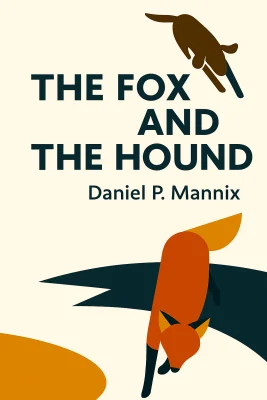
The Fox and the Hound
Categories
Fiction, Animals, Nature, Classics, Fantasy, Novels, Childrens, Media Tie In, Dogs, Animal Fiction
Content Type
Book
Binding
Hardcover
Year
1967
Publisher
Pocket Books
Language
English
ASIN
0671772724
ISBN
0671772724
ISBN13
9780671772727
File Download
PDF | EPUB
The Fox and the Hound Plot Summary
Introduction
In the pre-dawn darkness of Appalachian hills, two creatures stirred—one in a barrel kennel, dreaming of deer trails, the other in a fox den, hearing the desperate scratching at its entrance. Copper, the massive bloodhound, lived for the hunt, his world measured in scent trails and his master's commands. Tod, the red fox kit, would learn that survival meant outwitting those who pursued him. Their fates intertwined from the moment Chief, the pack leader, died beneath a speeding train—killed by the very fox he was chasing. What began as predator and prey would evolve into something more complex. As civilization crept across their wilderness, both animals found themselves relics of a vanishing world. The old rhythms of hunter and hunted gave way to new dangers: traps that thought like foxes, poisons that fell like snow, and the inexorable march of concrete and steel. In this changing landscape, the ancient dance between hound and fox would play out one final time, with consequences neither could foresee.
Chapter 1: Origins of Adversaries: The Birth of Predator and Prey
The fox appeared at dawn like a ghost made flesh, sitting just beyond the reach of Copper's chain. His red coat gleamed in the early light as he barked—a taunting sound that drove every hound in the pack to murderous frenzy. Copper, the half-bloodhound with his massive frame and gentle disposition, felt something primitive stir in his chest. This wasn't just any fox. This was the enemy. Tod had come deliberately, drawn by curiosity and boredom from his den among the boulder pile. The young fox possessed that fatal combination of intelligence and recklessness that would define his life. He understood chains and their limits with mathematical precision, having been raised by humans before escaping to the wild. Now he sat grinning at the captive hounds, tail curled around his feet, savoring their impotent rage. The Master emerged from his cabin, rifle in hand, tracking the source of the chaos. Car headlights swept the hillside as other men arrived—men who smelled of leather and gun oil, whose presence always meant a hunt was brewing. Tod's amusement evaporated. These weren't farmers with their clumsy dogs. These were professionals. Chief, the Trigg hound and pack leader, somehow broke his collar in his fury to reach the fox. The snap of metal was like a gunshot in the dawn air. Suddenly the game became deadly serious. Tod fled, his white-tipped brush flashing through the underbrush, but behind him came something he'd never encountered: a hound that could actually think. The chase led to the railroad tracks where Tod had played his train-dodging games before. As the locomotive's whistle shrieked across the valley, Tod made his desperate gamble. At the last possible second, he leaped from the rails. Chief, running by sight now rather than scent, couldn't adjust in time. The locomotive's scream mixed with a single, agonized howl. In the sudden silence that followed, Copper heard his master's sobbing—a sound that would haunt him forever. The old man knelt beside Chief's broken body, then looked across the valley and shouted his rage at the vanished fox. A blood debt had been born, one that would bind hunter and hunted across the seasons to come.
Chapter 2: Learning the Ways: Survival Skills and Hunting Techniques
Summer brought lessons written in blood and cunning. Copper learned to distinguish Tod's scent from a thousand others—a signature of wildness and intelligence that made his hackles rise. Under his master's patient guidance, the bloodhound studied every fence crossing, every creek bed, every fallen log where a fox might pass. His education was methodical, scientific, relentless. Tod's schooling came harder. The old vixen who'd become his mate taught him the ancient fox arts through necessity. When winter's grip turned the world white and still, survival meant mastering the hunt or starving. She showed him how to mouse through snow, how to coordinate attacks on larger prey, how to read the wind for messages of danger or opportunity. Their first crisis came when spring brought new life to the den. Five cubs, blind and mewling, represented both hope and vulnerability. Tod threw himself into the role of provider with desperate intensity, ranging farther than ever before to fill the vixen's belly. But the cubs attracted attention—their scent signature growing stronger each day, marking them as targets. The Master and Copper had been tracking the family for weeks, learning their patterns, mapping their territory. When the hunt finally came, it arrived with mechanical precision. Copper's bay echoed through the oak grove as he followed the scent trail of the biggest cub—the bold one who'd grown careless raiding chicken coops. Tod tried everything: false trails, backtracking, even attacking the farm dog that had joined the pursuit. But the vixen's maternal instincts proved their doom. She wouldn't abandon the den, wouldn't flee when flight meant survival. Instead, she sent the cubs underground and tried to lead the hounds away herself. The exhaust pipe thrust into the burrow brought death without dignity or fight. When Tod returned that evening, he found the vixen digging frantically at the sealed earth, laying out the small bodies in a neat row. She'd brought a fresh-killed chicken for the biggest cub, hoping its scent might somehow call him back to life. The blowflies that came with morning finally convinced her that miracles don't happen in the wild.
Chapter 3: The Dance of Pursuit: A Game of Strategy and Instinct
Autumn transformed the hunt into high art. The jug hunters arrived with their hounds and their mason jars of corn liquor, turning the night into a symphony of baying voices and flickering campfires. For Tod, these hunts became a deadly education in the psychology of pack behavior, teaching him to read not just individual hounds but their collective intelligence. He learned that each hound had weaknesses—the Hudspeth who wouldn't enter thick cover, the Birdsong who always took shortcuts that could be exploited. Most importantly, he discovered their jealousies, the way competition could turn pack cooperation into individual glory-seeking. When one hound found his scent but kept silent to gain advantage, Tod made him pay by doubling back and forcing the solitary pursuer into impossible terrain. Copper observed these night hunts from his kennel with growing frustration. His master had retired from the social hunting scene, preferring the pure challenge of one hound against one fox. But the bloodhound could hear the pack's struggles, their confused whimpering when Tod's tricks left them baffled and scattered across miles of empty countryside. The fox's reputation grew with each successful escape. He developed signature moves: the water running that left hounds floundering in streams, the cattle herding that ended with dogs trampled and bloody, the railroad timing that had already cost Chief his life. But perhaps his most devastating technique was psychological—appearing just close enough to be seen, grinning at his pursuers before vanishing like smoke. Winter brought the formal hunts, when mounted riders and imported English foxhounds turned pursuit into pageantry. Tod found these hunts almost insulting in their predictability. The foreign hounds, bred for speed rather than intelligence, could be fooled by tricks that would embarrass a farm cur. He would lead them in vast circles, always staying just ahead of their rush, until exhaustion scattered them like leaves. Yet even in his arrogance, Tod sensed something changing. The Master's careful study sessions with Copper weren't random wandering. They were reconnaissance, mapping his territory, learning his habits. The bloodhound was being educated for a specific purpose, trained to read not just Tod's scent but his mind. When the real test came, it wouldn't be against a pack of strangers. It would be personal.
Chapter 4: Bonds and Losses: Family, Territory, and Grief
The new vixen came to Tod desperate and starving, one of the few survivors of a winter that had claimed most of her kind. She was older, more experienced, but her gaunt frame and matted coat spoke of losses that hunger couldn't fully explain. Together they formed a bond born of mutual need rather than passion—two predators pooling their skills against an increasingly hostile world. Their partnership proved formidable. The vixen's knowledge of cooperative hunting transformed Tod from a solitary scavenger into part of a deadly team. She would circle behind feeding ducks while Tod performed his mesmerizing dance, luring them within striking distance. Together they could take prey that would have been impossible for either alone—geese whose powerful wings could break bones, rabbits whose speed exceeded any single fox's abilities. But the vixen brought her own ghosts to their union. Her previous mate had died in a trap, and the trauma left her simultaneously reckless and paranoid. She would attack any fox that dared approach their territory, fighting with a savagery that shocked even Tod. These weren't the ritualized combats of normal fox society—these were battles to the death, fought by a female convinced that sharing meant starvation. When their own cubs came, the pattern repeated with heartbreaking precision. The pups learned their lessons well—too well. The biggest male discovered the chicken coops and grew bold, ignoring his parents' careful teachings about human dangers. His success bred arrogance, and arrogance brought the inevitable reckoning. The man with the wounded rabbit call was patient, professional, invisible until the moment he squeezed the trigger. The vixen, racing to save her cub from what she thought was genuine distress, ran directly into the Master's rifle sight. The phonograph record kept playing its electronic deception even after her body hit the ground, the artificial rabbit cries mixing with Tod's real grief. That night, Tod sat vigil beside her corpse, trying to understand treachery that went beyond anything in his experience. Humans had always been dangerous, but this was different—a lie so perfect it could fool even senses honed by generations of survival. As dawn broke over the recorded cries still echoing from the abandoned machine, Tod learned that the rules of engagement had changed forever.
Chapter 5: Changing Landscapes: The Encroachment of Civilization
The bulldozers came with the spring thaw, their diesel roar drowning out the morning bird songs that had marked Tod's territory for years. Steel blades bit deep into earth that held the history of countless generations—fox dens, rabbit warrens, the secret highways of a wilderness society now condemned to extinction. Where forest paths had wound between ancient oaks, concrete ribbons unfurled with mathematical precision. The streams that had provided both drinking water and escape routes disappeared into culverts, their music silenced by the thunder of traffic that flowed without rest. The air itself changed, heavy with exhaust fumes that deadened scent and filled Tod's sensitive nostrils with industrial poison. New foxes appeared—urban scavengers who had never learned to hunt, content to raid garbage cans and live like rats in the shadows of human construction. They bred prolifically in the absence of natural selection, producing litters of weak, diseased offspring who survived only because the old predators and competitors had been driven away. Tod watched his world shrink to scattered islands of green surrounded by endless development. The housing projects brought their own dangers—children with BB guns, housewives with poison, municipal pest control officers with professional efficiency. Yet these same developments also brought opportunity. Pet rabbits in backyard hutches, bird feeders that attracted easy prey, garbage that provided sustenance when natural food sources vanished. The Master and Copper faced their own displacement. The kennel hill was sold to developers, forcing the pack into a cramped cabin that reeked of old age and defeat. One by one, the other hounds disappeared—some sold, others simply too old to justify their keep. Copper remained, loyal to the end, watching his world collapse with the same dignity he'd shown in the field. But even as civilization consumed their habitat, the bond between hunter and hunted intensified rather than weakened. They had become living symbols of something vanishing—the last players in a drama that had shaped these hills for centuries. When winter brought fresh snow, the old man and his old hound would still venture out, following tracks that led nowhere and everywhere, keeping alive rituals that no longer had meaning for anyone but themselves.
Chapter 6: The Final Hunt: Confrontation Between Ancient Rivals
The tracks in the snow were unmistakable—the last signature of wildness in a landscape gone sterile. Copper's ancient joints protested as he struggled from the cabin, but his nose still functioned with bloodhound precision. Somewhere in the remaining fragments of woodland, Tod waited for what both animals seemed to understand would be their final dance. The scent trail led through strip malls and subdivisions, across highways that had obliterated the old fox roads, past shopping centers built on the bones of sacred hunting grounds. Tod was no longer the young fox who had taunted Chief to his death. Age and countless narrow escapes had silvered his muzzle and taught him the weight of survival in a world that no longer wanted him. Copper followed with mechanical determination, each step an act of faith in skills that seemed increasingly meaningless. The trail told him everything—Tod's exhaustion, his confusion in unfamiliar territory, the way he kept trying to return to a home range that no longer existed. This wasn't the cunning strategist of the forest years. This was a refugee, lost and desperate in alien country. The chase stretched across two days and a night, predator and prey both driven by instincts stronger than conscious thought. Tod tried his old tricks—the water running, the backtracking, the impossible leaps that had once baffled entire packs. But Copper's experience had taught him to read intention as well as scent. Every evasion was anticipated, every desperate gambit countered with patient skill. They crossed into genuine wilderness for the first time in years—a preserve that developers hadn't yet claimed. Here, briefly, the old rules applied. Tod regained some of his cunning, laying false trails through bramble thickets that tore at Copper's ears. But the bloodhound's determination never wavered. This hunt had lasted decades, through seasons of plenty and scarcity, through the rise and fall of the world they'd both known. When Tod finally collapsed beside the fallen log, his sides heaving and his tongue black with exhaustion, there was almost relief in his amber eyes. Copper staggered forward, gave the dying fox a ritual shake, then collapsed across the body. They lay together in the last clean sunlight, hunter and hunted united at last in defeat. The Master found them there as the shadows lengthened. His arthritic hands shook as he lifted Copper, the old hound's breathing shallow but steady. The fox he handled more gently, almost reverently. This had been an opponent worthy of respect, a symbol of everything wild and free that was passing from the world.
Chapter 7: No Place for Wildness: The End of an Era
The photograph appeared in newspapers across three states—the old Master holding Tod's pelt while Copper lay exhausted but triumphant at his feet. For a brief moment, they were celebrities, representatives of a vanishing America that still stirred something in the collective memory. Reporters came to interview the last foxhunter, to document skills that would die with him. But fame proved as ephemeral as morning mist. Within weeks, the crowds stopped coming, the phone stopped ringing, and the Master returned to his bottle with renewed dedication. Copper watched helplessly as his beloved human slipped deeper into the despair that had been building for years. The great hunt's success had given them purpose; its conclusion left only emptiness. The final blow came with bureaucratic precision. Social services, prompted by complaints from new neighbors who found the old man's lifestyle offensive, arrived with legal papers and institutional smiles. The kennel master who had once commanded respect throughout the hunting world was declared unfit to care for himself, marked for removal to a sterile facility where dogs were forbidden. Copper understood none of the legal language, but he recognized the finality in his master's tears. When the old man took down his shotgun for the last time, the bloodhound's tail wagged with pathetic hope. Perhaps another hunt waited, another chance to prove their worth in a world that had moved beyond them. They walked together to the edge of what had once been hunting country, past shopping centers built on fox dens, through air thick with industrial poison. The Master's hands shook as he loaded the familiar weapon, his eyes bright with unshed tears. Copper lay trustingly at his feet, feeling the gentle pressure of fingers that had guided him through a thousand trails. The single shot echoed across the valley like a punctuation mark, final and absolute. In the sudden silence that followed, even the traffic seemed to pause in respect for something indefinable that had just passed from the world. The last foxhound and his master had chosen to leave together, refusing a future that had no place for their kind of wildness.
Summary
In the end, the wilderness claimed its own. Tod and Copper, bound together by years of pursuit and mutual respect, found their final peace in a world that had moved beyond the ancient rhythms of hunter and hunted. Their story became legend among the few who remembered when skill mattered more than efficiency, when the chase itself held meaning beyond mere success or failure. The hills they had known transformed completely—concrete arteries carrying endless streams of strangers, housing developments spreading like geometric cancer across landscapes that had once echoed with hound music and the whisper of fox paws on morning dew. Yet something of their essence lingered in the quiet moments between traffic sounds, in the few remaining fragments of forest where wild things still moved according to laws older than human civilization. Their bond transcended the simple categories of predator and prey, becoming instead a testament to the dignity possible when intelligence meets courage, when ancient enemies recognize the nobility in their opposition. In a world increasingly defined by mechanical precision and bureaucratic sterility, they remained stubbornly, gloriously alive until the very end.
Best Quote
“He did not care what happened as long as he would never be separated from the Master, for he had killed the great fox, and in this miserable, fouled land there was no longer any place for fox, hound, or human being.” ― Daniel P. Mannix, The Fox and the Hound
Review Summary
Strengths: The review effectively uses gifs to convey emotions and enhance the storytelling experience. It provides a detailed summary of the plot, highlighting key events and character dynamics, which helps readers understand the narrative's progression. Weaknesses: The review lacks a critical analysis of the book's themes, writing style, or character development. It primarily focuses on plot description rather than evaluating the book's literary qualities. The use of gifs, while engaging, may distract from a more in-depth critique. Overall: The reader's sentiment is one of emotional engagement, as indicated by the use of gifs and the warning about the story's emotional impact. The review suggests that the book is intense and not a typical light-hearted tale, but it does not provide a clear recommendation level.
About Author

Daniel P. Mannix
Mannix navigates an eclectic literary and professional landscape, reflecting a commitment to exploring the fringes of human and animal experience. He integrates his real-life roles as a sideshow performer, magician, and animal trainer into his diverse range of works. His writing traverses topics from fictional animal stories to grim historical accounts, with a focus on unconventional and often sensational subjects such as torture, sideshow culture, and the occult. For example, his book "The History of Torture" offers a comprehensive exploration of its dark subject matter, while "Step Right Up!" provides a vivid memoir of his life as a sword swallower.\n\nMannix's method involves drawing upon his varied life experiences to enrich his narratives, blending personal adventure with meticulous research. His "Black Cargoes: A History of the Atlantic Slave Trade 1518–1865" exemplifies this, informed by his extensive time in Africa. Meanwhile, "Those About to Die", a study on Roman gladiatorial games, stands out for its historical impact, even inspiring Ridley Scott’s film "Gladiator". His works therefore offer readers an engaging blend of scholarship and personal narrative, appealing to those interested in both historical depth and storytelling.\n\nReaders benefit from Mannix’s ability to illuminate lesser-known aspects of history and culture, providing insights that are both educational and entertaining. His novel "The Fox and the Hound", adapted into a Disney film, reaches mainstream audiences, while his contributions to the International Wizard of Oz Club showcase his passion for diverse literary genres. Mannix’s bio presents a portrait of a writer whose versatility and daring have left an indelible mark on both literary and popular culture.
Read moreDownload PDF & EPUB
To save this Black List summary for later, download the free PDF and EPUB. You can print it out, or read offline at your convenience.
The Fox and the Hound
by Daniel P. Mannix
