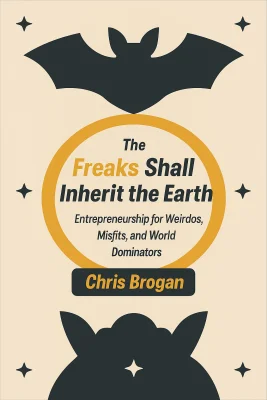
The Freaks Shall Inherit the Earth
Entrepreneurship For Weirdos, Misfits and World Dominators
Categories
Business, Nonfiction, Self Help, Reference, Entrepreneurship, Social
Content Type
Book
Binding
Hardcover
Year
2014
Publisher
Wiley
Language
English
ISBN13
9781118800553
File Download
PDF | EPUB
The Freaks Shall Inherit the Earth Plot Summary
Introduction
In a small coffee shop in Brooklyn, a woman with bright purple hair carefully arranges handcrafted jewelry on a display table. Nearby, a former corporate executive teaches skateboarding to kids after quitting his six-figure job. Across town, a software developer builds apps during the day while running an underground supper club at night. These aren't just random stories—they represent a growing movement of individuals who are redefining success on their own terms. The conventional path to business success has always been clearly marked: get a degree, climb the corporate ladder, play by the established rules. But what if your vision, talents, and approach don't fit neatly into that prescribed formula? This book explores how unconventional thinkers—the "freaks"—are creating thriving businesses aligned with their unique values and vision. Through stories of entrepreneurs who've broken the mold, you'll discover that today's business landscape increasingly rewards authenticity over conformity, passion over protocol, and meaningful connection over mindless competition.
Chapter 1: Defining the Freak Mindset: Business Beyond Boundaries
Marie Forleo once worked on the floor of the New York Stock Exchange, seemingly living the dream that many business school graduates aspire to. "I used to work on the floor of the New York Stock Exchange. That was my number-one job pick out of college and I loved it because there were no chairs," she explains. The high-energy environment initially seemed perfect for her vibrant personality. But something was missing. Despite the prestige and excitement, Marie felt a persistent disconnect between her work and her deeper purpose. "I kept having this intuitive gut feeling, 'This is not where I'm supposed to be in life,'" she recalls. After exploring different career paths, including magazine publishing and editorial work, Marie stumbled across an article about life coaching—a profession practically unheard of at the time. Despite being only 23 years old, something inside her recognized a perfect fit. When she received a job offer from Vogue—the pinnacle of fashion magazines—Marie faced a decisive crossroads: take the prestigious position or quit to start her own coaching business at 23. Marie chose the unconventional path. She began bartending at night while building her coaching practice during the day. Today, she runs a multi-million dollar business helping others find their own unconventional paths to success. Her business reflects her personality—playful, direct, and genuinely caring—qualities that would have been suppressed in a traditional corporate environment. What Marie's story illustrates is the fundamental principle of the freak mindset: refusing to separate who you are from what you do. The business landscape has evolved dramatically, creating space for those who once would have been forced to conform. Today's economy rewards those who bring their whole selves to their work, who create business models aligned with their values, and who connect authentically with communities that share their vision. The path might not be as clearly marked, but for those willing to forge it, the rewards extend far beyond financial success.
Chapter 2: Creating Success on Your Own Terms: The Wild Colors and Solid Spine
R.J. Diaz runs Industry Portage, a company producing rugged yet stylish laptop bags, duffels, and other utilitarian goods. Coming from the construction industry—not exactly known for its fashion sensibility—R.J. faced skepticism when he first launched his business. "I don't have a background in textiles or fashion design at all," he explains. "When I told people about my plans, I got a strong reaction of 'Why would you ever do that? What do you know about making a product?'" The construction industry colleagues gave him what R.J. describes as "a smirk, like, 'Okay, that's a nice hobby,'" discounting his efforts until they saw his persistence with newsletters and new product designs. Only then did they begin to take him seriously. The journey wasn't easy. "If I had known then what I know now about having to develop this idea, I honestly don't know that I would have done it," R.J. admits. It took nearly a year just to find manufacturers willing to work with him on small-quantity orders and prototypes. For people who feel like they don't fit the conventional business mold, success often requires balancing two seemingly contradictory elements: wild creativity (the "wild colors") and practical business fundamentals (the "solid spine"). Many creative entrepreneurs focus exclusively on their artistic vision while neglecting the structural business elements that make sustainability possible. Others become so focused on business mechanics that they lose the creative spark that made their offering unique in the first place. This balancing act involves understanding that business fundamentals aren't optional—they're essential. You must be able to pay your bills. You must create something to sell. You must find ways to reach customers. While you should never compromise your core vision, you must develop the discipline to handle the less exciting aspects of business. The most successful "freaks" aren't just wildly creative—they're disciplined practitioners who have learned to embed their uniqueness within solid business practices. They've discovered that structure doesn't have to mean conformity; rather, it creates the foundation that allows their creativity to flourish sustainably.
Chapter 3: Falling in Love with Not Knowing: Turning Uncertainty into Opportunity
"I think we should launch a magazine," Chris tells his business partner Rob. "Do we know how to do that?" Rob asks. "It'll be digital. Kind of like a blog, but I dunno... more." "Well, let's do it!" This exchange reveals a fundamental truth about entrepreneurial success: almost everything we know how to do started with not knowing how to do it. When interviewing successful entrepreneurs, a common pattern emerges—none of them knew exactly what they were doing when they started. They had hunches or related experiences, but most launched their ventures without a complete roadmap. Roderick Russell, a professional sword swallower, mind reader, and stage hypnotist, exemplifies this principle. When asked how one becomes a sword swallower, his answer was simple: by starting to do it. "Some people say they start by dangling cooked spaghetti down their throat to start numbing their gag reflexes. I believe that if you want to swallow swords, you practice by swallowing swords." Russell learned by practicing and trying, gaining a quarter inch of depth at a time until he could get the sword all the way into his throat. Each attempt built upon previous knowledge, gradually transforming impossibility into mastery. This approach applies equally to business ventures. Instead of waiting until you have all the answers, start with what you know and learn the rest through action. When you encounter something you don't know—and you will—you have several options: ask good questions of the right people, experiment to find answers, or pay someone else to handle that aspect while you focus on your strengths. The key is recognizing that ignorance is temporary and curable, while refusing to act until you know everything is permanent and deadly to your dreams. The most powerful insight about not knowing is that it represents opportunity rather than failure. Success is built on the ability to fail quickly, learn rapidly, and adapt. As one entrepreneur puts it: "My success is built entirely on my ability to fail quickly and then learn and adapt from the results of that failure." This mindset turns uncertainty from a source of paralysis into a competitive advantage—freeing you to explore possibilities that more cautious competitors might avoid.
Chapter 4: Building Systems That Work for Your Unique Style
John Saddington, a software entrepreneur who lives with Asperger's syndrome, has developed unique systems to manage his particular cognitive style. Visual information stays with him much more clearly than audible information. While he might forget the details of a grocery list, if he photographs that list, he can navigate the store without a problem. When speaking with someone on the phone, looking at their photo helps him access his mental database about that person. Rather than fighting against his natural wiring, John created systems that leverage his strengths. He even developed Pressgram, a photo-sharing software that allows users to take photos on their smartphones and post them to WordPress—a tool that helps him organize information in ways that work with his visual processing strengths. Many creative entrepreneurs resist the idea of systems, associating them with corporate rigidity or conformity. Yet systems don't exist because you're weak—they exist to free your creative energy. World-class cellist Yo-Yo Ma practices three hours daily not because he lacks talent, but because systematic practice is what maintains his extraordinary abilities. Similarly, the right business systems don't constrain your creativity; they channel it more effectively. Systems can take many forms depending on your needs. Ron Hood, a business operations specialist, creates detailed process documentation so that others can seamlessly continue his work if needed. "It's all related to what would happen if I was on my way home from work and I didn't return the next day," he explains. "I would not want the company to think, 'Oh my gosh! I have no idea what to do.'" His systems ensure continuity and efficiency, regardless of circumstances. The most effective systems align with your natural tendencies rather than fighting against them. If you love paper, use paper. If digital tools serve you better, embrace them. The key is creating frameworks that free you from reinventing routine processes so you can focus your energy on the aspects of your business that truly need your unique perspective. Whether it's a "compass" document that keeps you aligned with your values, time-blocking techniques that maximize productivity, or automated responses for common customer inquiries, effective systems create freedom rather than restriction.
Chapter 5: Connecting with Your Freaks: Creating Community and Belonging
Growing up in Maine, Chris felt like an outsider. While neighborhood kids debated Van Halen versus Led Zeppelin, he was obsessed with Batman, Star Wars, and "anything weird" that others weren't into. Finding others who shared his interests seemed impossible until his family got their first computer with a modem. Suddenly, through early bulletin board services, he could connect with people who shared his interests—people he'd never have encountered in his physical community. This experience reveals a fundamental truth for unconventional entrepreneurs: you are not alone. No matter how niche your interests or how unusual your approach, there are others who share your perspective. Finding and connecting with these kindred spirits—your "freaks"—is essential to both personal fulfillment and business success. Tony Hawk experienced this early in his skateboarding career. While most of his friends' parents discouraged skateboarding, Hawk had supportive parents who recognized his passion. His teachers, however, thought he was wasting his time and talent. "I remember the music teacher being very upset with me and just thought I was wasting everything with my skateboarding," Hawk recalls. This tension between following conventional expectations and pursuing your passion is familiar to many entrepreneurs whose vision doesn't align with established paths. The Japanese island of Okinawa has a concept called "monchu," meaning "one family"—the idea that community extends beyond blood relations to include those you choose to care for. This concept applies powerfully to business. Rather than simply networking to find customers, successful entrepreneurs build communities where people feel they belong. Marie Forleo created an online business community where her playful, authentic style attracts like-minded entrepreneurs who want to combine passion with profit. Tony Hawk not only created high-end skateboarding products but fought to develop affordable starter boards that would make the sport accessible to more young people. This approach turns traditional marketing on its head. Instead of trying to appeal to everyone (and consequently connecting deeply with no one), successful "freaks" signal clearly to their tribe through authentic communication, shared values, and distinctive style. When you stop trying to please everyone and start genuinely connecting with those who resonate with your vision, you create a community that sustains both your business and your spirit.
Chapter 6: Owning Everything: From Words to Your Future
"L'état c'est moi" ("I am the state") declared Louis XIV of France, suggesting that he personally embodied the nation he ruled. While his absolutist politics are questionable, his insight about personal identification applies powerfully to entrepreneurship: "The business is you." This realization leads to a fundamental principle for unconventional entrepreneurs—the necessity of ownership in all dimensions of your life and work. This ownership begins with your words. Most people engage in negative self-talk throughout the day, saying things to themselves they would never say to another person: "I'm stupid," "I'm a failure," "I've always been bad at this." These words become self-fulfilling prophecies that limit what you believe is possible. Owning your words means becoming conscious of this internal dialogue and deliberately changing it. It means eliminating phrases like "I should" (which usually means "I won't"), "I hope" (which abdicates responsibility), and "They won't" (which creates external excuses). Beyond words, ownership extends to your intentions. Many people follow a predictable cycle: they set an intention with great enthusiasm, start with fervor, then quickly abandon their efforts when obstacles arise. This pattern reflects the natural tendency toward entropy—the breakdown that occurs when energy isn't consistently applied. True ownership means maintaining your intentions even when motivation fades, developing discipline rather than relying on willpower. As one entrepreneur puts it, "Willpower is stupid. It's a very weak muscle. It's the least useful way to accomplish any goal." Ownership also means embracing the role of servant to your community. Rather than seeing customers as transactions, successful entrepreneurs see them as people they have the privilege to serve. This mindset turns traditional business hierarchies upside down. Instead of asking "What can I get from others?" you ask "How can I create value for others?" When you genuinely adopt this perspective, you discover that serving others ultimately serves your own goals as well. Perhaps most importantly, ownership means taking responsibility for your future. The future isn't something that happens to you; it's something you create daily through your choices and actions. If you want to learn guitar, you don't set a date three months from now to begin—you practice daily, making small improvements that accumulate over time. The future belongs to those who take ownership of creating it through consistent, intentional action in the present moment.
Chapter 7: Navigating Challenges: When Things Go Wrong
R.J. Diaz faced a critical challenge when planning to expand his bag business. "My concern isn't so much the sourcing," he explained. "I have manufacturers, production houses, workshops available to handle pretty much any size order. The bigger challenge is financing it." In retail, producers often don't see revenue until long after they've paid to produce inventory. Without outside investors, bootstrapping a growing business requires creative solutions to cash flow challenges. Every entrepreneur faces moments when their plans crumble—when the money runs out, when partners leave, when the market shifts unexpectedly. What separates successful entrepreneurs from the rest isn't avoiding these challenges but responding to them effectively. Tony Hawk experienced this firsthand when skateboarding declined in popularity during the early 1990s. Once earning $10,000-$15,000 monthly, he found himself scrambling to make $1,000. "As things started to decline I definitely was trying to figure out how to make ends meet," Hawk recalls. He used his video-editing system to do freelance work, sold his house to move into a smaller one, cut expenses dramatically, and took exhibition gigs that paid just $100 a day. "I would get random exhibition offers of skating in a Six Flags parking lot for a week, three times a day for 100 bucks a day. That's the kind of thing I was doing." Throughout this challenging period, Hawk maintained his commitment to skateboarding: "The only really consistent factor in that was that I just never quit skating." When business difficulties arise, successful entrepreneurs follow a clear pattern: they accept reality quickly without surrendering to it. They assess their situation honestly, identifying exactly what isn't working. They look for immediate patches while developing longer-term solutions. They make tough decisions about what to preserve and what to abandon. They take decisive action rather than waiting for conditions to improve on their own. And when necessary, they apologize effectively using the "Three A's": acknowledge what happened, apologize clearly, and act to prevent recurrence. Perhaps most importantly, they reframe their perspective on failure. Anthony Robbins suggests thinking of failures not as personal deficiencies but as "outcomes we didn't want or expect." This subtle shift removes shame and blame, freeing you to learn from the experience and try again. Depression, past traumas, and other personal challenges aren't excuses to give up but realities to acknowledge as you continue moving forward. The path to success isn't avoiding difficulties but developing the resilience to navigate through them while maintaining your core vision.
Summary
At its heart, this book offers a powerful reassurance: you don't have to choose between being yourself and being successful. The stories of entrepreneurs like Marie Forleo, R.J. Diaz, Tony Hawk and countless others demonstrate that authenticity isn't just personally fulfilling—it's increasingly becoming a competitive advantage in today's business landscape. The most compelling success stories don't come from those who followed conventional paths perfectly, but from those who created entirely new paths aligned with their unique visions, values, and capabilities. The world needs your particular brand of "freakiness"—your unusual perspective, your unconventional approach, your authentic voice. Whether you're launching an independent business, innovating within a corporate environment, or still figuring out your path, success comes from embracing rather than hiding what makes you different. By developing solid business fundamentals while maintaining your unique approach, falling in love with the learning process, creating systems that work with your natural tendencies, connecting with your community, and taking ownership of your choices, you create the conditions for sustainable success on your own terms. In today's rapidly evolving business landscape, the greatest risk isn't standing out—it's trying too hard to fit in.
Best Quote
“The future is what I create today. Every day.” ― Chris Brogan, The Freaks Shall Inherit the Earth: Entrepreneurship for Weirdos, Misfits, and World Dominators
Review Summary
Strengths: The book provides interesting insights into how business minds operate, offering tips for both employees and entrepreneurs. It includes a chapter on improving one's workplace and encourages readers to take action.\nWeaknesses: The author, Chris Brogan, sometimes appears more as a motivational cheerleader than a business expert, which some readers might find tiresome.\nOverall Sentiment: Mixed. The reviewer enjoyed the book and found it thought-provoking but was occasionally put off by the overly enthusiastic tone.\nKey Takeaway: The book emphasizes the importance of standing out and taking action, suggesting that success often comes from embracing one's unique qualities rather than conforming.
About Author
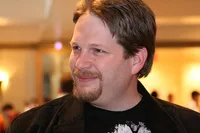
Chris Brogan
Brogan synthesizes the nuances of digital strategy and communication, aiming to redefine how businesses build trust and influence in the online world. By examining the intricate dynamics of social software technologies, he provides invaluable insights into cultivating genuine connections in digital landscapes. His works, such as "Trust Agents: Using the Web to Build Influence, Improve Reputation, and Earn Trust," explore the transformative potential of the web to foster authentic relationships. Meanwhile, "The Impact Equation" delves into effective communication strategies, and "The Freaks Shall Inherit the Earth" encourages embracing individuality within entrepreneurship, challenging conformity in the business arena.\n\nCentral to Brogan's approach is the emphasis on practical application and strategic foresight, which is evident in his extensive career as a marketing consultant and speaker. His methods are geared toward empowering individuals and organizations to leverage digital media for growth and trust development, while also focusing on community nurturing and customer acquisition. The author of several acclaimed books, Brogan has shaped his literary themes around social media marketing, influence, and strategic leadership, offering readers strategies to navigate the complexities of digital engagement effectively.\n\nThis bio highlights Brogan's impact on business professionals and marketers who seek to harness the web's potential. By advocating for authenticity and trust, he equips his audience with tools to drive transformative change. Recognized as a top influencer in the field, his expertise benefits those eager to adapt to evolving digital landscapes, ultimately positioning them for success in an interconnected world.
Read moreDownload PDF & EPUB
To save this Black List summary for later, download the free PDF and EPUB. You can print it out, or read offline at your convenience.
The Freaks Shall Inherit the Earth
by Chris Brogan
