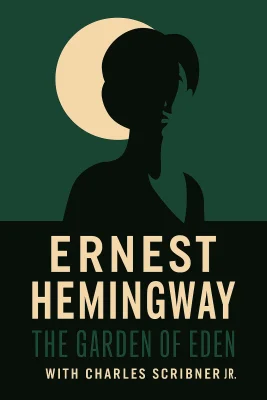
The Garden of Eden
Categories
Fiction, Classics, Romance, Literature, American, 20th Century, France, Novels, Classic Literature, Literary Fiction
Content Type
Book
Binding
Paperback
Year
2002
Publisher
Scribner
Language
English
ASIN
0684804522
ISBN
0684804522
ISBN13
9780684804521
File Download
PDF | EPUB
The Garden of Eden Plot Summary
Introduction
The Mediterranean sun beats down on two figures walking along a French beach—a young writer named David Bourne and his new wife Catherine, both darkened to mahogany by months of swimming and living under the endless summer sky. Their honeymoon has stretched into something more dangerous than bliss: a game of transformation that began with Catherine cutting her hair short as a boy's, then coaxing David to do the same. Now they share more than just matching haircuts—they've begun to blur the lines of identity itself, taking turns in bed being girl and boy, Catherine leading David deeper into a world where traditional boundaries dissolve. But their private paradise carries the seeds of its own destruction. David writes obsessively in his notebooks, crafting stories of his childhood in Africa that Catherine both loves and resents. She's funded their endless summer with her inheritance, and increasingly she sees his writing as a rival for his attention. When a beautiful dark-haired woman named Marita enters their world at a café in Cannes, Catherine makes a decision that will bind all three of them together in ways none of them can predict. What follows is a story of love pushed beyond its limits, of art threatened by the very passion that inspires it, and of the terrible price paid when someone tries to possess another person completely.
Chapter 1: Honeymoon Paradise: The Beginning of David and Catherine
The small hotel at le Grau du Roi sits where a canal flows straight from the walled city of Aigues Mortes to the sea. David and Catherine Bourne have been living there since their wedding, existing in a bubble of perfect contentment that feels almost too good to last. Every morning they wake ravenous—for food, for each other, for the simple pleasure of being alive in this sun-drenched corner of France where no one else comes in summer. Their days follow a rhythm as natural as breathing. David writes in the early morning hours while Catherine sleeps, filling notebook after notebook with stories about his childhood in Africa—memories of his father, of elephant hunts, of a world so different from this Mediterranean paradise it might as well be another planet. When he finishes writing, they bicycle along the white road to Aigues Mortes, swim naked on empty beaches, and eat long lunches under the trees at their hotel. The other guests at the hotel watch them with curiosity. They're both so dark from the sun that people often mistake them for brother and sister rather than newlyweds. Catherine delights in this confusion. She has an inheritance that makes their endless summer possible, and she uses it with the casual generosity of someone who's never known want. David, for his part, has never been happier. His first novel has been published to good reviews, and he's begun work on a second. Everything seems possible. But even in paradise, there are hints of trouble to come. Catherine watches David write with an intensity that goes beyond mere interest. She questions him about his stories, particularly the ones about his father. There's something hungry in her attention, as if she's trying to consume not just David but the source of his creativity itself. And David, lost in his work and his contentment, doesn't yet recognize the warning signs of a love that demands everything.
Chapter 2: Transformation and Identity: Catherine's Metamorphosis
The change begins with a haircut. Catherine disappears for an afternoon and returns with her long blonde hair cropped short as a boy's, bleached nearly white by the coiffeur in Aigues Mortes. David is startled by the transformation—she looks simultaneously more beautiful and more dangerous, her dark skin providing stark contrast to the pale sweep of hair across her forehead. But Catherine isn't satisfied with shocking him. She wants him to match her, to make them truly identical. At first David resists, but Catherine's will is stronger than his reluctance. She coaxes, pleads, and finally simply announces that they're going back to the hairdresser together. When they emerge, they look like twins—both with the same platinum hair, the same deep tan, the same ambiguous beauty that makes strangers stare and wonder about their relationship. The haircuts are only the beginning. In bed that night, Catherine introduces a new game. She wants to be the boy, wants David to be the girl. It's presented as play, as another adventure in their ongoing exploration of each other, but there's an urgency beneath Catherine's request that David doesn't fully understand. She guides him through the experience with a mixture of tenderness and determination that leaves him shaken. At first, David goes along with what seems like harmless experimentation. Catherine is inventive, passionate, and seemingly happier than ever. But as days pass, the role-playing becomes more frequent and more intense. Catherine begins to talk about it as something necessary rather than playful, as if she's working out some essential part of her identity through these nightly transformations. David finds himself caught between pleasure and unease, sensing that they're moving toward something he can't name but increasingly can't control.
Chapter 3: The Third Person: Marita Enters Their World
The café in Cannes is nearly empty in the summer heat when David and Catherine stop for drinks. They've driven down from their hotel in Catherine's small blue Bugatti, both wearing their matching short hair and looking like beautiful, androgynous creatures from another world. Catherine is reading a Spanish phrase book while David scans the newspapers, content in their private bubble of married intimacy. Then two young women at another table begin to stare. One is fair and sharp-featured, the other dark and strikingly beautiful with long black hair and eyes that seem to hold depths. The dark one blushes furiously every time David catches her looking, which only makes Catherine more interested. When the woman finally approaches their table, stammering an apology in accented English, Catherine invites them both to sit down. The dark woman's name is Marita, and she's traveled to the south of France with her friend Nina after some kind of falling out back home. There's something immediately appealing about her mixture of sophistication and innocence—she's clearly wealthy and well-educated, but she blushes like a schoolgirl when David speaks to her directly. Catherine, always attracted to beauty and drama, decides on the spot that Marita should join them. What follows is a strange courtship conducted by all three parties simultaneously. Marita is drawn to both David and Catherine, though she seems hardly to understand her own feelings. Catherine orchestrates meetings and outings with the skill of a director staging a play, while David finds himself charmed despite his better judgment. When Marita mentions that she's thinking of returning to Paris, Catherine immediately invites her to stay at their hotel. David watches this unfold with a mixture of amusement and apprehension, sensing that their carefully balanced world is about to become much more complicated.
Chapter 4: Writing and Reality: David's Creative Struggle
David's work has always been his sanctuary, the one place where he can retreat from the increasingly complex emotional currents swirling around him. Each morning he locks himself in his small room at the end of the hotel and disappears into the stories of his African childhood—tales of his difficult, charismatic father, of dangerous hunts, of a boy's coming of age in a landscape both beautiful and brutal. But now his sanctuary feels invaded. Catherine has begun reading his work, and her responses are intense and possessive. She loves the stories but resents the time they take away from her. More troubling, she's started to see them as somehow belonging to her—after all, she's paying for their life together, creating the conditions that allow David to write. When he tries to explain that the work needs to come from him alone, she becomes coldly angry. Marita's presence adds another layer of complexity. Unlike Catherine, she approaches David's writing with genuine literary understanding, reading his notebooks with the careful attention of someone who truly comprehends what he's trying to accomplish. Her insights are perceptive and generous, making David feel understood in a way that Catherine's passionate but possessive interest never does. As summer progresses, David finds himself torn between two kinds of love—Catherine's demanding, transformative passion and Marita's quieter but deeper understanding. He continues to write, producing some of his best work, but the emotional pressure is building. Catherine grows increasingly erratic, alternately pushing Marita toward David and then becoming jealous of their connection. David senses that something will have to give, but he's powerless to control the forces that Catherine has set in motion.
Chapter 5: The Act of Destruction: Catherine Burns the Manuscripts
The morning starts like any other, with David writing in his small room while the Mediterranean breeze carries the scent of pines through his window. He's deep in a story about an elephant hunt, reliving memories of his father and their tracker Juma, when he hears Catherine and Marita return from town. Their voices sound different—excited, secretive—but he's too absorbed in his work to pay attention. It's only when he finishes writing and returns to their shared quarters that David discovers what Catherine has done. His notebooks are gone. The careful accumulation of months of work—stories of Africa, memories of his father, the creative output that has defined his identity as a writer—has vanished from his locked suitcase. When he confronts Catherine, she admits everything with a mixture of defiance and something that might be relief. She burned them, she explains, in the hotel's trash burner behind the kitchen. She poured kerosene on the notebooks and watched them turn to ash, stirring the remains with a stick to make sure nothing survived. Her reasoning, delivered with the calm certainty of someone who has thought everything through, is that the stories were holding him back. They were too dark, too focused on the past, too much about his father and not enough about their life together. David's response is immediate and primal—a rage so complete it frightens him. For a moment he genuinely wants to kill her, and the intensity of that desire shocks him into a kind of cold clarity. Catherine, perhaps recognizing what she's unleashed, begins to backpedal, offering to pay him for the destroyed work, to have its value assessed by experts. But David knows that what she's destroyed can't be measured in money. The stories came to him once, complete and perfect, and now they're gone forever.
Chapter 6: Departure and Reconciliation: Finding a New Balance
Catherine leaves on the morning train to Biarritz, then Paris, claiming she needs to arrange illustrations for David's book—the one project she hasn't destroyed. Her departure feels like both an escape and an abandonment, leaving David and Marita alone together in the hotel that has been their strange communal home for months. The letter she leaves behind is both confession and justification. She acknowledges the magnitude of what she's done, comparing it to hitting a child with a car—something that can't be undone, no matter how much you regret it. But she also maintains that she had to do it, that the stories were somehow preventing them all from moving forward together. It's a letter that reveals Catherine's essential nature: loving but destructive, generous but selfish, capable of both tremendous tenderness and casual cruelty. With Catherine gone, David and Marita find themselves in a different kind of relationship. Without Catherine's demanding presence orchestrating their interactions, they discover a quieter, more sustainable kind of love. Marita moves into David's room, and they establish new rhythms—swimming together in the early morning, sharing meals on the terrace, talking about books and travel and the future they might build together. But David's relationship with his work remains damaged. He tries to write and finds himself blocked, capable of only single sentences that lead nowhere. The creative confidence that sustained him through the summer has been shattered along with his notebooks. Marita watches him struggle with patient sympathy, understanding that his identity as a writer is fundamental to who he is. She makes no demands, offers no false comfort, simply stands by him as he confronts the wreckage of his artistic life.
Chapter 7: Regeneration: Rewriting What Was Lost
Gradually, almost imperceptibly, David begins to heal. The process starts not with his writing but with his relationship to Marita, which deepens into something more solid and enduring than the passionate intensity he shared with Catherine. Marita doesn't try to own his creativity or compete with it—she simply provides the steady foundation that allows it to grow again. The breakthrough comes on a morning when David sits down to write without expectation or desperation, simply because it's what he's always done. To his amazement, the words begin to come back. Not all at once, but in pieces—fragments of the destroyed stories that have somehow survived in his memory, preserved by the very intensity of the writing process that created them. He discovers something remarkable: the stories haven't been lost, merely scattered. In the weeks since Catherine burned his notebooks, his subconscious has been quietly reconstructing them. Now, as he writes, entire passages return to him exactly as he first wrote them, complete with the small corrections and improvements he had made. It's as if his mind has been developing the stories like photographs in a darkroom, protecting them from destruction. The work that emerges is better than what came before—cleaner, more focused, purified by the test of memory. David realizes that Catherine, in trying to destroy his art, has actually strengthened it. The stories that survive are the ones that truly matter, the ones that have become so much a part of him that they can't be erased by fire or fury.
Summary
In the end, David's Eden survives both paradise and apocalypse. The summer that began with such promise—two young people drunk on love and sunshine and the endless possibilities of the Mediterranean—transforms into something darker and more complex when Catherine's need to possess everything she loves leads her to destroy the very things that make David who he is. Her act of burning his stories is both the ultimate violation and, paradoxically, the ultimate test of their value. The true revelation comes not in the destruction but in the regeneration that follows. David discovers that real art, once created, becomes indestructible—not because it exists on paper, but because it lives in the mind and heart of its creator. Catherine's fire can burn notebooks, but it can't touch the essential creative spirit that produced them. In losing Catherine and gaining Marita, David trades passionate destruction for steady growth, the kind of love that nurtures rather than consumes.
Best Quote
“Happiness in intelligent people is the rarest thing I know.” ― Ernest Hemingway, The Garden of Eden
Review Summary
Strengths: The review highlights Hemingway's skill in creating vivid settings, such as the French Riviera and Spain's Basque country, and his ability to weave complex character dynamics into the narrative. The inclusion of Hemingway-esque short stories within the novel is noted as a creative element. Weaknesses: The review points out potential issues with the posthumous editing and cutting of the novel, suggesting that significant content, including a subplot, was removed. There is also an implication that the novel's strong sexual content might have been considered too avant-garde for its time. Overall: The review presents a mixed sentiment, appreciating Hemingway's narrative skills but questioning the editorial decisions made posthumously. The novel is recommended for those interested in exploring Hemingway's exploration of complex themes and character relationships.
About Author

Ernest Hemingway
Hemingway interrogates the essence of human courage and existential struggle through a prose style that emphasizes economy and precision. His narratives, such as "A Farewell to Arms" and "For Whom the Bell Tolls," often delve into themes of war, love, and the human condition, providing readers a profound exploration of life's inherent conflicts. By situating his characters in environments ranging from the Italian Front during World War I to the plains of Africa, Hemingway connects the visceral experiences of his protagonists with broader existential questions. \n\nHis commitment to this minimalist style not only defined his own literary voice but also influenced countless writers of the 20th century. While his book "The Old Man and the Sea" secured him the Pulitzer Prize, his overarching impact on narrative form led to his receipt of the Nobel Prize in Literature. Readers benefit from Hemingway’s approach as it invites them to engage actively with the text, uncovering deeper meanings beneath the surface. This short bio reveals how his own adventurous and tumultuous life, marked by his experiences as a war correspondent and his personal struggles, shaped his work, offering a window into the complex interplay between life and literature.
Read moreDownload PDF & EPUB
To save this Black List summary for later, download the free PDF and EPUB. You can print it out, or read offline at your convenience.
The Garden of Eden
by Ernest Hemingway
