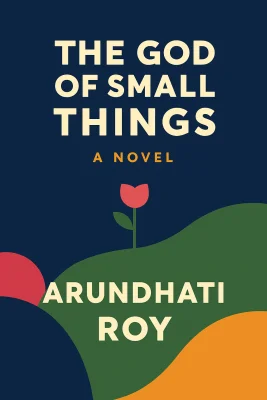
The God of Small Things
Categories
Fiction, Classics, Historical Fiction, Literature, India, Book Club, Contemporary, Novels, Indian Literature, Literary Fiction
Content Type
Book
Binding
Paperback
Year
1996
Publisher
Random House
Language
English
ASIN
B006E58GFG
ISBN
0679457313
ISBN13
9780679457312
File Download
PDF | EPUB
The God of Small Things Plot Summary
Introduction
# The God of Small Things: Love, Loss, and the Breaking of Ancient Laws The skyblue Plymouth with chrome tailfins sits rusting in the driveway like a monument to better days. Inside the crumbling Ayemenem House, thirty-one-year-old Rahel walks through rooms thick with dust and dying secrets, drawn back to Kerala by news that her twin brother Estha has been "re-Returned" after twenty-three years of silence. The air hangs heavy with monsoon moisture and the ghosts of 1969, when everything changed in a single December day. It was the day their English cousin Sophie Mol arrived from London, the day the twins were seven years old, the day the Love Laws were broken. In this lush corner of India where caste lines run deeper than blood and forbidden love carries the weight of death, a family's carefully constructed facade crumbled in one terrible night by the river. What happened in those dark waters would scatter them like leaves in a storm, leaving behind only the mathematics of loss and the lingering scent of old roses on a poisoned breeze.
Chapter 1: Return to Ayemenem: Confronting the Ghosts of Memory
The house breathes with the rhythm of decay. Baby Kochamma, now ancient and bitter, sits transfixed by American television while the real world rots around her. Her eyes, magnified behind thick glasses, reflect wrestling matches and soap operas as she feeds on other people's manufactured dramas, having long ago abandoned her own. Estha moves through the corridors like a ghost made flesh, washing his clothes with methodical precision, his silence so complete it seems to absorb sound itself. He has not spoken in years, not since he was sent away as a child, returned now like damaged goods to a family that no longer knows how to hold him. His quietness is not peaceful but terrible, the silence of someone who has seen too much and chosen never to speak of it. The twins study each other across the gulf of twenty-three years, recognizing familiar features made strange by time and trauma. They were once a single entity split in two, finishing each other's thoughts, sharing dreams across the space between their beds. Now they are strangers wearing familiar faces, carrying between them the weight of what happened that December night when the world split open. In Pappachi's old study, Rahel finds their childhood notebooks, the careful handwriting of seven-year-olds practicing stories about safety and family. The pages smell of mildew and lost time, each word a small monument to the children they used to be before everything went wrong. The house itself seems to whisper of that day when Sophie Mol came from London and love dared to cross the river.
Chapter 2: The Architecture of Forbidden Worlds: Family, Caste, and Hidden Desires
The Ayemenem House stands like a stage set for tragedy, its steep red steps leading to a verandah where performances of respectability once played out daily. Here lived Mammachi, the blind violin-playing matriarch who built Paradise Pickles from nothing, her scarred scalp hidden beneath carefully arranged hair, the legacy of her husband's brass-vase beatings. Her son Chacko, Oxford-educated and perpetually disappointed, quotes literature while seducing factory workers, his Marxist ideals at war with his feudal appetites. Ammu, the twins' mother, carries herself like a loaded weapon, beautiful and dangerous in her desperation. Divorced and dependent, she has no place in this world of patriarchal certainties, no Locusts Stand I as Chacko cruelly reminds her. Her love for her children burns fierce and protective, but it cannot shield them from the casual cruelties of a society that has already marked them as illegitimate. In the pickle factory, Velutha works with hands that know wood like a lover knows skin. He is Parava, Untouchable, but his skills have made him indispensable. The other workers watch with growing resentment as he operates machines they cannot understand, fixes problems they cannot solve. To the twins, he is magic incarnate, the man who can make boats from scraps, who treats them not as burdens but as fellow conspirators in small rebellions. The house thrums with unspoken tensions, with the weight of secrets and the pressure of maintaining appearances. Baby Kochamma tends her ornamental garden with the same precision she applies to nurturing grievances, her unrequited love for an Irish priest having curdled into a general resentment toward life itself. The old order is cracking, and everyone can feel the tremors building toward something terrible and inevitable.
Chapter 3: Sophie Mol's Arrival: The Catalyst of Inevitable Tragedy
The airport in Cochin buzzes with desperate energy as families greet their Foreign Returnees, those blessed souls who have escaped to promised lands and now return with suitcases full of hope. Among them walks nine-year-old Sophie Mol, her English mother Margaret beside her, both pale and grief-stricken from the recent death of Margaret's second husband Joe in a car accident. Sophie Mol is everything the twins are not: white, legitimate, loved without reservation from the moment she draws breath. Her blue-gray eyes and red-brown hair mark her as special in a world that worships fairness, and Chacko's joy at seeing his daughter again is painful to witness. He has not seen her since she was a baby, and now she stands before him like a living rebuke to all his failures as a father and husband. The twins watch this reunion with the sharp eyes of children who understand instinctively that love is not infinite, that Sophie Mol's arrival means less for them. Estha retreats into sullen silence while Rahel performs elaborate courtesies that fool no one. The adults orbit around the English child like planets around a sun, each seeking to bask in her reflected glory. At the movie theater watching The Sound of Music, the cracks in their carefully rehearsed welcome begin to show. In the lobby of Abhilash Talkies, something terrible happens to Estha, something that will poison his childhood forever. The Orangedrink Lemondrink Man with his yellow teeth and hairy hands teaches a seven-year-old boy about the casual cruelty that adults can inflict on children, about the weight of secrets that cannot be shared. The darkness that begins in that lobby will follow Estha for the rest of his life.
Chapter 4: Crossing Sacred Boundaries: Love in the Time of Ancient Laws
In the dappled light beneath the rubber trees, Ammu watches Velutha lift her daughter into the air, and something shifts in the carefully ordered world of Ayemenem. Velutha, the gifted carpenter with skin like polished wood and a birthmark shaped like a lucky leaf, has been part of their lives since childhood. But he is Paravan, Untouchable, and the Love Laws are clear about who should be loved and how and how much. Yet in that moment when their eyes meet across the space between the trees and the verandah, centuries of prohibition crumble like old paper. Ammu sees not the Untouchable carpenter but a man with gentle hands and a sudden smile, someone who treats her children with the tenderness their own family withholds. Velutha sees not the divorced daughter of the Big House but a woman with dimples that linger after her smile fades, someone as trapped by circumstance as he is by birth. Their love affair unfolds in secret, in the hours between midnight and dawn when the world sleeps and the river runs dark and quiet. Ammu crosses the water in a small boat, her heart hammering against her ribs as she makes her way to the History House on the other side, where Velutha waits in the shadows of the abandoned estate. Under the mangosteen tree, they discover in each other's bodies a country where the Love Laws hold no sway. The twins sense the change in their mother, the way she moves differently, speaks more softly, carries herself like someone harboring a beautiful secret. They do not understand what is happening, but they feel the electricity in the air, the sense that something momentous is building toward an inevitable explosion. The radio plays "Dum dum de dum dum" as love blooms in forbidden soil, and the world holds its breath.
Chapter 5: The River's Claim: A Night of Death and Transformation
The night everything changes begins with words that cut like glass. Ammu, exhausted by the performance of welcoming Sophie Mol, tells the twins she sometimes wishes she had never had them, that they are the millstones around her neck. The words hang in the air like poison, and the children flee into the darkness, taking Sophie Mol with them on what will become their final boat journey. The river at night is a different creature, dark and hungry, its currents stronger than memory serves. The small boat, rotted by time and rain, groans under the weight of three children and their accumulated griefs. Sophie Mol sits in the bow wearing her yellow bell-bottoms, her hat trailing in the water, while the twins paddle with makeshift oars toward the History House where their mother goes to meet her lover. In the darkness, something goes wrong. The boat tips, or perhaps Sophie Mol stands at the wrong moment, or maybe the river simply claims what it has been waiting for all along. The water closes over their heads, cold and final, and when the twins surface, gasping and choking, Sophie Mol is gone. They dive again and again, their lungs burning, their hands grasping at nothing but water and weeds and the terrible absence of their cousin. They find her at last, too late, her body caught in the roots of a submerged tree. Her face is pale and peaceful, as if she has simply fallen asleep beneath the surface, but her eyes are open and staring at nothing. The twins huddle in the abandoned History House, knowing that their world has ended, not yet understanding that their tragedy will become Velutha's death sentence, that love and loss will be twisted into a narrative that will satisfy the hunger for someone to blame.
Chapter 6: The Machinery of Justice: Sacrifice, Betrayal, and the Price of Truth
The discovery of Sophie Mol's body unleashes a fury that has been building for generations. The police arrive with their lathis and casual brutality, looking for someone to blame, someone to punish for the death of the English child. Inspector Thomas Mathew, faced with political pressure and a dead white girl, needs a villain who fits the story society wants to hear. Baby Kochamma, sensing opportunity in tragedy, weaves a web of lies that transforms love into attempted rape, accident into murder. Her false testimony to the police creates a narrative that satisfies everyone's need for clear villains and innocent victims. She tells them Velutha kidnapped the children, that he was responsible for Sophie Mol's death, that he had been stalking the family with dark intentions. They find Velutha at the History House, where he has been waiting for Ammu, unaware that the world has already ended. The Touchable policemen fall upon him with the enthusiasm of men who have found a sanctioned target for their rage. They beat him with methodical precision, breaking bones and rupturing organs, turning his beautiful carpenter's hands into bloody ruin. In the harsh fluorescent light of the police station, Estha is brought to identify the man who allegedly abducted them. Faced with Velutha's swollen and unrecognizable face, the traumatized boy whispers "yes" when asked if this is the man. It is a moment that will haunt him for the rest of his life, the word that seals the fate of the man who loved them most purely. Velutha dies in custody, officially of his injuries, though everyone knows he was murdered by men who saw in his death a restoration of the natural order.
Chapter 7: Scattered to the Winds: The Mathematics of Loss and Survival
In the aftermath of Sophie Mol's death and Velutha's murder, the family disintegrates like a structure whose foundation has been dynamited. Estha is "Returned" to his father in Calcutta, sent away like a defective product that cannot be repaired. He carries with him the weight of his betrayal, the memory of Velutha's broken face, and the terrible knowledge that his word condemned an innocent man to death. Ammu, stripped of her children and her lover, becomes a ghost haunting the edges of her former life. The family blames her for everything, for loving where she should not have loved, for breaking laws that were never meant to be broken. She is banished from the house, forbidden to see Rahel except for brief, supervised visits that break both their hearts. Rahel grows up wild and angry, expelled from school after school, carrying her mother's rage like a genetic inheritance. She watches helplessly as Ammu withers away, her lungs finally giving out in a cheap hotel room. Even in death, Ammu is denied dignity, her body cremated in a facility reserved for the destitute and forgotten. The twins, once inseparable, become strangers to each other and to themselves. They carry their shared trauma in different ways, Estha in his terrible silence, Rahel in her restless movement from place to place. They are like two halves of a broken whole, unable to function separately but unable to come together again. The Love Laws have claimed their victims, and the mathematics of loss plays out across decades of separation and guilt.
Chapter 8: The Weight of Small Things: Memory, Guilt, and the Possibility of Grace
Twenty-three years later, when Rahel returns to find Estha washing his clothes with the same methodical precision he has maintained for decades, they recognize in each other the walking wounded of a war fought in secret. The river still flows, though poisoned now with industrial waste. The pickle factory stands empty, its machinery rusted and silent. The Love Laws remain in force, as rigid and unforgiving as ever. In the darkness of their childhood room, they finally speak the truth they have carried alone for so long. The words come haltingly, like blood from a wound that has never properly healed. They remember Velutha's broken body, their mother's desperate love, the terrible choice they made to save her by destroying him. The guilt they have shared without speaking becomes, finally, a burden they can carry together. Their final transgression, the incestuous embrace that violates the last taboo, is not passion but recognition. They are two halves of a broken whole, seeking in each other's bodies the comfort they have been denied since childhood. It is an act of desperation, not desire, the last rebellion of souls who have been shaped by trauma into something the world cannot accommodate. In their union, they find not healing but acknowledgment, not redemption but the simple recognition that they have survived when others did not. They hold each other in the darkness, two children who never learned how to be adults, two adults who never stopped being the children who watched their world end by a river that claimed everything they loved.
Summary
In the end, the great themes of history matter less than the small moments that define individual lives. A child's whispered identification. A woman's walk to the river. A man's decision to love despite the cost. These are the small things that carry the weight of worlds, that determine who lives and who dies, who is remembered and who is forgotten. The Love Laws that govern Ayemenem are not abstract principles but lived realities, enforced through violence and maintained through silence. Velutha's death is not just the elimination of a man, but the destruction of possibility itself, the message that some boundaries can never be crossed, some dreams never realized. Yet even in its bleakness, the story affirms the power of love to transcend the systems that would contain it. Ammu and Velutha's brief union, the twins' fierce loyalty to each other, even their final desperate embrace, these are acts of resistance against a world that would deny them the right to love and be loved. They pay terrible prices for these moments of grace, but the moments themselves remain, small lights in the gathering darkness, proof that even in the most constrained circumstances, the human heart finds ways to assert its needs.
Best Quote
“That's what careless words do. They make people love you a little less.” ― Arundhati Roy, The God of Small Things
About Author

Arundhati Roy
Roy traces the intricate layers of Indian society through her works, revealing deep-seated issues of social justice and economic inequality. As an acclaimed author and activist, her narrative style, particularly in her celebrated book "The God of Small Things", employs vivid, poetic language and complex temporal structures, intertwining personal and political histories. This multifaceted approach allows readers to engage with the legacies of colonialism and the rigidity of Indian caste systems, fostering a nuanced understanding of marginalized voices and social dynamics.\n\nIn her nonfiction, Roy critiques globalization, corporate power, and environmental policies, such as India's nuclear strategy and the Narmada Dam project. Her essays, like those in "The Algebra of Infinite Justice", blend sharp political critique with advocacy for ethical governance. This synthesis of literary artistry and political engagement makes her work essential for readers interested in understanding the intersections of literature and activism. Her ability to distill complex social issues into compelling narratives invites both literary enthusiasts and social critics to reflect on the broader implications of her themes.\n\nRoy's impact extends beyond her literary achievements, as demonstrated by her Booker Prize win for "The God of Small Things" and her rejection of the Sahitya Akademi Award to protest governmental policies. These actions underscore her commitment to challenging injustices and highlight the importance of her voice in global discourses on militarism and corporate dominance. For those exploring the depths of Indian culture or seeking insights into the power of storytelling as a tool for social change, Roy's body of work offers a profound and thought-provoking bio of the possibilities within literary and political realms.
Read moreDownload PDF & EPUB
To save this Black List summary for later, download the free PDF and EPUB. You can print it out, or read offline at your convenience.
The God of Small Things
by Arundhati Roy
