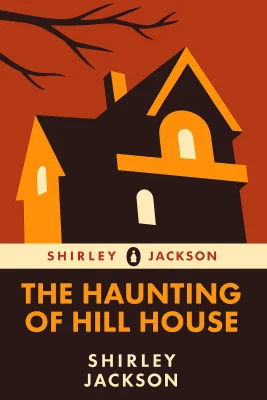
The Haunting of Hill House
Categories
Fiction, Classics, Audiobook, Horror, Mystery, Thriller, Book Club, Ghosts, Paranormal, Gothic
Content Type
Book
Binding
Paperback
Year
2006
Publisher
Penguin Classics
Language
English
ASIN
0143039989
ISBN
0143039989
ISBN13
9780143039983
File Download
PDF | EPUB
The Haunting of Hill House Plot Summary
Introduction
Eleanor Vance pressed her fingertips against the cold steering wheel, staring up at Hill House as shadows crawled across its Victorian facade. The house watched her with empty windows, its towers and turrets twisted at angles that hurt the eye. She had driven here alone, fleeing a life that had never truly been hers, drawn by Dr. Montague's invitation to join his paranormal investigation. The house seemed to lean forward, patient and hungry, as if it had been waiting specifically for her arrival. Three other guests had answered the doctor's call: Theodora, a vibrant artist with mysterious psychic abilities; Luke Sanderson, the charming heir who would someday inherit this cursed estate; and Dr. Montague himself, a scholar desperate to document supernatural phenomena. None of them could have imagined what Hill House had planned. The building stood against its hills like a living thing, holding darkness within its walls, and whatever walked there would never walk alone again.
Chapter 1: The Invitation to Isolation
Eleanor's hands trembled as she pushed through Hill House's massive front door. The hallway swallowed her footsteps, its dark wood paneling stretching upward into shadows. Behind her, the caretaker Dudley had already retreated to his gatehouse, leaving only cryptic warnings about staying away after dark. Mrs. Dudley, the cook, appeared like a specter in her starched apron, delivering her rigid schedule with mechanical precision: breakfast at nine, lunch at one, dinner at six. Then she vanished, leaving the newcomers to navigate the house's maze-like interior. Dr. Montague bustled about with scholarly excitement, his round face flushed with anticipation. He had spent years searching for an authentically haunted house, and Hill House's reputation for driving away tenants made it perfect for his research. Theodora swept through the rooms like a bright bird, her laughter echoing off the walls as she claimed the green bedroom. Luke lounged against doorframes with practiced indolence, treating the investigation as an amusing diversion from his dissolute city life. Eleanor found herself assigned to the blue room, its dimity curtains and floral wallpaper creating a false cheerfulness that couldn't mask the wrongness underneath. Every angle in Hill House was slightly off, Dr. Montague explained, creating a subtle disorientation that worked on the mind like poison. The builders had created a architectural trap, where doors swung shut by themselves and hallways seemed to shift when no one was looking. That first night, Eleanor lay in her narrow bed listening to the house breathe around her. Somewhere in the walls, timbers creaked and settled. A door closed softly in the distance. The house was learning her rhythms, studying her fears, preparing its welcome. She pulled the blue quilt over her head and tried to convince herself she was safe, but Hill House had already marked her as its own.
Chapter 2: Hill House Awakens
The first manifestation came like a thunderstorm at midnight. Eleanor woke to Theodora's terrified whisper through the bathroom door: "Something is knocking on the doors." The sound crashed through the hallway outside, a methodical hammering that moved from door to door with deliberate intelligence. Eleanor and Theodora huddled together in the green room, clutching each other as the temperature plummeted and their breath came in visible puffs. The knocking climbed higher on the doors, reaching impossible heights above where any human could strike. Ice-cold fingers of air crept under the doorframe, carrying with them a presence that felt ancient and hungry. Through the chaos, they heard Dr. Montague and Luke shouting from downstairs, chasing some phantom through the gardens. The house had separated them, Eleanor realized with growing horror. It was playing with them, testing their weaknesses. Then came the laughter, thin and mad, spiraling up from nowhere and everywhere at once. The wooden door bulged inward under tremendous pressure while something outside caressed the doorknob with obscene intimacy. Eleanor pressed her face against Theodora's shoulder, feeling the other woman's heart hammering against her ribs. This was not the gentle haunting of ghost stories, but something predatory and patient. When dawn finally came, the violence simply stopped. The hallway lay peaceful and undisturbed, with no sign of the night's torments except for their own shattered nerves. Mrs. Dudley arrived promptly at nine to prepare breakfast, humming tunelessly as she worked. She showed no interest in their pale faces or trembling hands, as if supernatural terror was simply another household inconvenience to be ignored.
Chapter 3: Manifestations of Madness
The attacks grew more personal as Hill House learned their individual fears. Theodora's room became a canvas for malevolence, its walls splattered with what looked like blood, spelling out Eleanor's name in dripping letters. Theodora's beloved clothes hung in tatters, stained beyond repair, while the message "HELP ELEANOR COME HOME" mocked them from above the bed. The substance reeked of decay and something worse, something that made Eleanor's stomach clench with revulsion. Dr. Montague documented everything with scientific fervor, measuring temperatures and recording testimonies, but his instruments could not capture the house's true nature. In the nursery, a pocket of absolute cold lurked by the doorway, watched over by carved faces whose grins seemed to shift when glimpsed from the corner of one's eye. Eleanor found herself drawn to this spot repeatedly, standing in the freezing air while something invisible whispered her name. Theodora moved into Eleanor's room for safety, but their forced intimacy bred resentment. Theodora's casual cruelty emerged like thorns, her beauty and confidence highlighting Eleanor's desperate loneliness. They bickered over clothes and space, their friendship curdling into something bitter. Eleanor began to suspect that Theodora enjoyed her helplessness, keeping her close only to mock her neediness. One afternoon, exploring the grounds with Luke, Eleanor heard her name called from the empty air. Footsteps crushed the grass beside her, invisible and purposeful, while Luke remained oblivious. The house was singling her out, choosing her from among the four investigators. It knew her deepest shame: that she had let her invalid mother die alone, ignoring the desperate knocking on the bedroom wall. Hill House offered what Eleanor had always craved—a place where she belonged completely, where she would never be abandoned again.
Chapter 4: The House Chooses Eleanor
Dr. Montague's wife arrived like a theatrical hurricane, bringing with her Arthur Parker, a pompous headmaster who treated the investigation like a camping trip. Mrs. Montague attacked the supernatural with aggressive optimism, conducting séances with her planchette board and lecturing the spirits about proper behavior. Her messages from beyond were banal and self-important, claiming contact with nuns and monks who had never existed at Hill House. Arthur patrolled the hallways with military precision, his loaded revolver and righteous ignorance making him immune to the house's subtle influences. He slept soundly while others cowered, his conventional mind too rigid to perceive what lurked in the shadows. Mrs. Montague's relentless cheerfulness about "helping poor lost souls" grated against the house's malevolent reality, her spiritual tourism reducing genuine terror to parlor games. The planchette sessions yielded one disturbing result: messages addressed specifically to Eleanor, speaking in the voice of a lost child crying for home and mother. The device spelled out Eleanor's loneliness in crude, repetitive words, as if something was learning to communicate through her deepest wounds. Mrs. Montague treated these revelations as routine contact with the spirit world, but Eleanor recognized something more personal and predatory at work. That night, Hill House unleashed its full fury. The building seemed to lift and turn, reality twisting until walls became floors and gravity lost meaning. Eleanor found herself floating in darkness while the others screamed her name from impossibly distant rooms. She felt the house's joy as it played with them, demonstrating its absolute power over physical laws. When morning came, she realized with crystalline clarity that she would never leave this place voluntarily.
Chapter 5: Boundaries Between Worlds Dissolve
Eleanor's grip on reality began to fray like old rope. She found herself conducting conversations with invisible presences, laughing at private jokes that no one else could hear. The house whispered constant encouragement, promising her permanent sanctuary from the world's cruelties. During the day, she drifted through rooms in a dreamy haze, seeing beauty where others saw decay, finding comfort in the building's suffocating embrace. The library became her secret shrine, its circular iron staircase spiraling up to the tower where the previous owner's companion had hanged herself decades before. Eleanor felt kinship with that desperate woman, understanding the final refuge that death might offer. She climbed the stairs repeatedly, drawn by the promise of the little door at the top, imagining the peace that lay beyond its locked threshold. Her relationship with Theodora deteriorated completely. When Theodora refused Eleanor's pathetic plea to take her home after the investigation ended, Eleanor felt the last thread connecting her to the outside world snap. Theodora's casual rejection confirmed what Eleanor had always known: she was unwanted everywhere except here, in Hill House's possessive arms. The building sensed her despair and fed on it, growing stronger as Eleanor grew weaker. One evening, drawn by phantom music, Eleanor danced alone in the drawing room while marble statues watched with knowing eyes. She felt hands guiding her steps, invisible partners waltzing her through shadows. The others found her spinning in circles, humming to herself, her face radiant with otherworldly joy. They exchanged worried glances, recognizing the signs of complete surrender to the house's influence.
Chapter 6: A Fatal Belonging
The final night brought the house's most seductive assault. Eleanor walked the corridors in her bare feet, following voices that called her name with maternal tenderness. She found herself in the library again, climbing the treacherous iron stairs toward the tower while the building groaned encouragement around her. At the top, she pressed against the trapdoor that led to the turret, desperate to reach the ultimate sanctuary. Luke followed her up the swaying staircase, his usual flippancy replaced by genuine terror as the rusted metal shrieked under their combined weight. He coaxed her down step by step, his hands shaking as he guided her to safety. But Eleanor knew it was temporary; the house would call her again, and next time she might not resist. The others saw her wild joy and recognized the danger. Someone who loved Hill House this completely could not be allowed to stay. Dr. Montague delivered his verdict with clinical detachment: Eleanor must leave immediately, before the house claimed her completely. They packed her belongings with ruthless efficiency, standing guard to ensure her departure. Eleanor watched their frightened faces and realized they had never understood. She was not the house's victim but its chosen bride, the one inhabitant who could appreciate its dark perfection. At the car, surrounded by their concerned faces, Eleanor made her final plea. She had no home to return to, no family who wanted her, no place in the world except here. The others remained unmoved, seeing only madness where Eleanor saw destiny. They pushed her into the driver's seat and waved goodbye, thinking they were saving her life. They could not imagine that some forms of salvation required complete surrender.
Chapter 7: The Final Embrace
Eleanor drove slowly down the winding driveway, her hands steady on the wheel for the first time in weeks. In the rearview mirror, Hill House watched her departure with patient confidence. She thought of the life waiting beyond the gates: her sister's grudging tolerance, the borrowed cot in the baby's room, the endless years of existing without purpose. The house had shown her a different possibility—eternal belonging, perfect understanding, an end to loneliness. She pressed harder on the accelerator, turning the wheel sharply toward the great tree that marked the curve of the drive. In the final instant before impact, clarity struck like lightning. She wondered why she was doing this, why no one was stopping her, but the question dissolved in the screaming of metal and the sudden, absolute silence that followed. Hill House absorbed her sacrifice with quiet satisfaction, another soul added to its collection.
Summary
Eleanor Vance's journey to Hill House began as an escape from suffocating isolation and ended in the ultimate embrace of that very solitude. The house recognized in her a kindred spirit—something abandoned, unwanted, desperate for belonging—and offered the only home she had ever truly desired. Her friends thought they were saving her by forcing her to leave, but they could not understand that some people find peace only in surrendering to forces larger than themselves. Eleanor's final act was not madness but the logical conclusion of a life spent searching for a place where she would never again be turned away. Hill House continues to stand against its hills, holding darkness within its twisted walls. It has claimed another victim, another soul to join the collection of lonely spirits that walk its corridors. The building's patient hunger remains unsatisfied, waiting for the next desperate person to cross its threshold seeking sanctuary. For some houses are born bad, and Hill House serves as a perfect mirror for the darkness that dwells in human hearts—the terrible need to belong somewhere, anywhere, even if that place demands the ultimate price for admission.
Best Quote
“No live organism can continue for long to exist sanely under conditions of absolute reality.” ― Shirley Jackson, The Haunting of Hill House
Review Summary
Strengths: The review highlights Shirley Jackson's ability to blend supernatural and psychological horror, creating a deeply unsettling atmosphere. The book's exploration of themes like trauma, loneliness, and mental health is praised, as well as its minimal exposition that maintains tension. The novel's influence on American literature and its status as a classic, particularly in the haunted house genre, is also emphasized. Overall: The reviewer expresses a highly positive sentiment, recommending the book as a quintessential haunted house story with significant literary impact. It is described as a gripping and thought-provoking read that continues to haunt readers long after completion.
About Author
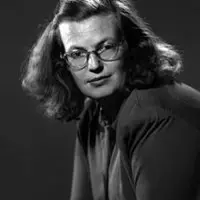
Shirley Jackson
Jackson probes the complexities of human nature and societal pressures, using horror and gothic fiction to delve into themes of alienation, identity, and conformity. Her work often reveals the sinister undercurrents beneath everyday life, engaging with the psychological distress that permeates societal norms. In "The Haunting of Hill House," Jackson navigates the interplay between psychological terror and haunted spaces, while "We Have Always Lived in the Castle" offers a gothic exploration of family secrets and isolation. By weaving these themes into her narratives, she interrogates the latent darkness within individuals and communities, providing a mirror to mid-20th-century existential anxieties.\n\nHer method involves crafting atmospheres that oscillate between the familiar and the uncanny, thus challenging readers to confront unsettling truths. Whereas many authors employ horror merely for shock, Jackson uses it as a tool for social commentary, critiquing the conformity and violence lurking beneath the veneer of idyllic small-town life. This approach is exemplified in her most famous short story, "The Lottery," where a seemingly ordinary community participates in a brutal ritual. By focusing on psychological and societal undercurrents, Jackson's work resonates deeply with readers, compelling them to question their own realities.\n\nReaders benefit from Jackson's incisive exploration of the human condition and societal structures, as her stories offer both entertainment and profound insight. Her books are particularly appealing to those interested in psychological horror and social critique, as well as scholars seeking to understand the cultural context of her era. This bio reflects her influence as a pioneering author whose narratives continue to provoke thought and discussion, cementing her legacy as a masterful architect of suspense and social commentary.
Read moreDownload PDF & EPUB
To save this Black List summary for later, download the free PDF and EPUB. You can print it out, or read offline at your convenience.
The Haunting of Hill House
by Shirley Jackson
