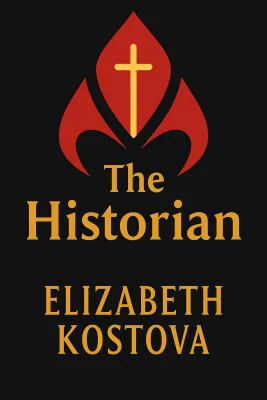
The Historian
Categories
Fiction, Horror, Mystery, Historical Fiction, Fantasy, Historical, Paranormal, Dark Academia, Gothic, Vampires
Content Type
Book
Binding
Kindle Edition
Year
2016
Publisher
Little, Brown and Company
Language
English
ASIN
B000FCK6EI
File Download
PDF | EPUB
The Historian Plot Summary
Introduction
# Shadows of the Dragon: A Scholar's Quest Through History's Darkest Secrets The ancient book appeared in Paul's library carrel like a curse waiting to unfold. Its leather binding cracked with age, pages yellowed and blank except for a single woodcut that seemed to burn itself into his vision—a dragon with wings spread wide, clutching a banner inscribed with one word: DRAKULYA. When he brought the mysterious volume to his mentor, Professor Bartholomew Rossi, the older man's face went white as parchment. Rossi revealed his own identical copy, discovered decades earlier during research that had led him deep into the mountains of Eastern Europe, following traces of Vlad the Impaler himself. Within days, Rossi vanished from his locked office, leaving behind only bloodstains on his desk and the lingering scent of something ancient and foul. Paul found himself holding both dragon books, their blank pages mocking him as he realized his mentor had disappeared into the same mystery that had consumed decades of his scholarly life. The hunt for Professor Rossi would lead Paul across continents, through layers of history and deception, into a world where academic research became a matter of life and death, and where some legends refused to remain safely buried in the past.
Chapter 1: The Dragon's Mark: A Professor Vanishes and Ancient Secrets Awaken
The morning sunlight streaming through the university library windows cast long shadows between the stacks when Paul first touched the cursed volume. Professor Rossi's reaction to the dragon woodcut was immediate and terrifying—his hands trembled as he produced an identical book from his own collection, its pages equally blank except for that same malevolent image. The brilliant historian who had guided Paul's research into Dutch merchant guilds suddenly seemed decades older, his voice dropping to a whisper as he spoke of medieval monasteries and monks who carried terrible secrets across centuries. That night in Rossi's cluttered office, surrounded by manuscripts and the comfortable chaos of academic life, the professor revealed fragments of his own dark journey. Twenty years earlier, he had followed clues from his dragon book to Romania, seeking traces of the historical Vlad Dracula. In a remote mountain village, he had encountered a young woman whose stories of local folklore filled gaps that official histories could not provide. Their brief romance had ended abruptly when Rossi fled the country, his memories strangely incomplete, his research notes scattered and largely destroyed. The letters Rossi showed Paul that night spoke of ancient coins bearing dragon symbols, of Ottoman invasions and something dark stirring in the Carpathian Mountains. They described correspondence from Brother Kiril, a medieval monk who had transported mysterious cargo from Constantinople to Bulgaria in 1477, carrying what he called relics that would "hasten the salvation of the soul of this prince." The documents painted a picture of desperate men moving through hostile territory, pursued by Ottoman soldiers who tortured and killed those who carried the sacred burden. When Paul arrived at the university the next morning, Rossi's office stood empty. His coffee cup sat cold on the desk, papers scattered as if he had risen suddenly and urgently. The secretary's words echoed through the abandoned space: "He simply didn't come in today. Most unlike him." But Paul knew better. On the professor's desk lay a library card—evidence that someone else had been searching for the same forbidden knowledge. As shadows lengthened across the empty office, Paul caught sight of a dark shape passing the window, too large and wrong to be a bird. The silhouette seemed to pause, aware of his gaze, before disappearing into the gathering dusk.
Chapter 2: Following the Trail: From University Libraries to Istanbul's Hidden Archives
The pale librarian began stalking Paul within days of Rossi's disappearance, appearing wherever he researched with hungry eyes that seemed to burn with unnatural intensity. The creature moved through the university stacks with fluid grace, watching from shadows between ancient volumes, his smile revealing teeth that seemed too sharp and white. Their confrontation came in the medieval history section, where the thing lunged with inhuman speed, seeking Paul's throat with predatory hunger. Salvation arrived in the form of Helen Rossi, a tall woman with dark hair and penetrating eyes who stepped from behind a bookshelf with deadly precision. As the librarian's fangs sought Paul's neck, Helen pressed a silver crucifix against the creature's flesh, sending it recoiling with a shriek that belonged in no human throat. The thing fled into the maze of books, leaving behind the acrid scent of burned flesh and the terrible knowledge that monsters walked among them. Helen's story emerged over coffee in a nearby diner, delivered in clipped sentences that brooked no interruption. She was Rossi's daughter, born from that brief Romanian liaison decades earlier, abandoned before birth and raised in communist Hungary. Her mother had told her enough about her absent father to fuel a lifetime of resentment, and Helen had come to America to confront the man who had never acknowledged her existence. But Rossi's disappearance had transformed her mission from personal revenge into something far more dangerous. The dragon books that had seemed like curious antiquities proved to be maps to humanity's darkest chapter, guides pointing toward Istanbul where Ottoman archives held documents that could change their understanding of history itself. Helen's heritage as a descendant of Vlad Dracula added another layer of complexity—the dragon mark on her shoulder, inherited through generations, marked her as both key to the mystery and target for those who would use her blood for their own purposes. As they prepared to follow Rossi's trail across the Atlantic, Paul realized they were not merely investigating historical mysteries but walking into the web of something that had been hunting scholars for centuries.
Chapter 3: The Crescent Guard: Turkish Allies and Ottoman Mysteries Revealed
Istanbul rose from the waters of the Bosphorus like a fever dream, its minarets and domes catching the morning light as their plane descended toward the ancient city. Here, in the archives of Sultan Mehmed II, Rossi had found documents that changed his understanding of history itself. Professor Turgut Bora found them in a restaurant in the old quarter, drawn by coincidence or fate to their table. The elderly Shakespeare scholar's dark eyes lit up when Paul mentioned Rossi's name, and his story sent chills through both listeners. Years earlier, a foreign professor had examined the Ottoman archives, then fled the city in apparent terror. That professor's name had been Bartholomew Rossi. But there was more—after the professor left, something else had come to the archives. The old librarian spoke of a man who appeared after hours when the building should have been locked, a creature with blood on his lips and eyes that reflected light like an animal's. The librarian had been so frightened that he sealed the documents away, where they remained until Turgut found them years later. In Turgut's cluttered apartment, surrounded by Ottoman manuscripts and medieval weapons, they learned the truth about their host's identity. He was not merely a professor but a member of the Crescent Guard, a secret organization founded by Sultan Mehmed II himself to hunt down the remnants of the Order of the Dragon. For five centuries, this hidden brotherhood had passed their mission from father to son, waiting for the day when Dracula's evil would stir again. They had been watching, gathering intelligence about the dragon books and the scholars who found them. The archive itself proved to be a repository of nightmares disguised as historical documents. Hidden within a seventeenth-century mosque, its collections contained correspondence with the Order of the Dragon, maps marking locations of supernatural significance, and accounts of tribute paid to forces that should not exist. Among routine administrative records were materials that spoke of systematic hunting, of scholars who came too close to certain truths and paid with their lives or worse. Each discovery added another piece to a puzzle that stretched back centuries, revealing a pattern of disappearances and deaths that followed anyone who sought Dracula's true resting place.
Chapter 4: Hunters and Hunted: Supernatural Encounters in Eastern Europe
The trail led them to Budapest, where the conference on Ottoman history provided perfect cover for their investigation. Paul's lecture on Vlad Dracula's campaigns felt surreal given the supernatural forces they were tracking, his nervous delivery nearly exposing their true purpose when he knocked over his water glass while describing the Impaler's methods. The audience of Hungarian historians listened politely, unaware that the American professor was hunting a monster that had walked among their ancestors centuries before. Helen's reunion with her Aunt Eva revealed the complex web of relationships that had shaped her life. Eva Orban was a high-ranking government official whose elegant apartment overlooked the Danube, her careful words speaking of political realities that made their research dangerous. Over dinner in a restaurant that had survived the war's devastation, Eva shared stories of Hungary's turbulent history while her eyes warned of surveillance and suspicion that extended far beyond academic curiosity. The most shocking revelation came when they visited Helen's mother in a village outside Budapest. The simple cottage seemed worlds away from political intrigue, but there Helen's mother told the story of her encounter with young Bartholomew Rossi—a tale of love and betrayal that explained Helen's existence and Rossi's forgotten past. The letters she had kept for decades proved that Rossi had not abandoned her by choice, but had been made to forget through supernatural means, his memories altered by forces that transcended human understanding. Their scholarly discussion was interrupted by violence when the undead librarian who had pursued them from America appeared at their hotel window, his pale face pressed against the glass like a spider studying its prey. The creature's eyes burned with inhuman hunger as it watched them through the glass, no longer bothering to hide its true nature. Paul and Helen gave chase through Budapest's lamplit streets, but their quarry vanished into shadows with supernatural speed, leaving them standing in an empty square surrounded by elegant facades that seemed to mock their helplessness against such ancient evil.
Chapter 5: The Bulgarian Connection: Monasteries, Monks, and Medieval Conspiracies
Sofia greeted them with suspicious officials and a guide named Ranov whose cold eyes suggested their every move was being monitored. The Bulgarian capital bore scars of war and revolution, its rebuilt monuments standing as testament to communist transformation. But beneath the political surface, older currents flowed—currents that connected medieval monasteries to modern surveillance, ancient fears to contemporary power structures that understood the value of controlling dangerous knowledge. Professor Anton Stoichev lived in exile in a house frozen in time, surrounded by manuscripts and icons that spoke of Bulgaria's Orthodox heritage. The elderly scholar's eyes lit up when they showed him Brother Kiril's letter from Istanbul, for he possessed another piece of the same correspondence—a document describing the monks' journey through Bulgarian mountains, carrying their terrible cargo toward a monastery called Sveti Georgi. In Stoichev's library, they pieced together the full story of Brother Kiril's desperate mission. The monks had not been simple pilgrims but agents of a plan to reunite Vlad Dracula's severed head with his buried body. Ottoman authorities had pursued them, torturing two of their number to death in the town of Haskovo, but survivors pressed on toward their mysterious destination. The most chilling discovery came when Stoichev revealed his own encounter with the supernatural—years earlier, his apartment had been ransacked by an invisible intruder who left behind a dragon book and a bloodstain that matched his own blood type, though he had been nowhere near the scene. At Rila Monastery, nestled in a valley carved from the earth itself, they found the final pieces of Brother Kiril's correspondence. The ancient fortress of striped walls and green domes had preserved documents revealing the full scope of the monks' mission. They had traveled from Snagov to Constantinople not to retrieve relics, but to recover Dracula's head from Ottoman trophy displays, then carry it to Bulgaria for proper burial. The Chronicle of Zacharias told of supernatural disturbances that followed, of a body moved in secret through hostile territory toward a monastery where head and body could finally be reunited.
Chapter 6: Into the Mountains: Discovering Dracula's True Resting Place
The search culminated in a remote Bulgarian village where ancient traditions still held sway. During a festival honoring Saint Petko, they witnessed fire-walking rituals that dated back to pagan times, ceremonies where old women danced barefoot through glowing coals while carrying icons of saints and dragons. One icon stopped Paul's heart—it showed Saint George and the dragon as equals, locked in eternal dance. This was the sign they had been seeking, the marker identifying the lost monastery of Sveti Georgi. Beneath the village church, in crypts that predated the Christian structure above, they found what they had been hunting. The tomb was empty, its occupant long gone, but evidence of his presence remained. Ancient books spoke of a plague that was "no ordinary plague," of monks who died with wounds on their throats, of evil that spread like contagion through the holy community. The monastery had been burned by Ottoman forces, its monks scattered or killed, its location forgotten by all but local villagers who still sang songs about the dragon who once protected and terrorized their ancestors. But their discovery came at terrible cost. In the crypt's depths, they found Professor Rossi—not dead, but transformed into something between life and death, sustained by Dracula's bite but not yet fully turned. His body lay in the stone sarcophagus where the vampire once rested, his mind still his own but fading with each passing hour. The brilliant historian who had guided Paul's research had become a prisoner in his own flesh, caught between human consciousness and inhuman hunger. With tears streaming down their faces, Paul and Helen performed the most merciful act they could imagine. Helen's silver dagger found its mark, piercing the heart of the man they both loved. Rossi died with gratitude in his eyes, finally free from the curse that would have made him a monster. His last words were a warning—Dracula had not been destroyed, only displaced, and the ancient evil that had claimed so many scholars across the centuries was still hunting, still hungry, still patient as death itself.
Chapter 7: The Final Confrontation: Face to Face with Ancient Evil
The trail led them to Saint-Matthieu-des-Pyrénées-Orientales, a monastery perched on cliffs in the French mountains where medieval monks had once prepared for apocalypse. According to documents they had uncovered, this remote sanctuary held a dark secret—it was here that Dracula had first encountered heretical knowledge that transformed him from mortal tyrant into something far more terrible. The monastery's crypt, carved directly into mountain stone, contained more than bones of long-dead abbots. Hidden among religious artifacts were records of corruption that had spread through the brotherhood like plague, turning holy men into servants of an unholy master. The monks' own chronicles told of brothers found drained of blood, of a teacher who rose from his grave to feast upon students, of desperate measures taken to contain evil that threatened to consume them all. Helen's connection to this place ran deeper than research—her mother's village lay in the shadow of similar mountains, and stories passed down through generations echoed the horrors recorded in the monastery's stones. The confrontation came with the setting sun, in crypt depths where Dracula had made his temporary lair. The vampire appeared as he truly was—not the romantic figure of popular imagination, but something ancient and terrible, wearing medieval robes that reeked of centuries and death. His face was a map of cruelty, eyes burning with intelligence that had watched empires rise and fall. He spoke in languages that predated nations, offering Paul the same bargain he had once offered Rossi—knowledge beyond imagination, life beyond death, power beyond mortal comprehension. But Paul was not alone. Helen emerged from shadows with silver bullets, and behind her came Turgut, the old Turkish professor who had followed his own trail of clues to this final confrontation. The battle was brief but decisive. Turgut fell, his skull cracked against ancient stones, but his sacrifice created the opening Helen needed. Her shot took Dracula through the heart, and the creature who had terrorized Europe for five centuries crumbled to dust, his ancient clothes falling empty to the crypt floor. The dragon that had cast its shadow across history was finally, truly dead.
Chapter 8: The Price of Victory: Love, Loss, and the Weight of Forbidden Knowledge
In the aftermath of their victory, the survivors gathered in a French hotel parlor, warming themselves by a fire that seemed inadequate against the chill that had settled in their bones. Turgut was dead, his body broken in service to a cause he had inherited from his ancestors but embraced with characteristic courage. His sacrifice weighed heavily on them all, a reminder that some knowledge came at a price too terrible to calculate, paid not just by those who sought it but by those who stood guard against its misuse. Helen's survival brought both joy and sorrow to Paul's heart. She had spent years preparing for this confrontation, mastering the same dark scholarship that had consumed her father, learning to fight monsters while the world around her insisted they were merely superstition. The scars on her throat told the story of previous encounters with the undead, battles fought in shadows while ordinary people slept safely in their beds. Now, with Dracula finally destroyed, she could allow herself to hope for something approaching a normal life. But victory brought its own burdens. They had saved the world from ancient evil, yet at what cost? Rossi was dead, Turgut was dead, and Helen bore scars both visible and invisible from her long hunt. The knowledge they had gained—of vampires and medieval conspiracies, of evil that walked among them wearing human faces—could not be unlearned. They were changed by what they had seen and done, marked by their encounter with darkness in ways that would never fully heal. Yet they were alive, they were together, and for the first time in years, they could sleep without fear of what might come hunting in the night. The dragon books that had started their quest lay silent now, their blank pages no longer filled with the weight of history and horror. Paul and Helen had broken a cycle that had claimed countless victims across centuries, scholars and innocents alike who had stumbled too close to secrets that should have remained buried. In the end, their love had proven stronger than the ancient evil that had tried to tear them apart, and that victory, however costly, was worth celebrating in the quiet moments before dawn.
Summary
The quest that began with a mysterious book in a university library had led Paul and Helen across Europe, through layers of history and deception that revealed the true scope of Dracula's legacy. They discovered that the vampire legend was not merely folklore but a carefully preserved secret, guarded by ancient organizations and coveted by modern powers who understood its potential for both knowledge and destruction. Professor Rossi's disappearance was not an isolated incident but part of a pattern stretching back centuries, as scholars who came too close to the truth found themselves consumed by the very mystery they sought to solve. The trail of Brother Kiril and his fellow monks had shown them that some evils refuse to remain buried, that the past can reach across centuries to claim new victims through the simple human desire to understand and explore. In the mountains of Bulgaria and the crypts of French monasteries, they had confronted not just a supernatural predator but the weight of history itself, the accumulated suffering of generations who had lived and died in the shadow of an evil that transcended death. Their victory came at enormous cost, but it ensured that future scholars could pursue knowledge without fear of awakening something that should sleep forever, and that the dragon's shadow would no longer stretch across the modern world, hungry for the blood of a new generation.
Best Quote
“It was good to walk into a library again; it smelled like home.” ― Elizabeth Kostova, The Historian
About Author

Elizabeth Kostova
Kostova delves into the intricate interplay between history, folklore, and legend, notably through the lens of Dracula and Vlad Țepeș, to create deeply immersive narratives. Her works integrate complex timelines and detailed research, fostering a literary style that combines Gothic and historical elements. This method is particularly evident in her debut novel, "The Historian," which draws on Victorian traditions and historical inquiry. Beyond this, her storytelling is characterized by an exploration of themes such as obsession, art, and memory, as demonstrated in her subsequent books like "The Swan Thieves."\n\nIn addition to her fiction, Kostova contributes significantly to cultural exchange and literary support. She co-founded the Elizabeth Kostova Foundation, which promotes Bulgarian creative writing and facilitates the translation of contemporary Bulgarian literature into English. Her engagement with Eastern European settings enriches her narratives while connecting readers to broader cultural contexts. For readers and literary scholars, her body of work offers a profound examination of historical and cultural narratives, appealing to those interested in the fusion of folklore with scholarly research. Her recognition by the Bulgarian Ministry of Culture and the town of Sozopol highlights her impact in fostering international literary dialogue, while her acclaimed book, "The Shadow Land," further exemplifies her commitment to exploring Eastern European themes.
Read moreDownload PDF & EPUB
To save this Black List summary for later, download the free PDF and EPUB. You can print it out, or read offline at your convenience.

The Historian
by Elizabeth Kostova
