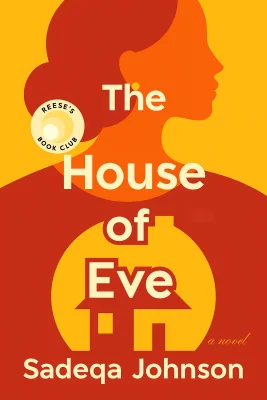
The House of Eve
Categories
Fiction, Audiobook, Historical Fiction, Romance, Adult, Book Club, Historical, African American, Race, Adult Fiction
Content Type
Book
Binding
Hardcover
Year
2023
Publisher
Simon & Schuster
Language
English
ISBN13
9781982197360
File Download
PDF | EPUB
The House of Eve Plot Summary
Introduction
# Divided Hearts: Motherhood and Sacrifice in Jim Crow America Philadelphia, 1948. The summer heat pressed down on the city like a suffocating blanket, but seventeen-year-old Ruby Pearsall barely noticed as she scrubbed floors in the Chestnut Hill mansion where she worked as a maid. Her mind was elsewhere, focused on the scholarship letter hidden in her bedroom drawer—her only ticket out of the North Philadelphia tenements where dreams went to die. She had no way of knowing that her carefully planned escape would soon collide with a forbidden love that would test every boundary society had drawn around young Black women like herself. Miles away in Washington D.C., Eleanor Quarles Pride stood in the nursery of her Gold Coast mansion, her arms empty and her heart breaking. Married to one of the city's most eligible Negro bachelors, she should have been living a fairy tale. Instead, she faced the crushing weight of expectations from a society that measured a woman's worth by her ability to produce heirs. Two miscarriages had left her desperate, willing to consider options that would have horrified her younger self. Neither woman could imagine how their separate struggles would soon intertwine at a mysterious institution where babies changed hands like currency, and where the American dream revealed its darkest face.
Chapter 1: Two Worlds Collide: Love Across the Color Line
The candy store on Diamond Street became Ruby's secret sanctuary. Behind the counter, surrounded by penny candy and chocolate bars, she found herself falling for Shimmy Shapiro—a gentle Jewish boy with green eyes and soft hands who treated her like she mattered. Their love bloomed in stolen moments, hidden from a world that would destroy them both for daring to cross the color line. Shimmy, home from Brooklyn College for the summer, saw Ruby as his salvation from the suffocating expectations of his family's world. He spoke of marriage, of defying convention, of a future where love conquered all. Ruby wanted to believe him, but Aunt Marie's warnings echoed in her mind. "White boys don't marry girls like us," the older woman would say, her voice heavy with bitter experience. Their meetings grew bolder and more dangerous. In the storage room of his family's store, in the backseat of his father's car parked in shadowy alleys, they created a private world where race and class didn't matter. Ruby taught him about her dreams of becoming a doctor, while he helped her with trigonometry homework. Their fingers intertwined over mathematical equations and shared secrets, building something beautiful and impossible. Meanwhile, Eleanor navigated the treacherous waters of Washington's Negro elite. Her mother-in-law, Rose Pride, ruled this world with an iron fist wrapped in silk gloves. Every detail of Eleanor's life came under scrutiny—her clothes, her speech, her background, and most critically, her ability to produce an heir to the Pride legacy. At elaborate brunches surrounded by light-skinned society women, Eleanor felt like an intruder at a feast she could never truly join. The pressure was relentless. Month after month, Eleanor's body failed to quicken with the child that would secure her place in the family. She began each morning with desperate prayers, ended each day with crushing disappointment. William, kind but increasingly distant, threw himself into his medical residency while Eleanor endured Rose Pride's increasingly pointed questions about grandchildren. Both women were learning that love in 1940s America came with a price neither had anticipated. Ruby faced the daily humiliation of hiding in the back seat of cars, crouching below window level whenever they drove through the city. Eleanor endured the icy disapproval of women who made it clear that a factory worker's daughter from Ohio would never be good enough for their golden boy. The invisible lines that divided their world seemed to grow thicker with each stolen kiss, each whispered promise of a future that felt increasingly impossible to claim.
Chapter 2: Forbidden Desires and Their Consequences
The confrontation came swift and brutal. Mrs. Shapiro discovered Ruby and Shimmy in the storage room of the candy store, their makeshift paradise shattered by her horrified screams. "How could you betray our trust by gallivanting around with this whore?" she spat, her words hitting Ruby like physical blows. The woman who had seemed so refined transformed into something vicious when faced with her son's transgression. Shimmy tried to defend their love, his voice cracking as he declared his intentions to marry Ruby. But his mother's fury only intensified. She snatched the ruby comb from Ruby's hair—a gift that had symbolized their secret world—and called her a thief. The accusation stung worse than any slur, reducing Ruby to nothing more than a criminal in her own love story. The weeks that followed brought a different kind of terror. Ruby's monthly cycle stopped, her body began changing in ways that filled her with both wonder and dread. At seventeen, pregnant by a white boy in 1949 Philadelphia, she faced a future that offered only shame and poverty. The We Rise scholarship that represented her escape from the tenements now seemed as distant as the moon. Aunt Marie's attempts to help proved futile and dangerous. Home remedies failed, back-alley solutions fell through when other girls died on makeshift operating tables. Ruby found herself trapped between worlds—too far along to easily undo her mistake, too young and poor to imagine raising a mixed-race child in a society that would reject them both. Eleanor's own crisis deepened with each passing month. Her third miscarriage left her hollow and haunted, while Rose Pride's disapproval grew more pointed. The doctor's words felt like a death sentence—she should never attempt pregnancy again. The future stretched ahead, empty of the children who might have made her marriage feel like destiny rather than duty. The irony was cruel and complete. Ruby, who had never wanted anything more than education and escape, found herself facing the same fate as her mother—teenage pregnancy derailing every carefully laid plan. Eleanor, who had everything money could provide, remained heartbreakingly empty. Both carried secrets that felt too heavy to bear, dreams that biology threatened to wash away like chalk in the rain.
Chapter 3: The House of Magdalene: Where Mothers Become Strangers
Mrs. Shapiro's solution arrived with the cold efficiency of a business transaction. She appeared at Aunt Marie's door dressed like a society matron, offering to make Ruby's "problem" disappear. The home for unwed mothers in Virginia, she explained, specialized in such unfortunate situations. Girls went away quietly, gave birth in secret, and returned to their lives as if nothing had happened. The proposal came with a guarantee that made Ruby's blood run cold and her heart race simultaneously—a full scholarship to Cheyney University, all four years paid, her future secured in exchange for her silence and compliance. Mrs. Shapiro sat on the scholarship board, she revealed with casual arrogance, and could ensure Ruby's acceptance if they reached an "understanding." The House of Magdalene rose from the Virginia countryside like something from a Gothic nightmare, its red brick facade hiding systematic cruelty within. Mother Margaret, the gin-scented nun who ran the facility, ruled with biblical fury and pharmaceutical assistance. Her sermons about fallen women and redemption came with a cruelty that seemed to feed on the girls' desperation. Ruby found herself sharing an attic room with three other girls, each carrying her own story of love gone wrong or simple bad luck. The daily routine was designed to crush spirit and individuality. Dawn brought mandatory floor scrubbing on bleeding knees while reciting prayers of repentance. The girls were fed bland food, subjected to lectures about their moral failures, and reminded constantly that they were unfit to raise the children growing in their wombs. Meanwhile, Eleanor's desperation reached a breaking point. It was during her darkest period that Mother Margaret appeared at her hospital bedside like an angel of mercy—or perhaps something far more sinister. The nun spoke of God's mysterious ways, of young women who needed help, of babies who deserved better than illegitimate birth. The adoption proposal came wrapped in religious language and social respectability. Eleanor would be helping both a fallen girl and an innocent child while solving her own desperate need for motherhood. It seemed like divine intervention, a solution that would satisfy everyone's needs while maintaining the careful facades that held their worlds together. Rose Pride orchestrated every detail of the deception, from the maternity clothes to the story of difficult pregnancy that would explain Eleanor's eventual seclusion.
Chapter 4: Forced Surrender: The Breaking of Sacred Bonds
The labor room at the clinic was a sterile chamber where Ruby learned the true meaning of powerlessness. Strapped to a table, her legs forced apart by metal stirrups, she endured hours of agony while white-coated strangers treated her like a breeding animal whose only purpose was to produce a commodity for sale. When the baby finally emerged, her cry pierced the clinical atmosphere like a prayer. Ruby glimpsed tiny fingers, perfect toes, a face that held echoes of both herself and Shimmy before the nurses whisked her daughter away. The doctor stitched Ruby's torn flesh without anesthesia, his indifference as sharp as his needle. For five precious days, Ruby was allowed to feed her daughter, to hold her, to memorize every detail of the child she would never see again. The baby had Shimmy's thin nose but Ruby's determined chin, and when she looked up at her mother with unfocused eyes, Ruby felt a love so fierce it threatened to tear her apart. She sang lullabies, told stories, made promises she knew she couldn't keep. The other girls had warned her not to get attached, but how could she not? This was her child, her flesh and blood, the product of the only real love she had ever known. When the final feeding came, Ruby wept openly, her tears falling onto her daughter's downy head as she tried to memorize the weight of her in her arms. The nurse who came to take the baby away was merciless in her efficiency. "I told you not to get attached," she said, her voice cold as winter. "She's going to a better place." The words were meant as comfort but landed like blows. Ruby's arms felt empty, her body hollow, her heart shattered into pieces that would never quite fit back together. Eleanor waited in her Washington mansion, playing the role of expectant mother with padding around her waist and carefully choreographed public appearances. The call came on a cold January morning. Mother Margaret's voice carried false cheer as she announced the arrival of Eleanor's new daughter—though the paperwork had mysteriously changed from the promised son. When Eleanor first held the baby—Wilhelmina, as they would name her—none of the details mattered. The child was perfect, tiny and warm and desperately needed. Eleanor felt the fierce protectiveness of motherhood surge through her, a love so immediate and overwhelming that it erased every doubt about the path that had brought them together.
Chapter 5: New Lives Built on Hidden Sorrows
Ruby returned to Philadelphia a ghost of her former self, carrying the weight of loss like a stone in her chest. The scholarship to Cheyney State College arrived as promised, Mrs. Shapiro having kept her end of their devil's bargain. But the victory felt hollow, the future she had sacrificed everything to achieve now tainted by the memory of her daughter's cry echoing through sterile corridors. She threw herself into her studies with desperate intensity, as if academic achievement could somehow justify the price she had paid. The other students saw her as driven, brilliant, destined for success. They had no idea that her ambition was fueled by grief and guilt in equal measure. Shimmy tried to find her when she returned, appearing at Aunt Marie's door with desperate eyes and trembling hands. He spoke of love, of regret, of wanting to know what had happened to their child. But Ruby had learned to build walls around her heart, and she turned him away with words that cut like glass. The scholarship depended on her complete separation from him, and she had sacrificed too much to risk it now. Eleanor, meanwhile, was learning the complex choreography of new motherhood while maintaining the fiction that Wilhelmina was her biological child. The baby was fussy, crying constantly in those first weeks, as if she sensed the deception that surrounded her birth. Eleanor walked the floors at night, singing lullabies and wondering if somewhere out there, another woman was lying awake thinking of the child she had lost. William threw himself into his medical career with renewed vigor, proud of his beautiful wife and perfect daughter. He never questioned the story of Wilhelmina's birth, never wondered about the young woman who had carried his child for nine months before surrendering her to strangers. The adoption records were sealed, the past erased as completely as money and influence could manage. But secrets have a way of festering in the dark. Ruby's success in college was shadowed by the knowledge of what she had given up, while Eleanor's joy in motherhood was complicated by growing questions about Wilhelmina's features that seemed to come from neither parent. The House of Magdalene had promised redemption through sacrifice, but all it had delivered was a different kind of prison—one built from lies, guilt, and the terrible weight of choices that could never be undone.
Chapter 6: Thirteen Years Later: When Secrets Surface
The summer of 1964 brought a new doctor to Howard University Hospital. Dr. Ruby Pearsall had built herself into everything she had dreamed of becoming—educated, successful, respected. But success had come at a price that still haunted her dreams, and the confident woman in the white coat carried scars that no amount of achievement could heal. Eleanor Pride had crafted a perfect life around her adopted daughter, but perfection was proving increasingly difficult to maintain. Wilhelmina, now thirteen, was developing into a young woman whose features raised uncomfortable questions. Her green eyes, her particular shade of skin, her artistic talents—none of it quite matched the genetic lottery that should have produced her from Eleanor and William's union. The meeting in William's office was cordial, professional, unremarkable to outside observers. But when Ruby looked up at the painting on the wall—one of Wilhelmina's artistic creations—something stirred in her chest that she had spent thirteen years trying to suppress. The brushstrokes, the use of color, the particular way light played across the canvas—it all spoke of a talent that seemed hauntingly familiar. Eleanor felt it too, that strange recognition that passed between them like an electric current. There was something about Dr. Pearsall's eyes, something in the way she held herself, that triggered memories Eleanor couldn't quite place. The adoption had been arranged so carefully, all records sealed, all connections severed. But blood calls to blood, and some bonds cannot be completely broken. Wilhelmina, meanwhile, was struggling with her own questions about identity and belonging. Her body was developing in ways that seemed foreign to her adoptive family's genetics, her artistic vision expressing truths she couldn't yet articulate. She had begun retreating to Eleanor's old prayer closet, seeking solace in the same small space where her adoptive mother had once begged God for the child that would complete their family. The irony was exquisite and terrible—Ruby had become the successful professional she had always dreamed of being, but at the cost of the daughter who might have shared her gifts. Eleanor had the child and family she had desperately wanted, but built on a foundation of lies that grew more unstable with each passing year. As the three women moved through their separate but connected lives, the truth lurked just beneath the surface, waiting for the moment when carefully constructed facades would finally crumble.
Chapter 7: The Price of Respectability: Truth and Reconciliation
The unraveling began with a simple medical emergency. When Wilhelmina collapsed at school, rushed to the hospital where her father worked, the blood tests revealed what years of careful deception had hidden. Her blood type made it impossible for William and Eleanor to be her biological parents, a scientific truth that no amount of social positioning could explain away. Ruby found herself called in as the attending physician, standing over the unconscious form of a girl whose features she recognized with a mother's instinct that thirteen years of separation couldn't erase. The green eyes that fluttered open were Shimmy's, but the determined set of the jaw was pure Ruby Pearsall. In that sterile hospital room, the careful walls that had separated their worlds finally crumbled. Eleanor's confrontation with the truth came like a physical blow. The daughter she had raised, loved, and protected was the child of the woman now standing beside her husband, discussing treatment options with professional detachment. The irony was cruel—Ruby had become everything Eleanor had once dreamed of being, while Eleanor had raised the child Ruby had been forced to surrender. The revelation shattered more than just family secrets. It exposed the entire system that had torn them apart—the House of Magdalene, Mother Margaret's cruel efficiency, the way society had commodified their bodies and their children in service of maintaining respectability. Ruby's success and Eleanor's motherhood had both been built on a foundation of lies that now lay exposed like bones in a desert. Wilhelmina, recovering from her collapse, found herself at the center of a storm she couldn't fully understand. The parents who had raised her faced the knowledge that their family was built on deception, while the biological mother she had never known stood before her as a stranger wearing a doctor's coat. The carefully constructed world of her childhood had been revealed as an elaborate fiction. The confrontation between the two women was quiet, devastating, and long overdue. In Eleanor's living room, surrounded by thirteen years of family photographs and memories, they finally spoke the truths that had been buried for so long. Ruby's sacrifice, Eleanor's desperation, the system that had used them both—all of it laid bare in the afternoon light filtering through expensive curtains. There could be no easy resolution, no simple return to the way things had been. Ruby had built a life on the ashes of her first love and lost motherhood. Eleanor had created a family from another woman's pain. Wilhelmina belonged to both of them and neither, a living reminder of the impossible choices that had shaped all their lives.
Summary
The House of Magdalene stands as a monument to the impossible choices faced by women in an era when society's demands for respectability came at the cost of human dignity and maternal bonds. Ruby Pearsall and Eleanor Pride, separated by race and class but united by their desperate circumstances, found themselves caught in a system that commodified both their bodies and their children in service of maintaining social order. Ruby's journey from the streets of North Philadelphia to professional success came at the ultimate price—the daughter she carried for nine months and loved for five precious days before being forced to surrender her to strangers. Eleanor's path from small-town outsider to Washington society matron was built on the foundation of another woman's loss, a truth that would shadow every moment of joy with her adopted child. Both women learned that the American dream, for all its promises of opportunity and advancement, often demanded sacrifices that hollowed out the very souls it claimed to elevate. Their reunion thirteen years later revealed not just the cruelty of the system that had separated them, but the enduring power of bonds that no amount of money, influence, or time could completely sever.
Best Quote
“And this trip downtown had shown me that we even had to fight for what should have been free: our dignity.” ― Sadeqa Johnson, The House of Eve
Review Summary
Strengths: The book is fast-paced and provides necessary details without unnecessary elaboration. Ruby's storyline is particularly engaging and well-concluded. The compartmentalized structure of the narrative is appreciated, as is the exploration of the lifestyle of wealthy African-Americans in the 1940s. The author's note adds authenticity to the narrative. Weaknesses: Many characters are clichéd and predictable, with the connection between the two main stories being easily anticipated. Eleanor's storyline, particularly her relationship with William, becomes frustrating and lacks depth. Overall: The reviewer finds the book to be somewhat predictable but acknowledges its educational value in exploring lesser-known aspects of African-American history. While Ruby's storyline is compelling, the overall execution leaves room for improvement.
About Author

Sadeqa Johnson
Johnson delves into the intricate narratives of African American history, focusing on themes of identity, resilience, and heritage. Her literary journey transitioned from contemporary to historical fiction, ignited by the Richmond Slave Trail and Mary Lumpkin's story. This shift not only expanded her storytelling scope but also deepened her engagement with personal and social histories, particularly through her books like "The House of Eve," which delves into mother-daughter relationships and empowerment, and "Yellow Wife," exploring the harrowing legacy of slavery in Virginia.\n\nThrough her role as an educator in the MFA program at Drexel University and her work with Story Summit, Johnson extends her influence beyond writing, mentoring upcoming authors and fostering new voices. Her approach intertwines narrative depth with historical authenticity, earning her accolades like the BCALA Literary Honoree and the Library of Virginia’s Literary People’s Choice Award. This blend of teaching, storytelling, and public speaking ensures her impact reaches a broad audience, providing a multifaceted exploration of African American experiences that resonate with both historical and contemporary readers.\n\nFor those delving into her bio, Johnson’s commitment to blending rich narrative with emotional insight offers a profound exploration of themes pertinent to understanding the complexities of heritage and identity. Her work stands as a testament to the power of storytelling in shedding light on underrepresented histories and offering readers a deeper understanding of the past's impact on present identities.
Read moreDownload PDF & EPUB
To save this Black List summary for later, download the free PDF and EPUB. You can print it out, or read offline at your convenience.
The House of Eve
by Sadeqa Johnson
