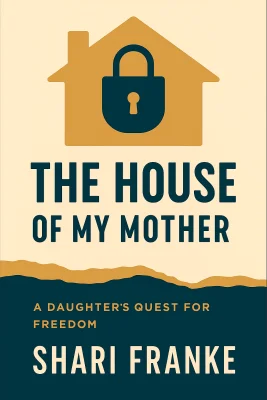
The House of My Mother
A Daughter's Quest for Freedom
Categories
Nonfiction, Biography, Memoir, Religion, Mental Health, Audiobook, True Crime, Adult, Autobiography, Biography Memoir
Content Type
Book
Binding
Hardcover
Year
2025
Publisher
Gallery Books
Language
English
ISBN13
9781668065396
File Download
PDF | EPUB
The House of My Mother Plot Summary
Introduction
In the gleaming suburban landscape of Utah, where picture-perfect families and social media stardom intersect, one young woman's story reveals the dark underbelly of digital fame and family dysfunction. Shari Franke, eldest daughter of the infamous YouTube family vloggers, lived her entire childhood under the relentless gaze of cameras, performing happiness for millions of strangers while navigating an increasingly toxic home environment. Her journey from obedient daughter to courageous whistleblower exposes the devastating cost of commodifying childhood and the price of speaking truth to power. What began as innocent family videos evolved into a nightmare of exploitation, manipulation, and abuse that would ultimately lead to criminal charges and shattered lives. Through Shari's eyes, we witness not only the collapse of a family empire built on lies, but also the remarkable resilience of the human spirit. Her story offers profound insights into the nature of trauma and recovery, the complex dynamics of narcissistic abuse, and the transformative power of choosing truth over comfortable illusions. Most importantly, it demonstrates how breaking generational cycles of harm requires immense courage, but promises the possibility of authentic healing and genuine freedom.
Chapter 1: Growing Up on Camera: The 8 Passengers Phenomenon
Shari Franke's childhood was defined by an unusual paradox: growing up in public while feeling invisible at home. From the age of twelve, her mother Ruby transformed their family into content, launching the YouTube channel "8 Passengers" that would eventually amass millions of subscribers and generate substantial income. What viewers saw was a wholesome Mormon family navigating daily life with apparent joy and authenticity. The reality behind the camera was far more complex and troubling. The constant presence of recording equipment meant that every moment, from birthday celebrations to mundane breakfast routines, became potential material for public consumption. Shari found herself performing happiness even when she felt miserable, smiling on cue while struggling with depression and anxiety that went largely unacknowledged by her parents. The line between genuine family interaction and manufactured content blurred until it became nearly impossible to distinguish authentic moments from staged performances designed to attract views and advertising revenue. Ruby's approach to family vlogging reflected a broader cultural shift toward commodifying childhood experiences. Private family moments that should have remained sacred—arguments between siblings, disciplinary actions, personal struggles—were packaged and sold to an audience hungry for authentic family content. Shari watched helplessly as her most vulnerable moments were edited, uploaded, and monetized, her consent never truly sought or respected despite her obvious discomfort with the constant exposure. The success of 8 Passengers came at an enormous personal cost to the children involved. Shari's education suffered when Ruby pulled her from school to maintain tighter control over her environment and image. Social relationships became nearly impossible as every interaction was potentially subject to public scrutiny. The normal developmental process of adolescence, with its natural desire for privacy and autonomy, was completely undermined by the family's commercial enterprise. Perhaps most damaging was how the channel's success reinforced Ruby's belief that her harsh parenting methods were not only acceptable but admirable. Viewer comments praising her "honesty" and "real parenting" fed her narcissistic tendencies and provided justification for increasingly extreme disciplinary measures. What should have been private family matters became public spectacles, with Ruby positioning herself as an expert on child-rearing while demonstrating patterns of emotional abuse that would later culminate in criminal charges.
Chapter 2: Under Ruby's Shadow: A Childhood of Control
Long before cameras entered their home, Shari lived under the oppressive weight of Ruby's controlling and emotionally abusive parenting style. Ruby's approach to motherhood was characterized by conditional love, impossible standards, and a complete lack of empathy for her children's emotional needs. From early childhood, Shari learned that her worth was contingent upon perfect behavior and unwavering obedience to her mother's demands. Ruby's punishments were both creative and psychologically damaging. She would withdraw privileges for months at a time, force children to sleep on uncomfortable surfaces, and use public humiliation as a tool of control. When Shari's brother Chad was deemed insufficiently compliant, Ruby had him sleep on a beanbag in the basement for seven months—a fact she casually revealed in a YouTube video, apparently unaware that most viewers would find this treatment shocking and abusive. The emotional atmosphere in the Franke household was one of constant vigilance and fear. Children learned to read Ruby's moods carefully, adjusting their behavior to avoid triggering her explosive anger. Shari developed what she would later recognize as a "fawn response"—a trauma reaction characterized by excessive compliance and people-pleasing designed to minimize conflict and maintain safety. This pattern would follow her into adulthood, affecting her ability to recognize and resist other forms of manipulation and abuse. Ruby's control extended beyond discipline into every aspect of her children's lives. She monitored their social media, dictated their friendships, and made unilateral decisions about their education and activities without considering their preferences or needs. When Shari began to question her mother's authority or express independent thoughts, Ruby would frame this natural developmental process as selfishness or rebellion requiring correction. The religious framework of their Mormon faith was weaponized to justify Ruby's harsh treatment. She positioned herself as divinely appointed to shape her children's characters, casting any resistance to her methods as spiritual defiance. This created a particularly insidious form of psychological manipulation, where questioning Ruby's authority became tantamount to questioning God himself, leaving the children with little recourse for protection or validation.
Chapter 3: The ConneXions Cult: Jodi's Manipulation
The entry of Jodi Hildebrandt into the Franke family's life marked a catastrophic turning point that would ultimately lead to criminal charges and the complete destruction of their family unit. Jodi, a licensed therapist running a program called "ConneXions," presented herself as an expert in helping families overcome dysfunction and embrace "truth." In reality, she was a skilled manipulator who used psychological techniques to gain control over vulnerable individuals and families. Jodi's methodology combined legitimate therapeutic concepts with cult-like indoctrination techniques. She encouraged followers to cut ties with anyone who didn't embrace her teachings, creating an echo chamber where questioning her authority became impossible. Her emphasis on "radical honesty" and "personal responsibility" was twisted into tools for breaking down individual autonomy and replacing it with complete dependence on her guidance and approval. Ruby was particularly susceptible to Jodi's influence due to her own narcissistic tendencies and deep-seated insecurities about her parenting abilities. Jodi offered Ruby a framework that not only justified her harsh treatment of her children but elevated it to the level of divine mission. Under Jodi's influence, Ruby began to view her children's natural developmental needs—for autonomy, privacy, and emotional support—as character defects requiring correction through increasingly severe interventions. The transformation of Ruby under Jodi's influence was swift and dramatic. She severed relationships with extended family members who questioned the new approach, isolated her children from outside influences, and began implementing Jodi's extreme disciplinary measures. Kevin, Shari's father, was gradually marginalized and eventually forced to leave the family home entirely, as Jodi convinced Ruby that his presence was harmful to the children's development. Jodi's ultimate goal appeared to be complete control over the Franke family's resources and relationships. She moved into their home, ostensibly to help Ruby with her "spiritual development," but actually to cement her dominance over the household. The children were subjected to increasingly bizarre and harmful "therapeutic" interventions, including forced isolation, severe dietary restrictions, and physical punishment that would eventually lead to serious injuries requiring medical intervention.
Chapter 4: Breaking Free: Finding Independence and Voice
Shari's journey toward independence began during her college years, when physical distance from her family provided the first opportunity for genuine self-reflection and healing. At Brigham Young University, she encountered perspectives and relationships that challenged the distorted worldview she had been raised with, gradually developing the cognitive tools necessary to recognize the abuse she had endured and was still experiencing. The process of breaking free was neither linear nor easy. Shari struggled with intense guilt and self-doubt, questioning whether her perceptions of her childhood were accurate or if she was simply ungrateful and selfish, as Ruby had always insisted. The programming of years of emotional manipulation ran deep, creating internal barriers to recognizing her own worth and rights as an individual. Therapy played a crucial role in Shari's awakening, providing her with language to describe her experiences and validation that her suffering was real and undeserved. Learning about trauma responses, particularly the "fawn" response that had characterized much of her childhood behavior, helped her understand that her compliance had been a survival mechanism rather than a character flaw. This understanding was both liberating and devastating, as it forced her to confront the full extent of what had been stolen from her. The decision to speak publicly about her family's dysfunction required enormous courage, as Shari knew it would result in complete ostracization from the people who had defined her world for two decades. When she finally posted on social media about distancing herself from her family's "extreme beliefs," she understood that there would likely be no path back to reconciliation with Ruby. The choice represented a fundamental decision to prioritize truth and her own well-being over the false peace of continued submission. Shari's breaking point came when she realized that her younger siblings were in immediate danger from Ruby and Jodi's escalating abuse. Her repeated attempts to work within the system—calling Child Protective Services, documenting concerning behavior, reaching out to family members—had failed to protect the children. The decision to go public with her concerns, despite knowing it would make her a target for Ruby's retaliation, demonstrated her transformation from victim to protector and advocate.
Chapter 5: Abuse Exposed: The Arrest and Aftermath
The dramatic arrest of Ruby Franke and Jodi Hildebrandt in August 2023 vindicated Shari's years of warnings and brought international attention to the dark reality behind their public personas. The charges of aggravated child abuse shocked even those who had followed the family's story, as the full extent of the physical and psychological torture inflicted on Shari's youngest siblings became public knowledge through court documents and evidence. The conditions in which the children were found—malnourished, physically injured, and bearing signs of prolonged abuse—represented the logical endpoint of Ruby and Jodi's twisted philosophy. What had been presented as "therapeutic intervention" and "character building" was revealed as systematic torture designed to break the children's will and establish complete control. The evidence included disturbing journal entries in Ruby's handwriting documenting the daily punishments and deprivations inflicted on children as young as ten. Shari's role as a whistleblower brought both validation and additional trauma. While she felt relief that her siblings were finally safe, she also grappled with guilt about not being able to prevent their suffering sooner. The media attention surrounding the case turned her into a public figure against her will, forcing her to navigate interviews and legal proceedings while processing her own complex emotions about her family's destruction. The legal proceedings revealed the calculating nature of Ruby and Jodi's abuse. Rather than crimes of passion or moments of lost control, the evidence showed systematic, planned torture carried out over months with careful documentation. Both women initially attempted to portray themselves as victims of misunderstanding, but the physical evidence and their own writings made denial impossible. Ruby's eventual guilty plea and cooperation with prosecutors represented a strategic decision rather than genuine remorse. Her statements during sentencing continued to minimize her responsibility while positioning herself as having been deceived by Jodi. This pattern of deflection and manipulation, even in the face of overwhelming evidence, demonstrated the persistence of the narcissistic traits that had made the abuse possible in the first place.
Chapter 6: Healing and Redemption: Reclaiming Family Bonds
In the aftermath of Ruby's imprisonment and the children's removal from her custody, Shari faced the complex task of rebuilding relationships with family members while processing her own trauma. The revelation of the abuse's extent forced everyone to confront the reality that the family they thought they knew had been largely an illusion, carefully crafted for public consumption while hiding tremendous pain and dysfunction. Reconciliation with her father Kevin required Shari to balance accountability with compassion. While she recognized that his passivity and enabling had contributed to the children's suffering, she also understood that he too had been victimized by Ruby and Jodi's psychological manipulation. Their renewed relationship became a foundation for healing, as Kevin worked to transform himself from an absent, controlled figure into a protective and engaged father. The process of healing required Shari to develop entirely new frameworks for understanding healthy relationships and family dynamics. Having grown up in an environment where love was conditional and control was disguised as care, she had to learn to recognize and trust genuine affection and support. The chosen family she found in mentors like the Haymonds provided crucial modeling of what healthy adult relationships could look like. Therapy became a central component of Shari's recovery, helping her identify and address the complex trauma responses that had shaped her behavior and worldview. Learning to recognize and interrupt patterns of people-pleasing, self-blame, and emotional dissociation required ongoing work and patience with herself as she slowly developed new ways of being in the world. Perhaps most importantly, Shari's healing journey involved reclaiming her own narrative and agency. For twenty years, her story had been controlled and distorted by others—first Ruby, then the media covering her family's downfall. Writing and speaking about her experiences on her own terms represented a fundamental shift from victim to survivor, from someone things happened to, to someone who could shape her own future and possibly help others facing similar challenges.
Summary
Shari Franke's extraordinary journey from exploited child performer to courageous advocate illuminates the hidden costs of our social media-obsessed culture while demonstrating the remarkable resilience of the human spirit in the face of systematic abuse. Her willingness to speak truth despite enormous personal cost ultimately saved her siblings' lives and exposed dangerous patterns that had been normalized through years of public exposure and enabling by both family members and viewers who mistook cruelty for authentic parenting. The lessons from Shari's story extend far beyond her individual experience, offering crucial insights into recognizing and interrupting cycles of abuse, understanding the complex dynamics of narcissistic relationships, and the importance of believing and protecting children even when their abusers present themselves as respectable community members. Her commitment to breaking generational patterns of trauma while rebuilding healthy family relationships demonstrates that healing is possible even from the most severe psychological damage. Anyone seeking to understand the intersection of technology, family dynamics, and child welfare will find profound wisdom in Shari's journey from silence to voice, from victim to survivor, and ultimately from survivor to healer.
Best Quote
“Sometimes, family isn’t just what you’re born into—it’s also what you build in the aftermath of loss.” ― Shari Franke, The House of My Mother: A Daughter's Quest for Freedom
Review Summary
Strengths: The review highlights the book's impactful nature and its important messages, such as the critique of family vlog channels and the misuse of children's images on social media. Shari Franke's resilience and bravery are commended, and the book is described as beautifully written with a strong voice. Weaknesses: The review criticizes the book for potentially being overly lengthy with unnecessary details. It mentions a confusing timeline and the impersonal nature of leaving siblings nameless. The reviewer also suggests the content might have been more effective as an essay or article. Overall: The reader expresses mixed sentiments, appreciating the book's themes and Shari Franke's courage but questioning its format and execution. While supportive of the author's journey, the reviewer does not recommend the book for reading.
About Author

Shari Franke
Franke delves into the complexities of family dynamics and personal resilience through her memoir, "The House of My Mother: A Daughter's Quest for Freedom." This work is not just a retelling of her experiences growing up under intense public scrutiny as part of the Franke family, known for their "8 Passengers" YouTube channel, but a profound exploration of her quest for self-empowerment and survival. The memoir exposes the chasm between the idyllic image projected by her family and the harsh realities of her upbringing, significantly influenced by relationship coach Jodi Hildebrandt. Therefore, Franke's book offers readers a unique perspective on the often unseen costs of family vlogging culture.\n\nThrough a narrative driven by themes of resilience and empowerment, Franke effectively critiques the dangers of a life lived under the public eye. Her writing is a poignant testimony of overcoming an inhumane disciplinary regime, offering insights into the psychological impact of such an upbringing. Readers looking for a deeper understanding of the personal toll of public personas will find this memoir particularly enlightening. The author’s nuanced approach allows her to dissect the interplay between familial expectations and personal freedom, therefore creating a compelling narrative that speaks to both individual and societal issues.\n\nThis short bio of Shari Franke highlights her ability to turn personal adversity into a narrative that challenges societal norms. While specific awards for her work are not mentioned, the public attention her memoir has garnered underscores its importance. Readers interested in personal transformation narratives or critiques of social media fame will find Franke's book to be both informative and thought-provoking, adding depth to the discourse around family dynamics in the digital age.
Read moreDownload PDF & EPUB
To save this Black List summary for later, download the free PDF and EPUB. You can print it out, or read offline at your convenience.
The House of My Mother
by Shari Franke
