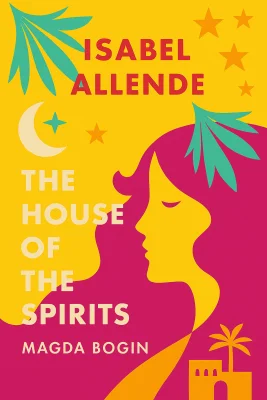
The House of the Spirits
Categories
Fiction, Classics, Historical Fiction, Fantasy, Literature, Book Club, Historical, Magical Realism, Novels, Spanish Literature
Content Type
Book
Binding
Paperback
Year
2005
Publisher
Dial Press Trade Paperback
Language
English
ASIN
0553383809
ISBN
0553383809
ISBN13
9780553383805
File Download
PDF | EPUB
The House of the Spirits Plot Summary
Introduction
# The House of Spirits: A Chronicle of Love, Magic, and Revolution The brandy arrived on a silver tray, amber liquid catching the afternoon light like liquid gold. Rosa del Valle lifted the glass to her lips, unaware that death had been meant for her father but would claim her instead. In the next room, her sister Clara sat rigid at her writing desk, her pen scratching urgent warnings across the page—prophecies that always came true, words that no one ever believed until it was too late. This is the story of four generations of women bound by blood, magic, and the inexorable weight of history. From Rosa the Beautiful, whose green hair and otherworldly grace defied nature itself, to her great-niece Alba, who would inherit not just supernatural gifts but the accumulated violence of a century. Between them stands Clara the Clairvoyant, who speaks to spirits and moves objects with her mind, married to Esteban Trueba, a man whose rage could level mountains and whose love could resurrect empires from dust. Their saga unfolds against the backdrop of a nation tearing itself apart, where the personal and political intertwine like lovers in an embrace that might be passion or strangulation. In the big house on the corner, where ghosts rearrange furniture and the future whispers its secrets to those brave enough to listen, three generations of women will discover that some legacies are written in blood, and only love—in all its terrible, transformative power—can break the cycle.
Chapter 1: Prophecies and Poison: The del Valle Legacy Begins
The del Valle mansion trembled with supernatural energy on the morning Rosa died, though no earthquake would be recorded in the official records. Clara, barely nine years old, had spent the dawn hours scribbling frantic predictions in her diary, her small hand moving across the page as if guided by invisible forces. The spirits that whispered to her spoke of endings and beginnings, of poison meant for one but claiming another. Rosa the Beautiful sat in the garden, her sea-green hair cascading over shoulders that seemed carved from the finest marble. She embroidered impossible creatures on an endless tablecloth—beasts with the bodies of lions and the wings of eagles, flowers that bloomed in colors that had no names. Her beauty was so otherworldly that people crossed streets just to glimpse her, mothers shielded their children's eyes from her radiance, and grown men wept at the sight of her ethereal perfection. The poison had been prepared with meticulous care by political enemies of Severo del Valle, Clara's father, whose Liberal sympathies had made him dangerous to the Conservative establishment. The bottle arrived disguised as a gift, its contents sweet enough to mask the taste of death. But fate, with its cruel sense of irony, guided the brandy to the wrong lips. Rosa, burning with fever from a minor illness, drank deeply of the cool liquid, never knowing she was swallowing her own destruction. When Dr. Cuevas arrived to perform the autopsy, he worked in the kitchen while the family waited in anguished silence. Clara, drawn by morbid curiosity, watched through a crack in the door as the doctor opened her sister's perfect body with clinical precision. The sight of Rosa's violated corpse, her beauty desecrated by the mortician's tools, shattered something fundamental in Clara's young mind. She retreated into silence as completely as a nun taking vows, her voice locked away like a dangerous weapon. The funeral procession stretched for blocks, mourners drawn not just by grief but by the need to witness the end of something miraculous. Rosa lay in her coffin like a sleeping princess, more beautiful in death than she had ever been in life. But Clara, walking behind the hearse in her black dress, had already begun her transformation from ordinary child to something far more mysterious. Her silence would last nine years, broken only when she announced her intention to marry Rosa's heartbroken fiancé.
Chapter 2: Building an Empire: Esteban's Rise at Tres Marías
Esteban Trueba received word of Rosa's death while standing knee-deep in the muddy hell of a northern mine, his hands bleeding from another day of clawing gold from reluctant earth. The telegram crumpled in his fist as grief transformed instantly into something harder and more dangerous—a cold fury that would reshape not just his own destiny but the fate of everyone who crossed his path. With his accumulated fortune, Esteban purchased Tres Marías, a decaying hacienda that had once belonged to his family but had been abandoned to neglect and ruin. The estate sprawled across the valley like a diseased kingdom, its adobe houses crumbling, its fields choked with weeds, its peasants reduced to living like animals in hovels that barely qualified as human shelter. But Esteban saw possibility in the devastation, a chance to build something magnificent from the bones of failure. He attacked the decay with the same ruthless energy he had once reserved for the mines. Adobe houses rose from rubble, irrigation channels carved new paths across barren fields, and the peasants found themselves under the rule of a patrón who demanded absolute obedience while providing unprecedented improvements to their lives. Esteban built them a school, established a clinic, and paid wages that were generous by the standards of the region. But his generosity came with invisible chains—company scrip instead of real money, mandatory purchases from the estate store, and the understanding that questioning his authority meant immediate exile. The loneliness ate at him like acid. Rosa's memory haunted his nights, but his body demanded more immediate comfort. He began with Pancha García, Pedro Segundo's fifteen-year-old sister, taking her in the rushes by the river with the casual brutality of a man claiming what he believed was rightfully his. She submitted without protest—what choice did she have?—but her silence only fed his rage. More women followed, a parade of peasant girls who bore his children and received nothing in return but the bitter knowledge that their bodies were just another resource for the patrón to exploit. Pedro García, ancient and nearly blind, watched these developments with the wisdom of someone who had seen empires rise and fall. When a plague of ants threatened to devour the entire harvest, it was the old man's mystical knowledge that saved Esteban's investment. He spoke to the ants in their own language, convincing them to march into the sea rather than destroy the crops. Esteban, despite his skepticism about such superstitions, could not argue with results. The old man became his most trusted advisor, the only person on the estate who dared to speak truth to power.
Chapter 3: Forbidden Harmonies: Love Across the Class Divide
Twenty years passed before Clara del Valle broke her silence, and when she finally spoke, it was to announce her engagement to the man who had once loved her dead sister. Esteban Trueba, now wealthy and powerful but still haunted by Rosa's ghost, accepted Clara's proposal with the desperate gratitude of a drowning man grasping for salvation. Their wedding was a grand affair, attended by society's elite, but it was marred by tragedy when Barrabás, Clara's beloved dog, staggered into the reception with a butcher's knife buried in his back. At Tres Marías, Clara transformed the estate's social fabric with her gentle revolution. She established a proper school where peasant children learned to read, created a clinic where she dispensed both medicine and miracles, and moved through the workers' world like a benevolent spirit, leaving behind a trail of small wonders and quiet rebellions. The peasants adored her, this ethereal woman who could predict the weather and heal the sick with her touch. Their daughter Blanca grew up wild and free among the tenant children, her closest companion Pedro Tercero García, the foreman's son whose dark eyes burned with intelligence and whose hands could coax music from any instrument. Pedro Tercero was the grandson of old Pedro García and the nephew of Pancha García—making him, though no one acknowledged it, Esteban's bastard nephew. The irony was lost on everyone except the spirits Clara consulted, who whispered of circular destinies and inherited sins. As adolescence transformed childhood friendship into something more dangerous, Pedro Tercero learned to channel his growing awareness of injustice into songs that spoke to the peasants' struggles. His ballad about chickens organizing against foxes became an anthem of resistance, spreading from farm to farm like wildfire. The music gave voice to generations of oppression, transforming Pedro Tercero from a bastard peasant into a folk hero whose songs carried more power than any political speech. Their love affair began in secret meetings by the river, where they discovered passion with the intensity of those who know their love is forbidden. Blanca, educated in the city but wild at heart, found in Pedro Tercero a connection to something real and vital that her privileged world could never provide. He taught her about injustice and inequality, while she shared with him the books and ideas that opened new worlds of possibility. Their bodies intertwined in hidden places throughout the estate, creating a bond that would survive decades of separation, persecution, and her father's murderous rage.
Chapter 4: When Earth Trembles: Earthquake and Transformation
The earthquake began at four in the morning with a roar that seemed to come from the center of the earth itself, as if the planet were screaming in pain. Clara awakened moments before the first tremor, her body vibrating with premonitions of disaster, but when she ran to warn Blanca, she found her daughter's room empty, the window open to the night air. Blanca was with Pedro Tercero by the river, their bodies entwined in desperate passion, unaware that the world was about to end. The main house at Tres Marías folded in on itself like a house of cards, centuries of adobe construction no match for the earth's fury. Esteban, trapped beneath tons of rubble, felt his bones snap like dry twigs as the weight of his empire literally crushed him. Clara crawled through the debris calling his name, her hands bleeding as she clawed at the wreckage, guided by an inner voice that insisted he was still alive somewhere in the chaos. When they finally dug him out, Esteban's body was so shattered that his bones seemed to float freely beneath his skin. Dr. Cuevas, summoned from the city, took one look at the mangled patrón and declared the case hopeless. But old Pedro García, blind and ancient but untouched by the disaster, examined Esteban with his knowing fingers and pronounced a different verdict: "If you move him, he'll die, but if you let me work, he might live." For three days and nights, the old man labored over Esteban's broken body, setting bones with the patience of a master craftsman and the wisdom of someone who understood that healing was as much art as science. He splinted and bound, massaged and manipulated, whispering prayers to saints whose names had been forgotten by the Church but were still remembered by the earth itself. Slowly, impossibly, Esteban's bones began to knit back together, though the process left him permanently altered—shorter, more fragile, but somehow more human than he had been before. The earthquake changed everything. Clara, who had lived her life protected from harsh realities, suddenly found herself responsible for the survival of everyone at Tres Marías. She learned to cook and clean, to tend the wounded and organize the reconstruction, her delicate hands growing callused from real work. The woman who had once communed with spirits now spent her days covered in dust and sweat, discovering reserves of strength she never knew she possessed.
Chapter 5: Songs of Revolution: The Political Awakening
As Tres Marías rose from the earthquake's ruins, the winds of political change began to blow across the country with increasing force. Pedro Tercero García, now a young man whose voice could move hearts with revolutionary songs, carried forbidden ideas from the city to the countryside, speaking to the peasants about unions and workers' rights, about the possibility that the foxes might not always rule over the chickens. His words found fertile ground among men who had rebuilt their patrón's empire with their own hands while remaining as poor as ever. The brick houses and medical clinic that Esteban had provided seemed less generous when measured against the wealth they had created through their labor. Pedro Tercero's songs gave voice to their growing resentment, transforming vague dissatisfaction into focused anger. Esteban Trueba, still recovering from his injuries but fierce as ever, recognized the threat in his foreman's son. The boy who had once played with his daughter now stood before him as a man, guitar in hand, singing songs that questioned the very foundations of Esteban's world. When Esteban caught Pedro Tercero distributing union pamphlets, he had him whipped in front of his father—a humiliation that only strengthened the young man's resolve and deepened his commitment to revolution. The confrontation that had been building for years finally exploded when Esteban discovered Pedro Tercero in his hiding place. Armed with an axe and consumed by rage, the patrón attacked with the fury of a man defending not just his property but his very identity. The blade that severed three of Pedro Tercero's fingers was meant to sever much more—the connection between past and future, between the old world and the new. But blood, once spilled, has a way of seeding the ground for future harvests. Pedro Tercero escaped with his life but not his innocence. The missing fingers became a symbol of resistance, and his music, now played with a modified technique that made it even more haunting and beautiful, spread beyond Tres Marías to every corner of the country. His songs were broadcast on radio waves that carried them to mining towns and urban slums, to university campuses and factory floors, wherever people gathered to dream of a different world.
Chapter 6: Alba's Inheritance: The Fourth Generation Rises
Alba Trueba entered the world feet first—a sign of good luck, according to her grandmother Clara, who immediately saw in the child's star-shaped birthmark the promise of an extraordinary destiny. Born in the big house on the corner after her mother Blanca's disastrous marriage to a French count, Alba grew up surrounded by ghosts, political conspiracies, and the lingering magic of Clara's spirit world. The child's education was unconventional by any standard. Clara taught her to read tarot cards and communicate with spirits, while Esteban filled her head with stories of Tres Marías and the empire that would someday be hers. Blanca, meanwhile, passed on her artistic gifts, teaching Alba to work with clay and create beauty from raw earth. The basement became Alba's sanctuary, a place where she built elaborate fantasy worlds among the detritus of previous generations. At university, Alba encountered ideas that challenged everything she had been taught. Her philosophy studies opened her mind to questions that had no easy answers, while her fellow students spoke passionately of revolution and justice. They saw her grandfather not as a patriarch but as an oppressor, a representative of the old order that needed to be swept away. The comfortable certainties of her upbringing began to crack under the pressure of these new perspectives. It was there that she met Miguel, a passionate law student whose revolutionary fervor matched her own awakening social conscience. Their love affair unfolded in the abandoned rooms of her grandfather's mansion, where they created a secret paradise among the dusty furniture and moth-eaten curtains. Miguel introduced Alba to the harsh realities of poverty and injustice, while she provided him with resources stolen from her family's wealth—food for the hungry, weapons for the resistance, and safe passage for political refugees. As the country polarized between left and right, Alba found herself caught between her grandfather's conservative fury and her lover's revolutionary dreams. She used her privileged position to help political fugitives escape, driving them to embassies in a car decorated with painted sunflowers. Her activities put her in constant danger, but she believed her family name would protect her from the worst consequences of her choices.
Chapter 7: Terror's Reign: The Military Coup and Its Consequences
The coup arrived on a brilliant September morning, shattering the illusion that democracy was unbreakable. Fighter jets screamed over the Presidential Palace while tanks rolled through the streets, and the Socialist President made his final radio address before dying in the flames of his office. The old world ended in a matter of hours, replaced by something harder and more brutal than anyone had imagined possible. Esteban Trueba, who had helped orchestrate the military intervention, watched in horror as the monster he had helped create turned against his own family. The generals he had courted now treated him with contempt, dismissing his decades of political service as irrelevant. His son Jaime, who had served as the President's personal physician, was arrested and tortured to death in a military barracks, his body thrown into a mass grave with hundreds of others who had believed in the possibility of peaceful change. The terror that followed was systematic and thorough. Lists of names circulated among the security forces, marking those who had supported the previous government for elimination or imprisonment. Alba's activities with the resistance had not gone unnoticed, and her name appeared on one of those lists, marked for special attention because of her family connections and her symbolic value as a prize. She was arrested on a winter night, dragged from her bed by Colonel Esteban García—the grandson of Pancha García, the bastard child whose existence Esteban Trueba had never acknowledged. In García, all the accumulated rage and humiliation of generations found its perfect expression. He had waited his entire life for this moment of revenge, when he could repay the Trueba family for every slight, every injustice, every moment of degradation his family had endured. The torture chamber became the final battlefield in a war that had begun fifty years earlier in the rushes by the river. García's methods were refined by modern techniques but motivated by ancient hatred, each session designed not just to extract information but to break Alba's spirit completely. He wanted her to understand that her privilege meant nothing, that her family name was now a curse rather than a protection.
Chapter 8: Notebooks of Memory: Breaking the Cycle Through Truth
In the darkness of her cell, Alba discovered the power of memory to transcend physical suffering. Following her grandmother Clara's ghostly advice, she began to write her family's story in her mind, creating an invisible manuscript that no torturer could destroy. The act of remembering became an act of resistance, each recovered detail a victory against the forces trying to erase her existence. Clara's spirit guided Alba through the labyrinth of family history, helping her understand the connections between past and present, the way violence breeds violence across generations. In her mental notebooks, Alba traced the line from her great-grandfather's arrogance to her grandfather's rage, from Pancha García's rape to her own torture at the hands of García's grandson. She began to see the pattern that had trapped them all in cycles of revenge and hatred. The revelation came not as a flash of insight but as a gradual understanding that hatred was just another form of prison. García's need for revenge had made him as much a victim as his victims, trapped in a cycle of violence that would consume his children and grandchildren just as it had consumed hers. The only way to break the pattern was through forgiveness—not the weak forgiveness of surrender, but the strong forgiveness of someone who chooses love over vengeance. When Tránsito Soto—the former prostitute who had become a successful businesswoman—used her connections to secure Alba's release, the young woman emerged from her ordeal transformed. She had learned that some battles could only be won by refusing to fight them, that some victories required the courage to lay down arms rather than take them up. Her grandfather waited for her in the big house on the corner, aged and broken by the loss of his family, finally understanding the cost of his choices. Together, they began the work of reconstruction—not just of the damaged house, but of their family's fractured history. Alba's invisible notebooks became real pages, filled with the stories Clara had preserved and the truths Alba had discovered in her suffering, creating a testament to the power of memory to heal even the deepest wounds.
Summary
The saga of the Trueba family spans nearly a century of history, from the earthquake that literally and figuratively shattered the old world to the political tremors that would reshape the nation. Through four generations of women—Rosa the Beautiful, Clara the Clairvoyant, Blanca the Defiant, and Alba the Awakened—we witness the transformation of a society and the persistence of love in all its forms. Esteban Trueba, the patriarch whose rage and passion drive much of the narrative, embodies the contradictions of his class and era: capable of both great tenderness and terrible cruelty, building an empire while destroying the very relationships that might have given his life meaning. The novel's magic realism serves not as mere ornament but as a lens through which to view the extraordinary within the ordinary, the mythic dimensions of personal and political struggle. Clara's ability to move objects with her mind becomes a metaphor for the power of will to reshape reality, while the spirits that populate the family mansion represent the persistence of memory and the impossibility of escaping the past. In the end, Alba's inheritance is not just material wealth but the accumulated wisdom and wounds of her ancestors, the understanding that every generation must choose between perpetuating old patterns of domination or breaking free to create something new. Her decision to write the family's story becomes an act of liberation, transforming private pain into public testimony and proving that some revolutions begin not with violence but with the simple, radical act of telling the truth.
Best Quote
“You can't find someone who doesn't want to be found.” ― Isabel Allende, The House of the Spirits
Review Summary
Strengths: The review highlights Isabel Allende's exceptional writing in both English and Spanish, her ability to create a sweeping epic spanning generations, and the strong character development, particularly of Esteban Trueba. The integration of personal and historical elements, such as the Pinochet coup, adds depth. The use of magical realism and feminist themes are also praised. Overall: The reviewer expresses a deep admiration for "House of the Spirits," considering it a benchmark for Allende's other works. The book is highly recommended, especially for its rich narrative and character portrayal, maintaining a high rating of at least 4.5 stars.
About Author

Isabel Allende
Allende investigates the intricacies of human resilience through her compelling narratives, drawing from a rich tapestry of personal and cultural history. Born to Chilean parents in Peru, her upbringing amidst political turmoil profoundly influenced her storytelling approach. As an author, she deftly intertwines magical realism with stark realism to explore themes of love, loss, and identity. Her early career as a journalist in Chile during the politically volatile 1960s and 1970s laid the groundwork for her later fictional works, allowing her to engage deeply with social and political issues, which she critiques through her narrative style.\n\nHer body of work often delves into the strength and perseverance of women, crafting multidimensional characters who navigate patriarchal systems with tenacity. For instance, her book "The House of the Spirits" established her international reputation by blending the mythical with the historical, offering a vivid portrayal of family and societal struggles in Latin America. This commitment to highlighting women's experiences is further exemplified in "The Soul of a Woman", where she captures the essence of female empowerment. Allende’s exploration of such themes not only captivates readers but also inspires introspection about gender roles and cultural identity.\n\nReaders benefit from Allende’s bio and body of work, gaining insights into the complex interplay between personal experiences and broader social dynamics. Her narratives resonate deeply with audiences seeking stories that are both emotionally engaging and intellectually stimulating. With numerous accolades, including the Presidential Medal of Freedom, her impact on literature is undeniable, paving the way for future generations of writers, particularly women, who aspire to challenge and redefine narrative conventions.
Read moreDownload PDF & EPUB
To save this Black List summary for later, download the free PDF and EPUB. You can print it out, or read offline at your convenience.
The House of the Spirits
by Isabel Allende
