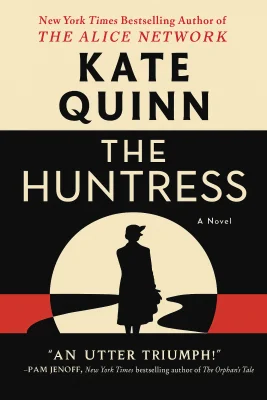
The Huntress
Categories
Fiction, Audiobook, Mystery, Historical Fiction, Thriller, Adult, Book Club, Historical, World War II, War
Content Type
Book
Binding
Kindle Edition
Year
2019
Publisher
William Morrow Paperbacks
Language
English
ASIN
B079DPN9S4
File Download
PDF | EPUB
The Huntress Plot Summary
Introduction
# The Huntress: Shadows Across Time and Waters The lake stretched black under the Austrian moon, its surface broken only by the desperate splash of a woman fighting for her life. But this was no ordinary drowning—this was justice finally catching up with die Jägerin, the Huntress who had stalked children through Polish forests and fed them their last meals before putting bullets in their heads. She had been untouchable once, the beautiful mistress of an SS officer who made sport of hunting escaped prisoners by moonlight. Now, five years after the Reich's collapse, three hunters had tracked her across an ocean to this moment of reckoning. The war correspondent Ian Graham clutched his brother's dog tags, thinking of Sebastian's murder by this woman's hand. The Soviet pilot Nina Markova felt the familiar weight of her father's razor, remembering how she had failed to save that same young Englishman at Lake Rusalka. And Jordan McBride, the American photographer whose camera had first revealed the monster hiding behind a stepmother's gentle smile, watched through her lens as past and present collided in blood and moonlight. Some debts follow you across continents and decades, and tonight the Huntress would learn that evil cannot hide forever behind beautiful masks.
Chapter 1: Night Witches and War Crimes: Origins of the Hunt
The Rusalka climbed through midnight sky over the Eastern Front, her fabric wings singing death songs in the wind. Lieutenant Nina Markova pressed her face to the navigator's cockpit, watching German searchlights sweep the positions below like fingers of blind giants. Beside her, Yelena Vetsina held the controls with steady hands, guiding their U-2 bomber through darkness with an intimacy that made Nina's heart race faster than flak bursts. They called themselves the Night Witches—the 588th Night Bomber Regiment, Marina Raskova's eagles unleashed upon Hitler's war machine. The Germans had given them the name in terror, hearing the whisper of fabric-winged planes cutting engines to glide silently over targets before releasing their deadly cargo. Nina had flown over six hundred missions, each one a dance with death performed in the cathedral of night. But the war had other plans for Nina Markova. Separated from her regiment during the chaos of 1944, she found herself crawling through Polish forests with a wounded English prisoner named Sebastian Graham. The boy was nineteen, gentle-eyed and desperate to reach Allied lines. Together they stumbled into the web of die Jägerin, the SS officer's mistress who hunted humans for sport around her lakeside estate. Nina watched in horror as the Huntress shot Sebastian down at the water's edge, but not before the boy managed to slash her throat with a razor, marking her with a scar she would carry forever. The Night Witch survived by diving into the freezing lake, letting the current carry her away from the woman's bullets. She crawled to safety carrying Sebastian's dog tags and a promise that someday, somehow, she would balance the scales of justice with blood. Years later, in a London refugee center, Nina would meet Ian Graham, the war correspondent searching for his brother's killer. She would marry him out of duty and gratitude, but the marriage was built on a lie wrapped around harder truth—that she had failed to save Sebastian, had hesitated too long before acting. Her guilt made her the perfect weapon for their hunt, because she alone knew the Huntress's face and had felt the bite of her bullets.
Chapter 2: Masks and New Identities: The Huntress in America
The woman who stepped off the refugee ship in Boston Harbor bore no resemblance to the monster who had stalked Lake Rusalka. Anneliese Weber was everything a war widow should be—gentle, cultured, grateful for American sanctuary. She spoke English with just enough accent to seem charmingly foreign, baked perfect apple pies for church socials, and carried herself with the quiet dignity of someone who had lost everything to Hitler's war. But beneath the carefully constructed facade, Lorelei Vogt remained very much alive. She had stolen the identity of a Jewish refugee, murdering the real Anneliese Weber by an Austrian lake and taking not just her papers but her three-year-old daughter Ruth. The child would grow up calling her mother while nightmares of that lakeside murder flickered at the edges of her memory, fragments too terrible for a young mind to fully process. The transformation hadn't been easy. She had learned to cook American food, to speak of democracy and freedom with convincing enthusiasm, to play the devoted stepmother to Jordan McBride when she married the girl's widowed father. Every gesture was calculated, every smile rehearsed, every tear shed on cue when speaking of her fictional dead husband and the horrors she had supposedly fled. Dan McBride's hunting accident had been no accident at all. When his questions about her past grew too persistent, when his casual inquiries threatened to pierce through her carefully constructed story, she had simply eliminated the problem with the same methodical efficiency she had once brought to hunting children. The rifle had misfired, the witnesses said. A tragic accident that left his daughters orphaned and his widow to comfort them in their grief. But Jordan McBride had inherited her father's suspicious nature along with his camera equipment. The girl watched her stepmother with the intensity of a hunter studying prey, noticing how Anneliese never spoke of her past, how she flinched from unexpected questions, how she seemed to know things no Austrian housewife should know. The camera that had first revealed the Iron Cross hidden in her wedding bouquet would soon capture truths far more dangerous than Nazi memorabilia.
Chapter 3: Three Hunters Converge: Trails Leading to Boston
The breakthrough came through patient detective work and a drunk German's loose tongue. Ian Graham and his partner Tony Rodomovsky had spent months following the paper trail that led from Austrian refugee camps to American ports, tracking the network that had spirited so many Nazis to safety. They learned of forged documents and false identities, of gold bars traded for new lives and the silence of accomplices. The trail led them to Boston, to an antique shop where a man named Kolb had been helping war criminals establish new identities in America. He provided papers and connections in exchange for gold and terror, because his clients had ways of ensuring loyalty that went far beyond mere payment. When Ian and Tony finally cornered him in his workshop, surrounded by the tools of document forgery, Kolb cracked under pressure like thin ice. He spoke of a woman who had come to him in 1946, carrying gold teeth and a child's frightened silence. She had needed papers for herself and the girl, had paid in currency that could only have come from the camps. But she had also made it clear that loose ends were dangerous things, that people who talked too much had ways of disappearing into the American vastness where even the FBI couldn't find them. Nina arrived from London like a force of nature wrapped in a stolen British uniform, no longer the broken refugee Ian had married but a compact, dangerous woman with pale Siberian eyes and hands that moved like striking snakes. She had spent five years learning to live with failure, to carry Sebastian's death as motivation for future battles. The Night Witch had found a new war to fight, hunting monsters who thought they could hide in America's vastness. The three hunters established themselves in Boston with the patience of professionals who understood that prey could sense desperation. Tony took a job at McBride Antiques to watch Kolb, his easy charm masking the shadows he had brought back from Europe. Ian and Nina maintained surveillance from a cramped apartment, building their case one photograph and witness statement at a time. They had no idea they were living next door to their quarry, that the woman they sought was baking cookies and tucking children into bed just blocks away.
Chapter 4: Suspicions and Surveillance: Closing the Net
Jordan McBride had always been different from other girls her age, more interested in capturing truth through her camera lens than in the domestic dreams her generation was supposed to embrace. Her photographs revealed things others missed—including the moments when her stepmother's mask slipped and something harder showed through the gentle facade. The first crack had appeared during Thanksgiving dinner, when Jordan found an old photograph of Anneliese with an SS officer. Her stepmother's explanation was smooth and plausible—it was her father, she claimed, a man who had died before the war began. But Jordan's instincts screamed danger, and she began watching Anneliese with the intensity of a hunter studying prey. When Jordan's investigation led her to discover lies about trips to New York and Concord, evidence of secret bank accounts and mysterious cash withdrawals, she realized with growing horror that her stepmother was not the victim of some elaborate scheme but its architect. The spider at the center of a web that stretched back to the war's darkest days. Meanwhile, Tony Rodomovsky found himself genuinely falling in love with Jordan even as he used his position at her family's shop to gather evidence against her stepmother. Their romance bloomed in darkrooms and dance studios, but it was built on a foundation of lies he couldn't yet reveal. He watched Jordan's growing suspicions with a mixture of admiration and dread, knowing that her amateur investigation could destroy months of careful surveillance. Ian Graham discovered his own connection to the McBride family when he began teaching violin to little Ruth, drawn by the child's desperate hunger for music and her strange, haunted eyes. Through these lessons, he glimpsed the domestic life of Anneliese Weber and saw nothing suspicious—just a devoted stepmother who worried about her children's futures. But Ruth's fragmentary memories spoke of violence by a lake and a woman who was both mother and monster, nightmares too specific to be mere childhood fears. The pieces began falling into place with the inexorable logic of a closing trap, but their quarry was not passive prey. Anneliese had survived five years of hiding by staying three steps ahead of her pursuers, and she was beginning to sense the net tightening around her carefully constructed life.
Chapter 5: Unraveling Deceptions: The Truth Emerges
The collision between hunter and hunted came through pure chance and careful observation. Jordan, driven by her own suspicions about her stepmother's mysterious activities, stumbled into Ian and Tony's apartment and saw the files spread across their table—including a photograph of a young woman she recognized as Anneliese. The moment of recognition hit like lightning, illuminating connections that had been hidden in shadow. Ian felt the cold satisfaction of a hunter finally sighting his prey, but it was tempered by the knowledge that they had been outmaneuvered for months. Anneliese Weber had been watching them as carefully as they thought they were watching her network, using Kolb as a shield while she prepared for the possibility of discovery. The woman who had killed his brother was not just a murderer but a strategist who understood that survival meant thinking like prey while acting like predator. Nina's reaction was more primal. The woman who had shot at her across Lake Rusalka, who had forced her to dive into freezing water and watch Sebastian die, was within reach. Every instinct screamed for immediate action, for the kind of swift violence that had kept her alive during the war. But Ian insisted on patience, on building a case that would ensure justice rather than mere vengeance. The revelation shattered Jordan's world as she realized the woman who had raised her, who had encouraged her dreams and comforted her grief, was a Nazi war criminal responsible for murdering children and prisoners of war. The hunting accident that had killed her father now seemed far too convenient, another victim of the monster who had been living in their house, sleeping in their beds, sharing their meals. But Anneliese Weber had not survived the collapse of the Reich by being careless. Even as the hunters closed in, she was preparing for the possibility that her carefully constructed world might crumble. The woman who had once stalked children through Polish forests was about to remind her pursuers that cornered predators were the most dangerous of all. When she realized Jordan had discovered her secret bank accounts and travel records, when Kolb's drunken warnings about English investigators finally pierced through her facade, she made her choice.
Chapter 6: Final Confrontation: Justice at the Lake
The endgame began in the basement darkroom where Jordan had first developed the photograph that revealed her stepmother's true nature. Anneliese stood in the red light with a gun in her hand, and for the first time in five years, she dropped her mask completely. The gentle stepmother vanished, replaced by the cold-eyed killer who had stalked the shores of Lake Rusalka. Her confession was matter-of-fact and chilling. She had killed Jordan's father when his suspicions grew too dangerous, had murdered the Jewish refugee whose identity she stole along with her three-year-old daughter. The children she shot in Poland had been acts of mercy, she claimed—quick deaths instead of slow starvation in the camps. Every horror was justified in her mind, every murder rationalized as necessity or kindness. But Anneliese's greatest mistake was taking Ruth when she fled to the family's remote lake cabin at Selkie Lake. She needed the child as both hostage and camouflage, but she had underestimated the bonds that connected her hunters. Ian and Nina commandeered a biplane, with Jordan and Tony following by car in a desperate race to reach the lake before their quarry could disappear forever into the American wilderness. The confrontation on the lake dock was a collision of past and present, hunter and hunted, justice and vengeance. Anneliese held Ruth at gunpoint while the team surrounded her, but her composure finally cracked when Nina emerged from the dark water like a creature from her nightmares. The rusalka had returned, streaked with blood and carrying the razor that had marked the Huntress years before at another lake, in another country, in another life. Faced with the one fear she could never overcome—the Night Witch who had survived her bullets and crossed an ocean for revenge—the Huntress finally surrendered. She chose trial and imprisonment over the bullet she had planned to put in her own head, because even monsters could recognize when their hunting days were over. The woman who had fed children their last meals before killing them would spend her remaining years in a cell, dreaming of lakes and moonlight and the sound of fabric wings cutting through darkness.
Chapter 7: Reckoning and Aftermath: The Price of Truth
Anneliese Weber was extradited to Austria to face trial for her war crimes, but the victory felt hollow to those she left behind. Jordan found herself guardian to Ruth, a traumatized child who would need years to understand why the only mother she remembered had been taken away in handcuffs. The girl's nightmares were no longer fragments but full memories of that night by the Austrian lake when her real mother had died and a monster had taken her place. The trial became a media sensation, with Jordan's photographs of the capture appearing in newspapers around the world. The images launched her career as a photojournalist but forever linked her name to the story of her stepmother's crimes. She testified about Anneliese's confession, about the domestic life that had hidden such monstrous secrets, about the father whose death was finally revealed as murder rather than accident. Nina found a different kind of peace in the courtroom, watching the woman who had haunted her nightmares finally face justice. She had learned to live with the guilt of Sebastian's death, to accept that some failures could not be undone but only carried forward as motivation for future battles. The Night Witch had found a new war to fight, hunting the monsters who thought they could hide in America's vastness. Ian wrote the story that made Anneliese Weber infamous, his articles ensuring that her crimes would not be forgotten even if legal technicalities might have freed her. His words were weapons as sharp as Nina's razor, cutting through the comfortable fiction that the war's horrors were safely buried in the past. The antique shop became a front for his expanded Nazi hunting operation, with Tony studying law to help future prosecutions. The hunt would continue, because evil did not die with the Third Reich—it simply learned to wear new faces and speak with different accents, waiting for the world to forget so it could rise again. But there would always be hunters willing to follow the trails across oceans and decades, armed with cameras and razors and the absolute certainty that some debts must be paid in full.
Summary
The woman who had once been die Jägerin learned in her Austrian prison cell that some prey are more dangerous when cornered, but even the most cunning predator cannot outrun the past forever. Her hunters had proven that justice moves slowly but inexorably, following paper trails and witness statements across continents until truth emerges from the shadows where monsters try to hide. The Night Witch had traded her bomber's cockpit for the patient work of investigation, the war correspondent had exchanged his typewriter for arrest warrants, and the young photographer had discovered that her camera could capture more than light—it could reveal the face of evil itself. In the end, the hunt that began beside a Polish lake reached its conclusion at another body of water, as if the rusalka spirits of Nina's childhood had guided them all toward this moment of reckoning. The children who died at Lake Rusalka could not be brought back, but their killer would spend her remaining years remembering their faces and knowing that the world had not forgotten their names. Some shadows stretch across time and water, but they cannot hide forever from those who refuse to let the light go out.
Best Quote
“The dead lie beyond any struggle, so we living must struggle for them. We must remember, because there are other wheels that turn besides the wheel of justice. Time is a wheel, vast and indifferent, and when time rolls on and men forget, we face the risk of circling back. We slouch yawning to a new horizon and find ourselves gazing at old hatreds seeded and watered by forgetfulness and flowering into new wars. New massacres. New monsters like die Jägerin. Let this wheel stop. Let us not forget this time. Let us remember.” ― Kate Quinn, The Huntress
Review Summary
Strengths: The review praises the book for its rich, character-driven narrative and the complex portrayal of its characters, particularly Nina. The blending of historical fact with fiction is highlighted as a strong point, offering insights into lesser-known historical events, such as the Night Witches. The story is noted for its exploration of women's struggles against societal constraints and the thrilling pursuit of a female villain. Weaknesses: The reviewer mentions a dislike for the romantic subplot, describing it as unnecessary and not adding value to the story, given the already complex narrative. Overall: The reader expresses a highly positive sentiment, awarding the book 4 1/2 stars. They recommend it for its engaging character development and historical depth, though they caution that it is not a mystery-focused novel.
About Author

Kate Quinn
Quinn reframes historical narratives by focusing on women's often overlooked roles during pivotal 20th-century events, blending thorough research with storytelling that breathes life into history. Her approach to writing historical fiction is characterized by a distinctive twist that incorporates humor, aiming to create narratives that are both engaging and educational. This technique enables readers to connect deeply with the past, presenting history not as a dry recounting of dates and facts but as vibrant stories filled with humanity and resilience.\n\nKate Quinn's major works, including "The Alice Network" and "The Huntress," explore themes of espionage and bravery, highlighting the courage of women who defied societal norms to make their mark in history. Her book "The Diamond Eye" follows the extraordinary journey of a female sniper, showcasing Quinn's commitment to depicting strong female protagonists. Readers of Quinn's novels are not just entertained but are also invited to gain a nuanced understanding of historical events through the lens of personal stories. Her historical fiction is accessible to a wide audience, making these stories valuable to anyone interested in learning about the past through compelling narratives.\n\nIn addition to her standalone novels, Quinn has contributed to collaborative projects like "Ribbons of Scarlet," which further exemplifies her ability to weave multiple perspectives into a cohesive narrative. Her recognition as a bestselling author is underscored by the critical acclaim her works have received, including praise from outlets like NPR. This broad appeal affirms her impact on the historical fiction genre, making her books essential reads for those seeking to uncover the hidden stories of the past.
Read moreDownload PDF & EPUB
To save this Black List summary for later, download the free PDF and EPUB. You can print it out, or read offline at your convenience.
The Huntress
by Kate Quinn
