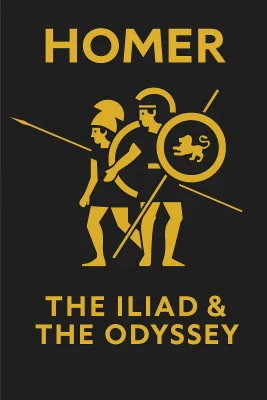
Categories
Fiction, Classics, Historical Fiction, Poetry, Fantasy, Literature, Mythology, School, Historical, Greek Mythology
Content Type
Book
Binding
Leather Bound
Year
0
Publisher
Sterling
Language
English
ASIN
B0DMZ94XL9
File Download
PDF | EPUB
The Iliad & the Odyssey Plot Summary
Introduction
In the twilight of the eighth century BC, a small settlement of shepherds and farmers nestled among seven hills beside the Tiber River would begin a journey that would reshape the entire Mediterranean world. From these humble beginnings, Rome would rise to become history's most enduring empire, commanding territories from Britain to Mesopotamia, from the Rhine to the Sahara. Yet this remarkable ascent was matched by an equally dramatic descent, as internal strife, external pressures, and the weight of governing a vast empire eventually brought down what had seemed an eternal city. This extraordinary millennium-long story reveals how a single city-state transformed from a monarchy to a republic, then to an empire that would dominate the known world. We witness the forging of Roman character through centuries of conflict, the brilliant military and political innovations that enabled unprecedented expansion, and the gradual transformation of Roman society under the pressures of success. Through the lives of farmers-turned-soldiers, ambitious generals, visionary emperors, and ordinary citizens caught in the sweep of history, we discover how Rome's greatest strengths ultimately became the sources of its vulnerability, and how the legacy of Roman civilization continues to shape our world today.
Chapter 1: Origins: From Village to Republic
Along the banks of the Tiber River, where trade routes converged and hills provided natural defense, early Italian tribes established settlements that would eventually coalesce into Rome. Archaeological evidence suggests that by the eighth century BC, these hilltop communities had begun to merge into a single political entity, though the traditional founding date of 753 BC represents more legend than historical fact. The early Romans were a hardy, agricultural people who shared the Italian peninsula with numerous other tribes, including the more advanced Etruscans to the north and the Greek colonists who had established cities throughout the south. The monarchy that governed early Rome from roughly 753 to 509 BC established many of the institutions that would define Roman civilization. Kings like Numa Pompilius codified religious practices, while Servius Tullius organized the population according to wealth and military service, creating the foundation of Roman civic life. The Etruscan influence during this period brought urbanization, monumental architecture, and sophisticated crafts, transforming Rome from a collection of villages into a true city. Yet it was the Roman genius for adaptation and integration that allowed them to absorb these influences while maintaining their distinct identity. The expulsion of the last king, Tarquin the Proud, around 509 BC marked not just a political revolution but a fundamental shift in Roman values. The Romans' deep suspicion of concentrated power, born from their experience with tyrannical monarchy, would shape their political thinking for centuries. The new republic they created divided power among multiple magistrates, balanced competing interests through complex institutions, and enshrined the principle that no single individual should hold supreme authority for extended periods. The early republic faced constant warfare as it struggled to survive among more powerful neighbors. These conflicts forged the Roman military character, emphasizing discipline, endurance, and tactical flexibility. Equally important was the gradual expansion of Roman citizenship, which allowed the city to incorporate conquered peoples rather than simply ruling over them. This inclusive approach, revolutionary for its time, created a constantly growing pool of soldiers and taxpayers who had a stake in Roman success. By the fourth century BC, Rome had emerged as the dominant power in central Italy, its republican institutions tested by war and proven capable of governing an expanding territory.
Chapter 2: Republican Expansion and the Punic Wars
The third and second centuries BC witnessed Rome's transformation from a regional Italian power to the master of the Mediterranean world. This expansion began almost accidentally, as Rome's interventions in southern Italy brought conflict with established powers. The conquest of the Greek cities in the south introduced Romans to Hellenistic culture and demonstrated that their military system could defeat even the most sophisticated armies of the age. Yet it was the three titanic struggles with Carthage, known as the Punic Wars, that truly tested Roman resolve and established their imperial destiny. Carthage, the great maritime empire of North Africa, controlled trade routes across the western Mediterranean and possessed wealth that dwarfed Rome's resources. The First Punic War erupted over control of Sicily, forcing Rome to develop naval capabilities and teaching them the costs of overseas empire. The Second Punic War brought Hannibal's famous crossing of the Alps and a series of devastating defeats that brought Rome to the brink of extinction. At Cannae in 216 BC, Roman losses were so catastrophic that Hannibal's victory seemed to herald the end of Roman power. Yet Rome's darkest hour revealed the true source of its strength. While other cities might have sued for peace after such disasters, the Roman system of alliances held firm, and the Roman people displayed an almost superhuman determination to continue fighting. The Roman strategy of attrition, perfected by Fabius Maximus, gradually wore down Hannibal's forces while Roman armies opened new fronts in Spain and Africa. Scipio Africanus's brilliant campaign culminated in the decisive victory at Zama in 202 BC, demonstrating that Roman military science had evolved to match any opponent. The aftermath of the Punic Wars transformed the Mediterranean into a Roman lake. The systematic destruction of Carthage in 146 BC, when the city was razed and its territory made a Roman province, marked the end of Rome's last serious rival in the west. Simultaneously, Roman legions carved up the Hellenistic kingdoms of the east, drawn into conflicts by appeals from Greek cities but remaining to impose Roman order. By 133 BC, Rome controlled an empire stretching from Spain to Asia Minor, ruling over millions of subjects and commanding unprecedented wealth. This rapid expansion, however, created new problems that would ultimately tear the republic apart.
Chapter 3: Civil Wars and the Fall of the Republic
The wealth and power that flowed from Rome's conquests created social tensions that the republican system could not contain. The traditional Roman citizen-farmer, backbone of the early republic, found himself displaced by slave-worked estates and impoverished by long military service in distant provinces. Meanwhile, successful generals returned from their campaigns with enormous wealth, vast personal followings, and ambitions that transcended traditional republican constraints. The stage was set for a century of civil conflict that would destroy the republic and pave the way for imperial rule. The crisis began with the attempts of the Gracchus brothers to redistribute land to Rome's dispossessed citizens in 133 and 123 BC. Their violent deaths at the hands of conservative senators established a precedent for political violence that would plague the late republic. The Social War of the early first century BC, which granted citizenship to all Italian allies, temporarily eased some tensions but created new conflicts over the distribution of power. More ominously, the careers of Marius and Sulla demonstrated how successful generals could use professional armies to dominate the state through force. The triumvirate of Julius Caesar, Pompey, and Crassus represented the ultimate corruption of republican values, as three men divided the empire among themselves like private property. Caesar's conquest of Gaul not only extended Roman power to the Atlantic but provided him with the wealth and veteran loyalty necessary to challenge the established order. When the senate ordered Caesar to disband his armies, his crossing of the Rubicon River in 49 BC initiated the final civil war that would determine Rome's future. Caesar's victory established the precedent that military force, not constitutional authority, would henceforth determine who ruled Rome. Caesar's assassination in 44 BC, far from restoring the republic, merely initiated another round of civil wars as his heirs fought for supremacy. The eventual triumph of Caesar's adopted son Octavian at the Battle of Actium in 31 BC marked the definitive end of the republican system. The Roman people, exhausted by decades of civil strife and longing for peace, willingly accepted the rule of a single man in exchange for stability. The republic had grown too large and too complex for its original institutions to govern effectively, and the price of empire had proved to be the loss of liberty.
Chapter 4: Augustus and the Early Empire
Gaius Octavius, who would become Augustus, faced the monumental task of creating a new system of government that could provide stability without appearing to destroy cherished republican traditions. His solution was a masterpiece of political theater that concealed revolutionary change behind familiar forms. In 27 BC, Augustus claimed to have restored the republic, returning all extraordinary powers to the senate and people. In reality, he retained control of the armies, the provinces, and the vast resources of the empire through a carefully constructed network of legal authorities that made him, in all but name, Rome's first emperor. The Augustan settlement established the Principate, a system in which the emperor ruled as "first citizen" rather than king or dictator. Augustus held the power of a tribune, making his person sacred and giving him the right to veto any action by other magistrates. As proconsul, he commanded all the frontier provinces where the legions were stationed. His careful accumulation of traditional offices, combined with his immense personal wealth and network of client relationships, gave him effective control over the state while preserving the fiction of republican government. Under Augustus and his immediate successors, the Roman Empire reached the height of its prosperity and cultural achievement. The Pax Romana, enforced by disciplined legions stationed along carefully fortified frontiers, allowed trade and civilization to flourish from Britain to Mesopotamia. Roman engineering connected the empire with magnificent roads, aqueducts, and public buildings, while Roman law provided a framework for justice that would influence legal systems for millennia. The incorporation of Greek learning with Roman practicality created a synthesis that preserved and transmitted the heritage of classical antiquity. The Julio-Claudian dynasty, however, also revealed the inherent instability of the imperial system. The madness of Caligula, the eccentricities of Claudius, and the theatrical excesses of Nero demonstrated the dangers of concentrating power in the hands of individuals chosen by birth rather than merit. The Year of the Four Emperors in 69 AD showed how quickly the empire could descend into civil war when the succession was disputed. Yet the system proved remarkably resilient, and the Flavian dynasty that followed would continue the work of consolidating imperial rule and expanding the boundaries of Roman civilization.
Chapter 5: Crisis and Recovery in the Third Century
The third century AD brought Rome face to face with challenges that seemed to threaten the very survival of the empire. External pressures mounted as Germanic tribes pressed against the northern frontiers while a resurgent Persian Empire challenged Roman dominance in the east. Simultaneously, economic crisis gripped the empire as decades of warfare, plague, and inflation undermined the fiscal foundations of imperial rule. The political system established by Augustus finally buckled under these strains, producing a half-century of chaos known as the Crisis of the Third Century. Between 235 and 284 AD, over fifty men claimed the title of emperor, most dying violent deaths within a few years or even months of their accession. This period of military anarchy saw the empire fragment as local commanders established independent kingdoms in response to the central government's inability to provide effective defense. The Gallic Empire controlled Britain, Gaul, and Spain for fifteen years, while Queen Zenobia's Palmyrene Kingdom dominated much of the eastern Mediterranean. Barbarian invasions devastated entire provinces, and economic collapse forced many regions to revert to barter systems as the imperial currency became worthless. Yet even during this darkest period, the fundamental strengths of Roman civilization endured. Provincial governors and military commanders, even when claiming independence from the central government, continued to rule according to Roman law and maintained Roman administrative practices. The army, despite its political unreliability, retained its tactical superiority over barbarian opponents. Most importantly, the ideal of Roman unity persisted among both elites and common people, creating the foundation for eventual recovery. The restoration began with Aurelian, who earned the title "Restorer of the World" by reuniting the empire and stabilizing the currency. His successors, particularly Diocletian, implemented comprehensive reforms that transformed the imperial system to meet the challenges of a changed world. Diocletian's division of the empire among multiple rulers, his creation of a vast bureaucracy, and his attempt to control prices and wages represented a fundamental shift from the relatively light government of the early empire to the rigid, militarized state that would characterize late antiquity. These reforms preserved Roman rule for another two centuries, but at the cost of the classical civilization that had flourished under the Principate.
Chapter 6: Christianity and Cultural Transformation
The emergence of Christianity from an obscure Jewish sect to the dominant religion of the Roman Empire represents one of history's most remarkable transformations. Initially, the Roman government viewed Christians as a peculiar but harmless superstition, occasionally persecuting them for their refusal to participate in traditional religious observances but generally ignoring their activities. However, as Christianity spread throughout the empire, attracting converts from all social classes, it began to challenge the fundamental assumptions upon which Roman society was based. Christian teachings about the equality of all souls before God subverted traditional Roman hierarchies, while Christian emphasis on spiritual rather than worldly success questioned the values that had driven Roman expansion and achievement. The Christian rejection of violence posed particular challenges in a society built upon military conquest, while Christian sexual morality clashed with Roman practices regarding marriage, divorce, and family relationships. Most provocatively, Christian claims about the exclusive truth of their religion challenged the Roman tradition of religious tolerance and syncretism. The Great Persecution launched by Diocletian in 303 AD represented the last systematic attempt to suppress Christianity through state violence. The failure of this persecution, followed by Constantine's conversion and legalization of Christianity in 313 AD, marked a decisive turning point in both Roman and world history. Constantine's decision to embrace Christianity was likely motivated by practical political considerations as much as personal conviction, but its consequences were revolutionary. Within a single generation, Christianity transformed from a persecuted minority to the favored religion of the imperial court. The Christianization of the Roman Empire profoundly altered the character of Roman civilization. Christian bishops became powerful political figures, while Christian theology influenced imperial law and policy. The construction of magnificent churches replaced the building of temples and amphitheaters as expressions of civic pride. Perhaps most significantly, Christian emphasis on salvation in the afterlife gradually undermined the civic virtues that had sustained the Roman state, as increasing numbers of Romans sought religious rather than worldly advancement. This transformation prepared the way for the medieval world, where spiritual authority would rival and eventually surpass temporal power.
Chapter 7: Decline and Fall of the Western Empire
The fifth century AD witnessed the final collapse of Roman authority in the western provinces, as waves of barbarian invasions overwhelmed the empire's defenses and established Germanic kingdoms on former Roman territory. This process was not a sudden catastrophe but rather the culmination of long-term trends that had been developing for centuries. The increasing barbarization of the Roman army, the economic decline of the western provinces, and the transfer of resources to the eastern capital at Constantinople had gradually weakened the western empire's ability to defend itself. The sack of Rome by Alaric the Visigoth in 410 AD shocked the Mediterranean world, demonstrating that even the eternal city was vulnerable to barbarian assault. More devastating was the vandalization of Rome by Genseric's Vandals in 455 AD, which stripped the city of much of its remaining wealth and prestige. Yet these spectacular events were less significant than the gradual loss of provinces to barbarian settlement and the empire's inability to collect taxes or recruit soldiers from increasingly autonomous local authorities. The deposition of Romulus Augustulus, the last western emperor, by the Germanic chieftain Odoacer in 476 AD marked the formal end of the Western Roman Empire, though effective imperial control had vanished decades earlier. Paradoxically, many of the barbarian kingdoms that replaced Roman rule maintained Roman administrative practices, legal systems, and cultural forms. The Ostrogothic kingdom in Italy, the Visigothic kingdom in Spain, and the Frankish kingdom in Gaul all presented themselves as successors to Roman authority rather than destroyers of Roman civilization. The survival of the Eastern Roman Empire, later known as the Byzantine Empire, demonstrated that Roman institutions could adapt to changing circumstances when properly reformed and adequately defended. The eastern empire's Greek character, its stronger economic base, and its more defensible geographical position allowed it to survive for another thousand years, preserving important elements of Roman law, administration, and culture. The fall of the west thus marked not the end of Roman civilization but its transformation into new forms that would continue to influence European development throughout the medieval period and beyond.
Summary
The history of ancient Rome reveals the eternal tension between the acquisition and exercise of power. From its origins as a small Italian city-state to its zenith as master of the Mediterranean world, Rome's story demonstrates how military success, political innovation, and cultural adaptability can create enduring civilizations. Yet Rome's ultimate fate also illustrates the dangers inherent in imperial expansion: the corruption of traditional values, the concentration of power in individual hands, and the difficulty of governing diverse populations across vast distances. The very qualities that enabled Rome's rise ultimately contributed to its transformation and, in the west, its fall. The Roman experience offers timeless lessons for understanding how societies grow, change, and adapt to new challenges. Rome's genius lay not in avoiding problems but in developing institutions flexible enough to evolve with changing circumstances while maintaining core principles and values. When those institutions became rigid or when the challenges exceeded the system's capacity for adaptation, decline followed. Modern democracies can learn from both Rome's successes in creating inclusive political systems and its failures in managing the tensions between security and liberty, tradition and innovation, local autonomy and central authority. The study of Roman history reminds us that no civilization, however powerful or enduring, is immune to the forces of change, and that survival depends on the continuous renewal of the civic virtues and institutional wisdom that originally created greatness.
Best Quote
“Rage - Goddess, sing the rage of Peleus' son Achilles,murderous, doomed, that cost the Achaeans countless losses,hurling down to the House of Death so many sturdy souls,great fighters' souls, but made their bodies carrion,feasts for the dogs and birds,and the will of Zeus was moving toward its end.Begin, Muse, when the two first broke and clashed,Agamemnon lord of men and brilliant Achilles.” ― Homer, The Iliad / The Odyssey
Review Summary
Strengths: The review highlights the epic nature of both "The Iliad" and "The Odyssey," praising Homer for his masterful storytelling and the historical significance of these works. The translation by Saeed Nafisi is noted for its quality, despite being somewhat challenging for those accustomed to Western-style translations. The publication by Hermes is also commended for its quality. Weaknesses: The review mentions that reading "The Odyssey" was less enjoyable than "The Iliad." Additionally, the translation by Mirjalaleddin Kazzazi is described as heavy, which might not appeal to all readers. Overall: The reviewer expresses a strong appreciation for Homer's epics, recommending them to serious readers of novels. Despite some translation challenges, the works are considered essential reading, with a particular endorsement of Saeed Nafisi's translation for its readability.
About Author
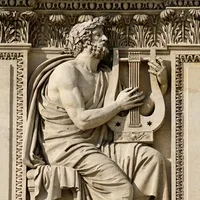
Homer
Homer probes the timeless nature of human struggles through his epic poems, focusing on the pursuit of honor and the interplay between fate and free will. His works, primarily "The Iliad" and "The Odyssey," explore the depths of human emotion and the intricate relationships between mortals and the divine. By utilizing a narrative style characterized by grandeur and meticulous detail, Homer offers insights into the complexities of heroism and resilience. Through his vivid storytelling, Homer not only preserves the oral traditions of ancient Greece but also crafts a literary framework that continues to captivate readers and scholars.\n\nIn addition to the well-known "The Iliad," Homer's narrative prowess extends to "The Odyssey," where the themes of cunning intelligence and loyalty are vividly depicted. His method of composing in Homeric Greek, a linguistic blend of Ionic and Aeolic dialects, demonstrates his mastery of epic poetry while illustrating the cultural milieu of the time. Homer's exploration of themes such as the wrath of Achilles and the cunning of Odysseus offers readers a rich tapestry of human experience, inviting them to reflect on their own journeys and the enduring nature of these tales.\n\nFor readers, Homer's works serve as a mirror to the human condition, revealing universal truths that transcend time and place. The author's unique ability to intertwine myth and history allows audiences to gain a deeper understanding of ancient Greece and its cultural ethos. This bio thus captures the essence of Homer as more than just a creator of epic tales; he is a foundational figure whose contributions continue to shape the Western literary canon. For students, scholars, and lovers of literature, Homer's works provide not only a window into the past but also timeless narratives that resonate with contemporary themes.
Read moreDownload PDF & EPUB
To save this Black List summary for later, download the free PDF and EPUB. You can print it out, or read offline at your convenience.
The Iliad & the Odyssey
by Homer
