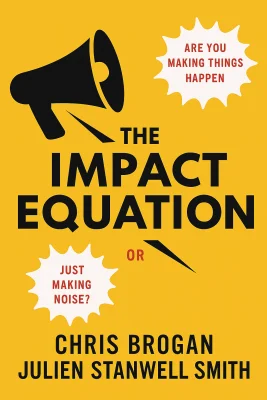
The Impact Equation
Are You Making Things Happen or Just Making Noise?
Categories
Business, Nonfiction, Self Help, Psychology, Leadership, Cultural, Social, Social Media
Content Type
Book
Binding
Hardcover
Year
2012
Publisher
Portfolio
Language
English
ISBN13
9781591844907
File Download
PDF | EPUB
The Impact Equation Plot Summary
Introduction
In today's digital landscape, creating genuine impact requires more than just being present—it demands a structured approach to breaking through the noise. How can individuals and organizations ensure their messages resonate in an increasingly crowded marketplace of ideas? This challenge affects everyone from solo entrepreneurs to large corporations trying to make meaningful connections. The Impact Equation offers a comprehensive framework that transforms how we think about creating influence in the digital world. At its core lies the formula C × (R + E + A + T + E), which stands for Contrast, Reach, Exposure, Articulation, Trust, and Echo. This elegant equation provides a roadmap for evaluating and improving how ideas spread, gain traction, and ultimately create real-world change. Rather than focusing merely on social media tactics or platform-specific strategies, this framework addresses the universal principles that determine whether your message will break through or fade into obscurity.
Chapter 1: Understanding the Impact Equation: C × (R + E + A + T + E)
The Impact Equation represents a holistic approach to creating influence in our digital world. Unlike simplistic formulas that focus on follower counts or engagement metrics, this equation acknowledges that true impact comes from the interplay of multiple critical factors. The formula—Impact = C × (R + E + A + T + E)—encapsulates the essential elements needed to make ideas spread and create meaningful change. Contrast serves as the multiplier in the equation because it fundamentally determines whether your message gets noticed at all. Without differentiation from competing messages, even the most brilliantly crafted idea remains invisible. Think of contrast as the difference between launching yet another fitness blog versus creating the first fitness program specifically designed for recovering heart patients. The more your idea stands out against the backdrop of similar offerings, the greater potential impact it can achieve. The core components within the parentheses represent the channels and qualities through which your distinctive idea travels. Reach refers to the raw size of your audience—how many people you can potentially connect with through your platform. Exposure relates to frequency—how often your audience encounters your message. Articulation addresses clarity—whether your audience immediately understands what you're communicating. These three elements together determine your idea's ability to spread effectively. The final components—Trust and Echo—speak to the human dimension of impact. Trust reflects credibility, reliability, and whether people believe in you enough to act on your ideas. Echo represents resonance—the degree to which your audience sees themselves in your message and feels a personal connection. A message with strong Echo makes people think, "This person understands me and my challenges." When applying the Impact Equation to real-world situations, consider how each component affects your specific goals. For instance, Brett Rogers, an adventurer who creates documentaries about traveling rivers without fossil fuels, succeeds because his work has strong Contrast (unique adventure concept), compelling Articulation (clear storytelling), and powerful Echo (environmental values that resonate with his audience). His platform grows because these elements work in harmony, creating exponentially greater impact than any single factor could achieve alone.
Chapter 2: Contrast: How to Stand Out from the Crowd
Contrast represents the degree to which your idea stands out from everything else competing for attention. In today's cluttered information landscape, being slightly different isn't enough—your message must create a pattern interruption that forces the brain to pay attention. Contrast functions as the multiplier in the Impact Equation because without it, even messages with enormous reach and perfect articulation will simply blend into the background noise. Creating effective contrast requires understanding the ecosystem in which your ideas exist. Just as species compete for resources in nature, ideas compete for limited attention in human minds. Most ideas die quickly because they lack sufficient differentiation from existing concepts. Consider what happened when Burger King attempted several initiatives like offering table service and reintroducing their mascot as a creepy character—these moves failed because they contradicted customer expectations without offering meaningful differentiation. By contrast, McDonald's successful McCafé concept worked because it represented a logical extension that still maintained brand coherence while differentiating from competitors. Contrast emerges from several possible approaches. You might take a small, incremental step that subtly differentiates you, like a bookstore adding coffee service. Alternatively, you could make a dramatic leap, like BeautifulPeople.com's dating site that actively rejects applicants based on attractiveness. The most effective approach often falls somewhere between—meaningful differentiation without alienating your audience. Whatever approach you choose, the goal remains making your offering recognizable and memorable amid similar options. Developing stronger contrast frequently requires bravery—the willingness to stand out and risk rejection. When Dan Carney, a vice president at a telecommunications company, suggested breaking down a complex project plan from hundreds of detailed tasks to just ten high-level line items with daily ten-minute status meetings, he exhibited this kind of courage. His approach contradicted conventional project management wisdom but proved remarkably effective. Such willingness to challenge established norms often yields the most distinctive and impactful ideas. The paradox of contrast is that while your idea must stand apart, it must still connect with existing frameworks in people's minds. Pattern recognition helps humans make sense of the world, so the most effective ideas contain enough familiarity to be recognizable while introducing enough novelty to command attention. The "Jaws in space" pitch that led to the film "Alien" exemplifies this balance—connecting to a known quantity (Jaws) while introducing a fresh context (space) created an instantly compelling concept that stood out from other science fiction stories of its era.
Chapter 3: Articulation: Crafting Clear and Compelling Messages
Articulation represents how clearly and effectively you communicate your ideas. No matter how groundbreaking your concept, if people cannot easily understand it, they cannot embrace it. The power of articulation lies in its ability to transform complex notions into accessible insights that immediately connect with your audience. As Kenneth Hadge, a business instructor, would say: "Tell it to me like I'm six years old." The most articulate communicators master the art of simplicity. They use small words, concise sentences, and vivid examples rather than industry jargon or academic complexity. When Stephen Hawking wrote "A Brief History of Time," he transformed abstract cosmological concepts into understandable prose, selling over ten million copies and staying on bestseller lists for four years. The articulation, not the underlying ideas (which other physicists already understood), created his extraordinary impact. Similarly, Chipotle's menu board articulates its entire ordering process through just four words: "ORDER," "WITH," "SALSAS," and "EXTRAS"—making the experience intuitive even for first-time customers. Effective articulation requires connecting the dots between ideas to create a coherent whole. While blog posts might present isolated insights, well-articulated concepts weave individual elements into a comprehensive framework. This synthesis process, which Harvard professor Howard Gardner considers one of five critical future skills, involves gathering diverse information, identifying patterns, removing irrelevant details, and creating meaningful connections. When you articulate ideas this way, you provide your audience with a "ten-thousand-foot view" that helps them grasp the big picture before diving into specifics. The true test of articulation is whether someone can immediately comprehend and recall your message. Rachel Hawkins, a young adult fiction author, excels at articulating her series concept—a boarding school for supernatural teens who struggle to fit in—in a way that resonates with both her target demographic and broader audiences. She communicates not just plot elements but emotional themes that feel universal: feeling different, sensing hidden truths, and discovering one's unique place in the world. This clarity creates an instant connection that transcends age and background. For businesses, clear articulation translates directly to market position and customer understanding. When Dollar Shave Club launched with the straightforward message "A great shave for a few bucks a month," they articulated their value proposition so effectively that consumers immediately grasped the concept. Their viral launch video further articulated their brand identity through humor and directness: "Are our blades any good? No. OUR BLADES ARE F**KING GREAT." This clarity helped them acquire tens of thousands of customers almost overnight, ultimately leading to a billion-dollar acquisition.
Chapter 4: Platform Building: Reach and Exposure
Platform represents your ability to distribute ideas to an audience at scale. In earlier eras, platforms were expensive and controlled by gatekeepers—television networks, radio stations, newspapers, and magazines. Today, virtually anyone can build a platform through blogs, podcasts, social media, email newsletters, and other digital channels at minimal cost. This democratization has fundamentally changed how ideas spread and who gets to spread them. Reach, the first essential component of platform building, measures the raw size of your potential audience—how many people you can potentially connect with through your combined channels. However, raw numbers can be misleading. What matters isn't just follower counts but meaningful connection with people who will take action when prompted. Paulo Coelho, author of "The Alchemist," has millions of social media followers, but his true impact comes from his ability to inspire those followers to engage deeply with his ideas and share them with others. Similarly, the difference between having ten thousand passive subscribers versus one thousand engaged followers who implement your ideas and advocate for you represents the distinction between vanity metrics and actual influence. Exposure, the second platform component, addresses frequency—how often your audience encounters your message. Saturday Night Live exemplifies the power of consistent exposure by appearing reliably every week for decades. When done right, regular exposure creates a mental default status where your audience thinks, "If there's nothing else to do, there's always this." However, the appropriate frequency varies dramatically depending on context. While some successful bloggers post multiple times daily, others build substantial influence with weekly or even monthly contributions. The key question isn't "How often should I post?" but rather "How often do I need to connect to maintain relevance while providing genuine value?" Building an effective platform requires external work—you cannot build it from the inside out. Just as a conference organizer must promote an event through existing channels rather than simply announcing it in an empty venue, you must leverage existing platforms to build your own. This might mean guest posting on established blogs, appearing on podcasts, connecting with up-and-comers in your field, or creating content that specifically serves audiences on platforms you don't own. Lucas Cruikshank, creator of the YouTube character Fred Figglehorn, built his platform from zero to become the first YouTube creator to reach one million subscribers, ultimately landing movie deals with Nickelodeon—all by understanding how to expand his reach within an existing ecosystem. The most effective platforms balance exclusivity with accessibility. TED conferences exemplify this approach by curating world-class presenters and maintaining strict quality standards while making the content freely available online. This creates both prestige for participants and widespread distribution of ideas. Similarly, strategic launches amplify platform impact by concentrating attention at specific moments. When planning a launch, focus on creating incentives for early action, building anticipation, ensuring consistent quality, and most importantly, directing attention toward other audiences rather than your existing followers who already support you.
Chapter 5: Trust and Echo: The Human Element of Impact
The human element—consisting of Trust and Echo—forms the soul of the Impact Equation. Without these components, even perfectly crafted ideas distributed through massive platforms will fail to create lasting impact. These attributes represent the relational aspects that transform mere information transfer into meaningful connection and influence. Trust functions as the foundation for all impact. It combines several critical elements captured in the Trust Equation: C × R × I / S = Trust, where C represents Credibility (qualifications and expertise), R stands for Reliability (consistency in delivering on promises), I indicates Intimacy (emotional closeness), and S reflects Self-interest (focus on yourself versus others). When YouTube added the infamous vuvuzela button during the 2010 World Cup—allowing users to add the annoying horn sound to any video—they demonstrated a distinctly human approach that built trust. Despite potentially reducing time on site and harming metrics, this playful move showed they understood internet culture and weren't afraid to sacrifice short-term business interests for human connection. Echo represents how well your audience sees themselves in your message. When British singer Adele performs, she creates powerful Echo by sharing personal stories between songs, speaking directly to audience members as individuals rather than a faceless crowd, and expressing vulnerability through relatable experiences. This approach makes listeners feel "You understand me and my world." Similarly, electronic music producer deadmau5 regularly streams unpolished studio sessions where he casually interacts with fans, makes mistakes, and shares his creative process—reinforcing that he's a regular person despite his fame. Building the human element requires genuine sacrifice and generosity. Throughout history, those willing to give something away even when resources are scarce earned trust and leadership roles because their actions demonstrated both stability and care for the community. In digital environments, this might mean regularly creating valuable content without immediate compensation, connecting others without expecting reciprocation, or publicly acknowledging mistakes. These actions signal that you prioritize relationships over transactions—a quality increasingly valued in an automated world. Speaking your audience's language creates profound Echo. This doesn't mean manipulative mimicry but rather genuine understanding of their context and concerns. When communicating with technologists, using a Star Wars reference establishes immediate connection. When addressing pediatricians, acknowledging changes in childhood education signals respect for their domain knowledge. By finding authentic common ground—as Chris did when discovering that Disney chairman Bob Iger shared his experience sailing in Maine—you create resonance that transcends professional roles and builds genuine human connection. Handling criticism gracefully represents a critical test of the human element. Rather than defending against every negative comment or attempting to please everyone, successful impact creators thank critics for their feedback while maintaining focus on their core message and community. This balanced approach recognizes that both excessive defensiveness and complete indifference to feedback undermine trust. Instead, treat all feedback—positive and negative—as simply the opinions of others, valuable for consideration but not definitive of your worth or impact.
Chapter 6: Practical Application: From Theory to Impact
Applying the Impact Equation requires transforming theoretical understanding into concrete action. The practical implementation begins with honest self-assessment using the framework's components as diagnostic tools. Just as Anne, Ben, and Charlie might evaluate the same project differently—Anne seeing only deficiencies, Charlie overestimating strengths, and Ben finding the balanced perspective that enables improvement—you must calibrate your self-evaluation to identify genuine opportunities without becoming discouraged or complacent. Creating meaningful contrast starts with systematic analysis of your competitive landscape. Identify what defines your space, pan out to understand broader value propositions, determine which elements are truly essential, and then deliberately reduce or eliminate non-essential features. Cirque du Soleil exemplifies this approach by eliminating animals and other traditional circus elements while enhancing artistic performance—creating distinctive contrast that commands premium pricing. Similarly, Dollar Shave Club differentiated itself by offering just three blade options with transparent pricing, contrasting sharply with Gillette's complex product line and celebrity endorsements. Improving articulation requires ruthless simplification. Kenneth Hadge's method—"Tell it to me like I'm six years old"—provides a powerful test for clarity. When Chipotle distills its entire ordering process to four words on a menu board, it demonstrates how structural simplicity creates instant understanding. Similarly, Instagram's success stems partly from its extraordinarily clear premise: take, edit, and share photos. This clarity enabled rapid adoption and contributed to its billion-dollar acquisition by Facebook despite fierce competition in the photo-sharing market. Building effective platforms requires understanding both reach and exposure. Rather than pursuing vanity metrics like follower counts, focus on building connections with high-quality network members who can amplify your message. Rachel Hawkins exemplifies this approach by actively engaging with readers across multiple platforms, creating community around shared interests beyond her books, and responding personally to messages—even from readers outside her target demographic. This human-centered approach creates advocates who promote her work more effectively than traditional marketing could. The human element—Trust and Echo—often presents the greatest implementation challenge. Building trust requires credibility through consistent quality, reliability through dependable delivery, intimacy through authentic sharing, and reduced self-interest through genuine helpfulness. Dolbeau, a small fashion label from Montreal, builds trust by transparently sharing its material selection and production processes through Instagram, letting customers witness the craftsmanship behind each product. Similarly, Paulo Coelho creates powerful Echo by featuring his readers in his social media background and engaging in two-way conversations about their interests rather than simply promoting his work. Perhaps the most powerful practical application is the simplest: reply to people. Despite its apparent simplicity, the act of personally responding to comments, messages, and emails creates disproportionate impact in an era when most organizations communicate through no-reply addresses and automated responses. This practice signals that you value individuals over efficiency—a distinction that increasingly defines memorable experiences in our digital world.
Summary
The Impact Equation offers a powerful framework for understanding how ideas spread and create meaningful change in today's digital landscape. By conceptualizing impact as the product of Contrast multiplied by the sum of Reach, Exposure, Articulation, Trust, and Echo, this equation provides both diagnostic tools and actionable strategies for anyone seeking to amplify their influence. The most successful impact creators understand that while platform metrics matter, the human elements of trust and resonance ultimately determine whether ideas merely reach people or actually transform them. Beyond its practical applications, the Impact Equation represents a profound shift in how we understand communication and influence. In a world increasingly mediated by technology, the equation reminds us that human connection remains the ultimate currency. As platforms evolve and technologies change, the fundamental principles of standing out meaningfully, communicating clearly, reaching the right people consistently, establishing genuine trust, and creating authentic resonance will continue to determine which ideas flourish and which fade away. By mastering these timeless elements while adapting to new contexts, we can ensure our most important messages not only spread widely but create lasting impact that matters.
Best Quote
“The people are what matters.” ― Chris Brogan, The Impact Equation: Are You Making Things Happen or Just Making Noise?
Review Summary
Strengths: The book provides a structured framework (C.R.E.A.T.E) for standing out online, which includes practical attributes like Contrast, Reach, Exposure, Articulation, Trust, and Echo. The reviewer appreciates the book's focus on how to effectively connect with and influence a large audience.\nOverall Sentiment: Enthusiastic. The reviewer is intrigued by the book's promise to enhance online presence and influence, as evidenced by their interest in applying the book's principles to their own blog.\nKey Takeaway: "The Impact Equation" offers a practical guide for individuals seeking to enhance their online influence by using a structured approach to connect with and engage a wider audience effectively.
About Author

Chris Brogan
Brogan synthesizes the nuances of digital strategy and communication, aiming to redefine how businesses build trust and influence in the online world. By examining the intricate dynamics of social software technologies, he provides invaluable insights into cultivating genuine connections in digital landscapes. His works, such as "Trust Agents: Using the Web to Build Influence, Improve Reputation, and Earn Trust," explore the transformative potential of the web to foster authentic relationships. Meanwhile, "The Impact Equation" delves into effective communication strategies, and "The Freaks Shall Inherit the Earth" encourages embracing individuality within entrepreneurship, challenging conformity in the business arena.\n\nCentral to Brogan's approach is the emphasis on practical application and strategic foresight, which is evident in his extensive career as a marketing consultant and speaker. His methods are geared toward empowering individuals and organizations to leverage digital media for growth and trust development, while also focusing on community nurturing and customer acquisition. The author of several acclaimed books, Brogan has shaped his literary themes around social media marketing, influence, and strategic leadership, offering readers strategies to navigate the complexities of digital engagement effectively.\n\nThis bio highlights Brogan's impact on business professionals and marketers who seek to harness the web's potential. By advocating for authenticity and trust, he equips his audience with tools to drive transformative change. Recognized as a top influencer in the field, his expertise benefits those eager to adapt to evolving digital landscapes, ultimately positioning them for success in an interconnected world.
Read moreDownload PDF & EPUB
To save this Black List summary for later, download the free PDF and EPUB. You can print it out, or read offline at your convenience.
The Impact Equation
by Chris Brogan
