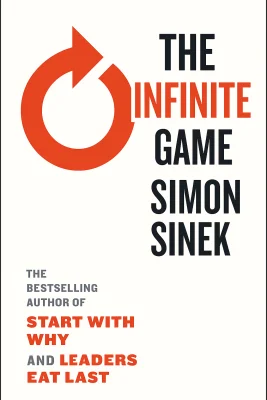
The Infinite Game
Categories
Business, Nonfiction, Self Help, Psychology, Philosophy, Leadership, Audiobook, Management, Entrepreneurship, Personal Development
Content Type
Book
Binding
Hardcover
Year
2019
Publisher
Portfolio
Language
English
ASIN
073521350X
ISBN
073521350X
ISBN13
9780735213500
File Download
PDF | EPUB
The Infinite Game Plot Summary
Introduction
Picture a military leader in Vietnam, staring at reports that show his forces winning every battle yet somehow losing the war. This paradox haunted American commanders who couldn't understand how they could dominate every engagement with superior firepower and tactics, yet watch their overall position deteriorate. The answer lay not in military strategy, but in a fundamental misunderstanding of the game they were playing. This story illuminates a profound truth that extends far beyond warfare into every aspect of our lives. We live in a world of infinite games, yet we persist in playing them with finite mindsets. In business, politics, relationships, and personal growth, we obsess over winning and losing, rankings and competitions, quarterly results and immediate victories. But what if the most important games in life aren't meant to be won at all? What if the goal isn't to finish first, but to keep playing? This shift in perspective doesn't just change how we compete, it transforms how we lead, how we build relationships, and how we find meaning in our work and lives.
Chapter 1: The Finite vs. Infinite Mindset: A Fundamental Shift
When Apple learned that IBM was entering the personal computer market in 1981, their response defied conventional business wisdom. Instead of panic or defensive maneuvering, Apple took out a full-page ad in The Wall Street Journal with a surprising headline: "Welcome, IBM. Seriously." The ad went on to celebrate IBM's entry into the market, acknowledging that their massive investment would help legitimize and expand the entire personal computer industry. Apple understood something their competitors didn't—they weren't trying to beat IBM, they were trying to advance a cause bigger than themselves. This story perfectly illustrates the difference between finite and infinite thinking. Finite players play to win, to end the game in their favor. They have clear opponents, fixed rules, and agreed-upon objectives. But infinite players play to keep the game going. They understand that business, like life, has no finish line. While finite-minded leaders obsess over quarterly rankings and market dominance, infinite-minded leaders focus on building something that will outlast them. Apple didn't see IBM as an enemy to defeat, but as a worthy rival who would push them to become better while advancing their shared vision of putting computing power in everyone's hands. This mindset shift transforms not just strategy, but the very soul of an organization.
Chapter 2: Just Cause: More Than Purpose, More Than Profit
During the brutal Siege of Leningrad in World War II, a group of scientists faced an impossible choice. Surrounded by starvation and death, they guarded a secret collection of hundreds of thousands of seeds and tons of food. These weren't just any scientists—they were the team of botanist Nikolai Vavilov, who had spent decades building the world's first comprehensive seed bank to prevent future famines and ecological disasters. As the siege dragged on and people around them died of hunger, nine of these scientists chose to starve to death rather than eat the very food that could have saved them. What drove them to such extraordinary sacrifice? They were animated by what Vavilov called "a mission for all humanity"—a vision so compelling that preserving it mattered more than their own lives. One survivor later explained, "It was impossible to think of eating it up. For what was involved was the cause of your life, the cause of your comrades' lives." This is the power of a Just Cause—not merely a corporate mission statement or profit motive, but a specific vision of a future state so meaningful that people willingly sacrifice for it. A true Just Cause must be for something positive, inclusive of all who wish to contribute, service-oriented toward others, resilient enough to endure change, and idealistic enough to inspire generations. When leaders articulate such a cause clearly, they don't just motivate employees—they ignite a movement that outlasts any individual leader.
Chapter 3: Trusting Teams: How Vulnerability Drives Performance
Rick Fox ran one of the most dangerous operations in the world—a deepwater oil rig that could kill a man instantly if anything went wrong. His crew was exactly what you'd expect: tough, hardened roughnecks who viewed any display of emotion as weakness. So when consultant Claire Nuer suggested that Fox's team needed to learn to express their feelings to improve safety and performance, it sounded like corporate nonsense. Yet Fox, desperate to protect his men and improve operations, agreed to an unprecedented experiment. Day after day, these tough oil workers sat in circles talking about their childhoods, their fears, and their relationships. One crew member broke down in tears describing his son's terminal illness. Another asked his teammates to tell him his biggest flaw, then listened as they told him he talked too much and didn't listen. Gradually, the masks came off. These men discovered that beneath their tough exteriors, they all had the same human vulnerabilities, doubts, and desires for connection. The results were extraordinary—the Shell URSA achieved one of the best safety records in the industry and outperformed production goals by 14 million barrels. Trust, it turns out, isn't just a nice-to-have in team dynamics. When people feel psychologically safe enough to admit mistakes, ask for help, and show vulnerability, performance soars because information flows freely and problems get solved before they become disasters.
Chapter 4: Ethical Fading: When Good Companies Make Bad Decisions
The employees at Wells Fargo weren't evil people. Most considered themselves honest, hardworking individuals who would never intentionally harm customers. Yet between 2011 and 2016, they opened over 3.5 million fake accounts, charging customers unexpected fees and damaging credit scores—all while telling themselves they were just "meeting expectations" and "doing what leadership wanted." How did thousands of good people end up engaging in systematic fraud while believing they maintained their moral principles? This phenomenon is called ethical fading—when organizational pressure gradually erodes moral standards so slowly that people don't realize they've crossed ethical lines. It starts small. Maybe you bend a rule slightly to hit a quota. Maybe you rationalize a questionable decision as "industry standard." The pressure intensifies, the rationalizations multiply, and before long, wholesale fraud feels normal. At Wells Fargo, employees faced impossible quotas combined with threats of termination and promises of bonuses. They developed euphemisms like "solutions" instead of "sales," distancing themselves from the reality of their actions. When one employee called the ethics hotline to report concerns, she was fired rather than heard. The lesson is stark: ethical cultures require constant vigilance and infinite-minded leadership that prioritizes doing right over delivering results. When leaders focus solely on finite metrics without considering the human cost, they create conditions where good people do terrible things while believing they're just doing their jobs.
Chapter 5: The Courage to Lead with an Infinite Mindset
When CVS decided to stop selling cigarettes in 2014, Wall Street analysts were brutal in their criticism. The decision would cost the company $2 billion annually in lost revenue. CNBC's Jim Cramer dismissed it as naive idealism, arguing that shareholders don't buy stocks because companies are "good citizens." The company's stock price dropped immediately after the announcement. Yet CVS leadership had looked at their stated mission—"helping people on their path to better health"—and realized they couldn't authentically advance that cause while selling products that killed 480,000 Americans annually. What happened next surprised the critics. The decision didn't just align with CVS's values—it strengthened their business. An independent study showed that overall cigarette sales actually decreased in markets where CVS had significant presence, meaning their decision helped people quit smoking. Health-focused companies that had refused to do business with CVS suddenly wanted partnerships. The stock price recovered within days and eventually doubled. This story illustrates that infinite-minded leadership requires courage not just to take risks, but to fundamentally change how we see the world. It means rejecting the conventional wisdom that business exists primarily to maximize shareholder value, and instead building organizations that serve a cause greater than themselves. Such courage often feels risky in the short term, but it builds the kind of trust and loyalty that creates lasting success.
Chapter 6: Worthy Rivals and Existential Flexibility
When Alan Mulally became CEO of the struggling Ford Motor Company, he did something that shocked the automotive world—he drove home in a Toyota Camry. Not as a publicity stunt, but because he realized Ford's executives had no idea what their competitors' cars actually felt like to drive. He then bought a fleet of competitors' vehicles and required his leadership team to drive them. When asked about the Camry, he called it "the finest car in the world," freely admitting that Toyota made better products than Ford. Rather than viewing this as defeatist, Mulally saw Toyota as a "worthy rival"—a company whose excellence revealed Ford's weaknesses and inspired improvement. This mindset proved crucial during the 2008 financial crisis when GM and Chrysler needed government bailouts to survive. A finite-minded leader might have celebrated the potential elimination of competitors. Instead, Mulally supported the bailouts, understanding that worthy rivals make everyone better. He even worked with Honda, Toyota, and Nissan to keep mutual suppliers in business, recognizing that the auto industry was an ecosystem where everyone's success was interconnected. Meanwhile, Mulally also demonstrated existential flexibility by selling off luxury brands like Jaguar and Land Rover that distracted from Ford's core mission of providing reliable transportation for everyone. This combination of learning from rivals while staying flexible about methods—but rigid about purpose—helped Ford become the only American automaker to survive the crisis without government assistance. The infinite game isn't about beating competitors, it's about becoming worthy of the game itself.
Summary
The most profound leadership stories share a common thread—they're about people who understood that the most important games in life have no finish lines. Whether it's scientists sacrificing their lives to preserve seeds for future generations, oil rig workers learning that vulnerability creates safety, or executives choosing purpose over profit, these stories reveal that our greatest achievements come not from trying to win, but from trying to keep playing in service of something greater than ourselves. The shift from finite to infinite thinking isn't just a business strategy—it's a complete reorientation of how we approach life. It means measuring success not by what we accumulate, but by what we contribute. It requires the courage to build trust before demanding performance, to advance a cause even when it costs us, and to view competitors as worthy rivals who make us better. Most importantly, it demands that we become the kind of leaders whose organizations can thrive long after we're gone. The infinite game isn't about becoming the best—it's about becoming better, continuously and forever, in service of something that will outlast us all.
Best Quote
“leaders are not responsible for the results, leaders are responsible for the people who are responsible for the results. And the best way to drive performance in an organization is to create an environment in which information can flow freely, mistakes can be highlighted and help can be offered and received.” ― Simon Sinek, The Infinite Game
Review Summary
Strengths: The review highlights an interesting aspect of the book where the author challenges conventional business motivations, suggesting that businesses should aim for broader, world-changing goals rather than just profit. Weaknesses: The review criticizes the book for relying on cherry-picked success and failure stories to support its theory of infinite vs. finite games. The reviewer doubts the scientific validity of the book's claims and expresses skepticism about the practicality of its ideas, particularly the notion that businesses can save humanity through "infinite games." Overall: The reader's sentiment is largely negative, expressing disappointment with the book's approach and skepticism about its conclusions. The reviewer does not recommend the book, particularly for those seeking scientifically grounded business strategies.
About Author

Simon Sinek
Sinek probes the core principles of leadership and human motivation, articulating a vision where purpose-driven leadership fosters environments in which individuals and organizations can thrive. Through his influential book, "Start with Why," he proposes that the most inspiring leaders and companies focus on their underlying purpose before addressing how they operate or what they produce. This concept, known as the "Golden Circle," has reshaped how many perceive leadership, emphasizing the critical role of purpose in driving meaningful action.\n\nCentral to Sinek's philosophy is the belief that trust and cooperation are fundamental to effective teamwork. In "Leaders Eat Last," he explores how leaders who prioritize these elements create resilient teams capable of achieving collective success. Meanwhile, "The Infinite Game" challenges traditional business paradigms, urging leaders to adopt a mindset that values long-term vision over short-term gains. These ideas encourage readers to rethink their leadership approaches, ultimately leading to more sustainable and fulfilling outcomes.\n\nHis books and insights have impacted various sectors, including business, military, and social movements, making them relevant to a broad audience. Sinek’s eloquent narrative style and motivational clarity ensure that complex concepts are accessible, inspiring a generation to prioritize purpose and trust in their endeavors. His work has garnered critical acclaim and widespread recognition, affirming his status as a prominent voice in leadership thought.
Read moreDownload PDF & EPUB
To save this Black List summary for later, download the free PDF and EPUB. You can print it out, or read offline at your convenience.
The Infinite Game
by Simon Sinek
