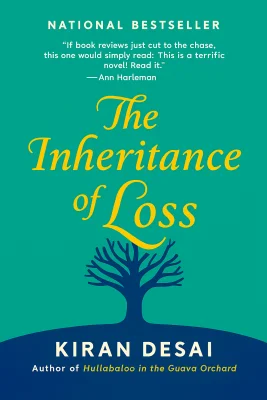
The Inheritance of Loss
Categories
Fiction, Historical Fiction, Literature, India, Asia, Book Club, Contemporary, Novels, Indian Literature, Literary Fiction
Content Type
Book
Binding
Paperback
Year
2004
Publisher
Grove Press
Language
English
ASIN
0802142818
ISBN
0802142818
ISBN13
9780802142818
File Download
PDF | EPUB
The Inheritance of Loss Plot Summary
Introduction
# The Geography of Belonging: Inheritance of Displacement The mist rolled down from Kanchenjunga like a living thing, swallowing the colonial mansion of Cho Oyu whole. In that February evening of 1986, seventeen-year-old Sai waited for her mathematics tutor who would never come. Instead, five boys with guns emerged from the fog, their faces painted with revolutionary fervor. They had come for Judge Jemubhai Patel's hunting rifles, but they would take much more than weapons that night. The robbery shattered the brittle peace of this crumbling house where three generations lived suspended between worlds—the judge haunted by his Cambridge education and colonial shame, Sai caught between her convent English and mountain isolation, and their cook whose son Biju scraped floors in New York's basement kitchens, chasing an American dream that tasted like grease and humiliation. As the Gorkhaland movement erupted across the Himalayan hills, demanding a homeland for the Nepali-speaking people, each character faced the brutal arithmetic of belonging. Love would collide with politics, dreams with survival, and the inheritance of displacement would pass like a genetic curse through families torn between the dying echoes of empire and the harsh mathematics of a new world that seemed determined to erase them.
Chapter 1: Mist and Mirrors: The Fragile World of Cho Oyu
The morning mist clung to Cho Oyu like a burial shroud, revealing glimpses of faded grandeur through its gray fingers. Judge Jemubhai Patel sat on his veranda with the chessboard that had become his only honest companion, playing both sides of games that stretched into eternity. At eighty-six, he had outlived everyone foolish enough to challenge him, leaving him alone with the mounted animal heads that stared down from his study walls with glassy accusation. His granddaughter Sai moved through the house like a ghost, seventeen and caught between worlds she barely understood. The convent had expelled her into this mountain exile after her parents died in a Moscow car crash, leaving her with an English tongue that cut like glass and a grandfather whose silence stretched like a chasm between breakfast and dinner. She spoke with the crisp precision of nuns but belonged fully to no language, no territory, no future she could name. The cook shuffled between kitchen and garden, his weathered hands preparing meals from whatever the failing earth could provide. His son Biju had vanished into America three years ago, leaving behind only sporadic letters that arrived like breadcrumbs from another planet. The old man clutched these fragments, reading them until the paper grew soft as skin, building elaborate stories of his son's success for neighbors who measured their worth by their children's distance from home. Into this careful choreography of isolation came Gyan, twenty and beautiful in the way mountain boys could be—all sharp cheekbones and restless energy barely contained in secondhand clothes. He arrived three times weekly to teach Sai mathematics, but the equations crackling between them in the dusty afternoon light calculated something far more dangerous than derivatives. When their hands brushed over geometry textbooks, when she laughed at his jokes about imaginary numbers, they were mapping the treacherous territory between childhood and the bitter knowledge that would soon divide them. The judge watched these lessons with the cold eye of experience. He had learned long ago that love was a luxury the displaced could not afford, that tenderness was just another word for vulnerability. In his locked study, surrounded by the mounted heads of long-dead animals, he kept his secrets locked away—the Cambridge degree that had cost him his soul, the wife he had destroyed with his self-hatred, the daughter who had died a stranger to him. But even in their careful isolation, the outside world pressed against Cho Oyu's windows like a gathering storm. In the bazaar below, young men gathered in tea stalls, their voices rising with talk of Gorkhaland—a homeland for people who had been made foreigners in their own mountains. The word carried like smoke through the valleys, settling into every conversation, every glance, every silence that stretched too long, promising violence that would soon consume them all.
Chapter 2: Parallel Exiles: Love and Survival in Two Worlds
In the basement of Gandhi Café in New York, Biju learned the true weight of the American dream. It pressed down eighteen hours daily, measured in grease that coated his skin, English words that crumbled in his mouth like stale bread, and the endless parade of orders barked by men who saw him as nothing more than a pair of hands attached to a work permit. The restaurant owner, Harish-Harry, had split himself like his hyphenated name—serving beef to customers while muttering prayers for forgiveness, counting profits while his daughter pierced herself into an American stranger. Biju moved through the city like a phantom, invisible except to immigration officers who haunted his dreams. He shared basement rooms with other ghosts—Saeed from Zanzibar who collected shoes like talismans, Achootan who had fled England's open racism for America's polite version. They were all running from something, toward something, caught in the terrible mathematics of survival that reduced human worth to hourly wages and visa status that never came. Back in Kalimpong, Sai discovered her own equations of desire. Gyan's visits became the axis around which her days revolved, their walks through colonial remnants charged with electric possibility. Past the crumbling Gymkhana Club where her grandfather had once played tennis, through markets where Tibetan refugees sold prayer wheels to tourists who would never understand their weight. In abandoned tea gardens, among wild orchids and rhododendrons, they found spaces where their different worlds could touch without drawing blood. But even in those stolen moments, the future pressed against them like a storm front. Gyan lived in a tin-roofed shack with his family, sleeping four to a room while his father sent every spare rupee toward his son's education. The weight of their sacrifice sat on his shoulders like a stone, growing heavier each time he looked at Sai's casual privilege—her books, her clothes, her assumption that the world would bend to accommodate her desires like a trained animal. Their first kiss happened during a thunderstorm that trapped Gyan at Cho Oyu overnight. In the drawing room, with rain hammering the tin roof and lightning illuminating the mist-shrouded mountains, they finally surrendered to the tension that had been building for months. They began with questions about hair and soap, the intimate details of daily life that became charged with meaning in the electric atmosphere. Gyan traced the arch of Sai's eyebrow with an unsteady finger while she catalogued the differences between his calloused hands and her soft ones. The judge watched his granddaughter's transformation with weary recognition. He saw how she glowed after Gyan's visits, how she stared at the mountains with new hunger in her eyes. Love, he knew, was just another form of colonization—the strong taking what they needed from the weak, leaving devastation in their wake. In New York, Biju received his father's letters like communion wafers, each one dissolving on his tongue with the bitter taste of homesickness, unaware that his own devastation was already written in the stars above the Himalayas.
Chapter 3: Colonial Ghosts: The Judge's Fractured Legacy
The judge's memories came unbidden now, triggered by the sight of Gyan's obvious hunger for what Sai represented. Jemubhai Popatlal Patel had been twenty when he sailed from Bombay to Liverpool in 1939, carrying a black tin trunk and his family's desperate hopes for advancement. The England that received him was gray and cold, filled with landladies who barely tolerated his presence and fellow students who looked through him as if he were transparent glass. At Cambridge, he learned to despise everything he had been. He scrubbed himself obsessively, afraid of giving offense with his smell, his accent, his very existence. The transformation was surgical in its precision—he learned to hold his fork properly, to speak without the musical cadences of Gujarat, to become a perfect mimic of the men who would never accept him as an equal. When he looked in mirrors, he saw a brown face wearing a white mask, and the sight filled him with a self-hatred so pure it had crystallized into something harder than diamond. His return to India as a member of the Indian Civil Service brought no relief. He had become a stranger to both worlds, caught forever between the country that had rejected him and the country that had made him. His marriage to fourteen-year-old Nimi had been arranged to pay for his education, her dowry funding his transformation into a sahib. But the English gentleman he had tried to become recoiled from her Indianness—her inability to use knife and fork, her red hair oil and tinkling bangles, her very existence a reminder of what he truly was beneath his carefully constructed facade. He punished her for this reminder with a cruelty that grew more refined with each passing year. The touring life of a district judge suited him perfectly, moving from camp to camp with his furniture and servants, dispensing justice in languages he barely understood. He wore his white wig and powdered his dark face, a grotesque parody of colonial authority that satisfied neither the English nor the Indians who appeared before his bench seeking justice he had no power to provide. When Nimi finally died—worn down by his coldness, by the isolation he imposed, by the slow poison of living with a man who hated himself so completely he had nothing left for anyone else—he felt only relief. Their daughter Tara had already escaped to America, carrying her own wounds and her own desperate need to transform herself into someone else, someone who could survive in a world that seemed designed to destroy people like them. Now, decades later, sitting in his crumbling house with his half-English granddaughter, he felt the foundations of his carefully constructed identity giving way like the rotting timbers of Cho Oyu itself. The hunting rifles on his wall gathered dust, relics of a time when he had believed in his right to take what he wanted from this world, before he learned that he was just another animal to be mounted and displayed in someone else's collection of exotic trophies.
Chapter 4: Revolution's Price: When Politics Devour the Personal
The first stones fell like rain on the police station roof, each impact echoing through the valleys like gunshots. What had begun as a peaceful march to burn the Indo-Nepal treaty had exploded into something far more dangerous. Young men with kukris raised high screamed for Gorkhaland while tear gas bloomed like poisonous flowers in the mountain air, and Gyan found himself swept up in the crowd like debris in a flood. The rage felt clean, pure—a fire that burned away the shame of his poverty, the humiliation of serving tea to Sai while knowing he could never afford to take her anywhere finer than a roadside stall. In the mob's roar, he heard his own voice demanding justice, demanding recognition, demanding a homeland where boys like him would not have to beg for scraps from their colonial masters. The mathematics textbooks that had once represented his future lay forgotten in the dust as older boys pressed weapons into his hands and revolutionary slogans into his mouth. But when the police opened fire, when thirteen young men fell bleeding onto the bazaar stones, the revolution revealed its true face. Gyan watched a severed head roll past his feet, saw a headless body run three steps before collapsing in a fountain of blood. The boy who had dreamed of engineering college found himself holding a rifle taken from a dead policeman, his hands shaking as he tried to understand how equations had led him to murder, how love had transformed into this terrible hunger for destruction. At Cho Oyu, the gunmen arrived like shadows made flesh. They wore masks cut from old saris, carried weapons that gleamed with fresh oil, moved through the mist with the confidence of men who had finally found their power. The judge sat frozen at his chessboard as they stripped his walls of hunting rifles, his dignity of its last pretenses. Sai watched from the stairs as her grandfather—the man who had terrified her with his imperial silences—revealed himself to be nothing more than a frightened old man begging for mercy from children young enough to be his great-grandchildren. The cook served them tea with trembling hands, his mind racing through calculations of survival. These were Nepali boys, his people, but their eyes held no recognition of kinship. They took what they wanted—rice, lentils, the judge's ancient bottles of sherry—and left behind only the echo of their boots on marble floors, the memory of how quickly power could shift from one hand to another like a card trick performed by a master magician. In the aftermath, as curfew settled over the hills like a burial shroud, Sai began to understand the true geography of her world. The lines that mattered were not drawn on maps but carved into skin—the distance between her grandfather's Cambridge accent and the cook's village Hindi, between her convent education and Gyan's government school certificates, between the safety of Cho Oyu and the tin shacks where revolution was born from hunger and humiliation. When Gyan finally appeared at her door, his eyes burning with newfound hatred, she realized that the boy who had traced her features with reverent fingers had been consumed by something larger and more terrible than love could ever hope to contain.
Chapter 5: The Arithmetic of Betrayal: Loyalties Tested and Broken
The transformation began slowly, like poison working through Gyan's bloodstream. At Ex-Army Thapa's Canteen, surrounded by other young men drunk on chang and revolutionary rhetoric, he found himself describing Sai and her grandfather with increasing contempt. The English-speaking girl who ate with knife and fork, the judge with his fake accent and Cambridge certificate—they became symbols of everything that kept the Gorkhas oppressed, everything that needed to be destroyed before true liberation could begin. Christmas had never bothered him before, but now the sight of Sai celebrating what he saw as a foreign festival filled him with rage that surprised him with its intensity. "You little fool," he shouted at her, his voice thick with newly discovered hatred. "You're like slaves, running after the West, embarrassing yourself. You think they'll accept you? You'll always be nothing to them, nothing." Sai recoiled as if he had struck her across the face. This was not the gentle boy who had traced her features with reverent fingers, who had called her his momo, his sweet dumpling. This was someone else entirely, someone whose eyes burned with the fire of the dispossessed, whose love had curdled into something poisonous and unrecognizable. The argument escalated with the viciousness of lovers who knew exactly where to strike, each word chosen for maximum damage. Gyan accused her of being a copycat, a mimic of Western ways who would never be accepted by the very people she tried to emulate. Sai struck back at his failures, his inability to find proper employment, his family's poverty that clung to him like a bad smell. But the cruelest blow came later, in the canteen, when Gyan found himself describing Cho Oyu to his revolutionary friends with the clinical precision of a military strategist. The isolated house, the elderly judge, the well-stocked kitchen, the absence of telephone or neighbors—information that could be used, he told himself, for the cause of Gorkha liberation. The boys listened with interest, filing away details about gun collections and escape routes while Gyan felt a moment of doubt, remembering Sai's face in the lamplight. But the alcohol and the intoxication of belonging to something larger than himself swept his qualms away like debris in a mountain stream. He had crossed a line that could never be uncrossed, betraying not just Sai but the innocent version of himself that had loved her without reservation. When the gunmen finally came to Cho Oyu, moving through the mist with supernatural confidence, Gyan was not among them. But his fingerprints were on their knowledge, his voice in their certainty, his betrayal the map that led them to the judge's door. The screaming from the police station carried across the valley like the cry of some wounded animal. They had taken the drunk—a harmless man who spent his days in ditches, bothering no one—and were using him to practice their new techniques. His crime was being in the wrong place when the authorities needed someone to blame for the stolen rifles, someone whose disappearance would cause no inconvenience to anyone who mattered. In the sound of his agony, Gyan heard the true voice of the revolution he had helped to birth, and the mathematics of his betrayal finally revealed their terrible sum.
Chapter 6: Violent Reckonings: The Cost of Identity and Dignity
In the basement of Gandhi Café, Biju's knee gave out on a patch of rotten spinach, sending him sliding across the greasy floor like a broken marionette. The injury was minor, but it cracked something deeper—the faith that had sustained him through three years of basement living, of swallowing his pride with every order of beef he served to customers who saw him as nothing more than a brown hand attached to a work permit that might be revoked at any moment. Harish-Harry's response was swift and brutal: no doctor, no compensation, just fifty dollars and a suggestion that he return to India for "cheap and good" medical care. The words carried the casual cruelty of a man who had learned to survive by treating other people's suffering as a business expense, their dreams as inventory to be liquidated when no longer profitable. In that moment, Biju understood that he would never be anything more than disposable labor in this country that had promised him everything and delivered only humiliation. The decision crystallized in his mind like ice forming on a window. He would go home—not in triumph as he had imagined, not with pockets full of dollars and stories of American success, but as he was: broken, poor, and hungry for something that could not be bought or sold in any market. He spent his last savings on gifts that would prove his journey had not been entirely in vain—electronics and clothes, whiskey and perfume, the material evidence of a dream that had curdled into nightmare but still demanded some physical manifestation. At Cho Oyu, the violence had settled into the hills like fog, dense and suffocating. Father Booty, the Swiss priest who had spent forty-five years building his dairy in the mountains, received his deportation order with the bewildered dignity of a man who had believed good works could transcend nationality. The authorities gave him two weeks to sell everything he had built, to abandon the cows he had raised by hand, to leave behind the only home he had ever truly known. His crime was being foreign in a time when foreignness had become synonymous with treachery. The judge's dog Mutt vanished one morning, taken by the same desperate people who had come begging for justice after the police blinded their husband and father. In their logic, the theft was simple mathematics—a purebred dog could feed a family for months, could be sold to city people who collected exotic breeds like trophies. The judge's anguish was absolute, the loss of his last companion revealing the hollow core of his existence like an X-ray revealing cancer in healthy-looking bones. The night the judge beat the cook—drunk on whiskey and rage, striking out at the only target within reach—Sai stood in the garden and felt the last of her innocence wash away with the monsoon rain. The sound of violence echoed from the house behind her while the mountains watched in their ancient silence, indifferent to the small human dramas playing out in their shadow. She began to plan her own escape, to imagine a future beyond the crumbling walls of Cho Oyu, beyond the mathematics of survival that had trapped them all in their separate cells of suffering like specimens in some cosmic laboratory experiment.
Chapter 7: Journey's End: Return, Recognition, and Reconciliation
The men who robbed Biju on the jungle path took everything—his clothes, his money, his dignity—leaving him standing in a pink flowered nightgown like some grotesque parody of homecoming. He ran through the darkness pursued by wild dogs and wilder laughter, his American dream reduced to the ruffles and ribbons of a stranger's discarded garment. The boy who had left Kalimpong with such hope returned as a broken man, carrying nothing but the bitter knowledge of what the world did to those who dared to dream beyond their station. But he ran toward home anyway, stumbling through forest paths his feet remembered even when his mind reeled with shame. The mountains that had seemed so small from his basement window in New York revealed themselves again in their true proportions—vast, indifferent, eternal. In their shadow, his failure seemed both absolute and strangely insignificant, just another small tragedy in the endless cycle of departure and return that had shaped these hills for centuries like water carving stone. At Cho Oyu, the cook sat in his kitchen nursing bruises that mapped the geography of his servitude. The judge's blows had awakened something in him—not rebellion, but a deeper understanding of the bonds that held them all in place. Master and servant, they were both prisoners of the same history, both casualties of the same war between worlds that had been raging since the first colonial ship dropped anchor in an Indian harbor carrying dreams and diseases in equal measure. The sound at the gate came just as dawn was breaking over Kanchenjunga, the five peaks catching fire in the early light like candles lit for the dead. The cook dragged himself through the wet grass, expecting another beggar, another petitioner seeking justice from men who had none to give. Instead, he found a figure in pink and yellow ruffles, a ghost made flesh, a prayer answered in the most unlikely form imaginable. "Pitaji?" The voice cracked with exhaustion and hope in equal measure, carrying across the years of separation like a bridge built from nothing but love and longing. The cook's hands shook as he opened the gate, his mind refusing to accept what his eyes were showing him. But when the figure stumbled forward, when familiar arms wrapped around his shoulders, when the smell of his son's skin cut through the stench of failure and defeat, the mathematics of love proved stronger than all the equations of empire and exile that had shaped their lives. They collapsed into each other's arms, their reunion playing out against the backdrop of Kanchenjunga's golden peaks, two broken men finding wholeness in their shared brokenness. Sai watched from the kitchen window as father and son wept together, their tears washing away the lies they had told themselves and each other. In that moment of pure recognition, she glimpsed something that transcended the brutal arithmetic of survival—a truth that could not be bought or sold, conquered or colonized, a love that endured despite everything the world had done to destroy it. The judge emerged from his room to find his cook weeping over a son dressed in women's clothing, speaking English mixed with Hindi, carrying stories of basement kitchens and broken dreams that sounded remarkably like his own.
Summary
In the end, the mountains remained while everything else shifted like mist in the morning light. The Gorkhaland movement would achieve its partial victory, creating new borders that satisfied no one completely, new governments that would prove as corrupt as the old ones. Sai would leave Cho Oyu as she had always planned, carrying with her the hard-won knowledge that love was not enough to bridge the chasms that history had carved between people, that some wounds were too deep to heal with anything but time and distance. The judge would die as he had lived—alone with his chess set and his memories, the hunting rifles on his wall replaced by empty spaces that spoke more eloquently than any trophy of the true cost of empire. But in the kitchen of the crumbling mansion, something precious had been salvaged from the wreckage. Biju and his father sat together over tea, their conversation a mixture of languages and silences, their reunion imperfect but real. They had both learned that home was not a place you could return to unchanged, that the geography of belonging was written in scars as much as in soil, in loss as much as in love. Yet in choosing each other over the dreams that had separated them, they had found something more valuable than success—the courage to be human in a world that demanded they be something else, the grace to love without conditions in a time when everything had its price. The inheritance they would leave was not land or money, but the knowledge that survival was not enough, that dignity could not be purchased, and that sometimes the greatest act of rebellion was simply refusing to disappear into the mist that swallowed everything else.
Best Quote
“The present changes the past. Looking back you do not find what you left behind.” ― Kiran Desai, The Inheritance of Loss
Review Summary
Strengths: The review highlights the book's relevance to Asian readers, its readability, and the vividness of its characters and imagery. It praises the book for its concise storytelling and engaging narrative style, which effectively conveys the theme of cultural identity loss due to Western influences. The characters are portrayed as having agency, which adds realism to the narrative. Weaknesses: The review does not explicitly mention any significant weaknesses, though it implies that the book may lack the comprehensiveness of Salman Rushdie’s work or the emotional depth of Arundhati Roy’s. Overall: The reader expresses a positive sentiment, appreciating the book's engaging storytelling and its exploration of cultural identity. The recommendation is strong, particularly for those interested in themes of post-colonial identity and realistic character portrayals.
About Author

Kiran Desai
Desai explores the intricacies of cultural identity and the immigrant experience through her novels, weaving narratives that delve into themes of postcolonialism and globalization. Her early book, "Hullabaloo in the Guava Orchard," garnered significant attention, winning the Betty Trask Award for its rich storytelling and nuanced humor. Desai's work is celebrated for its lyrical prose and multi-layered plots, which often draw on her own experiences as an Indian-born writer navigating life in the United States.\n\nHer acclaimed book, "The Inheritance of Loss," not only won the prestigious Man Booker Prize but also cemented her status as a significant voice in contemporary literature. This novel, set against the backdrop of 1980s India, interrogates the complex realities of cultural dislocation and familial ties. Readers benefit from Desai's profound engagement with the challenges faced by diasporic communities, which she skillfully intertwines with personal and political narratives. Her writing is particularly resonant for those interested in the intersections of race, class, and identity in a global context.\n\nBeyond her achievements, Desai's authorial purpose extends to capturing the emotional truths of her characters' journeys. Her bio reveals an author deeply connected to the themes she writes about, bringing authenticity and depth to her stories. By drawing from her own life experiences, Desai offers readers a window into the diverse and often tumultuous worlds her characters inhabit, making her work both relatable and enlightening.
Read moreDownload PDF & EPUB
To save this Black List summary for later, download the free PDF and EPUB. You can print it out, or read offline at your convenience.
The Inheritance of Loss
by Kiran Desai
