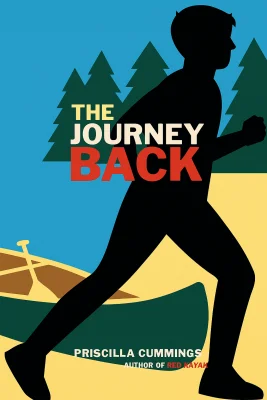
The Journey Back
Categories
Fiction, Young Adult, School, Contemporary, Coming Of Age, Realistic Fiction, Adventure, Middle Grade, Survival, Juvenile
Content Type
Book
Binding
Hardcover
Year
2012
Publisher
Dial
Language
English
ASIN
0525423621
ISBN
0525423621
ISBN13
9780525423621
File Download
PDF | EPUB
The Journey Back Plot Summary
Introduction
The birthday cake sat on the cafeteria table, chocolate with white frosting, two candles flickering in the stale air of Cliffside Youth Detention Center. Fourteen-year-old Michael "Digger" Griswald stared at the blue gel writing that spelled out both his name and that of his tormentor, Tio. The sick twist in his stomach told him everything he needed to know about what would happen next. When the other boys sang their halfhearted version of "Happy Birthday," Digger made his choice. He blew out both candles, leaving Tio with nothing but rage. That single act of defiance set everything in motion. Within hours, Digger would be crawling through garbage, stealing trucks, and running for his life down the historic C&O Canal towpath. But this wasn't just another jailbreak story. This was the journey of a boy carrying the weight of a three-year-old's death on his conscience, desperately trying to outrun ghosts that would follow him no matter how far he traveled. What started as an escape would become something far more complex—a reckoning with the past, an education in trust and betrayal, and ultimately, a hard-won understanding of what it truly means to find redemption.
Chapter 1: The Desperate Escape: Breaking Free from Cliffside
The garbage truck's brakes squealed like a dying animal as it rumbled down the steep gravel driveway toward Cliffside Youth Detention Center. Digger crouched behind the dining hall, his heart hammering against his ribs as he grabbed the shovel he'd hidden beneath a pile of leaves. This was it—his one shot at freedom, and there would be no turning back. The plan was insane, but desperation had a way of making the impossible seem reasonable. While Mr. Rankin waited for him to return from getting his notebook, Digger had urinated all over Tio's bed in petty revenge, then told the counselor he needed to take out the trash. Now, as the garbage truck positioned itself beside the dumpster, Digger knew he had seconds to make his move. He threw himself over the rim of the dumpster, landing hard on bags of cafeteria waste. The stench was overwhelming—rotting food, soiled paper, everything that made up the discarded remnants of institutional life. But when the truck's mechanical arms grabbed the container and lifted it high, Digger felt something close to exhilaration. He was actually doing this. The world flipped upside down as garbage cascaded around him in the truck's cargo bay. In the pitch darkness, he groped desperately for the shovel he'd brought to jam the compacting blade. The machine's whirring grew louder, and he felt the crushing pressure as tons of waste pressed against him. Just as his lungs began to scream for air and his vision started to fade, the mechanism shuddered to a halt. When Digger finally clawed his way to the surface at the county landfill, covered in filth but breathing free air, he allowed himself one moment of triumph. Behind him lay nine months of detention, therapy sessions with Miss Laurie, and the constant threat of Tio's violence. Ahead stretched the unknown—but for the first time since the night he'd drilled holes in a red kayak and accidentally caused little Ben DiAngelo's death, Digger felt like he might have a chance at controlling his own destiny.
Chapter 2: Survival on the Run: Navigating Wilderness and Deception
The stolen tractor-trailer roared down Interstate 68, its eighteen wheels eating up miles of Western Maryland highway while Digger gripped the steering wheel with sweaty palms. At fourteen, he was tall enough to reach the pedals and experienced enough from riding with his truck-driver father to handle the big rig, but nothing had prepared him for this moment of pure terror and freedom combined. The red Southern States cap sat crooked on his head, a pathetic disguise as he rumbled past other motorists who had no idea they were sharing the road with an escaped juvenile felon. Digger had hot-wired the Kenworth from a truck stop parking lot while the driver enjoyed biscuits and gravy inside, using skills learned from watching his father break into his own rig when he'd locked himself out. Now, with each mile marker that flashed by, the weight of what he'd done pressed harder against his chest. The CB radio crackled with trucker chatter—warnings about speed traps, weather reports, the casual camaraderie of the road that Digger remembered from childhood trips with his dad. Those had been the good times, before alcohol and rage consumed the man who'd once taught his son to shift gears and read the signs of an overheating engine. Now that knowledge was keeping Digger alive as he navigated through unfamiliar territory. But the truck was fighting him. The descent down Sideling Hill turned into a nightmare of burning brakes and screaming metal as the rig gained speed beyond his control. The acrid smell of rubber filled the cab while Digger's foot pressed uselessly against brake pedals that no longer responded. The speedometer climbed past safe limits as gravity and momentum conspired against him. When he finally spotted the runaway truck ramp at mile marker 72, Digger yanked the wheel hard right and sent the Kenworth careening down the gravel incline. The truck buried itself deep in the engineered gravel bed, coming to rest in a cloud of dust and smoke. As Digger grabbed a blanket from the sleeper and abandoned the burning rig, he knew he'd crossed another line. There was no going back now—only the long walk home through whatever wilderness lay between him and the Eastern Shore of Maryland.
Chapter 3: Finding Temporary Haven: The Campground and Horse Farm
The gray dog was dying when Digger found him, tangled in clothesline and half-drowned along the Potomac River's edge. Something about the animal's desperate struggle resonated with the boy who'd spent days stumbling along the C&O Canal towpath, stealing food and shelter wherever he could find it. Maybe it was recognition—one trapped creature saving another—that made Digger cut the rope and share his meager rations with the mutt he decided to call Buddy. Their partnership led them to the campground near Harwick, West Virginia, where Digger's luck finally turned. Luke, an eight-year-old with thick glasses and endless curiosity, discovered them hiding by the river and brought peanut butter sandwiches without asking questions. More importantly, Luke's father Woody seemed willing to accept Digger's story about being a hiker whose gear had been stolen, offering shelter in exchange for helping with the boy while Woody worked construction. The arrangement felt almost too good to be true. Digger had a tent, regular meals, and the first stable situation he'd known since his arrest nine months earlier. He helped Luke with homework, cooked dinner, and slowly began to believe he might actually have found a place to rest and plan his next move. Even his blistered, poison-ivy-covered face began to heal in the autumn air. When Nora appeared—a sharp-tongued fourteen-year-old with a blue streak in her black hair and ambitions to become a doctor—Digger's world expanded further. She saw through his false name immediately but chose to protect rather than expose him. More than that, she offered him work at Heavenly Days, a horse rescue farm where abused animals learned to trust humans again. The work was hard, mucking stalls and hauling feed, but it paid cash and gave Digger a sense of purpose he'd never experienced. Mrs. Crawford, the farm's owner, treated him with respect, while Nora shared her encyclopedic knowledge of everything from poison ivy remedies to the spontaneous combustion of wet hay. For the first time in his life, Digger began to understand what it might feel like to belong somewhere, to be valued for something other than his ability to take punishment or dish it out.
Chapter 4: Bonds Formed in Uncertainty: Luke, Nora, and Broken Trust
The horseshoes clanged against the metal stakes in the sandy pits behind Harwick's campground, but the real game being played was far more complex than the simple competition suggested. Digger watched Woody deliberately throw wide, clearly intending to let Luke and Nora win, and found himself facing a choice that would have seemed insignificant months earlier. The old Digger would have crushed the competition without a second thought, but something had shifted during his weeks of hiding. He missed his next shot by twelve feet, drawing laughter from Luke and a knowing glance from Woody. The boy's joy at winning was worth more than any genuine victory could have been, and Digger realized he was learning lessons that no detention center program could have taught him. Watching Luke hug his father after their manufactured triumph, Digger felt an ache for the family he'd left behind—not just the mother and siblings he'd claimed to be protecting, but the father who'd once lifted him high in the air after teaching him to drive. But trust was a luxury Digger couldn't afford, as he learned when Woody disappeared for four days without explanation. Left to care for Luke alone, surviving on deer meat from a road-kill doe he'd field-dressed with expertise that amazed the other campers, Digger was forced to confront the possibility that even this temporary haven might be built on deception. When Woody returned with a story about jail time for gambling debts, the cracks in their arrangement became visible. The discovery that Woody was traveling under false identification—Glen David Hardesty according to one license, Sherwood Hawkins according to another—confirmed Digger's suspicions that his benefactor was running from something more serious than debt. Luke's slip about "adventure names" suggested the boy had been coached to hide his true identity, making Digger wonder if he'd stumbled into a custody kidnapping situation. The final betrayal came when Woody stole the $735 Digger had earned through honest labor at the horse farm, gambling away months of savings in a single night at the Charles Town casinos. Standing over Digger with a bloodied lip and threats about police involvement, Woody revealed the predator beneath the caring father facade. The lesson was clear: in a world where everyone was running from something, trust was just another word for vulnerability, and vulnerability was a luxury Digger couldn't afford if he wanted to survive.
Chapter 5: Acts of Courage: Facing Fire and Flood to Save Others
The barn at Heavenly Days erupted in flames against the November night sky, orange tongues licking at the darkness while horses screamed inside. Digger watched from the crowd as firefighters worked their hoses, knowing with sick certainty that his mistake had caused this catastrophe. The wet hay he'd helped stack in the loft had undergone spontaneous combustion, turning his attempt to help Mrs. Crawford into a death trap for the animals they'd both sworn to protect. When the fire chief declared the building too dangerous to enter, Digger couldn't accept that Fuego would die. The red stallion with the golden mane had survived years of abuse, locked in a filthy stall by an owner who'd forgotten that animals needed light and space to thrive. Now, when freedom was so close, the horse's learned distrust would kill him as surely as any human cruelty. Ignoring the firefighter who'd tried to stop him, Digger circled to the barn's rear window and smashed his way inside. The smoke was already thick, burning his lungs and eyes as he duck-walked through the hallway, feeling along walls to find the stalls. He managed to free two horses before reaching Fuego's door, where the terrified stallion had backed into a corner, too frightened to flee even as flames consumed his world. The wet t-shirt pressed to Fuego's eyes should have calmed him enough to lead to safety, but the horse's fear ran too deep. When Fuego reared and knocked Digger to the ground, filling his lungs with poisonous smoke, both of them seemed doomed to die together in the place that was supposed to offer sanctuary. Digger crawled out alone, collapsing at the barn entrance as the roof caved in behind him. The tragedy taught him that good intentions weren't enough—that sometimes, despite every effort to make amends, the past would claim its victims anyway. But the lesson that stayed with him came later, when he realized he'd spent so much energy blaming Miguel's cigarettes for the fire that he'd ignored the real cause. His own actions, stacking wet hay despite knowing better, had created the conditions for disaster. Just like the kayak he'd sabotaged months earlier, this catastrophe bore his fingerprints, no matter how hard he tried to shift the blame to someone else.
Chapter 6: The Weight of Truth: Confronting Past Actions and Responsibilities
The newspaper article crackled in Digger's hands as he read about his own death, the words swimming before his eyes in the dim light of the pup tent. According to the report, Michael Griswald had drowned in the Potomac River, his body swept away after the stolen canoe capsized near Dam No. 5. A Cliffside sweatshirt and trucker's cap found downstream had convinced authorities to call off their search, leaving Digger officially dead while he lived and breathed just miles from where they'd stopped looking. The irony wasn't lost on him. He'd spent two months running from the law, only to discover that his greatest protection came from being presumed dead in the same waters where three-year-old Ben DiAngelo had lost his life. The parallel felt like cosmic justice, as if the universe was forcing him to confront the weight of what he'd done by making him experience, however briefly, the finality of death. Nora found him crying that night, the first tears he'd shed since childhood, and didn't ask questions about the newspaper clipping. Instead, she held him while he stumbled through the story he'd never told anyone completely—how a prank meant to embarrass a wealthy neighbor had ended with a toddler's funeral, how his two best friends had paid the price for his anger, how every day since had carried the weight of a life cut short. The confession should have felt like relief, but instead it opened new questions about justice and redemption that Digger wasn't prepared to answer. Nora's challenge—what gave him the right to take the law into his own hands—cut deeper than any counselor's therapy session. She was right that running from detention was just another crime, that stealing the truck had hurt innocent people, that his entire escape had been built on selfishness disguised as noble purpose. But the hardest truth was the one he could barely admit to himself: he'd never had a real plan to protect his family from his father's violence. The fantasy of returning home with a weapon, of somehow solving everything with force, crumbled under examination. He was just a scared kid who'd convinced himself that running away was heroic rather than cowardly, that his problems could be solved if he just got far enough from their source. Now, sitting in a tent with money stolen by yet another adult who'd betrayed his trust, Digger had to face the possibility that some weights were meant to be carried, not escaped.
Chapter 7: Second Chances: The Unexpected Path to Redemption
The river was a torrent of icy chaos when Luke fell in, his small body swept between boulders as the current carried him toward certain death. For Digger, watching from the opposite shore, time collapsed into a single moment of terrible clarity. Here was Ben DiAngelo all over again—another small boy, another body of water, another chance for tragedy to claim an innocent life while Digger stood helpless on the sidelines. But this time, there was no hesitation, no calculation of personal cost. Digger dove into the Potomac without a second thought, fighting the savage current that wanted to claim them both. When he finally got his arm around Luke's chest and turned onto his back to float, keeping the boy's head above water, he felt something fundamental shift inside him. This wasn't about atonement or balancing some cosmic ledger—it was simply about doing what needed to be done. The rescue ended Digger's time on the run but began something else entirely. Standing dripping wet before police officers with Luke safe beside him, Digger gave his real name without hesitation. The weight he'd carried for so long hadn't disappeared, but it had transformed into something bearable—not the crushing guilt of causing death, but the steady responsibility of choosing life whenever possible. At his court hearing, the parade of consequences seemed almost anticlimactic. More time in detention, thousands of dollars in restitution for the burned truck, the permanent end of his dream of joining the Marines. But then Edward Houseman stepped forward—the truck driver Digger had robbed, limping slightly as he approached the bench with an offer that defied every expectation. The man Digger had wronged became his salvation, offering to forgive the debt in exchange for honest work after graduation. It wasn't charity, Houseman explained, but investment in the principle that everyone deserved a second chance. He'd received one himself as a young man in trouble, and now it was time to pass the gift forward. As Digger accepted the offer, he understood that redemption wasn't something you earned through suffering—it was something you received through grace, then spent the rest of your life trying to deserve.
Summary
In the end, Digger learned that running never solved anything—it only delayed the reckoning that would come eventually, whether in a detention center cell or at the bottom of a river. The boy who escaped Cliffside in a garbage truck returned to face justice not because he was caught, but because he'd finally understood the difference between fleeing from responsibility and moving toward redemption. The weight of Ben DiAngelo's death would always be part of him, but it no longer had to define him. The real journey wasn't the miles traveled along the C&O Canal or the dramatic rescues and barn fires that punctuated his time in hiding. It was the slower, harder work of learning to trust and be trusted, of discovering that heroism wasn't about grand gestures but about small daily choices to help rather than harm. From Luke's reading disability to Fuego's fatal mistrust, from Woody's betrayal to Edward Houseman's unexpected mercy, every encounter had taught Digger something about the complexity of human nature and the possibility of change. His future stretched ahead not as a Marine, but as something perhaps more valuable—a person who understood that the heaviest burdens became lighter when carried in service of others, and that sometimes the longest journey home begins with the courage to stop running.
Best Quote
Review Summary
Strengths: The review highlights the book's engaging plot with numerous twists and turns, making it a compelling read. The realistic depiction of events and the detailed narrative allow readers to feel immersed in the story. The development of the protagonist, Michael, from the previous book "Red Kayak" is noted, showcasing his growth and complexity. The book's ability to portray Michael's softer side through his relationships adds depth to his character. Overall: The reviewer expresses a positive sentiment towards the book, recommending it to readers who enjoy stories about escapes and realistic fiction. The book is particularly recommended for those who have read "Red Kayak," as it provides a deeper understanding of Michael's character.
About Author

Priscilla Cummings
Cummings connects her literary work with themes of nature, ethical dilemmas, and personal growth, drawing from her early experiences on a dairy farm and her career as a journalist. Her deep-rooted affinity for animals and nature often surfaces in her books, as seen in her first picture book, "Chadwick the Crab," where she explored themes of aspiration and community through the eyes of a crab. This focus on environmental and moral themes extends into her acclaimed young adult novel "Red Kayak," which delves into the complex web of responsibility and ethics within a community setting. \n\nHer transition from journalism to fiction writing allows her to employ a narrative style that is both realistic and accessible, appealing to young readers who face similar moral and emotional challenges. Her work not only entertains but educates about local wildlife, as seen in her picture books that highlight creatures from the Chesapeake Bay. This combination of storytelling and environmental education enhances readers' understanding and appreciation of their natural surroundings while prompting introspection on ethical decisions. By infusing her stories with these layered themes, Cummings fosters a space where young readers can engage with pressing issues of family and community, making her books a valuable resource in both educational and personal contexts. \n\nThis brief bio underscores the author’s ability to weave environmental and ethical themes into engaging narratives, providing insights that resonate with young audiences. Her accolades, including the Journalist of the Year award, further validate her narrative skills and commitment to impactful storytelling. Cummings's literature continues to inspire and educate, encouraging a deeper connection with both the natural world and one's own inner moral compass.
Read moreDownload PDF & EPUB
To save this Black List summary for later, download the free PDF and EPUB. You can print it out, or read offline at your convenience.
The Journey Back
by Priscilla Cummings
