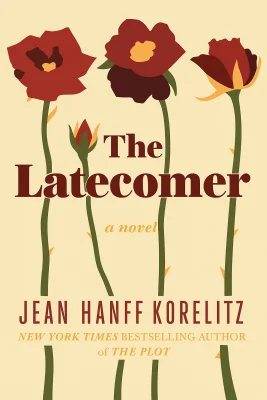
The Latecomer
Categories
Fiction, Audiobook, Mystery, Adult, Family, Book Club, Contemporary, New York, Literary Fiction, Family Drama
Content Type
Book
Binding
Hardcover
Year
2022
Publisher
Celadon Books
Language
English
ISBN13
9781250790798
File Download
PDF | EPUB
The Latecomer Plot Summary
Introduction
# The Latecomer: A Family Fractured by Secrets, Healed by Truth In a sterile fertility clinic in 1982, four embryos float in liquid nitrogen, waiting for life. Three will be chosen immediately, becoming the Oppenheimer triplets—Harrison, Lewyn, and Sally—born into Brooklyn Heights privilege but destined for emotional exile. The fourth remains frozen, suspended in time like a secret the family hasn't learned to tell yet. Salo Oppenheimer carries the weight of a car accident that killed two college friends, a guilt that transforms him into a ghost haunting his own mansion. His wife Johanna orchestrates elaborate birthday celebrations and family traditions, desperate to create connection where none exists. The triplets grow up as strangers sharing DNA, their artificial conception mirroring the artificial warmth of their household. When their nineteenth birthday explodes in accusations and revelations on a Martha's Vineyard beach, the family scatters like debris from a bomb. But seventeen years later, that frozen embryo awakens as Phoebe, the latecomer who will excavate buried truths and discover that her father's greatest secret wasn't his affair—it was the son he loved in the shadows while his legitimate children learned to live without him.
Chapter 1: The Weight of Survival: How Tragedy Shaped a Father's Distance
The Jeep tumbled through winter air in 1972, four Cornell students spinning through space in a ballet of metal and screaming. When the world stopped moving, Salo Oppenheimer crawled from the wreckage with four stitches and a bandaged wrist. Mandy Bernstein and Daniel Abraham would never crawl anywhere again. The fourth passenger, a quiet girl named Stella Western, emerged bloodied but breathing, her dark eyes meeting Salo's across the smoking ruins of what had been an ordinary morning drive. Nobody blamed him. The families embraced him at the funerals, their grief too enormous for anger. But blame settled into Salo's bones anyway, a weight that followed him through Cornell graduation, through joining his family's textile fortune, through marrying kind Johanna Hirsch who believed love could heal invisible wounds. The tumbling never stopped. Even sitting still, Salo felt the world tipping beneath him, gravity unreliable as a promise. Then, in a German museum, he encountered a Cy Twombly painting—orange and red scrawls against fawn canvas—and for the first time since the accident, the spinning ceased. He bought it immediately, the first piece in what would become an obsession. Art became his anchor, each canvas a moment of stillness in the endless fall. While Johanna managed their Brooklyn Heights mansion, Salo haunted galleries and auction houses, acquiring paintings nobody else understood or wanted. He stored them in a Red Hook warehouse, a private sanctuary where he could sit among his collection and remember what solid ground felt like. The warehouse became his real home, the place where the tumbling stopped and Salo Oppenheimer could exist without the weight of survival crushing his chest. His wife and future children would never understand this need for beauty born from trauma, this desperate search for stillness in a world that wouldn't stop spinning.
Chapter 2: Three from One: The Triplets' Journey into Deliberate Isolation
After years of fertility struggles, Johanna finally conceived through in vitro fertilization. Harrison, Lewyn, and Sally arrived in 1982 as three separate souls who seemed determined to remain that way. From their first breath, they showed no interest in the sibling bond their mother desperately wanted to cultivate. Harrison emerged first, screaming his displeasure at the bright world. Lewyn followed quietly, already observing. Sally came last, as if reluctant to join the chaos her brothers had begun. Johanna threw herself into creating family unity, orchestrating activities and documenting their childhood with annual birthday photographs on Martha's Vineyard. But the children remained stubbornly individual. Harrison, brilliant and contemptuous, wielded his intellect like a weapon against his siblings. Lewyn drifted through existence as the forgotten middle child, sensitive and perpetually wounded. Sally retreated into fierce isolation, her silence more cutting than any insult. At the progressive Walden School, their mutual indifference became legendary. Teachers expected triplets to be inseparable, but the Oppenheimers moved through their expensive education like planets in separate orbits. Harrison devoured conservative texts, building an intellectual fortress that excluded everyone. Sally discovered furniture restoration in the basement workshops, finding solace in broken objects that could be fixed. Lewyn simply endured, caught between two forces of nature that barely acknowledged his existence. Salo watched his children with detached interest, recognizing in their separateness something essential and unchangeable. He spent more time at his warehouse, surrounded by paintings that spoke to him in ways his family never could. The triplets learned early that love was rationed in the Oppenheimer household, affection a scarce resource that required careful management. By adolescence, they had mastered the art of emotional survival, each developing their own method of living without warmth.
Chapter 3: Scattered Lives: College Years and the Discovery of Individual Identity
When college applications arrived, the triplets scattered like refugees fleeing disaster. Harrison chose Roarke, an obscure all-male institution in rural New Hampshire where twenty-eight young men lived without electricity or modern conveniences. There, among brilliant misfits who read Aristotle by candlelight and debated philosophy while mucking cow stalls, he finally found his tribe. The physical labor and intellectual rigor stripped away his urban softness, revealing the conservative warrior he had always believed himself to be. Sally and Lewyn both ended up at Cornell, though neither by design. Sally was determined to experience college alone, free from the burden of being a triplet. She refused to acknowledge Lewyn's presence on campus, creating an alternate family history for her roommate Rochelle Steiner. The deception felt like liberation, a chance to exist without the suffocating context of her artificial family. She told Rochelle she was an only child, the lie rolling off her tongue like honey. Lewyn stumbled through freshman year in a fog of loneliness until his Mormon roommate Jonas introduced him to faith and certainty. Through Jonas, Lewyn glimpsed a world where people believed in something larger than themselves, where community and ritual provided comfort his own family had never offered. He organized a Passover Seder for Jonas and his Christian fraternity brothers, finding unexpected joy in explaining his heritage to curious outsiders. The web of deception grew more elaborate when Lewyn met Rochelle on a bus returning from spring break. The small, dark-haired girl with the infectious laugh was everything he had never dared hope for—warm, intelligent, genuinely interested in his thoughts and dreams. When she mentioned her roommate Sally Oppenheimer, Lewyn performed mental gymnastics to avoid revealing their connection, claiming Oppenheimer was a common name. The lie should have been impossible to sustain, but Rochelle, focused on her own complicated life, accepted his explanation without question.
Chapter 4: The Night Everything Shattered: Martha's Vineyard and September 11th
September 10, 2001. The annual birthday celebration on Martha's Vineyard carried an electric tension from the moment the triplets arrived. Harrison came fresh from triumph at a conservative think tank, his confidence burnished by intellectual validation. Sally brought Rochelle as her guest, a decision that seemed spontaneous but carried the weight of suppressed desire. Lewyn arrived alone, having told Rochelle he was attending a family retreat in New Hampshire. The Oppenheimer cottage overlooked the Atlantic like a gray-shingled monument to forced togetherness. Eighteen previous birthday celebrations had unfolded here, each more strained than the last. This year felt different, charged with the electricity that precedes lightning strikes. Salo spent the day making mysterious phone calls and drafting legal documents, preparing for a departure his family couldn't yet imagine. The explosion came during the evening clambake, lobsters steaming in aluminum pans while caterers maintained professional distance from the unfolding drama. When Rochelle met Harrison, she struggled to reconcile Sally's description of a brother at junior college with this articulate young man bound for Harvard. When Johanna called Lewyn over to meet Sally's friend, the carefully constructed lies of three siblings began collapsing like dominoes in an earthquake. Recognition flashed between Lewyn and Rochelle like a struck match. Her confusion transformed into fury as she realized the depth of deception that had surrounded her for months. She had been living with one Oppenheimer while dating another, both conspiring to keep her ignorant of their connection. Harrison, delighted by chaos, delivered the killing blow by revealing Sally's sexuality to the assembled family. The secret, shared in confidence between Rochelle and Lewyn, became a weapon deployed with surgical precision. Sally struck back with nuclear force, revealing her father's affair to the horrified gathering. She had carried the knowledge for years, watching Salo embrace his beautiful mistress at gallery openings while pretending to be their devoted patriarch. The revelation tore through their parents like shrapnel, exposing the fundamental dishonesty that had defined their family for decades. By morning, Salo would be gone forever, boarding American Airlines Flight 11 and carrying Sally's condemnation as his final memory of the children he was abandoning.
Chapter 5: Born from Grief: Phoebe's Arrival and Her Mother's Last Hope
The morning of September 11th dawned clear and bright, perfect flying weather that would become forever tainted. Salo Oppenheimer's plane slammed into the North Tower at 8:46 AM, transforming him from absent father to unwilling participant in America's darkest day. The triplets watched the towers fall on television, not yet knowing their father was among the dead, not yet understanding that their angry words had become their final conversation. The grief that followed was complicated by guilt and unfinished business. Sally carried the burden of her last words to her father. Harrison retreated into intellectual coldness. Lewyn simply disappeared, fleeing to Utah and the strange comfort of Mormon theology. The family that was already broken shattered completely, each member dealing with loss in their own destructive way. But from tragedy came unexpected life. In a Florida clinic, the fourth Oppenheimer embryo finally awakened after seventeen years of frozen sleep. Johanna, desperate to fill the void left by her husband's death and her children's abandonment, decided to complete the family that science had begun two decades earlier. The pregnancy required a surrogate mother and careful medical supervision, her forty-eight-year-old body too fragile for the miracle she demanded. Phoebe Oppenheimer was born into a world already scarred by loss, raised by a grieving mother in a mansion too large for its remaining occupants. She grew up with photographs of the father she would never remember and siblings who visited like distant relatives, polite but fundamentally disconnected from her daily reality. The child who was meant to be insurance against loss became the family's only hope for redemption. The irony was not lost on anyone who cared to notice. Phoebe entered the world carrying the DNA of her siblings but none of their shared trauma, positioned uniquely to see their family's dysfunction with clear eyes. While Harrison built his career as a conservative intellectual, Sally retreated into the antique business, and Lewyn managed their father's art collection from academic distance, Phoebe grew up asking the questions none of them had dared voice.
Chapter 6: Excavating the Past: The Quest to Understand Family Secrets
At seventeen, Phoebe Oppenheimer had grown tired of being the family afterthought, the surprise ending to a story that was supposed to be finished decades ago. While her classmates at Walden obsessed over college applications, she found herself drawn to a different investigation—the excavation of her family's buried secrets. The discovery began with a misdirected letter from the American Folk Art Museum, requesting access to drawings by an artist named Achilles Rizzoli. Her brother Lewyn, who managed their father's art collection, had never heard of these works, yet the museum claimed the Oppenheimers owned nearly everything the artist had ever created. The mystery deepened when Phoebe researched the documentary filmmaker mentioned in the letter: S.S. Western, whose photograph showed a woman with gray dreadlocks and a distinctive scar. Armed with questions and teenage persistence, Phoebe began connecting dots her siblings had spent years avoiding. She traveled to Ithaca to confront Sally, who finally revealed the truth about their father's double life. The confession came with its own burden of guilt—Sally had carried the knowledge for years, watching it poison every relationship she might have valued. From Sally, Phoebe learned about Stella Western, the documentary filmmaker who was more than just their father's mistress. She was his salvation, the woman who helped him carry the weight of that terrible accident from his youth. Their father's affair wasn't just about desire—it was about finding someone who could love him despite his sins, who understood that survival sometimes requires more forgiveness than the innocent can provide. The investigation took Phoebe to Harrison's sterile Manhattan apartment, where her eldest brother revealed the final piece of the puzzle with characteristic bluntness. Stella Western hadn't just shared their father's bed—she had borne his child. There was another Oppenheimer sibling, a son named Ephraim who had grown up knowing about his half-siblings while they remained ignorant of his existence. The knowledge hit Phoebe like a physical blow, but it also brought strange completion. Her family's dysfunction suddenly made sense, rooted not just in their father's absence but in the fundamental dishonesty that had defined their relationships from the beginning.
Chapter 7: The Fifth Sibling: Discovering Ephraim and Their Father's Hidden Love
The meeting happened by accident, or perhaps by the kind of fate that governs the Oppenheimer family's most significant moments. Phoebe and Lewyn were leaving their father's art warehouse in Red Hook when they encountered a young Black man carrying groceries, whistling as he walked down the cobblestone street. Recognition flickered between Phoebe and the stranger—Ephraim Western, her fellow camp counselor from the previous summer, the Yale student who had promised to stay in touch but never called. The coincidence became revelation when Ephraim invited them into his house, the small building at the end of Coffey Street where he lived with his mother. Stella Western emerged from her kitchen like a figure from a dream, her dreadlocks now silver, her smile both welcoming and wary as she recognized the children of the man she had loved and lost. The conversation that followed was a masterclass in careful revelation, each participant testing the waters of truth while trying not to drown in the emotions that surfaced. Stella spoke of Salo with a tenderness that made Phoebe understand, for the first time, what her father might have been like when he was happy. She described a man capable of joy and spontaneity, someone who could laugh without calculating the cost, who could love without measuring the distance to the exit. Ephraim, twenty years old and already showing the journalistic instincts that would make him formidable, had grown up knowing his father's other family as characters in a story rather than real people. He had read Harrison's books, followed Sally's business online, studied Lewyn's scholarly articles about their father's art collection. Now, faced with his half-siblings in person, he seemed almost shy, uncertain how to bridge the gap between knowledge and relationship. The evening stretched into night as they shared stories and wine, filling in gaps that had defined their separate lives. Phoebe learned that her father had visited this house regularly, that he had kept a study upstairs with photographs of all his children, that he had spoken of his older kids with a mixture of love and regret that never quite resolved into action. The missing Rizzoli drawings were part of a larger story about art and love and the ways people try to preserve beauty in the face of loss. They were Salo's gift to Stella, his attempt to give her something that would outlast their relationship, hidden away after his death by a grieving widow who couldn't bear to honor her husband's other love.
Chapter 8: Threads Rewoven: How the Latecomer United What Was Broken
The final gathering took place in Stella Western's living room, where the Oppenheimer siblings—all of them now—attempted to forge something resembling a family from the wreckage of their shared past. The process was messy and painful, marked by tears and accusations and the kind of brutal honesty that can either destroy relationships or transform them into something stronger. Harrison arrived carrying the weight of his own recent humiliation, his closest friend exposed as a fraud who had built his career on racial deception. The revelation had shattered Harrison's confidence in his own judgment, forcing him to confront the possibility that his entire worldview might be built on equally shaky foundations. Facing Ephraim, the journalist who had exposed the lie, Harrison had to choose between doubling down on his prejudices or admitting he might have been wrong about more than just one person. Lewyn brought his own burden of transformation, his failed experiment with Mormon faith having taught him something valuable about the difference between belief and belonging. His reunion with Rochelle, orchestrated by Phoebe's determined matchmaking, had given him a second chance at love, but it also forced him to confront the cowardice that had defined his younger self. Sally arrived with Paula, the veterinarian who had helped her finally accept her own identity, and with hard-won wisdom that comes from years of therapy and honest self-examination. She had learned to forgive herself for the cruelty of that last night with their father, understanding that nineteen-year-olds are not responsible for the sins of their parents, even when their words carry unexpected weight. The conversation was not neat or easy. There were accusations and explanations, tears and laughter, moments of connection interrupted by flashes of old resentment. But gradually, something new emerged from the chaos—not the perfect family any of them might have imagined, but something more valuable: a group of people who chose to love each other despite their flaws and failures. The missing Rizzoli drawings were returned to Stella, not through legal action but through Johanna's grudging recognition that some gifts transcend death and deserve to reach their intended recipients.
Summary
In the end, the Oppenheimer family's salvation came not from forgetting their past but from finally understanding it completely. Phoebe's relentless excavation of family secrets revealed that their father's emotional distance was not indifference but self-protection, the response of a man who had learned too young that his actions could destroy innocent lives. His affair with Stella Western was not betrayal but redemption, the one relationship that allowed him to be fully human despite his guilt and fear. The frozen embryo that became Phoebe Oppenheimer was never meant to be an afterthought or consolation prize. She was the family's missing piece, the one member positioned to see their dysfunction clearly because she entered the story after the original trauma had occurred. Her birth seventeen years after her siblings gave her the emotional distance necessary to become their healer, the bridge that could span the gaps their shared pain had created. In choosing connection over isolation, forgiveness over resentment, she transformed not just her own story but the entire family's narrative, proving that sometimes the best families are not born but made, through patience and persistence and the radical act of refusing to give up on love.
Best Quote
“After the accident he lacked a sense of fully inhabiting his own life, as if he were still, somehow, tumbling through that tumbling air…He wasn’t in despair, he was just tumbling, perpetually tumbling, relentlessly tumbling at the mercy of that terrible weightlessness and the betrayal of gravity…He was there, but he was always in that other place, the tumbling place, the place he was used to now.” ― Jean Hanff Korelitz, The Latecomer
About Author

Jean Hanff Korelitz
Korelitz delves into the intricate web of human relationships through her novels, often exploring themes such as moral dilemmas, family dynamics, and privilege. Her work combines suspenseful narratives with deep thematic exploration, as seen in "The Latecomer" and "The Plot," both recognized for their compelling plot twists and literary sophistication. As an author whose storytelling extends beyond the page, Korelitz’s novels, like "You Should Have Known," adapted into the HBO series "The Undoing," highlight her ability to engage with complex narratives that resonate in both literary and visual mediums.\n\nIn addition to her novels, Korelitz has contributed essays to major publications and co-adapted James Joyce's "The Dead" for theater, showcasing her versatility across different formats. Her founding of BOOKTHEWRITER—a service offering pop-up book discussions—demonstrates her commitment to connecting readers and authors, thereby fostering a community that values in-depth literary conversation. This engagement with her audience, combined with her focus on morally ambiguous narratives, has solidified her reputation as a New York Times bestselling author whose work continues to influence contemporary literary circles. For readers who appreciate stories that challenge perceptions and encourage reflection, Korelitz’s oeuvre provides a rich landscape to explore.
Read moreDownload PDF & EPUB
To save this Black List summary for later, download the free PDF and EPUB. You can print it out, or read offline at your convenience.
The Latecomer
by Jean Hanff Korelitz
