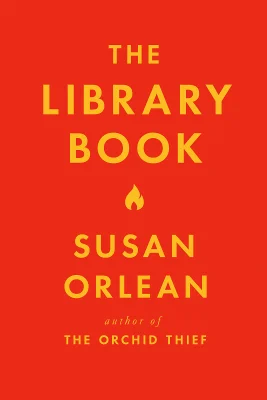
The Library Book
Categories
Nonfiction, History, Audiobook, Mystery, True Crime, Adult, Book Club, Historical, Books About Books, Crime
Content Type
Book
Binding
Hardcover
Year
2018
Publisher
Simon & Schuster
Language
English
ISBN13
9781476740188
File Download
PDF | EPUB
The Library Book Plot Summary
Introduction
# The Central Library Fire: A Chronicle of Destruction and Democratic Renewal On the morning of April 29, 1986, the Los Angeles Central Library stood as it had for sixty years—a magnificent testament to democratic ideals, where movie stars and homeless individuals, scholars and dreamers, all found equal welcome beneath its soaring pyramid tower. By evening, this sanctuary of knowledge lay in ruins, consumed by flames that reached 2,000 degrees and destroyed 400,000 books in what became one of the most devastating library fires in American history. Yet from this tragedy emerged a story far more profound than mere destruction—a chronicle that reveals the essential role libraries play as the beating heart of democratic society. The fire exposed both the fragility of our collective memory and the remarkable resilience of communities united in defense of knowledge. Through the mysterious circumstances surrounding the blaze, the unprecedented volunteer response that followed, and the institution's ultimate resurrection, we witness not merely the burning and rebuilding of a building, but a powerful demonstration of what libraries truly represent. They are not simply repositories of books, but living embodiments of our shared humanity, places where the promise of equal access to knowledge transforms abstract democratic ideals into daily reality. This story illuminates how public institutions serve as society's safety net, cultural anchor, and beacon of hope for those seeking to better their circumstances through learning and connection.
Chapter 1: The Democratic Cathedral: Central Library as Community Sanctuary (1926-1985)
When architect Bertram Goodhue designed the Los Angeles Central Library in the 1920s, he envisioned more than a building—he created a democratic cathedral that would serve as a beacon of enlightenment for a rapidly growing city. The structure, with its distinctive pyramid tower crowned by a bronze hand holding an eternal flame, embodied the ambitious spirit of Los Angeles reaching toward cultural greatness. Every surface told a story of human knowledge and creativity, from Lee Lawrie's sculptural tributes to great thinkers to inscriptions celebrating "The Light of Learning" that adorned the walls. By the 1980s, the library had evolved into something far beyond Goodhue's original vision. It served nearly a million patrons annually, circulating books and answering six million reference questions each year. The building housed extraordinary collections that reflected the city's unique character: the world's finest collection of books on rubber, twelve thousand cookbooks including six devoted entirely to popcorn recipes, and comprehensive patent records dating back to 1799. These eclectic holdings demonstrated how great libraries grow organically, shaped by the passionate interests of donors and the diverse needs of their communities. The library's true significance lay not in its collections but in its role as an unofficial community center for Los Angeles's diverse population. Immigrants learned English in its classrooms, students researched term papers in its reading rooms, and lonely souls found companionship among fellow readers. The Children's Department hosted story hours that brought together what one observer called "the petted darlings of prosperity" alongside "ragged urchins," creating a democratic space where economic differences dissolved in the shared magic of storytelling. This was Charles Fletcher Lummis's vision realized—a place that truly served as "a workshop for scholars including every painter's apprentice or working boy or streetcar man who wishes to learn." Yet beneath this noble mission, the building harbored serious vulnerabilities that would prove catastrophic. The structure lacked sprinklers, fire doors, and other modern safety features, with twenty fire code violations awaiting resolution. The maze-like book stacks, with their narrow passages and steel grating shelves, created perfect conditions for fire to spread rapidly through what fire department reports had long warned was a "very high" probability disaster waiting to happen. Despite these dangers, the library continued its vital work, serving as proof that in a sprawling, often fragmented city, there remained at least one place where all were welcome and knowledge was freely shared, regardless of one's circumstances or background.
Chapter 2: April 29, 1986: Seven Hours of Flames Transform a City's Heart
The fire began with deceptive politeness at 10:52 AM, announced by a smoke detector's alarm that most staff and patrons assumed was another false alert. The building's aging system was notorious for its frequent, inexplicable outbursts, so people filed out in orderly fashion, leaving belongings behind and expecting to return within minutes. Mary Ludwig abandoned two years of genealogy research notes on her reading table, while architect Norman Pfeiffer left his renovation drawings in Elizabeth Teoman's office, confident the interruption would be brief. No one could have imagined they were witnessing the beginning of a seven-hour inferno that would transform their beloved institution into what one firefighter described as "the bowels of hell." In the Fiction Department stacks, smoke began threading through the shelves, pale as onionskin at first, then deepening to dove gray before turning black. The fire found perfect conditions in the narrow, chimney-like stacks with their open steel grating designed to allow air circulation for book preservation. What had been engineered to protect books now became the mechanism of their destruction. As temperatures soared past 451 degrees—the point at which paper ignites—books began to bloom with flame, their pages springing away from bindings like "black butterflies" soaring on the superheated updraft that turned the stacks into vertical furnaces. The Los Angeles Fire Department responded with unprecedented force, eventually deploying more than half the city's firefighting resources: 350 firefighters, sixty companies, nine ambulances, and three helicopters. Yet the fire proved nearly unstoppable, behaving more like a ship fire than a building fire as it fed on itself with terrifying efficiency in the compressed space of the stacks. Water sprayed on the flames boiled instantly, while firefighters could endure the heat for only minutes at a time before retreating to cool down. The temperature reached 2,000 degrees, creating what veterans called a stoichiometric condition where fire achieved perfect combustion, burning so hot it appeared colorless, like looking through glass. When the flames were finally extinguished at 6:30 PM, the devastation was staggering: 400,000 books destroyed, 700,000 more damaged by smoke and the three million gallons of water used in the firefight. The loss equaled the entire collections of fifteen typical branch libraries, representing not just books but decades of carefully curated knowledge that served the city's diverse communities. Yet even as the building smoldered and smoke continued to rise from its windows, something remarkable began to happen on the streets of downtown Los Angeles—word was spreading that volunteers were needed, and by dawn the next day, nearly 2,000 people would gather to help save what remained, creating what one observer called "a living library" dedicated to preserving their city's shared intellectual heritage.
Chapter 3: Harry Peak: The Troubled Dreamer Caught in Suspicion's Web
Harry Omer Peak embodied the restless ambition and fragile dreams that drew thousands to Los Angeles each year, seeking transformation in a city that promised reinvention but delivered harsh realities. Born in 1959 in the suburban flatlands of Santa Fe Springs, he possessed the kind of striking looks—tall, blond, dimpled—that seemed destined for Hollywood success. His family saw him as their potential star, the one who would escape their cycle of bad luck and modest circumstances, and Harry shared this belief completely, always speaking of his future fame in terms of "when," never "if." He would become a movie star; it was simply a matter of time and the right opportunity. But Los Angeles proved far less welcoming than Harry had imagined, filled with handsome young men harboring identical dreams and lacking the training, connections, or psychological stability necessary for success. His persistent stage fright undermined auditions, while his tendency toward elaborate storytelling—which had delighted friends back home—began to alienate those around him in a city where everyone had heard every variation of every dream. He drifted from job to job as a valet, chauffeur, and errand runner, always on the margins of the entertainment industry he desperately wanted to join, watching others achieve the success that seemed perpetually beyond his reach. Harry's personal struggles ran deeper than professional disappointment. A childhood sexual assault had left profound psychological scars, contributing to his ongoing battles with identity and relationships. His romantic relationships with women ended in heartbreak—a broken engagement, a girlfriend who miscarried twins—leading him to question his sexuality in an era when such questions carried heavy social stigma. He found some stability with the American Orthodox Church, an unconventional religious organization that served as a refuge for Los Angeles's lost souls, but even there his relationships were complicated by his compulsive need to embellish the truth and make his mundane existence seem worthy of attention. On the morning of April 29, 1986, Harry's whereabouts became the subject of intense police scrutiny when witnesses reported seeing a young blond man in restricted areas of the library, someone who claimed to be a new employee when confronted by staff. Harry himself told conflicting stories about his presence at the fire, each version slightly different, as if he were trying on different roles to see which fit best. To some, he was a hero who helped an elderly woman escape the flames; to others, he was simply a bystander caught up in the drama; to investigators, he became a suspect whose inability to keep his story straight made him an irresistible target. The question that haunted the investigation was whether Harry Peak was a desperate young man seeking attention through a terrible act, or simply another casualty of Los Angeles's capacity to chew up and spit out those who came seeking dreams that proved too elusive to grasp.
Chapter 4: Two Thousand Volunteers: A City United to Save Its Books
The morning after the fire, as smoke still rose from the library's shattered windows, something extraordinary began unfolding on the streets of downtown Los Angeles that would redefine how the city saw itself and its values. Word had spread through radio and television that volunteers were needed to help save the damaged books, and by dawn, nearly two thousand people had gathered outside the building—a spontaneous outpouring of civic engagement that surprised even longtime community organizers. They came from every corner of the sprawling metropolis and every walk of life: IBM employees given time off work, members of the Junior League, students, retirees, and countless others who simply felt compelled to help preserve their city's literary heritage. The task confronting these volunteers was both monumental and urgent, requiring the kind of coordinated effort typically seen only in wartime or natural disasters. Seven hundred thousand water-damaged books needed to be packed and frozen within forty-eight hours to prevent mold from making them unsalvageable forever. The city had managed to procure thousands of cardboard boxes and hard hats overnight, while local food processing companies cleared precious space in their industrial freezers. Under the direction of Eric Lundquist, a mechanical engineer turned expert in drying wet materials, the volunteers formed human chains stretching through the smoky, debris-filled building and out onto Hope Street, passing books hand to hand in a rhythm that continued around the clock for three exhausting but exhilarating days. The scene was simultaneously heartbreaking and inspiring, as volunteers worked alongside professional movers and city workers, their clothes blackened with soot, their eyes stinging from smoke, yet their spirits remarkably high despite the magnitude of the loss surrounding them. Many had never met before, but they worked together with the focused dedication of a family saving their home from disaster. They packed more than fifty thousand boxes, each containing fifteen tightly packed books, loading them onto refrigerated trucks bound for warehouses where literary classics would rest between frozen shrimp and broccoli florets at seventy degrees below zero. It was, as one observer noted, as if the people of Los Angeles had temporarily become a living library themselves, creating a human system to protect and preserve the shared knowledge that defined their community's intellectual life. The volunteer effort revealed something profound about the library's place in the community's heart that surprised even those who understood its importance. These were not just books being saved, but the very foundation of the city's intellectual and cultural identity—the democratic promise that knowledge should be freely available to all, regardless of economic status or background. The diversity of the volunteers, speaking dozens of languages and representing every economic class and ethnic background, perfectly mirrored the library's own democratic mission. In those three days of collective action, Los Angeles demonstrated that despite its reputation for superficiality and fragmentation, it possessed a deep, abiding commitment to the values the library represented: learning, knowledge, community, and the fundamental belief that information should be accessible to everyone who seeks it.
Chapter 5: From Ashes to Renaissance: Technology and Vision Rebuild the Library
The challenge of rebuilding Central Library's collection seemed almost insurmountable in the aftermath of such devastating destruction. The estimated cost of replacing 400,000 destroyed books reached $14 million, money the cash-strapped city simply didn't have in its budget. Many of the lost volumes were out of print, requiring exhaustive searches through thousands of vendors worldwide, while others were irreplaceable special collections that had taken decades to assemble. The surviving books, frozen in food warehouses throughout Los Angeles, presented their own complex problems—how do you safely thaw and restore 700,000 water-damaged volumes without destroying them entirely? The library faced the very real possibility of remaining closed indefinitely, its mission suspended at the precise moment the community had demonstrated how desperately it was needed. The salvation came through an unprecedented partnership between public and private sectors, led by Lodwrick Cook, head of ARCO and co-chairman of the "Save the Books" campaign. From his office across the street, Cook had watched the library burn and immediately understood that this was more than a municipal crisis—it was a threat to the cultural heart of Los Angeles that required extraordinary measures. He launched the fundraising effort with a $500,000 donation from ARCO and began rallying support from Hollywood studios, major corporations, and individual citizens. The response was overwhelming: the Getty Trust contributed $2 million, while thousands of smaller donations poured in, often accompanied by touching notes explaining why the library mattered to ordinary people who had never considered themselves philanthropists. The campaign culminated in one of the strangest and most memorable nights in Los Angeles history: a twenty-four-hour telethon hosted by the flamboyant televangelist Gene Scott in his cavernous downtown church. Celebrities read from their favorite books—Charlton Heston performed the final chapter of Moby Dick with theatrical intensity, while Zsa Zsa Gabor showed up but forgot to bring a book to read. The evening's most unforgettable moment came when the normally staid ARCO executive Lodwrick Cook danced alone on stage to "Just a Gigolo," a performance so electrifying and unexpected that it generated $100,000 in pledges within minutes. The telethon exceeded its $2 million goal, proving that Los Angeles, despite its reputation for shallowness and materialism, could rally around institutions that truly mattered to the community's soul. The reconstruction process took seven years and required innovations that would influence library design worldwide, transforming tragedy into an opportunity for revolutionary advancement. The fire had destroyed the old card catalog system, forcing the library to leap directly into the digital age with one of the first major electronic catalog systems in the country. The building itself was not only restored but dramatically expanded, with Norman Pfeiffer's elegant new wing doubling the available space while respectfully complementing Goodhue's original vision. When Central Library finally reopened in October 1993, it emerged stronger, more technologically advanced, and better equipped to serve its diverse community than ever before, proving that institutions can emerge from even the most devastating setbacks more vital and relevant than they were before disaster struck.
Chapter 6: The Modern Library: Public Space as Society's Last Safety Net
The fire at Central Library illuminated fundamental truths about libraries that extend far beyond Los Angeles, revealing their essential role as among the last truly public spaces in American society. In an age of rapid technological change and increasing social fragmentation, libraries have evolved into institutions that welcome everyone regardless of economic status, background, beliefs, or circumstances. They serve simultaneously as community centers, job training facilities, Internet access points, homework help centers, and refuges for the homeless, while maintaining their traditional role as guardians of human knowledge and democratic ideals. The library's destruction and rebirth demonstrated how these institutions function as more than repositories of books—they are the physical embodiment of democratic values and the keepers of our collective cultural memory. The investigation into the fire's cause, though it never resulted in a conviction, revealed the complex psychology of those who destroy libraries and the broader historical pattern of book burning as a weapon against free thought. Throughout history, from the ancient Library of Alexandria to Nazi Germany's systematic destruction of Jewish texts, the burning of books has represented an assault on the very concept of open inquiry and intellectual freedom. The Central Library fire, whether intentional or accidental, joined this tragic tradition while simultaneously inspiring a powerful counter-narrative of community resilience and unwavering commitment to preserving knowledge for future generations who would depend on it for their own growth and understanding. Today's libraries face new challenges that echo the themes revealed by the 1986 fire, as budget constraints threaten collections and services while digital technology transforms how people access and consume information. Yet libraries continue to evolve and adapt, offering everything from maker spaces and computer training to citizenship classes and mental health resources, proving their continued relevance in an interconnected world. They remain essential infrastructure for democracy, providing not just access to information but the quiet spaces necessary for contemplation, study, and the kind of deep thinking that democratic participation requires. The story of Central Library's destruction and rebirth reminds us that libraries are more than buildings filled with books—they are temples to human curiosity, monuments to the belief that knowledge should be freely shared, and living proof that even in our increasingly connected world, we still need physical places where strangers can gather in pursuit of learning, understanding, and the connections that bind communities together.
Summary
The story of Central Library's fire and resurrection reveals a fundamental truth about the role of cultural institutions in sustaining democratic society. Libraries represent far more than collections of books; they embody our collective commitment to the free exchange of ideas and equal access to knowledge that makes democratic participation possible. The fire exposed both the fragility of these institutions and their remarkable resilience when supported by communities that understand their true value extends beyond mere convenience to touch the very heart of what makes society civilized. The unprecedented volunteer response demonstrated that even in a city known for its individualism and superficiality, people will unite to preserve what they recognize as essential to their shared humanity and democratic ideals. The library's transformation following the fire offers profound lessons for how institutions can adapt and thrive in the face of crisis while remaining true to their core mission. By embracing new technologies while preserving their fundamental commitment to serving all members of society, libraries like Central have evolved into dynamic community centers that address needs far beyond traditional book lending. They provide Internet access to those who cannot afford it, offer refuge to the homeless, teach literacy to immigrants, create spaces for civic engagement, and serve as society's safety net when other institutions fail. In an era of increasing polarization and social isolation, libraries remain among the few places where people from all backgrounds can encounter different perspectives and engage with ideas that challenge their assumptions. The story of Central Library reminds us that the institutions we value most require constant vigilance and support, but when properly nurtured and defended, they can emerge from even the most devastating setbacks stronger, more vital, and more essential to the health of democratic society than ever before.
Best Quote
“In Senegal, the polite expression for saying someone died is to say his or her library has burned. When I first heard the phrase, I didn’t understand it, but over time I came to realize it was perfect. Our minds and souls contain volumes inscribed by our experiences and emotions; each individual’s consciousness is a collection of memories we’ve cataloged and stored inside us, a private library of a life lived.” ― Susan Orlean, The Library Book
Review Summary
Strengths: The review highlights the book's engaging narrative on the history and significance of libraries, as well as its exploration of the 1986 Los Angeles Central Library fire. The author, Susan Orlean, is praised for her evident passion for libraries, making the book feel like an ode to these institutions. The review appreciates the detailed historical context and the portrayal of diverse librarians, particularly Charles Fletcher Lummis. Weaknesses: The review notes that the true crime aspect, specifically the investigation into the fire's suspect, was less compelling compared to the historical and cultural insights provided. Overall: The reader expresses a highly positive sentiment, appreciating the book's depth and breadth beyond just a true crime story. It is recommended for those interested in libraries' history and cultural impact.
About Author

Susan Orlean
Orlean charts a unique path in American journalism by delving into the unusual and often overlooked aspects of culture. Her work is defined by a deep commitment to narrative nonfiction, exploring diverse themes such as human-animal relationships, eccentric cultural phenomena, and American institutions. Her ability to infuse storytelling with precision and empathy allows her to captivate readers while shedding light on both familiar and obscure narratives.\n\nWith titles like "The Orchid Thief" and "The Library Book", Orlean showcases her talent for turning meticulous research into engaging prose. Her bio reveals a journey from writing for local weeklies to becoming a staff writer at "The New Yorker" in 1992, where she cemented her status as a leading voice in contemporary nonfiction. Meanwhile, her latest memoir, "Joyride", offers a personal glimpse into her life and career, further enriching her repertoire of compelling stories.\n\nReaders benefit from Orlean’s work by gaining a deeper understanding of the intricacies of American culture and society. Her books are not only informative but also entertaining, appealing to those who appreciate detailed and insightful storytelling. Through her dedication to her craft, Orlean has achieved critical acclaim, with her works frequently described as essential reads for anyone interested in the art of narrative nonfiction.
Read moreDownload PDF & EPUB
To save this Black List summary for later, download the free PDF and EPUB. You can print it out, or read offline at your convenience.
The Library Book
by Susan Orlean
