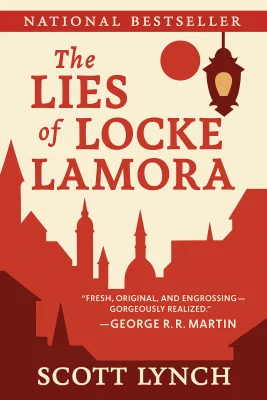
The Lies of Locke Lamora
Categories
Fiction, Audiobook, Mystery, Fantasy, Science Fiction Fantasy, Adult, Adventure, Crime, High Fantasy, Epic Fantasy
Content Type
Book
Binding
Kindle Edition
Year
2016
Publisher
Spectra
Language
English
ASIN
B0DT1NXV7Q
File Download
PDF | EPUB
The Lies of Locke Lamora Plot Summary
Introduction
# Shadows of Deception: The Gentleman Bastard's Dance with Fate The floating city of Camorr drowns in its own shadows as dawn breaks over glass towers and ancient canals. In the depths of a forgotten temple, Locke Lamora counts stolen gold by alchemical light—forty-three thousand crowns gleaming like captured stars. Above him, the nobility sleep peacefully in their silk-draped beds, unaware that their most dangerous enemy dines at their tables and speaks their language with perfect refinement. But today brings whispers of a different kind of predator. The Gray King has begun his hunt, leaving bodies floating in the harbor with gray cloth wrapped around their wrists. Each corpse carries the same message: the old order is ending, and those who built their lives on careful deceptions may find themselves drowning in the chaos that follows. In a city where loyalty is currency and betrayal is death, even the most accomplished liar must eventually face the truth that some games are played for stakes higher than gold.
Chapter 1: The Orphan Thief: Origins of Locke Lamora
The plague took everything from Camorr's Catchfire district—parents, children, hope itself. Only the youngest survived, skeletal waifs who stumbled through ash-covered streets like ghosts of a better world. Among them walked Locke Lamora, six years old and already too clever for his own good. The Thiefmaker found him three days after the burning stopped. The old criminal had built his empire on broken children, teaching them to steal and lie and die quietly when their usefulness ended. But Locke proved different from the start. While other orphans learned to pick pockets, he orchestrated elaborate schemes that invariably spiraled beyond control. He burned down taverns, started riots, and committed the ultimate sin—stealing from the city watch, breaking the Sacred Peace that kept Camorr's underworld in delicate balance. His greatest transgression came wrapped in childish cunning. When an older boy named Veslin began bullying the younger thieves, Locke planted evidence of corruption and whispered poison into the Thiefmaker's paranoid ear. The old man's response was swift and brutal—Veslin died with his throat cut, along with his innocent roommate. The boy had turned his master's own suspicions into a weapon, demonstrating manipulation so subtle that others might learn to use it themselves. That night, rain hammered the cobblestones as the Thiefmaker led Locke through winding streets to the Temple of Perelandro. There, a different kind of criminal waited. Father Chains sat in apparent meditation, his blind eyes seeing nothing, his devotion to the Beggar God absolute and unquestioning. What the Thiefmaker couldn't know was that the priest's blindness was performance, his piety a mask, and his true allegiance lay with the Crooked Warden—patron saint of thieves and lies.
Chapter 2: The Temple's Secret: Training Under Father Chains
Beneath the crumbling temple lay wonders that defied imagination. Through hidden passages behind Chains' stone sleeping pallet, Locke descended into chambers of pure Elderglass, their walls glowing with soft light that had burned since before human memory. Here, stolen luxury filled rooms sealed by alien technology—silk tapestries, golden plates, wines worth more than most men earned in lifetimes. Chains proved no ordinary criminal. The former scholar had transformed theft into art, understanding that the greatest cons required perfect performances rather than nimble fingers. Locke found himself studying alongside the Sanza twins—Calo and Galdo, whose identical faces masked distinctly different souls—while learning of the absent Sabetha, whose very name seemed to cast shadows over their lessons. The curriculum would have impressed university masters. Locke learned to speak Vadran like a native, to set noble tables with precision, to cook elaborate meals worthy of ducal banquets. He studied mathematics and literature, swordplay and etiquette. Most crucially, he learned to become other people—merchants and nobles, priests and scholars, each identity crafted with meticulous care and worn like perfectly tailored clothing. But the most important lesson came when Chains revealed his true purpose. The Sacred Peace governing Camorr's underworld forbade thieves from targeting nobility, creating stability but limiting opportunity. Chains intended to shatter that peace through deception so perfect their victims would never realize they'd been robbed. The Gentleman Bastards would be arrows fired straight into the heart of the established order. Years passed in this hidden paradise. Locke's body filled out, his mind sharpened, his skills grew beyond anything the Thiefmaker could have imagined. When Chains finally died, leaving his students to carry on his work, they were no longer mere thieves. They had become artists of deception, ready to paint their masterpiece on the canvas of Camorr's unsuspecting elite.
Chapter 3: The Noble's Game: Conning Don Salvara
The plan unfolded with clockwork precision. Don Lorenzo Salvara—young, wealthy, and burning with desire to outmaneuver his rival Don Jacobo—would be approached by a desperate merchant from distant Emberlain. This trader, calling himself Lukas Fehrwight, would offer the don a chance to invest in a scheme so profitable it seemed impossible—which, naturally, it was. Locke transformed himself into Fehrwight with painstaking care. The wool clothing was authentic Vadran, uncomfortably hot in Camorr's summer but perfectly suited to a northern merchant. The accent was flawless, the mannerisms precisely observed. Most importantly, the story was believable—civil war was indeed brewing in the Seven Marrows, and merchant houses might well need to evacuate precious cargo of aging Austershalin brandy. The first touch came by apparent accident. As Don Salvara left his weekly devotions at the Temple of Fortunate Waters, he stumbled upon what appeared to be a robbery in progress. Two masked men strangled a well-dressed foreigner while his servant lay beaten in the mud. The don's honor demanded intervention, and his blade cleared the alley of villains with righteous efficiency. What Salvara couldn't know was that the entire scene was theater. The "bandits" were Calo and Galdo Sanza, the "servant" was Jean Tannen, and the rope around Fehrwight's throat was positioned to look deadly while remaining perfectly harmless. The don had rescued exactly the man Locke needed him to rescue, at exactly the right moment, in exactly the right way. Gratitude opened doors that force never could. Within hours, Salvara had invited his mysterious savior to dine aboard his pleasure barge during the Shifting Revel, where crowds cheered brutal contests while Locke spun his web of lies with masterful precision.
Chapter 4: The Gray King's Shadow: Assassinations and Threats
Death stalked Camorr's underworld with surgical precision. Seven gang leaders lay in their graves, each killed by methods that defied explanation. The Gray King seemed to move through the city like smoke, striking without warning and vanishing without trace. His victims were found in locked rooms and crowded streets, in their beds and at their tables, each death more impossible than the last. Capa Barsavi, once the undisputed master of the criminal empire, now cowered in his floating fortress called the Wooden Waste. The Floating Grave squatted in the harbor like a diseased whale, its hull split open to accommodate the throne room of Camorr's most dangerous man. What had once been a symbol of power now felt like a prison, bristling with crossbows and crowded with guards who jumped at shadows. The latest victim was Tesso, nailed to a wall in Rustwater with his manhood carved away, left to bleed out slowly while his bodyguards slept through supernatural dreams. Before him, six other garristas had met equally gruesome ends, each death designed to spread maximum terror through Barsavi's organization. The message was unmistakable—no one was safe, no matter how well-protected or carefully hidden. Barsavi's response had been to retreat deeper into paranoia. His children were forbidden to leave the floating fortress, his lieutenants summoned only for interrogations that often ended in blood. The man who'd once ruled through charisma and calculated mercy now governed through fear alone. But his daughter Nazca saw what her father could not—that hiding would only delay the inevitable. The Gray King wasn't just killing gang leaders; he was dismantling the entire structure of Camorr's underworld, preparing the way for something larger. In the midst of this chaos, Barsavi made a demand that threatened to destroy everything Locke had built. The old capa had decided his daughter needed a husband—specifically, Locke Lamora. The union would bind the Gentleman Bastards closer to the ruling family while ensuring absolute loyalty through marriage. To refuse would mean death. To accept meant binding himself to a sinking ship.
Chapter 5: Blood and Betrayal: The Fall of the Gentleman Bastards
The trap closed with elegant brutality. Locke found himself dragged from familiar streets by cloaked figures, awakening in an abandoned tavern face to face with his nightmares. The Gray King sat across from him—a lean man with hunter's eyes and an accent that spoke of distant shores. Beside him stood the Falconer, a young Bondsmage whose very presence made the air crackle with unnatural power. The scorpion hawk perched on the sorcerer's gauntlet fixed Locke with obsidian eyes. Its rear talons had been replaced by curved stingers, each capable of delivering death with a single scratch. When Locke dared speak with anything less than absolute submission, the creature demonstrated its lethal grace, leaving him bleeding and thoroughly cowed. The Bondsmage's power made resistance impossible—with casual gestures, he could inflict agony without leaving marks, speak directly into minds, bend reality itself to his will. The Gray King's proposal was simple: Locke would impersonate him at a meeting with Capa Barsavi. The deception must be perfect, for the Gray King would be occupied elsewhere when the confrontation occurred. In exchange for this service, the Gentleman Bastards would be allowed to live. The alternative was death, preceded by the systematic torture of everyone Locke held dear. The three black rings on the Falconer's wrist marked him as a master of his craft, worth a king's ransom and deadlier than any army. While Locke prepared for his unwilling masquerade, assassins struck at the heart of their sanctuary. The glass burrow beneath the Temple of Perelandro became a charnel house. Calo and Galdo Sanza died first, their throats opened by matching cuts that spoke of professional efficiency. The twins who had moved as one in life lay still as stone in death, their blood pooling on ancient tiles. Bug, the youngest and bravest of them all, faced the assassin with nothing but desperate courage. The crossbow bolt meant for his heart took him in the throat instead, and he died in Locke's arms, whispering that he was never just an apprentice but a true Gentleman Bastard to the end. The sanctuary burned. Forty-three thousand crowns in stolen gold vanished into the Gray King's coffers. Years of careful preparation turned to ash and smoke, leaving only grief and a burning hunger for vengeance.
Chapter 6: Vengeance and Justice: The Final Confrontation with Capa Raza
The Echo Hole became a stage for the Gray King's masterpiece. Disguised as his enemy, Locke faced Capa Barsavi and a hundred armed killers in the ancient Eldren structure. The deception held until a dying man reached out to touch the supposedly untouchable Gray King. When Locke flinched away, the illusion shattered like glass against stone. Barsavi's men dragged him to a barrel filled with horse urine—the same degrading death the Gray King had visited upon others. As foul liquid closed over his head, Locke understood the true scope of his enemy's cruelty. He had never been anything more than a convenient tool, discarded when his usefulness ended. Jean and Bug rescued him from the drowning barrel, fighting through salt devils that the Bondsmage had somehow bent to his will. The Gray King revealed his true identity with theatrical precision. He was Capa Raza—vengeance incarnate—and the Berangias sisters had been his agents all along. The shark that tore off Barsavi's arm was no accident but carefully orchestrated execution. The twins who had served as bodyguards became executioners, their axes splitting skulls with practiced efficiency. Raza's coup unfolded like a deadly dance, half of Barsavi's garristas already bought or blackmailed into submission. The old capa died with a stiletto under his chin, his body fed to the sharks he'd once used to dispose of enemies. From the crowd, Locke watched his world transform as the new Capa Raza accepted submission from Camorr's underworld. The Secret Peace would continue under new management, tribute flowing to different coffers, but the system remained intact. Only the man at the top had changed, and with him, the rules of the game. But Raza had made one crucial error—he had underestimated what a thief would do when everything he loved had been taken from him. In the ruins of the floating fortress, surrounded by the bodies of friends and enemies alike, Locke began weaving a counter-deception of breathtaking audacity. The Gray King believed he held all the cards, but grief had transformed his surviving enemy into something harder, colder, and infinitely more dangerous than a mere confidence man.
Chapter 7: Escape from Camorr: The Price of Survival
The final confrontation came not in the shadows but under the blazing lights of the Duke's feast at Raven's Reach. Six hundred feet above the city, in towers of glass that scraped heaven's belly, Camorr's nobility gathered for their annual celebration. They came in silk and jewels, carrying centuries of privilege like armor against the world's cruelties, unaware that death waited among them disguised as gifts to their duke. Locke moved through the glittering crowd wearing stolen clothes and a borrowed name, playing his final role with desperate precision. The Gray King had placed four sculptures throughout the tower—beautiful works of art hiding a terrible purpose. Within their golden shells lay enough Wraithstone to turn every soul in the tower into mindless husks, their lives burned away by alchemical fire. Time became the enemy as Falselight began to rise and hidden fuses burned toward their deadly purpose. Locke raced against clockwork and chemistry, his warnings dismissed as ravings of a known criminal until evidence became too obvious to ignore. The sculptures cracked open to reveal their poisonous hearts, and suddenly the flower of Camorr's nobility found itself fleeing up endless stairs, carrying death toward the only salvation the city could offer—a cistern of water far above the glittering towers. Even as the immediate threat dissolved in the depths of the Sky Garden's pool, the Gray King's escape route burned under the city's defensive engines. The plague ship that had lurked in the bay for days revealed its true nature as Raza's final gambit, taking with it stolen wealth and the dreams of a man who had confused justice with revenge. In the harbor below, the Floating Grave rocked gently as Locke descended into its depths for the confrontation that had been building since the first body appeared in the water. They faced each other across thirty feet of empty space—master thief and vengeful son, both shaped by loss into something harder than the men they might have been. The duel that followed was less contest of skill than collision of desperation, steel meeting steel in red-lit chambers while the city slept above. When the moment came, it was not skill that saved Locke but the oldest trick in any thief's repertoire—misdirection, and a blade driven home while his enemy's attention wavered for one crucial heartbeat.
Summary
They sailed from Camorr on a merchant vessel bound for distant ports, two survivors of a war that officially never happened. Locke lay wrapped in blankets and oilcloth, his body a map of scars that would never fully heal, while Jean tended wounds both visible and hidden. The city faded behind them in the rain, its glass towers catching the last light before disappearing into memory and mist. The victory they had won tasted of ashes and salt water. The Gray King was dead, his plot unraveled, the nobility saved from a fate worse than death. But the price lay heavy on their hearts—three friends who would never again share wine and laughter in a temple cellar, never again risk their lives for the pure joy of an impossible con. The Gentleman Bastards were broken, their brotherhood reduced to two men fleeing across dark waters toward an uncertain future. Yet something endured in that flight, something the Gray King's hatred could not touch and the Bondsmage's magic could not bind. It lived in the loyalty that made Jean carry his wounded friend from a burning ship, in the love that drove Locke to risk everything for the memory of the dead. The thieves of Camorr may have been gone, but their legend would outlive the city that made them, carried forward on stories that transform mere criminals into something approaching myth.
Best Quote
“Someday, Locke Lamora,” he said, “someday, you’re going to fuck up so magnificently, so ambitiously, so overwhelmingly that the sky will light up and the moons will spin and the gods themselves will shit comets with glee. And I just hope I’m still around to see it.”“Oh please,” said Locke. “It’ll never happen.” ― Scott Lynch, The Lies of Locke Lamora
Review Summary
Strengths: The review praises "The Lies of Locke Lamora" for its exceptional debut quality, comparing it favorably to other notable debuts like "The Name of the Wind" and "Malice." The book is highlighted for its engaging plot, character development, dark humor, and the successful crafting of a multi-layered narrative. The reviewer appreciates the book's ability to stand alone while also being part of a planned series. Overall: The reviewer expresses high enthusiasm for Scott Lynch's debut, recommending it as a compelling heist fantasy. The book is described as both plot and character-driven, with a narrative that grows in complexity and intensity, culminating in a satisfying climax. The reviewer looks forward to the continuation of the series.
About Author

Scott Lynch
Lynch crafts intricate narratives that delve into the complexities of loyalty, deception, and survival. His work, characterized by richly detailed worlds and morally ambiguous settings, reflects a unique blend of crime, adventure, and political intrigue. Lynch's debut novel, "The Lies of Locke Lamora", set the tone for his writing style, garnering critical acclaim and establishing him as a notable figure in contemporary fantasy literature. His storytelling is marked by witty dialogue and intricate plots, capturing the reader's imagination through a blend of humor and grim realism.\n\nDrawing from a diverse range of experiences before becoming a full-time author, Lynch held roles from dishwasher to web designer, each contributing to his multifaceted narrative style. His method involves creating complex characters and scenarios that explore the darker aspects of human nature. By intertwining personal experiences with fictional worlds, Lynch brings a level of authenticity and depth to his storytelling. This approach appeals to readers who appreciate a sophisticated narrative filled with unexpected twists and character-driven plots.\n\nFans of fantasy literature find Lynch's work compelling for its ability to weave together themes of friendship and betrayal within vividly imagined settings. His books, particularly those in the "Gentleman Bastard Sequence", offer readers an escape into worlds where the boundaries between right and wrong are constantly questioned. Recognition from the World Fantasy Award and the Sydney J. Bounds Best Newcomer Award underscores his impact in the genre. This bio highlights how Lynch continues to influence and inspire readers and writers with his distinctive narrative voice and creative storytelling techniques.
Read moreDownload PDF & EPUB
To save this Black List summary for later, download the free PDF and EPUB. You can print it out, or read offline at your convenience.
The Lies of Locke Lamora
by Scott Lynch
