
The Lions of Little Rock
Categories
Fiction, Audiobook, Historical Fiction, Young Adult, Historical, Realistic Fiction, Childrens, Middle Grade, Friendship, Juvenile
Content Type
Book
Binding
Hardcover
Year
2012
Publisher
G.P. Putnam's Sons Books for Young Readers
Language
English
ASIN
039925644X
ISBN
039925644X
ISBN13
9780399256448
File Download
PDF | EPUB
The Lions of Little Rock Plot Summary
Introduction
September 1958. Thirteen-year-old Marlee Nisbett stands frozen atop the five-meter diving board at Fair Park Swimming Pool, counting prime numbers to calm her racing heart. Below, the water mirrors the Arkansas sky, while across the street, lions pace silently in their cages at Little Rock Zoo. Marlee talks constantly—but only in her head, where words are safe and no one can judge her squeaky voice or laugh at her mistakes. In a city torn apart by school integration battles, where Central High School has become a battleground and federal troops patrol the hallways, Marlee discovers that silence can be both shield and prison. When she befriends Elizabeth, a mysterious new girl with sharp wit and dangerous secrets, Marlee must learn that some truths demand to be spoken aloud. As Little Rock's schools close to prevent integration and her own family fractures under the weight of taking sides, Marlee faces a choice that will define not just her voice, but her courage. Sometimes the quietest people have the most important things to say—if they can find the strength to speak.
Chapter 1: The Quiet Girl and the Roaring Lions
Marlee's sister Judy finally coaxes her down from the diving board, saving her from complete humiliation in front of Sally McDaniels and the other kids. At thirteen, Marlee has mastered the art of internal conversation while remaining virtually mute in public. She categorizes people like drinks—her brother David is sweet iced tea, while her mother burns like hot black coffee, too strong for comfort. That evening, Governor Faubus appears on their new television set, speaking about Southern pride and the integration crisis. Marlee's father announces grimly that Central High will remain closed rather than allow colored students to attend with Judy. The weight of this news settles over their dinner table like thick summer heat. Judy will have to leave Little Rock, sent away to live with their grandmother in Pine Bluff to continue her education. The injustice of it strikes Marlee silent, though she already was. Football games can continue, but schools must close. Her sister's future hangs in the balance of adult decisions she doesn't understand. That night, she lies awake listening to the lions roar across the street—their voices carrying through the darkness while hers remains trapped inside her throat. Walking home from school, Marlee passes the zoo daily, drawn to those magnificent cats who speak their truth boldly into the Arkansas night. She envies their fearless voices, their ability to announce their presence to the world without shame or hesitation.
Chapter 2: An Unexpected Friendship Changes Everything
Elizabeth—who insists on being called by her full name, like the Queen of England—arrives at West Side Junior High like a breath of fresh air in Marlee's suffocating silence. When Sally tries to nickname her "Bethie," Elizabeth deflects with humor and confidence that leaves Sally speechless for once. Marlee watches this interaction with fascination, recognizing something special in the new girl's fearless wit. During lunch, Elizabeth approaches Marlee's isolated table with easy confidence. She doesn't demand conversation, instead offering comfortable silence that feels revolutionary to Marlee. When Elizabeth notices Marlee working on magic squares—mathematical puzzles where numbers align perfectly in rows and columns—their friendship begins to take shape around shared intellectual curiosity. Elizabeth becomes Marlee's unlikely courage coach, teaching her breathing techniques and visualization exercises to overcome her speaking anxiety. They meet at the zoo after school, where Elizabeth encourages Marlee to practice talking to the animals. The elephants become their testing ground, with Marlee slowly finding her voice while describing their upcoming history presentation about the Quapaw Indians. Elizabeth carries herself with mysterious worldliness, as if she's lived experiences beyond her thirteen years. She speaks knowledgeably about satellites and space exploration, sharing Marlee's fascination with mathematics and science. Their friendship deepens over discussions of prime numbers and dreams of rocket ships, two minds finding perfect synchronization.
Chapter 3: Secrets, Lies, and Hard Truths Revealed
The truth explodes during lunch when Sally McDaniels announces that Elizabeth is colored—a Negro who has been passing for white all semester. Sally's mother spotted Elizabeth leaving a colored church on South Chester Street, holding hands with a colored boy. The revelation hits the cafeteria like a physical blow, students whispering and staring as Elizabeth's carefully constructed identity crumbles. Marlee's world tilts on its axis. Her best friend, the person who taught her to find her voice, has been living a lie more dangerous than Marlee's silence. In 1950s Arkansas, a colored girl attending a white school isn't just deception—it's a crime that could get her killed. Elizabeth vanishes from school immediately, transferred to Dunbar Junior High without a word of goodbye. The betrayal cuts deep, but Marlee's anger gives way to understanding as she imagines the courage it took for Elizabeth to sit in those classrooms every day, knowing discovery meant not just expulsion but potentially violence. Betty Jean, the family's colored maid, explains the brutal reality of "passing"—the exhaustion of constant lies, the complete severing of family ties, the ever-present threat of death if the truth emerges. Despite the danger, Marlee refuses to abandon their friendship. She creates a coded phone system, calling Elizabeth at home using fake names and arranging secret meetings at the old rock crusher quarry. Their friendship transforms from public alliance to underground resistance, two girls refusing to let hatred dictate their bond.
Chapter 4: Standing Together When the World Pulls Apart
Marlee's father receives his termination notice—forty-four teachers and administrators fired for supporting integration. The school board's purge targets anyone who signed their name to moderate organizations or spoke against segregation. Richard Nisbett's membership in the Arkansas Council on Human Relations marks him as a dangerous integrationist in the new political climate. The family's financial security evaporates overnight. Marlee's mother, initially resistant to taking controversial stands, transforms under pressure. Maurine Nisbett joins the Women's Emergency Committee to Open Our Schools, stuffing envelopes and making phone calls despite threatening messages and social ostracism. Their quiet suburban life becomes a battlefield of principle. Betty Jean's son Curtis gets arrested for allegedly egging a white woman's house—a crime actually committed by Red Dalton, older brother of Marlee's classmate JT. When Richard Nisbett posts Curtis's fifty-dollar bail, he spends their daughter's college savings to protect an innocent boy whose only crime was being colored in the wrong place at the wrong time. The incident opens Marlee's eyes to the casual injustice surrounding them. Curtis, barely fourteen, faces jail time for a crime he didn't commit while the real perpetrator—a white football star—walks free. The hypocrisy burns in Marlee's throat like acid, adding fuel to her growing determination to speak truth regardless of consequences.
Chapter 5: Finding a Voice in the Midst of Fear
Election day arrives with the weight of the future pressing down on Little Rock. The STOP campaign—Stop This Outrageous Purge—represents the community's last hope for reopening schools and restoring sanity to education. Marlee works beside her mother, calling voters and distributing sample ballots, her voice growing stronger with each conversation. The moderate candidates win, removing the segregationist board members who closed the schools. Victory celebrations echo through integrationist households, but Marlee recognizes this as merely one battle in a longer war. The schools may reopen, but hearts and minds require more time to change. At school, JT Dalton finally reveals his brother Red has been terrorizing the colored community with stolen dynamite. The golden boy of West Side Junior High, accustomed to having others do his homework, finally finds the courage to tell the truth about his dangerous older brother. His confession comes too late to prevent tragedy but early enough to save lives. Marlee's voice, once trapped behind anxiety and fear, now carries across classrooms and community meetings. She speaks at PTA gatherings and writes letters to newspaper editors, her words precise and powerful. The girl who once counted prime numbers to avoid conversation now marshals mathematical logic to argue for justice and equality.
Chapter 6: Confronting Danger to Protect What Matters
Red Dalton's rage reaches a breaking point when he discovers Elizabeth and Marlee's continued friendship. Armed with dynamite stolen from an abandoned quarry, he plots revenge against the colored girl who dared to infiltrate white spaces. His hatred focuses on Elizabeth as the symbol of everything he believes threatens his world. The bombing of Pastor George's house—Betty Jean's husband and Elizabeth's minister—shatters the illusion of safety that protected Marlee's secret meetings with her friend. The explosion destroys the living room where they had sat just minutes earlier, saved only by Marlee's warning about Red's suspicious car circling the neighborhood. Glass and debris scatter across the yard where they huddle in terror, the smell of smoke and dynamite acrid in the evening air. The attack was meant to kill Elizabeth, but Red's imprecise aim endangers everyone in the house. Only luck and Marlee's vigilance prevent a massacre that would have destroyed two families and silenced their voices forever. The police investigation reveals the depth of Red's hatred and the complicity of adults who should have stopped him. His father's Ku Klux Klan robes, hidden in the family closet, connect him to a network of violence that has terrorized the colored community for decades. JT's courage in finally speaking against his brother helps expose the truth, though it comes at the cost of his own safety.
Chapter 7: The Courage to Speak When Silence Is Safer
Marlee's mother rises to address the packed auditorium, her voice trembling but determined as she reads from the pink paper her daughter left in her purse. The biblical verse about suffering for righteousness gives Maurine Nisbett strength to condemn the teacher firings and defend public education. Her transformation from silent housewife to civil rights advocate mirrors her daughter's journey from mute observer to vocal participant. The confrontation with Red's family forces the truth into daylight. Marlee's broken letter opener, still bearing her engraved name, provides evidence of Red's crimes when found in his car trunk. The physical proof overcomes denials and forces even his parents to acknowledge their son's dangerous hatred. Red's enlistment in the army removes the immediate threat but doesn't erase the damage he's caused. JT, freed from his brother's shadow, begins the difficult work of becoming his own person. He confesses to cheating, accepts the consequences, and starts building relationships based on honesty rather than deception. Elizabeth's family, traumatized by the bombing attempt, forbids further contact between the girls. Their friendship, built on shared courage and intellectual curiosity, becomes another casualty of the integration battles tearing Little Rock apart. The silence that once protected Marlee now separates her from the person who taught her to speak.
Summary
Summer arrives with the promise of reopening schools, though only token integration—five colored students across two high schools—marks the victory. Marlee returns to the zoo where her friendship with Elizabeth began, remembering their shared dreams of rockets and magic squares. The lions still roar at night, but now Marlee adds her voice to theirs, no longer content to remain silent when injustice demands response. The girl who once froze on diving boards now leaps fearlessly into conversations and confrontations. Her voice, strengthened by loss and tempered by truth, carries the weight of hard-won wisdom. Elizabeth may be gone from her daily life, but her influence echoes in every word Marlee speaks for justice, every stand she takes against hatred. In learning to speak, Marlee discovered that courage isn't the absence of fear—it's finding your voice despite the terror, adding your roar to the chorus demanding change. The lions taught her well: sometimes the most important words are the ones that frighten us most to say aloud.
Best Quote
“I think a friend is someone who helps you change for the better. And whether you see them once a day or once a year, if it's a true friend, it doesn't matter.” ― Kristin Levine, The Lions of Little Rock
Review Summary
Strengths: The review highlights the book's engaging narrative and its ability to provoke thought and discussion on serious themes such as racial segregation and personal courage. The characters, particularly Marlee and Liz, are portrayed as compelling and relatable, encouraging readers to empathize with their struggles. The book successfully captures the historical context of the 1950s segregated South. Weaknesses: The review notes that the language and themes may be too mature for younger readers, suggesting it is more suitable for older children or young teens. Overall: The reader expresses a highly positive sentiment, describing the book as the best read of the year for their 12-year-old. It is recommended for its emotional depth and educational value, though caution is advised regarding its mature content.
About Author

Kristin Levine
Levine explores the intricate tapestry of American history through her compelling narratives, focusing on themes of race relations and friendship amid societal challenges. Her works, such as "The Lions of Little Rock" and "The Best Bad Luck I Ever Had", use historical settings to examine the complexities of racial divides and social injustices. Levine's ability to weave factual events with fictional elements enables young readers to engage with difficult historical moments, providing a platform for understanding and empathy.\n\nHer storytelling is marked by its accessibility, appealing to middle-grade and young adult audiences who benefit from her insightful exploration of historical themes. Levine's educational background, including a Bachelor of Arts in German from Swarthmore College and a Master of Fine Arts in film/screenwriting from American University, informs her narrative style, making her books not only informative but also deeply engaging. The author’s early book, "The Best Bad Luck I Ever Had", exemplifies her ability to transform personal family history into a rich fictional narrative that resonates with contemporary issues, earning it a spot on the American Library Association’s Best Books for Young Adults.\n\nLevine continues to reside in Alexandria, Virginia, where she nurtures her writing career alongside her family. While she remains renowned for her historical fiction, her contemplation of genres like science fiction and fantasy hints at an exciting evolution in her work. This bio underscores her dedication to crafting stories that illuminate past and present societal issues, aiming to inspire and educate her readers.
Read moreDownload PDF & EPUB
To save this Black List summary for later, download the free PDF and EPUB. You can print it out, or read offline at your convenience.
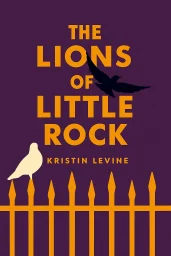
The Lions of Little Rock
by Kristin Levine
