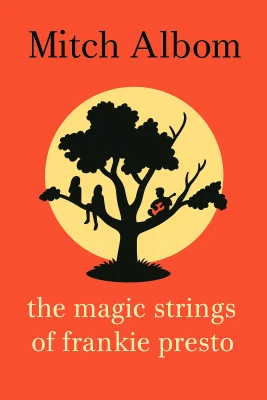
The Magic Strings of Frankie Presto
Categories
Fiction, Audiobook, Music, Historical Fiction, Fantasy, Adult, Book Club, Inspirational, Magical Realism, Adult Fiction
Content Type
Book
Binding
Kindle Edition
Year
2015
Publisher
Harper
Language
English
ASIN
B00U1T43Y4
File Download
PDF | EPUB
The Magic Strings of Frankie Presto Plot Summary
Introduction
# The Six Blue Strings: A Musical Soul's Journey Through Time The guitar clatters to the stage like a fallen angel, its strings still vibrating with the ghost of a final note. Above, in the rafters of a Spanish theater, Francisco de Asís Pascual Presto rises toward something beyond sight—his body lifting impossibly into darkness while six hundred witnesses hold their breath. The boy who was born in fire and raised by music has played his last song, and the world will never understand what they've just witnessed. This is the story of those six blue strings, each one capable of changing a life, each one a thread in the tapestry of a soul that touched every corner of music's vast kingdom. From the burning churches of Civil War Spain to the muddy fields of Woodstock, from Django Reinhardt's smoky clubs to the neon stages of rock and roll stardom, Frankie Presto carried within his guitar the power to alter destiny itself. But power demands sacrifice, and talent exacts a price that few are willing to pay. The orphan who learned to speak through strings would discover that sometimes the greatest magic lies not in what you can do, but in what you're willing to give up.
Chapter 1: Origins in Fire: Birth of a Musical Destiny
The night Francisco entered the world, death stalked the cobblestone streets of Villareal like a hungry wolf. His mother Carmencita crawled through the rain toward the basilica of San Pascual, her labor pains cutting through her spine while Fascist raiders torched everything sacred they could find. Behind her, flames licked at centuries-old wooden saints. Above her, church bells sang their final song before the fire would silence them forever. In the chamber where Saint Pascual himself had died, Carmencita brought forth her son with only a teenage novice named Josefa to help. The girl had fled the burning convent when the killing began, but she couldn't abandon a woman in childbirth. As Francisco drew his first breath, his tiny fists clenched around something invisible—his piece of music, torn from the swirling colors of newborn possibility. His mother pressed a small cloth purse into Josefa's trembling hands. Guitar strings, she whispered, for her husband the musician. Then Carmencita hummed a lullaby called "Lágrima" and closed her eyes forever. Josefa wrapped the baby in her novice robes and ran into the night. For months she tried to raise him in the ruins of the countryside, but hunger and desperation drove her to the river's edge. With tears streaming down her face, she threw the infant into the rushing waters of the Mijares and fled into the darkness, certain she had committed murder. But Francisco Presto was not meant to die that night. A hairless dog plunged into the current and dragged him to shore, where Baffa Rubio found them both shivering on the muddy bank. The fat sardine maker had lost his own family to the war's cruelty. When he looked into the baby's startling blue eyes, he saw not an abandoned child but a second chance at love. He carried Francisco home and raised him as his own son, never knowing that the boy's real father lived just across town—a blind guitar teacher who had lost everything the night the church burned.
Chapter 2: The Maestro's Gift: Learning Music's Sacred Language
At nine years old, Francisco discovered that love was built on lies. The photograph he'd treasured—the woman he'd called mother—was nothing but Baffa's desperate fiction to protect a child's heart. The revelation shattered Francisco's world like a dropped mirror, each piece reflecting a different deception. In his rage, he stole a phonograph and ran through the streets until the police cornered him in an alley. But instead of arrest, he found salvation in the form of a tall, bearded man with dark glasses who spoke with quiet authority. "I will take responsibility for the boy," El Maestro told the officers. Carlos Andrés Presto—though Francisco never learned his real name—was Villareal's most feared and respected guitar teacher. He had lost his sight fighting Franco's forces, and with it, his dreams of concert halls and acclaim. Now he poured his frustrated genius into a handful of students, demanding perfection with the ruthlessness of a drill sergeant. Francisco's fingers bled from the steel strings. His back ached from holding proper posture hour after hour. El Maestro would strike his knuckles with a wooden ruler when his technique faltered, shouting corrections in the darkness of their cramped apartment above a laundry. "Music is pain," the blind man declared. "If it does not hurt, you are not trying hard enough." For a full year, Francisco wasn't allowed to touch the strings—only to listen as El Maestro played composition after composition, training the boy's ears before his hands. But slowly, miraculously, the pain transformed into something else. Francisco's small hands learned to dance across the fretboard with spider-like precision. He mastered the tremolo technique that made single notes shimmer like water in sunlight. He absorbed the works of Tárrega and Villa-Lobos, Bach and Django Reinhardt, until his fingers could speak in a dozen musical languages. The guitar became an extension of his soul, and El Maestro's harsh lessons forged that soul in fire. The old man never smiled, never offered praise. But sometimes, late at night when he thought Francisco was sleeping, El Maestro would play his own guitar with such heartbreaking beauty that the boy would weep into his pillow. Those midnight serenades were love letters written in music—a father's tenderness expressed in the only language he had left, never knowing he was playing for his own son.
Chapter 3: Atlantic Crossing: From Survival to Stardom
The ship to America reeked of diesel fuel and human desperation. Twelve-year-old Francisco huddled in the cargo hold, clutching his guitar case like a life preserver while the vessel pitched through Atlantic storms. El Maestro had arranged his passage with money earned from selling everything they owned—a final gift wrapped in the harsh command to "make something of yourself in the New World." In the guitar case lay six strings, a gift from El Maestro's dead wife that he'd never used, along with papers bearing a new name: Francisco Presto. On the Southampton docks, Francisco met Django Reinhardt, the legendary gypsy guitarist whose two-fingered technique had revolutionized jazz. Django was traveling with Duke Ellington's orchestra, and when he heard the Spanish boy play "Billets Doux" for coins, his scarred face broke into a knowing smile. "Come with me, little one," he said in broken English. "I'll teach you to play like a gypsy." The crossing to New York opened Francisco's eyes to a larger world. Duke Ellington's band treated him like a mascot, this Spanish boy who translated for Django and marveled at their colorful underwear. In Cleveland, Francisco watched from the wings as Django played his guitar—Francisco's guitar—with such passion that even the orchestra members shouted encouragement. When Django finished his solo, Francisco stared in amazement at his instrument. The bottom string had turned blue for the first time, though he didn't yet understand what it meant. But America proved hungry and unforgiving. When Francisco slipped away from the tour in Detroit to find his "aunt," he discovered the final lie in Baffa's protective fiction. Danza Rubio was not his mother, had never been married to Baffa, knew nothing of his existence. The truth crumbled in minutes, leaving Francisco alone in the snow with his guitar and the bitter taste of abandonment. He survived on the streets, sleeping in alleys and begging for coins with his guitar case open on the sidewalk. The music that had been his salvation became his lifeline, each note a prayer for another day's survival. In Detroit's Black Bottom, he learned the blues from musicians who accepted him as one of their own, his Spanish accent mixing with their Mississippi drawl in late-night jam sessions where talent mattered more than skin color.
Chapter 4: Aurora's Dance: Love Found, Fame's Price Paid
The first miracle happened in a smoky nightclub when a knife-wielding drunk threatened a young blonde woman. Francisco's fingers found the strings instinctively, playing with such supernatural speed and intensity that the attacker froze in hypnotic fascination. As the music soared, Francisco watched his second string glow electric blue. The woman escaped, the drunk collapsed in confusion, and Francisco realized he carried something far more powerful than mere talent. That woman's name was Aurora York, and though she vanished into the Detroit night, her face would haunt Francisco's dreams for years. Following rumors that she'd moved to Tennessee, he stowed away in a car trunk, emerging half-dead in Nashville with his faithful hairless dog. There he learned country music and nearly auditioned for the Grand Ole Opry before his benefactor Hampton Belgrave suffered a heart attack. Francisco lied to get the old man medical treatment at a whites-only hospital, claiming they were both Opry performers. When Hampton recovered, Francisco's third string had turned blue—another life saved by music and deception. New Orleans brought jazz, rhythm and blues, and finally, Aurora herself. She appeared like a vision by the Mississippi River, smiling down at him as he practiced under a bridge. "I hear you've been looking for me," she said. They were both eighteen now, no longer the children who'd met in a Spanish forest, but the connection remained electric. Aurora's British accent, her wild blonde hair, her habit of climbing trees and speaking in riddles—she was exactly as he remembered, yet utterly transformed. Their wedding in a French Quarter nightclub at three in the morning was pure magic. Fats Domino played piano, Little Richard sang, and Francisco serenaded his bride with classical guitar while she cried tears of joy. They lived above a drugstore, Aurora cutting his hair and choosing his clothes, Francisco playing with every band in the city. For three years, they existed in perfect harmony, two souls who'd found their missing pieces. But success began to pull them apart. Francisco's talent attracted attention from Los Angeles, from agents and record companies who saw dollar signs in his dark good looks and supernatural musical ability. Aurora begged him not to go, not to abandon his guitar for the empty promises of fame. "You're not Elvis Presley," she warned. "You're Francisco." But the boy who'd spent his life searching for belonging couldn't resist the call of the spotlight. When he returned from his first tour, Aurora was gone—only a yellow suitcase missing from their closet, and the echo of her voice: "We are together. We're just apart."
Chapter 5: The Needle's Shadow: Addiction, Loss, and Wandering
By 1958, Francisco had become Frankie Presto, teen idol and rock and roll sensation. His pompadoured hair and sultry voice graced magazine covers from coast to coast. Screaming girls threw themselves at his feet while "I Want To Love You" climbed the charts like a rocket toward heaven. But success tasted like ashes in his mouth because Aurora was gone, vanished from their Los Angeles apartment with only her note of abandonment. His manager Tappy Fishman paraded him through television studios and concert halls like a prize bull, always pushing for the next hit, the next tour, the next dollar. The guitar that had once been Frankie's voice became a prop, relegated to the background while he danced and crooned for the cameras. The magic strings gathered dust in their case, their power unused and forgotten while he pursued fame's hollow promises. In desperation, Tappy arranged a marriage to Delores Ray, a voluptuous actress whose career was ascending while Frankie's began its inevitable slide. The wedding was a publicity stunt photographed for magazines, but the union felt hollow as a drum. Delores loved the idea of Frankie Presto more than the man himself, and he found himself sleepwalking through a life that looked perfect from the outside but felt empty within. The breaking point came in London, where Frankie was filming a movie he didn't want to make. At a party with the Beatles and Rolling Stones, John Lennon mocked his appearance: "The great Frankie Presto. Are you trying to look like us now?" The words cut deeper than any critic's review. Here he was, the boy who had learned music from a master, being dismissed as a copycat by musicians half his age. The needle slid into Frankie's arm like a silver prayer, carrying him away from the pain of Aurora's absence and the weight of his shattered dreams. In the basement clubs of New York's Village, he played session guitar for whoever would pay, his identity hidden behind dark sunglasses and a scraggly beard. The magic strings remained silent, their power dormant while he drowned his talent in heroin and whiskey, trading his soul for temporary oblivion from the emptiness that fame had carved in his chest.
Chapter 6: Island Sanctuary: Redemption Through Family and Teaching
Aurora returned like a ghost made flesh, pregnant with their child and demanding he choose between the needle and their future. For a brief, shining moment at Woodstock, Frankie thought he could have both—the woman he loved and the oblivion that numbed his pain. He was wrong. While he lay passed out from another night of chemical escape, three men attacked Aurora in broad daylight, kicking her pregnant belly until she miscarried their son on the sidewalk. The guilt drove him to slash his own left hand with a broken bottle during his final performance, the wounds severe enough to end most guitarists' careers. For Frankie, it became a kind of penance. He sailed the world's oceans on cargo ships, his wounded hand slowly healing while his wounded soul searched for redemption in the endless blue horizon. Three years in a Spanish monastery followed—three years of silence and prayer and the gradual rebuilding of both technique and faith. Aurora waited for him on a London park bench, rain-soaked and beautiful as the day they first met. She had found him through a radio program that told the story of a mysterious guitarist who sat in the same spot every morning, waiting for his wife to return. When she finally crossed the street and sat in his lap, Frankie asked the question that had haunted him for years: "Will you stay?" "Yes," she said, and the word contained all the forgiveness in the world. They fled to New Zealand, to a small island where the past couldn't follow and the future stretched out like an unwritten song. There they found an abandoned baby girl, mute but responsive to music, and raised her as their own. Kai became the bridge between Frankie's damaged hand and his undamaged heart, inspiring him to relearn the guitar one painful note at a time. For twenty years they lived in paradise, teaching music and growing old together while Kai blossomed into a virtuoso who would eventually study at Juilliard. But paradise couldn't last forever. Hurricane Katrina brought them back to New Orleans, where Aurora suffered a fatal stroke while they sheltered in a flooded hospital. As she lay dying, Frankie sang "I Want To Love You" for a room full of strangers, and they all joined in, their voices rising above the storm like a prayer. Aurora smiled and closed her eyes, and Frankie's world went dark once more.
Chapter 7: The Final String: Coming Home to Complete the Circle
The old woman waiting by Tárrega's statue looked like death itself, bent and withered despite the morning heat. But when she lowered her hood, Frankie saw eyes he recognized—the same eyes that had watched him from shadows his entire life, protecting him from dangers he never knew existed. Josefa told him everything: how she was the novice who had delivered him, how guilt had driven her to become his secret guardian, following him across oceans and through decades to honor his dying mother's final wish. "I threw you away, Francisco," she whispered. "Forgive the way I say it, but I do not deserve to say it more kindly." That night, on the stage of Villareal's municipal theater, Frankie played a duet with Kai that reminded him why music mattered. His daughter had inherited not just his technique but his soul, and watching her perform filled him with a pride that transcended his own achievements. When she stepped aside and asked him to play something for Aurora, he knew there was only one song left. "Lágrima"—the teardrop his mother had hummed as she died, the melody that had carried him through a lifetime of joy and sorrow. As his fingers found the familiar notes, Frankie felt the weight of all his years settling on his shoulders like a comfortable coat. In the wings, he saw Josefa watching with tears in her ancient eyes, and he understood at last that forgiveness was not something you earned but something you chose to give. "I do forgive you, kind woman," he said, his voice carrying across the silent theater. "And I thank you for my life." The lights went out. His remaining three strings began to glow—the fourth turning blue as his music healed a bitter feud between two brothers in the audience, the fifth blazing as his melody inspired a suicidal teenager to choose life, the sixth and final string turning blue as Frankie's own heart, worn out by decades of love and loss, finally surrendered. He rose above the stunned crowd, not through trickery but through the pure power of Music itself—six strings spent, six lives saved, a soul returning to the source of all sound.
Summary
The boy who was thrown into a river and pulled out by a hairless dog became a man who threw himself into music and was pulled out by love. Francisco de Asís Pascual Presto lived every musician's dream and nightmare—the intoxication of crowds screaming his name and the emptiness of success without purpose. He lost himself in the machinery of celebrity and found himself again in the simple act of playing guitar for the woman he loved. Most importantly, he learned that music doesn't belong to any one person, but flows through all of us, waiting for the moment when we're brave enough to let it change our lives. His strings may have lost their supernatural glow, but the songs they created will burn bright forever. The children who heard him play in hospital corridors will hum his melodies to their grandchildren. His daughter will pass his techniques to her own students. His bootleg recordings will inspire guitarists for generations. This is how music achieves immortality—not through fame or fortune, but through the endless echo of one soul speaking to another across the vast silence of existence, each note a bridge between what was and what might yet be.
Best Quote
“All humans are musical. Why else would the Lord give you a beating heart?” ― Mitch Albom, The Magic Strings of Frankie Presto
Review Summary
Strengths: The review highlights the engaging narrative of Frankie Presto's life, the inclusion of real-life musicians, and the emotional depth of the story. The book's ability to evoke a sense of magic and heart through its storytelling is praised, as well as the author's skillful writing. Weaknesses: The reviewer notes initial difficulty with the narrator and music terminology, describing parts of the book as unrealistic, sappy, preachy, and slightly too long. These aspects may detract from the overall experience for some readers. Overall: The reader expresses a positive sentiment, ultimately finding the book captivating and rewarding despite initial reservations. The recommendation is strong, especially for those willing to embrace its magical realism and emotional narrative.
About Author

Mitch Albom
Albom reframes the nuances of human connection and mortality through his storytelling, aiming to evoke deep reflection in readers. In his seminal work, "Tuesdays with Morrie," Albom delves into life lessons imparted by his former professor, Morrie Schwartz, using a blend of memoir and philosophical dialogue that encourages readers to confront their own life choices. Meanwhile, his narrative technique in "Finding Chika" explores themes of love and loss, focusing on the transformative impact of a Haitian orphan on his life. For readers, these works offer a mirror to evaluate personal relationships and the fragility of life, fostering a sense of empathy and introspection.\n\nAlbom's method intertwines emotional depth with accessible prose, making complex themes relatable. His books often address spirituality and redemption, as seen in "The Five People You Meet in Heaven," where he probes the afterlife to reflect on earthly actions. This approach, characterized by simplicity yet profound insight, not only captivates but also challenges readers to consider their values and the meaning of existence. Therefore, those who engage with his work find themselves prompted to reassess personal priorities and connections with others.\n\nReaders who are drawn to Albom's bio and works, particularly those grappling with existential questions, benefit from his ability to make abstract concepts tangible. His writing, which transcends the conventional boundaries of storytelling, serves as a catalyst for personal growth and philosophical inquiry. As an author whose influence extends beyond literature, Albom's contributions also underscore his commitment to philanthropy, thereby solidifying his role as a significant cultural figure whose impact is felt both on and off the page.
Read moreDownload PDF & EPUB
To save this Black List summary for later, download the free PDF and EPUB. You can print it out, or read offline at your convenience.
The Magic Strings of Frankie Presto
by Mitch Albom
