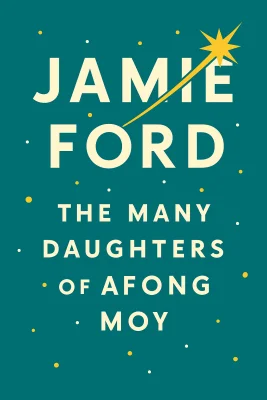
The Many Daughters of Afong Moy
Categories
Fiction, Mental Health, Science Fiction, Audiobook, Historical Fiction, Fantasy, Book Club, Historical, Magical Realism, Literary Fiction
Content Type
Book
Binding
Hardcover
Year
2022
Publisher
Atria Books
Language
English
ISBN13
9781982158217
File Download
PDF | EPUB
The Many Daughters of Afong Moy Plot Summary
Introduction
# Echoes Through Time: The Inheritance of Memory and Pain In a sterile Seattle clinic, Dorothy Moy lies strapped to a treatment table as Dr. Shedhorn prepares to flood her brain with experimental light therapy. The procedure promises to unlock genetic memories buried in her DNA—trauma passed down through generations like a hereditary curse. What Dorothy doesn't know is that she's about to experience the lives of seven women whose pain has been waiting in her blood for over two centuries. The journey begins with Afong Moy in 1834, the first Chinese woman to set foot on American soil, displayed like a circus curiosity in theaters across the country. Her bound feet and tragic fate set in motion a chain of inherited suffering that echoes through time. Each generation carries the genetic memory of those who came before—from Lai King fleeing the burning streets of San Francisco's Chinatown to Greta creating a revolutionary dating app in modern Seattle. As Dorothy's treatment progresses and her present-day crisis with her controlling boyfriend Louis reaches its breaking point, the boundaries between past and present dissolve, revealing how the choices of the dead shape the lives of the living.
Chapter 1: The Awakening: Dorothy's Journey into Inherited Memory
Dorothy stares at her reflection in the ferry window, watching five-year-old Annabel climb dangerously close to the railing in the storm. The moment crystallizes everything wrong with her life. Louis grips her arm too tightly, his mother Louise hovering like a vulture, both of them treating Dorothy's moment of panic as evidence of her unfitness as a mother. The experimental epigenetic therapy begins three days later. Electrodes attached to her temples, Dorothy feels herself slipping away from the sterile clinic room as Dr. Shedhorn activates the LED array. The first memories that surface belong to her mother, Greta, a brilliant programmer who created Syren, a feminist dating app designed to revolutionize online dating in 2014 Seattle. Through Greta's eyes, Dorothy watches success turn to nightmare. The app's algorithm prioritized emotional compatibility over superficial attraction, threatening the male-dominated tech industry. Carter Branson, the company's mysterious angel investor, reveals himself as a predator who has been manipulating events from the shadows. He traps Greta in the Space Needle elevator, forcing a kiss that security cameras capture and leak to the press. The scandal destroys everything. Greta's relationship with Sam, a kind English teacher who had finally made her believe in love, crumbles when he sees the photos. Her company collapses under the weight of manufactured controversy. The session ends with Greta standing on her apartment balcony, pregnant with Dorothy, choosing life over the easier path of surrender. Dorothy gasps back to consciousness in the clinic chair, understanding for the first time that her struggles aren't personal failures but echoes of a pattern stretching back through generations of women who dared to want more than society allowed them to have.
Chapter 2: Ancestral Voices: Lives Lived in Shadow and Flame
The second treatment plunges Dorothy deeper into genetic memory, accessing her great-grandmother Zoe's experiences at Summerhill, the radical English boarding school of 1927. Sixteen-year-old Zoe dives from the highest platform into the swimming pool, her body cutting through water like a blade. The progressive school allows children absolute freedom—no mandatory classes, no arbitrary rules, students governing themselves through democratic meetings. Zoe falls desperately in love with Mrs. Alyce Bidwell, her violin teacher trapped in a loveless marriage. Their relationship exists in stolen moments—conversations in moonlit gardens, hands touching as poetry books are exchanged, the electric tension of unspoken desire. Mrs. Bidwell gives Zoe volumes of Sappho, encoded messages of affection hidden in classical literature. But Augustus Moss, a cruel boy with predatory eyes, discovers their secret. He finds a love letter Zoe wrote and orchestrates an elaborate campaign of psychological torture, using the school's experimental week of fascist government as cover. The democratic meeting takes a dark turn when students vote to embrace fascism for seven days, curious to see where the dangerous experiment leads. Guto mails the letter to Mrs. Bidwell's husband, knowing exactly what will happen. The scandal destroys both women—Mrs. Bidwell is committed to Broadmoor asylum for the criminally insane, and Zoe is left to carry guilt and grief for the rest of her life. The session shows Dorothy how quickly paradise becomes hell when love is weaponized against the lover.
Chapter 3: The Weight of Generations: Patterns of Love and Loss
Dorothy's third session reaches back to 1892, to her ancestor Lai King, a young girl trapped in San Francisco's Chinatown during the bubonic plague quarantine. The SS Australia sits in the bay like a frozen tomb, pumping white vapor into the morning air as enormous rats emerge from its cargo hold along with the bodies of two dead stowaways. Lai King's father volunteers as a translator for the health department, allowing ghost men in white coats to inject him with an experimental vaccine. The needle pierces his arm like a brass fang, and within hours he's burning with fever, his arm swollen to twice its size. For three days, Lai King's mother tends to her delirious husband, placing mirrors around his bed to confuse demons and lighting incense to mask the smell of death. The streets of Chinatown burn as soldiers with bayonets herd survivors toward the waterfront. Lai King's mother pushes her into a ship's boat bound for Canton, staying behind on the dock as flames consume their world. The last image Lai King has is her mother's silhouette waving goodbye, swallowed by the inferno. On the voyage to China, Lai King befriends Alby, a lonely white boy whose guardian also died of plague. Their friendship blooms in the ship's hold, two children finding solace while death stalks the passengers. When Alby falls ill, Lai King makes the choice that echoes through generations—she stays with him, holds him as he dies, choosing love over safety, compassion over self-preservation.
Chapter 4: Storm Rising: When Past and Present Collide
Dorothy's present-day crisis reaches its peak as Typhoon Tenjin bears down on Seattle. Louis and his mother Louise have obtained a court order to stop her treatments, using secretly recorded video of Dorothy's panic on the ferry as evidence of her instability. The video shows Annabel wandering onto the deck in dangerous weather while Dorothy momentarily lost track of her, a moment of human fallibility weaponized against her. The fourth treatment pulls Dorothy into Faye's story, her ancestor who served as a nurse with the Flying Tigers in wartime China. The shark-nosed P-40 fighter plane limps through the sky above Kunming, trailing black smoke. Nurse Faye runs toward the airstrip as the damaged aircraft makes an emergency landing, its fuselage riddled with bullet holes. The young American pilot, John Garland, climbs from the cockpit soaked in blood and petroleum, staggering toward her through exploding ammunition. As bullets whistle through the air, he tries to light a cigarette while covered in flammable oil. Faye dashes forward and blows out the flame just as he collapses in her arms. In the makeshift operating room of the converted monastery, Faye assists Dr. Gentry in removing bullet fragments from John's abdomen. She finds herself holding the pilot's hand during surgery, feeling an inexplicable connection to this stranger who fell from the sky. That evening, she reads Edgar Allan Poe to his unconscious form, choosing "Annabel Lee" as rain patters against windows and war rages in the distance. When John's body convulses in violent seizures, Faye tries to hold him down as blood soaks through his bandages. His stormy blue-gray eyes open one final time, seeming to recognize her, before life drains from his body. Going through his effects, Faye discovers his pocket watch contains a newspaper clipping—a photo of her with "FIND ME" written on the back in her own handwriting, though she has no memory of either.
Chapter 5: Into the Abyss: Seeking Truth in Darkness
With the storm raging and her world collapsing, Dorothy makes a desperate decision. She takes Annabel to safety with her friends Graham and Clarke, then seeks refuge in a Buddhist temple as the typhoon makes landfall. In her desperation, she overdoses on the experimental medication Dr. Shedhorn had given her, hoping to escape permanently into genetic memories rather than face losing her daughter. The overdose nearly kills her but completes the circuit of inherited memory. Dorothy experiences the full story of Afong Moy, the first Chinese woman to arrive in America in 1834. The red velvet curtains part to reveal Afong seated on her gilded throne, tiny bound feet displayed for the gawking crowd at Baltimore's Athenaeum. Three thousand people pay fifty cents each to stare at this living curiosity. Mr. Hannington introduces her with theatrical flourish, spinning lies about Chinese customs while Afong sits motionless, her silver headdress heavy with pearls and kingfisher feathers. She learned not to move after it fell during a Philadelphia show, earning her a beating with a horsewhip. Painted scenery scrolls behind her—mountains, waterfalls, Canton harbor—while jasmine petals fall like snow from the theater's rafters. Backstage, doctors wait with brass instruments and scalpels. They've paid to examine her bound feet, to measure her skull with calipers, debating whether she's Mongolian or Ethiopian. Afong pleads "Ng hou"—no—but they don't understand. They cut through her silk shoes and bandages, exposing feet no man should see, while she breathes ether until the world goes black. Nanchoy Eu Tong, the new interpreter, brings news from home in Cantonese—the first she's heard in two years. Her mother hasn't forgotten, still searching for ways to bring Afong home. But he also brings devastating news: Yao Han, the boy she loved, walked into the flooding Pearl River and drowned, unable to bear her absence.
Chapter 6: Resurrection: Breaking the Chains of Suffering
Dorothy awakens to find a police officer performing CPR, pulling her back from the brink of death. The man who saves her is Sam, the same soul who has been appearing in her genetic memories, the love that has been seeking her across time and generations. The epigenetic therapy has revealed not just inherited trauma but inherited love—the same spirits finding each other again and again, lifetime after lifetime. Sam doesn't consciously recognize her, but something in him responds to Dorothy's presence. He stays with her through the storm, protective and caring in a way Louis never was. When Dorothy mentions her daughter, Sam promises to help, to be there for both of them. It's a vow that echoes across generations, the same promise made by John to Faye, by Mrs. Bidwell to Zoe, by all the lovers who found each other despite impossible odds. The storm passes, and Dorothy emerges from the temple transformed. The treatments have integrated her genetic memories, allowing her to understand that she carries not just trauma but strength, not just loss but the capacity for profound love. She is all of these women and none of them, free to write her own story while honoring the struggles of those who came before. When she reunites with Annabel, Dorothy sees that her daughter's visions have also changed. No longer frightening glimpses of inherited trauma, they've become windows into inherited wisdom. Annabel carries the memories too, but she'll grow up understanding them, integrated and whole in a way previous generations never could be.
Chapter 7: Liberation: A New Song for Future Generations
Years pass, and Dorothy's life transforms completely. She leaves Louis, who fades into irrelevance without his mother's constant manipulation to sustain him. Louise's custody battle collapses when Dorothy demonstrates her stability and growth through continued therapy and her relationship with Sam, who becomes not just her partner but Annabel's beloved stepfather. Dorothy's poetry, informed by her deep understanding of inherited memory and generational trauma, finds its audience. She writes about the women who came before her, giving voice to their stories, ensuring they are remembered not as victims but as survivors who paved the way for her own liberation. Her first collection, titled "Genetic Echoes," wins critical acclaim for its unflinching examination of how trauma travels through bloodlines. Dr. Shedhorn's work evolves too, her experimental therapy becoming recognized treatment for inherited trauma. She chooses to make her discoveries freely available rather than profit from them, understanding that healing should not be a luxury available only to the wealthy. The clinic expands, helping other families break cycles of inherited pain. The final glimpse into the future shows Annabel as an adult, continuing the family tradition of artistic expression while free from the crushing weight of unprocessed trauma. She carries the memories of her ancestors as wisdom rather than wounds, as strength rather than suffering. At an artists' residency, she meets her own destined love, and the pattern continues—transformed from a cycle of loss into one of recognition and reunion.
Summary
The inherited symphony of memories and love reveals itself as more than genetic echoes—it's the story of human resilience, of women who refused to be silenced despite living in times and places that denied their very humanity. Dorothy's journey through the lives of her ancestors shows that trauma may be inherited, but so is strength, and so is the capacity for transformative love. Each woman in the lineage faced impossible choices and made them with courage and grace. Afong Moy endured exploitation with dignity. Lai King chose compassion over safety. Faye found redemption through service. Zoe loved fearlessly despite consequences. Greta fought to change the world through technology. Dorothy learned to integrate their experiences into wisdom, breaking the cycle of inherited suffering while honoring the struggles that made her freedom possible. The novel suggests that we are all more than the sum of our traumas, that love transcends individual lifetimes, and that the courage to heal ourselves can liberate not just our own lives but the lives of generations yet to come. The echoes across time become not warnings of inevitable tragedy, but promises that love endures, that healing is possible, and that every ending contains within it the seeds of a new beginning.
Best Quote
“The most important lesson I can teach you is to never settle for what others want you to be. Find a way to be the person you need to be to truly be happy. Don't give in to convention. Don't make the same mistake I did. Marriage to the wrong person is like stepping in quicksand, you lose yourself, bit by bit, slowly suffocating until your disappear completely.” ― Jamie Ford, The Many Daughters of Afong Moy
Review Summary
Strengths: The review highlights Jamie Ford's talent and gift for storytelling, particularly in exploring complex themes such as inherited trauma and multigenerational experiences. The narrative structure, described as a "box of crayons," suggests a rich diversity in perspectives and settings, enhancing the depth of the story. Weaknesses: The reviewer expresses confusion about the plot, indicating a lack of clarity in understanding the events and their implications. The non-chronological storytelling may contribute to this confusion, as the reviewer struggles to grasp the connections between the characters' experiences. Overall: The reader finds the book interesting yet challenging due to its complex narrative and themes. While the emotional impact of the story is acknowledged, the lack of clarity in the plot may hinder full appreciation. The reviewer seems to recommend the book with reservations, particularly for those interested in themes of trauma and historical narratives.
About Author

Jamie Ford
Ford connects the intricacies of historical narratives with multicultural themes, focusing on Asian-American experiences and the concept of heritage. His purpose extends beyond storytelling; he aims to explore identity and familial connections within the context of broader societal changes. Ford's book, "Hotel on the Corner of Bitter and Sweet," exemplifies his focus on these themes, intertwining them with personal narratives to create compelling historical fiction that resonates with a wide audience.\n\nMoreover, Ford's writing style is characterized by its diversity in genre, ranging from historical fiction to speculative narratives. This eclectic approach allows him to delve into various aspects of the human experience, thereby enriching the reader's understanding of cultural and historical contexts. His contribution to anthologies such as the Apocalypse Triptych and "Stories from Suffragette City" showcases his ability to navigate different literary forms while maintaining a core focus on Asian-American narratives. Therefore, readers interested in exploring rich, culturally infused stories will find Ford's work both enlightening and engaging.\n\nHis work's impact is further solidified by the recognition he has received, including the 2010 Asian/Pacific American Award for Literature. This acknowledgment not only highlights his skill as an author but also underscores the relevance of his themes in contemporary discussions on identity and multiculturalism. Ford's dedication to exploring these complex themes ensures that his bio remains a vital resource for those seeking to understand the nuances of Asian-American history and its ongoing influence on modern storytelling.
Read moreDownload PDF & EPUB
To save this Black List summary for later, download the free PDF and EPUB. You can print it out, or read offline at your convenience.
The Many Daughters of Afong Moy
by Jamie Ford
