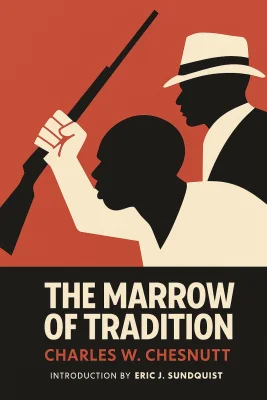
The Marrow of Tradition
Categories
Fiction, Classics, Historical Fiction, Literature, School, African American, Race, College, Read For School, African American Literature
Content Type
Book
Binding
Paperback
Year
1993
Publisher
Penguin Classics
Language
English
ASIN
0140186867
ISBN
0140186867
ISBN13
9780140186864
File Download
PDF | EPUB
The Marrow of Tradition Plot Summary
Introduction
In the suffocating heat of a Southern summer night, old Mrs. Ochiltree lay dying in a pool of her own blood, her cedar chest ransacked, her secrets scattered across the floor like autumn leaves. The murder would ignite Wellington's streets with racial fury, but the true horror lay deeper—in the twisted roots of a family tree that had grown crooked in slavery's shadow. Major Philip Carteret, editor of the Morning Chronicle, stood over his newborn son with dreams of white supremacy dancing in his head. Across town, Dr. William Miller, a skilled black physician, tended to patients who would never be allowed through Carteret's front door. Between them stretched a chasm of hatred and fear that had been decades in the making. Yet neither man knew that their fates were bound by blood as surely as if they were brothers—and that before the next sunset, one man's child would die while another's hung by the thinnest thread of mercy.
Chapter 1: Divided by Blood: The Carterets and Millers
The cry piercing the dawn air belonged to Theodore Felix Carteret, heir to a legacy of Confederate pride and racial hatred. Major Philip Carteret, editor of Wellington's Morning Chronicle, held his newborn son like a precious weapon against the changing South. His wife Olivia had nearly died in childbirth, but their white bloodline would continue—pure, untainted, superior. Old Mammy Jane, the black nurse who had delivered the child, whispered prayers over the baby's head. She had noticed something troubling: a small mole behind the infant's left ear, a mark she believed foretold violent death. But she kept her fears to herself as she watched the major's face glow with paternal pride and political ambition. Across the segregated city, in a grand house that had once belonged to the Carteret family before the war, Dr. William Miller finished his morning rounds at the new hospital he had built for colored patients. Miller was everything the white establishment feared: educated, successful, and unafraid to demand respect. His wife Janet was so light-skinned that strangers often mistook her for white—a resemblance that made Olivia Carteret's blood run cold whenever their paths crossed. The two families moved through Wellington like opposing armies, their children playing in separate worlds divided by invisible but absolute lines. Major Carteret preached white supremacy in his newspaper editorials while Dr. Miller quietly built institutions that proved black capability. Neither man suspected that their hatred was poisoned by a secret that ran deeper than race—a truth buried with Olivia's father, Samuel Merkell, whose will had burned to ashes in his daughter's fireplace years before. As summer settled over the city like a funeral shroud, the stage was set for a reckoning that would expose the rotted foundations of Southern society and test whether mercy could survive in hearts hardened by generations of racial contempt.
Chapter 2: Conspiracy of Power: The Campaign for White Supremacy
In the sweltering backroom of the Morning Chronicle, three white men plotted the destruction of black political power in Wellington. Major Carteret, the aristocratic newspaper editor, sat alongside General Belmont, a silver-tongued politician with Confederate memories, and Captain George McBane, a brutal ex-convict contractor whose single eye gleamed with murderous intent. The sight of black faces in government offices had driven these men to desperate measures. They watched in fury as Negro voters elected their candidates, as colored lawyers won cases in court, as Dr. Miller's hospital rose like a monument to black achievement. The very foundations of white supremacy seemed to crack beneath the weight of black progress. McBane slammed his fist on the desk, his scarred face twisted with rage. He had made his fortune leasing convict labor, working black men to death in turpentine camps and railroad construction. Now that contract was gone, stolen by reformers who called his methods barbaric. Every successful Negro in Wellington was a personal insult to his vision of racial order. General Belmont spoke more softly but with equal venom. He painted pictures of white civilization crumbling before black barbarity, of pure Southern womanhood threatened by dark-skinned beasts. His silver tongue transformed fear into fury, transforming economic anxiety into racial hatred. The general understood that politics was merely war by other means. Carteret provided the intellectual framework for their conspiracy. His newspaper would be the weapon, his editorials the ammunition. They would use the upcoming election to break black political power permanently, employing fraud if necessary, violence if fraud failed. The campaign would be fought on the color line, where white solidarity could overcome numerical disadvantage. As the three conspirators raised their glasses in a toast to white supremacy, none noticed the colored porter Jerry listening outside the door. The wheels of racial warfare had been set in motion, and Wellington would soon discover that hatred, once unleashed, devours everything in its path—including those who think they control it.
Chapter 3: Justice Corrupted: Murder and False Accusation
Mrs. Polly Ochiltree died as she had lived—surrounded by the ghosts of slavery and the weight of buried secrets. The elderly widow lay crumpled on her parlor floor, her skull cracked open, her cedar chest broken and ransacked. In the morning light streaming through lace curtains, her blood looked almost black against the Persian carpet her grandfather had brought from Charleston before the war. The murder sent shockwaves through Wellington's white community. Here was a woman of impeccable bloodline, a guardian of Confederate memory, struck down in her own home. The newspapers screamed about black savagery, about the failure of Reconstruction, about the need for swift and terrible justice. Major Carteret's Chronicle led the charge, transforming a simple robbery into a racial atrocity that demanded vengeance. Sandy Campbell, the faithful servant of old Mr. Delamere, became the scapegoat. Two witnesses claimed to have seen a black man near Mrs. Ochiltree's house on the night of the murder. Sandy's clothes were found muddy and disheveled, and hidden in his room was Mrs. Ochiltree's distinctive silk purse filled with gold coins. The evidence seemed overwhelming, damning, inescapable. But Sandy's protests of innocence fell on deaf ears. He swore he had been drinking with friends miles away, swore that someone had stolen his clothes and worn them to commit the crime. His master, old Mr. Delamere, believed in his servant's honesty with the fierce loyalty of the old plantation system. But belief could not overcome the hunger for black blood that was building in Wellington's streets. The true murderer walked free, his face blackened with burnt cork, his plan executed with diabolic precision. Tom Delamere, the old gentleman's worthless grandson, had needed money to pay gambling debts. He had transformed himself into a grotesque parody of his grandfather's faithful servant, counting on racial prejudice to blind witnesses to the truth. As the mob gathered outside the jail, Tom cleaned the makeup from his face and prepared to watch an innocent man burn for his crimes. Justice in the New South had become a mockery, a ritual of racial sacrifice that fed on black bodies and white fear.
Chapter 4: Buried Truths: Olivia's Discovery of Kinship
The envelope lay in Olivia Carteret's bureau drawer like a coiled serpent, its yellowed edges holding secrets that could shatter her world. She had found it in the ransacked remains of her Aunt Polly's house, clutched it to her breast while her mind reeled with possibilities. Now, alone in her bedroom while her infant son slept, she finally found the courage to break the seal. Her father's will, written in his own careful script, revealed a bequest of ten thousand dollars to "Janet, daughter of Julia Brown." The words struck Olivia like physical blows. This woman—this colored woman who lived across town with Dr. Miller—was her half-sister. The baby she had seen in Janet's arms was her own nephew, carrying Carteret blood in his veins despite his darker skin. But worse revelations awaited. Hidden beneath the will was a marriage certificate, legal and binding, between Samuel Merkell and Julia Brown. The document was dated two years before her father's death, making Janet not just his daughter but his legitimate daughter. Under the law, this meant that half of everything Olivia had inherited rightfully belonged to the woman she had spent her life despising. The truth hit her like a physical assault. She had been raised to believe in the purity of her bloodline, in the sacred nature of racial separation. Now she discovered that her own father had crossed that forbidden line, had loved a woman whose African blood made her untouchable in Southern society. The discovery shattered her sense of identity, her understanding of her place in the racial hierarchy. With trembling hands, Olivia fed the documents into her fireplace and watched them burn. The flames consumed the evidence but could not erase the knowledge that now poisoned her thoughts. She had robbed her own sister of her inheritance, had allowed Janet to grow up nameless and penniless while she lived in luxury built on stolen wealth. The weight of this injustice pressed down on her like a gravestone, but pride and prejudice held her tongue. Some truths, she told herself, were too dangerous to acknowledge, too destructive to reveal.
Chapter 5: The Storm Breaks: Wellington in Flames
At three o'clock on a crystalline October afternoon, Wellington exploded into racial warfare. Armed white men flooded the streets like a plague of locusts, hunting black faces with the methodical efficiency of a military campaign. The conspiracy that had been months in the planning now unfolded with terrible precision, transforming ordinary citizens into a howling mob thirsting for blood. The signal came when Carteret's newspaper reprinted an inflammatory editorial from the black-owned Banner, adding commentary that painted it as an attack on white womanhood. The words were moderate, even cautious, but in the fevered atmosphere of racial tension, they became a declaration of war. White men poured from offices and stores, arming themselves with pistols and rifles, organizing into hunting parties that swept through the colored neighborhoods like death itself. Dr. Miller, returning from a patient call in the countryside, found his city transformed into a battlefield. Bodies of black men lay crumpled at street intersections, killed for the crime of being in the wrong place with the wrong skin color. The doctor's heart hammered against his ribs as he searched desperately for his wife and child, knowing that in this madness, no Negro was safe regardless of education, wealth, or respectability. The violence followed its own terrible logic. Sandy Campbell, the innocent servant, had been released from jail when old Mr. Delamere provided him with an alibi, but this act of justice only fueled the mob's hunger. They had been promised black blood, and they would have it. The hospital that Miller had built, the schools where black children learned to read, the churches where they worshipped—all became targets for white rage. Josh Green, a giant stevedore whose father had been murdered by the Ku Klux Klan, gathered a group of armed black men to make a stand at the hospital. They barricaded themselves inside the brick building, determined to die fighting rather than flee like sheep. As flames licked at the walls and bullets shattered the windows, Green prepared to settle a twenty-year-old debt with Captain McBane, the man who had orphaned him and driven his mother mad with terror. The city burned while its leaders watched in horror, realizing too late that the forces they had unleashed could not be controlled.
Chapter 6: Parallel Tragedies: Lives Lost and Hanging by a Thread
The flames reached toward heaven as Josh Green and his men made their final stand. The hospital that Dr. Miller had built as a monument to black progress became a funeral pyre for dreams of racial equality. Green, massive and fearless, led his companions in a desperate charge through the smoke and gunfire, his bowie knife gleaming in the firelight as he sought the man who had murdered his father. Captain McBane stood waiting in the mob, his single eye fixed on the approaching giant. The two men had been bound by violence for twenty years—the white killer and the black son sworn to vengeance. When they met in the chaos of battle, only one would walk away. Green's blade found its mark, piercing McBane's heart with the precision of justice long delayed, but a dozen bullets tore through the black man's body as he smiled his final smile. Miles away, in the quiet nursery of the Carteret mansion, another tragedy unfolded with agonizing slowness. Little Dodie Carteret gasped for breath, his throat closing as membranous croup threatened to suffocate him. Dr. Price was out of town, Dr. Ashe was treating riot victims, and every other white physician in Wellington was unavailable. The child's life hung by a thread that only one man's skill could strengthen. Major Carteret swallowed his pride and raced through the burning streets to Dr. Miller's house, where he found the black physician kneeling beside his own dead child. A stray bullet from the riot had struck down little Ted Miller as he played in his yard, cutting short a life that had barely begun. The sight of the small body on the white sheet struck Carteret with the force of divine retribution. Miller's refusal to leave his grieving wife was not cruelty but justice. The editor who had unleashed this racial holocaust now faced its consequences in the most personal terms. His child would die just as Miller's had died—a victim of the hatred that white supremacy had sown in Wellington's streets. The doctor spoke with quiet dignity about the wages of sin, about the harvest that follows the sowing of racial hatred. As Carteret stumbled home through the smoke-filled darkness, he carried with him the weight of perfect justice and the certainty of unbearable loss.
Chapter 7: Mercy's Choice: Janet's Decision and the Price of Healing
Olivia Carteret ran through the night like a woman possessed, her silk gown torn by thorns, her aristocratic composure shattered by a mother's desperate love. She had heard her husband's report of Dr. Miller's refusal with the shock of someone watching her child's coffin being nailed shut. Now she fled through Wellington's blood-soaked streets to throw herself at the feet of the sister she had scorned for twenty-five years. The two women faced each other across the body of Miller's dead son—one black, one white, both mothers, both broken by the night's terrible harvest. Janet Miller stood erect in her grief like an avenging goddess, her resemblance to Olivia now a mockery of the kinship that had been denied. The sight of her sister kneeling on the floor, begging for her child's life, should have filled her with triumph. Instead, it brought only bitter ashes. "You are my sister," Olivia gasped through her tears, "the child is your own near kin!" The words that Janet had longed to hear her entire life now came wrapped in blood and desperation, offered not from love but from the fear of loss. The recognition she had craved was poisoned by the circumstances of its giving, tainted by the riots that had killed her son and threatened to claim her nephew. Janet's response came from depths of pain that twenty-five years of rejection had carved in her soul. She spoke of watching her mother die in poverty while Olivia lived in luxury built on stolen inheritance. She spoke of walking the streets as a nameless bastard while her white sister claimed the family honor. The confession of their kinship, the offer of belated recognition, came too late and cost too much. But mercy, when it comes, often arrives through the most unlikely channels. Looking at her sister's broken form, Janet saw not the woman who had scorned her but another mother facing the unthinkable loss of her only child. The nobility that education had cultivated in her, the compassion that suffering had deepened, overcame the bitterness that injustice had bred. "You may have your child's life," she said, "if my husband can save it." Dr. Miller followed Olivia through the night to the Carteret mansion, where young Dodie fought for every breath. The surgery was delicate, dangerous, requiring steady hands and absolute precision. As Miller worked to save the child of his race's greatest enemy, he embodied the highest ideals of his profession and his humanity. The scalpel that opened the boy's throat also cut through decades of racial hatred, creating a space where mercy could take root.
Summary
In the aftermath of Wellington's racial apocalypse, the survivors counted their losses and contemplated the prices that hatred extracts from human souls. Dr. Miller saved Dodie Carteret's life, but could not resurrect his own son or the dreams that had died with him. The hospital lay in ruins, its promise of racial progress reduced to smoking rubble. Major Carteret lived to hold his breathing child, but carried forever the weight of the blood on his hands and the knowledge of his sister-in-law's impossible grace. The conspiracy of white supremacy had succeeded beyond its architects' wildest nightmares, establishing racial control through terror and murder. Yet victory tasted like ashes in the mouths of men who had unleashed forces they could not control. The bonds of kinship, revealed in the crucible of crisis, proved both stronger and more fragile than the barriers of race—capable of inspiring mercy but powerless to heal the deeper wounds that slavery had carved in the American soul. In the end, Wellington's riot became a parable of how hatred consumes not just its targets but those who wield it, leaving behind a poisoned legacy that would haunt generations yet unborn.
Best Quote
“When the pride of intellect and caste is broken; when we grovel in the dust of humiliation; when sickness and sorrow come, and the shadow of death falls upon us, and there is no hope elsewhere,—we turn to God, who sometimes swallows the insult, and answers the appeal.” ― Charles W. Chesnutt, The Marrow of Tradition
Review Summary
Strengths: The review highlights the educational value of "The Marrow of Tradition" by Charles W. Chesnutt, emphasizing its historical accuracy and relevance. It effectively contextualizes the book within the broader narrative of American racial history, particularly the events surrounding the Wilmington Riot of 1898. The review also appreciates the book's ability to capture the spirit and dialect of the era. Overall: The review conveys a positive sentiment towards the book, recommending it as an insightful account of racial tensions in American history. It suggests that the book provides a necessary perspective on events often omitted from traditional historical narratives.
About Author

Charles W. Chesnutt
Chesnutt investigates the intricate dynamics of racial and social identity through his novels and short stories, offering readers a profound exploration of these complex themes. His works delve into the nuanced experiences of African Americans, often challenging prevailing social norms and highlighting the multifaceted nature of identity. By weaving narratives that are both compelling and thought-provoking, Chesnutt positions his writings as critical reflections on society and the persistent issues of race and identity.\n\nHis method of addressing such profound themes involves a blend of storytelling and social commentary. This approach allows readers to engage with the narratives on both an emotional and intellectual level. For instance, Chesnutt's stories often blur the lines between fiction and reality, prompting readers to reconsider their preconceptions about race and identity. This dual-layered technique ensures that his works remain relevant to discussions about racial equity and social justice, making them indispensable for readers interested in these topics.\n\nThe impact of Chesnutt's writings extends beyond mere literary circles; his stories serve as a catalyst for dialogue and reflection among those interested in the intersections of race, identity, and society. By confronting these issues directly, Chesnutt provides invaluable insights that resonate with readers across different backgrounds. His early book contributions continue to be a reference point for scholars and enthusiasts seeking to understand the historical and cultural contexts of racial identity in America. This short bio highlights Chesnutt’s enduring influence as an author who not only depicted the complexities of his time but also paved the way for future discussions on race and identity.
Read moreDownload PDF & EPUB
To save this Black List summary for later, download the free PDF and EPUB. You can print it out, or read offline at your convenience.
The Marrow of Tradition
by Charles W. Chesnutt
