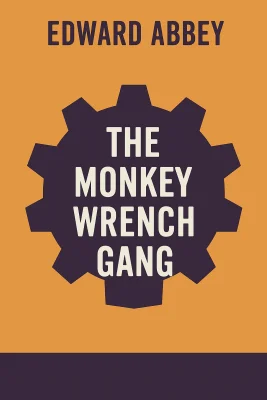
The Monkey Wrench Gang
Categories
Fiction, Politics, Nature, Classics, Literature, Humor, Book Club, Environment, Novels, Adventure
Content Type
Book
Binding
Paperback
Year
2006
Publisher
Harper Perennial Modern Classics
Language
English
ASIN
0061129763
ISBN
0061129763
ISBN13
9780061129766
File Download
PDF | EPUB
The Monkey Wrench Gang Plot Summary
Introduction
# Monkey Wrench Gang: Desert Warriors Against Industrial Conquest The desert air shimmers with heat and diesel fumes as four unlikely conspirators crouch in the shadow of a massive bulldozer, its steel blade still warm from the day's work of carving through ancient sandstone. Dr. Alexander Sarvis adjusts his wire-rimmed glasses, his surgeon's hands steady as he watches George Washington Hayduke wire explosives to the machine's engine block. Beside them, Bonnie Abbzug keeps watch through binoculars while Seldom Seen Smith monitors police frequencies on a crackling radio. They are the Monkey Wrench Gang, and tonight they declare war on the industrial machine devouring the American Southwest. What began as a chance encounter on a Colorado River rafting trip has evolved into systematic sabotage across four states. These desert rebels fight with dynamite and determination against strip mines that decapitate mountains, dams that drown canyons, and highways that slice wilderness into fragments. The FBI has opened files. Rewards have been posted. But in the vast red-rock country of Utah and Arizona, four people with monkey wrenches can bring billion-dollar projects to their knees. The question is not whether they will be caught, but how much damage they can inflict before the machine crushes them.
Chapter 1: Formation of the Unlikely Alliance: Four Rebels Unite
The conspiracy began innocently enough on a river trip through Glen Canyon, where the massive concrete plug of Glen Canyon Dam was slowly drowning one of the most beautiful places on Earth. Dr. Sarvis had hired Seldom Seen Smith as their guide, seeking solace in the wilderness after his wife's death. Smith, a weathered polygamist with three wives scattered across Utah, navigated their raft through red-walled gorges while pointing out landmarks that would soon disappear beneath the rising waters of Lake Powell. Bonnie Abbzug had joined as the doctor's assistant and occasional lover, her sharp Brooklyn accent cutting through the desert silence as she documented the destruction with her camera. The third passenger was George Washington Hayduke, a Vietnam veteran Smith had picked up in Green River. Short, broad, and hairy as a bear, Hayduke carried enough weapons to outfit a small army and enough rage to fuel a revolution. As they drifted deeper into the canyon, the conversation turned to the industrial machinery grinding away on the rim above. Hayduke's jaw tightened as he described strip mines in Appalachia, mountains decapitated for coal, streams running orange with acid. Smith spoke quietly about uranium mines poisoning Navajo workers, roads bulldozed through pristine wilderness to serve corporate greed. Dr. Sarvis catalogued the medical consequences of industrial pollution while Bonnie quoted Edward Abbey and talked revolution. By their final camp at Separation Rapids, something had crystallized between them. The doctor raised his bourbon and proposed a toast to preserving the last remnants of American wilderness. But it was Hayduke who gave their mission its edge, pulling out his Buck knife and drawing blood from each palm as they swore an oath of brotherhood. They would not simply protest or petition. They would act. The Monkey Wrench Gang was born that night under a canopy of desert stars, sealed with whiskey and shared purpose.
Chapter 2: First Strikes Against the Machine: Sabotage Begins
Three months later, the newly formed gang crouched in pre-dawn darkness above Black Mesa, watching Peabody Coal Company's strip-mining operation tear into sacred Navajo land. Dragline excavators the size of office buildings clawed coal from wounds in the earth that stretched for miles, while conveyor belts transported the black gold to loading towers feeding an electric railway. The scale of destruction was breathtaking, but Hayduke had identified the weak point with military precision. The conveyor belt system was unguarded, vulnerable, and essential to the entire operation. Dr. Sarvis had provided materials through his legitimate mining claims—cases of dynamite, blasting caps, timing devices. Smith contributed his knowledge of terrain and escape routes while Bonnie served as lookout and getaway driver. The plan was elegant: place charges at multiple points along the conveyor, timing explosions for maximum disruption while minimizing risk to human life. Hayduke calculated the belt's speed precisely, loading explosives onto the moving conveyor to let it carry charges directly into the loading towers. As first light touched the mesa, he made final preparations while Bonnie sat behind the wheel of Dr. Sarvis's station wagon, engine running. Smith monitored police frequencies as Hayduke gave the signal. The desert erupted in a chain of explosions that sent towers of flame and smoke into the morning sky. The conveyor belt, severed in four places, ground to a halt as millions of dollars in equipment became twisted scrap metal. The signature was unmistakable—this was no random vandalism but carefully orchestrated assault on the industrial machine. They had drawn first blood in their war against the conquest of the American West, and there would be no turning back.
Chapter 3: Escalation and Mastery: From Pranks to Warfare
Success bred ambition as the gang refined their techniques and expanded their targets across the Four Corners region. They cached supplies in hidden locations throughout the canyon country—food, tools, explosives buried in sites marked only in their memories. Each raid grew bolder, each target more significant, as they evolved from amateur vandals into professional saboteurs. Hayduke pushed constantly for escalation, his Vietnam training crying out for bigger explosions and more dramatic destruction. He wanted to burn the machines they disabled, not just cripple them. The others held him back, fearing that violence would turn public opinion against them and bring down federal law enforcement. Their compromise was elegant destruction without bloodshed—timing attacks when work sites were empty, telephoning warnings before explosions, targeting property rather than people. Their masterpiece came at the railroad bridge spanning Kaibito Canyon, where automated coal trains crossed a steel trestle two hundred feet above the desert floor. Working by starlight, they placed charges with military precision on the massive I-beams while Bonnie maintained watch from a nearby ridge. The explosion exceeded even Hayduke's expectations, collapsing the bridge just as an eighty-car coal train reached the center span. The locomotive and its cargo plunged into the canyon in a thunderous avalanche of twisted metal and scattered fuel. The engineer barely escaped with his life, jumping from the cab moments before his engine followed the train into the abyss. The destruction shut down the entire coal transport system for months, proving that a small group of determined saboteurs could challenge the most powerful industrial interests. But their success also marked them as enemies of the state, with federal agents and corporate security forces mobilizing for a manhunt that would span three states.
Chapter 4: The Hunt Intensifies: Bishop Love's Relentless Pursuit
Bishop J. Dudley Love of Blanding, Utah, took the sabotage personally. A pillar of the Mormon community and chairman of the county commission, Love owned mines, businesses, and politicians with equal ease. When eco-terrorists began targeting projects in his territory, he organized the San Juan County Search and Rescue Team into his private army, bringing military-style equipment and unlimited resources to bear on the problem. The first serious confrontation came after the gang destroyed equipment at one of Love's uranium mines. His team tracked Hayduke and Bonnie to a remote canyon where they seemed trapped on a cliff face with armed men closing in from all sides. The situation looked hopeless until Hayduke revealed his most audacious skill—winching his jeep down a hundred-foot cliff face, rappelling through empty air with Bonnie clinging to him in terror while Love's frustrated men searched the empty rim above. The escape became legend, but it marked a turning point in their war. Love now knew he was dealing with professionals, not amateur vandals. He brought in helicopters, sophisticated tracking equipment, and coordination with state and federal agencies. The net was tightening around the Monkey Wrench Gang, and their days of easy victories were ending. Smith felt the pressure most acutely. Unlike the others, he had deep roots in the community, families to protect, and a legitimate business to maintain. His three wives provided alibis and safe houses, but they also gave Love leverage. The bishop made it clear that Smith's continued freedom depended on cooperation, but the river guide's loyalty to his friends ran deeper than fear. The chase intensified when federal agents joined the investigation, flooding the region with roadblocks and surveillance teams. Reward money brought out informants and bounty hunters eager to claim substantial bounties on their heads. The gang was forced underground, communicating through coded messages and dead drops while constantly moving to stay ahead of their pursuers. Each successful sabotage brought increased attention from law enforcement, but also growing support from environmental activists who saw them as folk heroes fighting impossible odds.
Chapter 5: Internal Fractures: Loyalty Tested Under Pressure
The constant pressure began fracturing the group's unity as personality conflicts emerged under stress. Dr. Sarvis found the outlaw life increasingly difficult to reconcile with his medical practice in Albuquerque. Bonnie struggled with the violence inherent in their actions, even as she remained committed to the cause. Smith worried about his families and legitimate business while Hayduke grew more reckless and unpredictable with each mission. Their relationship dynamics shifted as danger brought them closer together. Doc and Bonnie's mentor-student relationship evolved into something deeper, complicated by Hayduke's crude charisma and warrior intensity that attracted her despite better judgment. Smith remained the group's moral center, his quiet wisdom and desert knowledge keeping them grounded even as their actions grew more extreme. The pressure reached a breaking point during a mission to destroy survey equipment for a proposed highway through pristine wilderness. Hayduke wanted maximum destruction regardless of risk. Doc urged caution and careful planning. Bonnie found herself caught between them while Smith tried to maintain group cohesion. Their target was strategically important but heavily guarded, requiring precise coordination that their personal conflicts threatened to derail. The operation began smoothly with warning signs placed to divert traffic while explosives were prepared. But Love's forces had anticipated their move, setting up an elaborate trap that would test not only their skills but their loyalty to each other. When helicopters appeared over the canyon rim and gunfire erupted from concealed positions, each member faced a choice between personal safety and collective survival. The running battle that followed scattered them across miles of rugged terrain, with pursuit teams using military tactics to cut off escape routes. Communication broke down as radio frequencies were jammed and rendezvous points compromised. For the first time since their formation, the Monkey Wrench Gang found themselves fighting not as a coordinated unit but as individuals struggling to survive in a hostile wilderness where every shadow might conceal an enemy.
Chapter 6: The Final Stand: Sacrifice in the Canyon Depths
The trap closed at Lizard Rock, deep in the labyrinthine canyon country known as the Maze. Love's forces had positioned helicopters and ground teams to cut off every escape route, forcing the gang into a deadly game of hide-and-seek among towering stone pinnacles and bottomless canyons. The pursuit had become personal for Love, his business interests forgotten in obsession with capturing the saboteurs who had made him look foolish. Dr. Sarvis made the first sacrifice when Bishop Love suffered a heart attack during the chase. The doctor's Hippocratic oath compelled him to treat his enemy, knowing it meant capture and imprisonment. Bonnie followed him into custody, unwilling to abandon the man she had come to love. Their surrender left Smith and Hayduke alone in the wilderness, hunted by an army of law enforcement officers equipped with military hardware. The two survivors split up to divide their pursuers' attention. Smith, the desert rat who knew every hidden trail and secret spring, headed for his home territory near Green River. Hayduke, the warrior who had never learned to retreat, made his stand at the edge of the Maze, armed with nothing but a rifle and stubborn courage that had carried him through Vietnam's jungles. The final confrontation played out on a narrow peninsula of rock jutting into the canyon depths. Hayduke held off dozens of officers for hours with precise sniper fire, wounding the police helicopter and keeping ground forces at bay with carefully aimed shots that demonstrated his military training. As the sun set over red rock wilderness, he faced the choice that had haunted him since Vietnam—surrender or die fighting. When the shooting stopped, authorities found only blood on the rocks and a shattered rifle. Hayduke's body had fallen into raging floodwaters below, swept away by the same wild forces he had died defending. The desert wind carried the sound of gunfire across the canyons as the eco-warrior made his final decision, choosing to go down with guns blazing rather than submit to capture. Rudolf the Red was dead, or so it seemed to those who witnessed his last stand.
Chapter 7: Legacy and Resurrection: The Spirit Lives On
The trials that followed drew national attention to the remote courthouse in Monticello, Utah, where Dr. Sarvis, Bonnie Abbzug, and Seldom Seen Smith faced felony charges that could have meant decades in prison. But the case was largely circumstantial, built on suspicion rather than hard evidence. Bishop Love, recovering from his heart attack, found his appetite for vengeance tempered by his brush with mortality, delivering crucial testimony without the fire that had once driven his pursuit. The defense painted the defendants as misguided idealists rather than dangerous criminals. Dr. Sarvis's reputation as a respected physician worked in his favor, while Bonnie's youth and intelligence made her sympathetic. Smith's deep roots in the Mormon community helped offset his criminal activities. The first trial ended in a hung jury, and both sides agreed to a plea bargain reflecting the case's complex realities. The sentences were seen as lenient by some, harsh by others, but they reflected growing recognition that environmental destruction was itself a form of violence. Dr. Sarvis agreed to practice medicine in a small Utah community, bringing his skills to an underserved population. Bonnie married him in a ceremony performed by Bishop Love himself, a gesture of reconciliation that surprised everyone. Smith returned to his river guiding business, his reputation enhanced rather than damaged by his outlaw activities. Two years later, on a quiet evening by the Green River, the past returned with the sound of hoofbeats on the dusty lane leading to Dr. Sarvis's houseboat. The doctor was playing poker with his wife, Smith, and their probation officer when mysterious riders appeared out of the darkness. One was tall and masked like an old-west outlaw. The other was stocky and familiar, grinning beneath a battered sombrero—George Washington Hayduke, alive and ready for unfinished business.
Summary
The Monkey Wrench Gang's campaign represented more than simple sabotage—it embodied a fundamental conflict between industrial progress and wilderness preservation that continues to define the American West. Their actions, while illegal and dangerous, grew from genuine love of the land and desperate recognition that conventional politics had failed to protect the natural world from corporate exploitation. Each member brought unique skills and motivations, but they were united by shared vision of a world where wild places could exist without being commodified or destroyed. Their legacy extends far beyond the specific targets they attacked or headlines they generated. They demonstrated that a small group of committed individuals could challenge the most powerful industrial interests, inspiring a generation of environmental activists while revealing the lengths to which the establishment would go to protect its investments. In the end, their greatest victory may have been proving that the machine, for all its power and resources, remains vulnerable to determined resistance from those who refuse to surrender the last wild places on Earth. The desert remembers everything, and their ghost still walks the red cliffs at sunset, reminding us that some things are worth fighting for, even when the fight seems hopeless.
Best Quote
“When the situation is hopeless, there's nothing to worry about.” ― Edward Abbey, The Monkey Wrench Gang
Review Summary
Strengths: The review highlights the book's engaging narrative style, reminiscent of James Crumley's work, with a unique blend of humor and character depth. The setting is vividly depicted, with a map included to enhance the reader's understanding of the geographical context. The book's originality as a manual for modern saboteurs is also noted, providing an intriguing premise. Weaknesses: The review points out a formatting issue with the notes appearing out of sync, which may disrupt the reading experience. Additionally, the book's deviation from traditional noir or crime genres might not appeal to all readers. Overall: The review conveys a generally positive sentiment, appreciating the book's creativity and character development. It suggests the book is a worthwhile read for those interested in unconventional narratives and environmental themes, despite minor formatting issues.
About Author

Edward Abbey
Abbey interrogates the tensions between wilderness preservation and industrial expansion through his vivid and provocative writing. His books explore themes of individual freedom, anarchist thought, and a deep reverence for the natural world, particularly the deserts of the American Southwest. With a background as a park ranger, Abbey's firsthand experiences in areas like the Arches National Monument profoundly influenced his work, especially in the acclaimed "Desert Solitaire". This book, often likened to Thoreau's "Walden", not only captures the beauty of untouched landscapes but also critiques the encroachment of modern civilization on these sacred spaces.\n\nBeyond capturing nature's allure, Abbey's work serves as a rallying cry against the industrial exploitation of public lands. His novels, including "The Monkey Wrench Gang", combine satirical prose with environmental activism, inspiring radical movements like Earth First! Abbey's writing method is characterized by a combination of lyrical descriptions and biting satire, which aims to unsettle readers and provoke environmental consciousness. This unique style has garnered a cult following and established his legacy as a pivotal figure in 20th-century environmental literature.\n\nReaders interested in environmental advocacy, anarchist philosophies, or simply seeking a profound connection to nature will find Abbey's body of work both challenging and enlightening. His contributions extend beyond traditional literary circles, influencing ecological activism and prompting a reevaluation of public land policies. While Abbey did not receive mainstream literary awards, his impact is celebrated within environmental and literary communities, reflecting the lasting significance of his themes and the passionate defense of wild landscapes. This bio captures the essence of Abbey's influence, resonating with those who value both literature and nature conservation.
Read moreDownload PDF & EPUB
To save this Black List summary for later, download the free PDF and EPUB. You can print it out, or read offline at your convenience.
The Monkey Wrench Gang
by Edward Abbey
