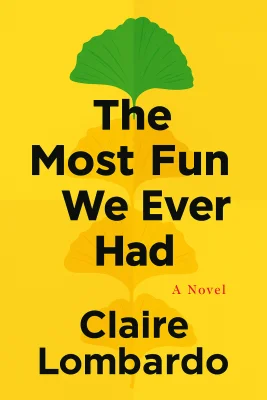
The Most Fun We Ever Had
Categories
Fiction, Audiobook, Romance, Adult, Family, Book Club, Contemporary, Adult Fiction, Literary Fiction, Family Drama
Content Type
Book
Binding
Hardcover
Year
2019
Publisher
Doubleday
Language
English
ASIN
0385544251
ISBN
0385544251
ISBN13
9780385544252
File Download
PDF | EPUB
The Most Fun We Ever Had Plot Summary
Introduction
# The Ginkgo Tree: A Family's Tangled Roots The restaurant was trendy and inconveniently located, forcing Violet to valet her car at two in the afternoon on a Wednesday. She expected another of her sister Wendy's existential crises, but when she arrived at the table, something crystallized in her chest. Sitting across from Wendy was a teenage boy with dark hair flopping over his eyes. The moment Violet saw him, a sharp uterine tug almost made her double over. This was the boy she'd given birth to fifteen years earlier, the child she'd relinquished and tried to forget. The Sorenson family had always been a constellation of secrets held together by David and Marilyn's enduring love. But now the past was colliding with the present in ways none of them could have anticipated. Jonah's return would unravel carefully constructed lives, force buried truths to the surface, and test the bonds that had held this family together for decades. What began as Wendy's impulsive act of genealogical curiosity would become a reckoning that would change them all forever.
Chapter 1: The Unexpected Return: Jonah Enters the Sorenson World
The call came on a Tuesday morning, shattering the careful rhythm of David and Marilyn Sorenson's empty nest. A social worker's voice crackled through the phone, professional yet urgent. There was a boy, fifteen years old, who needed placement. His name was Jonah Bendt, and his DNA told a story that would unravel family secrets buried for over a decade. David's hand trembled as he wrote down the details. After forty years of marriage, Marilyn could read every micro-expression on her husband's face. This wasn't just another case from his volunteer work with troubled youth. Something about this boy connected to them in ways they couldn't yet comprehend. When Jonah arrived at their Fair Oaks Avenue home, he carried himself with the guarded posture of someone who'd learned not to expect much from adults. Tall for his age, with startling blue eyes and an air of practiced indifference, he surveyed the comfortable suburban house with the wariness of a survivor. He'd been through this before—the awkward introductions, the well-meaning attempts at normalcy, the inevitable disappointment. The dinner conversation stumbled along, punctuated by the clink of silverware and the weight of unspoken questions. Jonah answered their inquiries with monosyllabic responses. Yes, he liked school well enough. No, he didn't have any hobbies. Maybe he'd be interested in martial arts—there was a place nearby that taught Krav Maga. The boy's features, his mannerisms, the way he held his head when thinking—it all felt hauntingly familiar. Later that night, David and Marilyn lay in bed staring at the ceiling. Neither spoke the obvious question aloud, but it hung between them like smoke. Somewhere in their family's tangled history lay the answer to why this stranger felt like coming home.
Chapter 2: Buried Secrets: Violet's Hidden Past Surfaces
Violet Sorenson-Lowell had built her life on control and careful planning. Married to Matt, a successful attorney, mother to two young boys, she inhabited a world of private schools and charity galas where image was everything. Her Evanston existence was precisely calibrated—the right clothes, the right friends, the right activities for her children. But Jonah's arrival threatened to shatter the facade she'd spent years constructing. The truth sat like a stone in her chest. Fifteen years ago, she'd made a decision she'd never spoken about to anyone, not even her husband. A pregnancy during her senior year at college, a boy who disappeared when she needed him most, and a choice that seemed logical at the time but had haunted her ever since. She'd gone to Wendy, of all people—wild, unpredictable Wendy who was newly married to her wealthy older husband. Together, they'd concocted an elaborate lie about a year abroad in Paris, complete with forged postcards and carefully orchestrated phone calls to their parents. Violet had hidden in Wendy's Chicago townhouse, growing larger and more terrified with each passing month. The birth had been a blur of pain and deliberate disconnection. Violet refused to look at the baby, couldn't bear to see his face and risk the kind of recognition that might make her change her mind. Wendy was the first to hold him, the one who counted his fingers and toes, who whispered a lullaby version of an old song because it was all she could think of. The adoption was supposed to be clean, final, a closed door that would allow Violet to move forward with her life. Now, watching Jonah interact with her own sons during an awkward dinner, she saw echoes of herself in his serious demeanor, his careful way of observing before speaking. Wyatt, her five-year-old, was immediately smitten with this mysterious older boy. But Violet could barely look at Jonah without feeling the weight of her abandonment crushing down on her. When he innocently mentioned that Santa Claus wasn't real, her reaction was swift and vicious, her carefully maintained composure cracking to reveal the raw fear underneath.
Chapter 3: Fractured Bonds: Sisters Navigate Truth and Betrayal
Wendy's decision to take Jonah in was as impulsive as everything else in her life, but for once, her recklessness served a purpose beyond her own entertainment. She enrolled him in martial arts classes at her health club, bought him a wardrobe that didn't scream foster kid, and stocked her kitchen with teenage necessities. Her River North condo, with its floor-to-ceiling windows and view of Lake Michigan, became an unlikely sanctuary. Jonah had never lived anywhere like this. He had his own bathroom, his own space, and an adult who seemed genuinely interested in his well-being rather than just collecting a monthly check. Wendy was unlike any guardian he'd ever had—she swore freely, drank wine with dinner, and treated him like a person rather than a problem to be managed. But Wendy's demons were never far from the surface. Her drinking increased, her casual encounters with men became more frequent and less discreet. The breaking point came during a conversation on her patio, when Jonah made the mistake of telling Wendy he thought her life was cool—enviable, free from the constraints that bound other adults. His words, meant as a compliment, hit her like a slap. She saw herself through his eyes: a woman who had mistaken self-destruction for liberation. The revelation about Jonah's father came like a physical blow. Wendy ran into Aaron Bhargava in a hospital parking lot—her first love, her high school boyfriend who'd broken her heart by going to college without her. When she got home, she couldn't stop thinking about Aaron's eyes, the particular shade of blue that looked back at her from Jonah's face every morning across the breakfast table. The confrontation with Violet was seventeen years in the making. All the careful politeness between the sisters, all the unspoken resentments and buried jealousies, came pouring out. Violet had slept with Aaron during one of his breakups with Wendy, had carried his child in secret, had let Wendy fall in love with the boy without knowing the truth. The betrayal was so complete that Wendy had to sit on her kitchen floor and laugh at the cosmic cruelty of it all.
Chapter 4: The Falling Sky: David's Collapse and Family Crisis
The heart attack came without warning on a cold January afternoon. David Sorenson, at sixty-eight, had always been the steady center of his family's universe. He was the one who fixed broken things, who offered quiet wisdom, who never raised his voice or lost his temper. He was also the one who climbed ladders to trim trees despite his wife's protests, who ignored the ache in his shoulder for months. Jonah was holding the ladder when it happened. One moment David was cutting branches from the old ginkgo tree, the next he was falling, his face gray with pain, his body crumpling to the frozen ground. The boy who'd spent his life feeling responsible for everything that went wrong watched his grandfather collapse and knew, with terrible certainty, that this was somehow his fault. The ambulance ride blurred with sirens and medical jargon. David's heart had stopped for several minutes before the paramedics revived him. He was alive, but barely, and the family that had just begun to coalesce around Jonah suddenly faced losing its center. Marilyn sat by her husband's bedside, holding his hand and remembering their first night together under that same ginkgo tree forty years ago. She'd been twenty then, sure that love was enough to overcome anything. Now she was sixty, understanding that love was both more fragile and more resilient than she'd ever imagined. The crisis brought the family together in ways that months of careful negotiation hadn't. Violet finally came to the hospital, her perfect composure cracking as she saw her father hooked up to machines. Wendy put aside her anger to coordinate care. Even Liza, the third daughter, flew in from Philadelphia, pregnant and exhausted but determined to be there. Jonah became the one who held them together. He sat with David when the others needed breaks, read to him from medical journals, learned to navigate hospital bureaucracy. When David finally woke up, weak but alive, the first person he asked for was Jonah. The boy who'd caused so much upheaval had become the family's unexpected anchor.
Chapter 5: Slow Healing: Finding Ways Forward Through Pain
Recovery was slower than anyone expected. David came home diminished, his left arm in a cast, his confidence shattered. The man who'd spent his life taking care of others struggled to accept help, to admit he was no longer invincible. Marilyn hovered like a worried bird, and their daughters took turns visiting, each bringing their own particular brand of anxiety. But it was Jonah who became David's unlikely companion during the long days of healing. The boy who'd grown up without a father figure found himself learning to be a grandson, helping with physical therapy exercises, listening to stories about medical school and the early days of David's practice. In return, David taught Jonah to play chess, to appreciate jazz, to understand that strength sometimes meant admitting weakness. The reconciliation between Violet and Wendy came slowly, in fits and starts. They met on neutral ground, in their parents' living room, with Marilyn serving as reluctant referee. The conversation was painful, full of accusations and justifications, but underneath the anger was something that had always been there: love, complicated and conditional, but real. Violet's voice was small when she spoke. "I was twenty-one. I was scared and alone and I made a terrible choice. But I can't undo it, and I can't keep apologizing for it for the rest of my life." Wendy's response cut through the defensiveness. "I'm not asking you to apologize. I'm asking you to acknowledge that your choices had consequences for other people. That Jonah deserved better. That I deserved the truth." The truth was that they were both right and both wrong, that families were built on compromises and forgiveness and the willingness to keep showing up even when showing up was hard. Violet would never be the mother Jonah deserved, but she could try to be the mother he needed now. And Jonah, the catalyst for all this upheaval, was learning that belonging wasn't about being perfect or grateful—it was about being seen, fully and completely, flaws and all.
Chapter 6: New Growth: The Family Learns to Expand and Accept
When spring came, they planted a new tree in the backyard where the ginkgo had stood. A young oak that would take decades to mature, its roots spreading slowly through the same soil that had nurtured the old tree for a century. It was David's idea, a symbol of new growth, of second chances, of the long view that families required. Jonah helped dig the hole, his hands dirty with earth that held forty years of Sorenson family history. The boy who'd arrived as a stranger was learning to call this place home, to trust that these people who shared his DNA might also share his future. Two years later, the family gathered for their traditional Second Thanksgiving, the December celebration that had become their own peculiar tradition. The dining room table was extended to accommodate not just the original family but all the additions and complications that had accumulated over the years. Jonah, now seventeen and college-bound, sat between his half-brothers Wyatt and Eli, helping them cut their turkey and mediating their arguments with the patience of someone who'd learned to value what he had. He'd grown into his face, his features settling into something unmistakably Sorenson despite his complicated origins. Violet watched him with something approaching peace. She would never be his mother in any meaningful sense, but she'd learned to be his family, to show up for school events and birthday dinners, to answer his questions about his father with as much honesty as she could manage. It wasn't the relationship either of them had imagined, but it was real, and that was enough. Wendy had surprised everyone by thriving in her role as the cool aunt. She'd taken Jonah on trips, taught him to drive, been his advocate when family dynamics got too intense. In caring for him, she'd found a purpose that grief had stolen from her, a reason to get up in the morning that had nothing to do with the past. As the evening wound down, Jonah found himself on the back porch with David and Marilyn, looking out at the yard where the old ginkgo stump was slowly being reclaimed by moss and new growth. The oak tree they'd planted was still small, barely taller than Jonah himself, but its roots were spreading, finding their place in the soil.
Summary
The Sorenson family's story reveals the difference between the families we're born into and the families we choose to create. Jonah's arrival forced each of them to confront the gap between who they thought they were and who they actually were, between the stories they told themselves and the truth they'd been avoiding. For Violet, it meant learning that perfection was not only impossible but unnecessary, that love could exist alongside regret. For Wendy, it meant discovering that grief didn't have to be the end of the story, that there were still people to love and reasons to hope. The ginkgo tree that had watched over their family for decades was gone, but its absence had made room for new growth. The oak tree in the backyard would outlive them all, its branches eventually stretching over future generations of Sorensons who would inherit not just the house on Fair Oaks but the complicated legacy of a family that had learned, sometimes painfully, that love was not about perfection but about persistence. In the end, they discovered that the strongest families are not the ones without secrets, but the ones that survive the telling of them, that find ways to weave even the most painful truths into the ongoing story of who they are together.
Best Quote
“The thing that nobody warned you about adulthood was the number of decisions you’d have to make, the number of times you’d have to depend on an unreliable gut to point you in the right direction, the number times you’d still feel like an eight-year-old, waiting for your parents to step in and save you from peril.” ― Claire Lombardo, The Most Fun We Ever Had
About Author

Claire Lombardo
Lombardo reflects on the intricacies of family life, focusing on emotional complexities and social dynamics. Her writing draws from her experiences in social work in Chicago, which enriched her empathetic understanding of character and relationships. She skillfully delves into themes of familial bonds, love, and loss, as seen in her debut book, "The Most Fun We Ever Had", where she crafts a multi-generational narrative set in the Midwest. This novel captures the evolving dynamics among four sisters and their parents, providing readers with a profound reflection on the enduring ties of family.\n\nHer approach is marked by psychological depth and unsentimental realism, making her a unique voice in contemporary fiction. Lombardo's subsequent work, "Same As It Ever Was", continues her exploration of personal and familial tensions. This story centers on Julia Ames, a middle-aged librarian navigating the complexities of suburban life, showcasing Lombardo's ability to build narrative tension through subtle emotional shifts. Her style, often compared to authors like Jonathan Franzen and Anne Tyler, resonates with those interested in the nuances of domestic life and the emotional intricacies of ordinary people.\n\nThe author's stories have not only captured the attention of readers but also earned critical acclaim. "The Most Fun We Ever Had" was longlisted for the Women’s Prize for Fiction, highlighting her skill in crafting narratives that resonate deeply with audiences. Claire Lombardo's work, enriched by her background in both social work and academia, offers readers a rich tapestry of human experience, where the ordinary becomes extraordinary through her lens of empathy and precision.
Read moreDownload PDF & EPUB
To save this Black List summary for later, download the free PDF and EPUB. You can print it out, or read offline at your convenience.
The Most Fun We Ever Had
by Claire Lombardo
