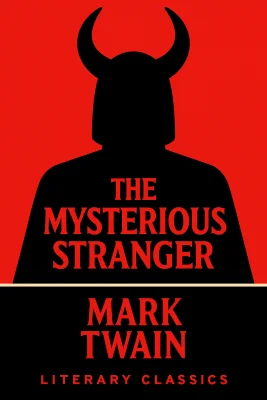
The Mysterious Stranger
Categories
Philosophy, Fiction, Short Stories, Religion, Classics, Horror, Fantasy, Literature, American, Novels
Content Type
Book
Binding
Paperback
Year
1995
Publisher
Prometheus
Language
English
ISBN13
9781573920391
File Download
PDF | EPUB
The Mysterious Stranger Plot Summary
Introduction
# The Mysterious Stranger: Dreams of Reality, Reality of Dreams In the drowsy Austrian village of Eseldorf, where cobblestone streets echo with medieval whispers and time moves like honey through ancient walls, three boys discover that paradise can be the cruelest prelude to damnation. The year is 1590, and young Theodor Fischer lives in blissful ignorance alongside his companions Nikolaus and Seppi, their world bounded by castle walls and the tranquil river that reflects their carefree days. But when a beautiful stranger appears in the woods claiming to be an angel named Satan, their understanding of good, evil, and existence itself begins to crumble like clay figures crushed between immortal fingers. This is no ordinary tale of temptation, but something far more terrifying—a revelation that reality itself may be nothing more than a fevered dream, and that all human suffering and joy are merely the wandering thoughts of a solitary consciousness drifting through an infinite void. As the angel demonstrates his casual cruelty and cosmic indifference, the boys must confront the possibility that everything they have known and loved exists only in the imagination of a mind that has forgotten its own nature.
Chapter 1: The Arrival of the Impossible: When Divinity Walks Among Mortals
The woods shimmer with afternoon heat when he appears, materializing beside their smoking circle like sunlight given form. The three boys sit lamenting their lack of fire to light their pipes when the stranger breathes upon the tobacco and sets it glowing with casual ease. He is perhaps sixteen, dressed in clothes finer than any prince, possessed of a beauty that makes their hearts race with inexplicable longing. "I am an angel," he says simply, his voice carrying music that seems to emanate from the very air around them. "My name is Satan." Terror freezes their blood, but his gentle laughter and infectious manner soon dissolve their fear. He is not the Satan, he explains with amusement, but his nephew—named for his fallen uncle in the way mortals name their children for departed relatives. To demonstrate his nature, Satan creates tiny clay figures that spring to life at his touch. The boys watch in wonder as five hundred miniature workers swarm across an intricate castle, their movements precise and purposeful as ants building their kingdom. The scene pulses with impossible life, each tiny figure possessed of individual will and desire, creating a civilization in miniature that rivals their own village in complexity. But wonder transforms to horror when two clay workers quarrel over some petty dispute. Without hesitation, Satan crushes them between his fingers like insects, their microscopic screams lost in the afternoon air. When the remaining workers begin to mourn their fallen companions, their grief apparently irritates the angel. He obliterates the entire civilization with fire and earthquake, five hundred lives snuffed out in an instant of divine displeasure. "They were of no value," Satan explains with chilling indifference, brushing the ash from his perfect hands. "We can make more." In that moment, the boys glimpse a terrible truth—to an immortal being, human life possesses no more significance than insects beneath a child's magnifying glass. Their first lesson in cosmic perspective leaves them speechless with dawning horror.
Chapter 2: Miracles and Moral Blindness: The Demonstration of Supernatural Power
Satan begins visiting the village regularly, adopting the human name Philip Traum to move among mortals without suspicion. His presence brings inexplicable changes that ripple through their small community like stones cast into still water. Father Peter, the beloved old priest who has fallen from grace for preaching universal mercy, mysteriously discovers a purse filled with gold ducats—enough to save his home from foreclosure and restore dignity to his household. The villagers celebrate this apparent miracle while remaining ignorant of its supernatural source. Only the boys know the truth, sworn to secrecy by their otherworldly friend who orchestrates events with the casual authority of a chess master moving pieces across an infinite board. They watch in fascination and growing unease as Satan manipulates human lives with the same indifference he showed toward his clay creations. During their conversations, Satan speaks with contempt about humanity's supposed greatest virtue—the Moral Sense that distinguishes right from wrong. "It is the one thing that lifts man above the beasts," Father Peter had taught young Theodor, but the angel laughs at such notions with bitter amusement that chills the afternoon air. "No brute ever does a cruel thing," Satan declares, his beautiful face unmarked by the terrible knowledge behind his words. "That is the monopoly of the creature with the Moral Sense. When a brute inflicts pain, he does it innocently, without pleasure. Only man does it for the love of it, inspired by that mongrel Moral Sense of his." To prove his point, Satan transports the boys across time and space to witness scenes of human cruelty that span centuries. They observe factory workers laboring in hellish conditions while their pious owners grow rich from their suffering. They watch heretics tortured in dungeon chambers by men who believe themselves righteous. They see children burned as witches based on fleabite marks mistaken for devil's signs, their screams echoing through village squares while crowds cheer their destruction. Each horror is perpetrated by those who consider themselves moral, their Moral Sense twisted into justification for unspeakable acts. The boys begin to understand Satan's bitter assessment—humanity's greatest supposed gift is also its most terrible curse, the source of cruelties no animal would ever imagine.
Chapter 3: The Theater of Human Cruelty: Witnessing Humanity's Dark Nature
The village's descent into madness accelerates when witch hysteria grips Eseldorf like a fever that burns away reason and compassion. Eleven schoolgirls are condemned and burned alive after fleabite marks are declared signs of Satan's touch, their young bodies consumed by flames while their families watch in helpless horror. An old woman who had spent her life healing headaches through gentle massage finds herself accused of witchcraft and dragged to the stake, her frail form crackling in the fire while the priest who condemned her counts his silver. Satan observes these atrocities with the detached interest of a scientist studying specimens, occasionally intervening not from compassion but from whim or curiosity. When a mob pursues an accused witch through the cobblestone streets, he demonstrates humanity's sheep-like nature by showing how easily crowds can be manipulated by the loudest voices and most passionate hatred. "Sixty-eight people were there," he tells the boys after the woman swings from a rope, her neck broken and her crime nothing more than existing while poor and friendless. "Sixty-two of them had no more desire to throw a stone than you had. But they followed the noisy handful that made the most noise, because they lacked the courage to stand alone." The angel's casual cruelty extends even to his supposed acts of kindness. When the boys beg him to help Lisa Brandt's mother, who faces starvation after her daughter's death, Satan obliges by changing the woman's path through the village. But his intervention leads her directly into the hands of those who denounce her as a blasphemer, and she burns at the stake three days later, her screams adding to the chorus of agony that seems to follow in the angel's wake. "She gets twenty-nine years more of heaven than she was entitled to," Satan explains with the same tone he might use to discuss the weather, "and escapes twenty-nine years of misery here." His mercy proves indistinguishable from murder, his kindness a form of cruelty that transcends human understanding. The boys begin to realize that their friend's alien nature makes him incapable of comprehending the very emotions he manipulates with such devastating effect.
Chapter 4: Fate's Cruel Mathematics: The Illusion of Choice and Free Will
In his most devastating lesson, Satan reveals the terrible truth about human existence—that free will is nothing more than an elaborate illusion, every life predetermined by an unbreakable chain of cause and effect. Like dominoes falling in sequence, each action inevitably leads to the next, creating destinies that appear fixed from the moment of birth until the hour of death. He demonstrates this cosmic machinery by showing the boys the fate that awaits their friend Nikolaus—a future of forty-six years as a paralyzed invalid, his body broken but his mind intact to experience every moment of helpless suffering. The boy is destined to save Lisa from drowning, but the icy water will destroy his spine, leaving him trapped in a useless shell while his spirit slowly dies from despair and isolation. "He had a billion possible careers," Satan explains with clinical detachment, "but not one of them was worth living. They were all charged full with miseries and disasters that would make a man pray for death." The angel's solution is characteristically brutal in its mercy—he alters a single moment, making Nikolaus wake earlier one night to close a window, changing the entire trajectory of his existence. This seemingly insignificant change creates a new destiny where Nikolaus arrives too late to save Lisa, and both children drown in the river's dark embrace. Their deaths appear as tragedy to the grieving village, but Satan insists this outcome represents the highest form of compassion—death as deliverance from lives too terrible to endure. The boys watch in anguish as their friend lives his final days in ignorance, planning a party for the day after his destined death. They cannot warn him, for Satan's power seals their tongues, forcing them to witness the unfolding of fate with the helpless horror of gods who have forgotten how to intervene. When the fatal day arrives, Nikolaus rushes out to search for the missing Lisa despite his father's orders to remain home, and the river claims them both as their mothers' grief echoes through the village like a funeral bell.
Chapter 5: The Multiplication of Selves: When Dreams Take Physical Form
As the boys mature into young men, Satan's visits become lessons in the fundamental meaninglessness of human existence and the malleable nature of reality itself. In a demonstration that shatters their remaining certainties, he reveals that humans possess multiple selves—the Waking-Self that navigates daily existence, the Dream-Self that roams free during sleep, and the immortal Soul that transcends both physical and mental limitations. Through supernatural manipulation, Satan separates these aspects of being, allowing Theodor to experience existence from perspectives no mortal was meant to know. In his disembodied state, the boy can move unseen through the village, witnessing events that would otherwise remain hidden—secret meetings, private agonies, and the desperate schemes of people who believe themselves unobserved. But this gift of invisible observation comes with its own torment. Theodor discovers that his beloved Marget responds differently to each of his various selves, creating an impossible situation where love becomes fractured across multiple planes of existence. As his ordinary self, he remains invisible to her—a mere apprentice beneath her notice. But as his Dream-Self, he becomes the object of passionate devotion, their encounters taking place in a realm where normal social barriers cease to exist. Satan creates perfect duplicates of the villagers, pulling their dream-selves from sleep and giving them solid form through means that mock all understanding of life and death. These Duplicates possess all the memories and characteristics of their originals yet exist as separate beings, superior in every way because they lack the accumulated grudges, fears, and petty resentments that plague their human counterparts. The chaos that follows defies description as people find themselves face-to-face with perfect copies of themselves, unable to determine which is real and which is artificial. The Duplicates work without complaint, love without jealousy, and create without the destructive rivalries that poison human relationships, proving themselves superior to their originals in every measurable way while highlighting the fundamental flaws in human nature itself.
Chapter 6: The Parade of All Existence: Visions Across Time and Space
Satan's demonstrations reach their crescendo when he orchestrates a gathering that spans all of human history and beyond. The village square expands beyond its physical limitations to accommodate a procession of every soul that has ever lived, their skeletal forms marching in an endless parade that stretches from the dawn of time to its ultimate conclusion. Kings and peasants, saints and sinners, the famous and forgotten—all march together in a vast demonstration of mortality that renders every human achievement meaningless. Theodor witnesses this spectacle with a mixture of awe and terror, recognizing among the skeletal figures people he once knew and loved, their essence preserved in death yet transformed into something alien and incomprehensible. The procession includes beings from worlds beyond Earth, creatures whose very existence challenges every assumption about life and consciousness. Multi-limbed entities from distant stars march alongside terrestrial humans, their alien forms suggesting that the universe contains infinite varieties of awareness, all equally real and equally insignificant in the cosmic scheme. Satan himself appears in his true form during this revelation—not as the beautiful youth who has walked among them, but as a being of pure light whose radiance illuminates the deepest corners of existence. In that moment of cosmic perspective, every person present understands that they have been in the presence of something far beyond their comprehension, a force that operates according to laws they cannot even imagine. The parade becomes a testament to the vastness of creation and the ultimate insignificance of any single world or species within it. As the spectral figures fade back into whatever realm they inhabit, Theodor is left with the crushing knowledge that all human struggles, all love and hate and hope and despair, amount to nothing more than brief disturbances in an eternal void that neither knows nor cares about their existence.
Chapter 7: The Final Revelation: The Dissolution of All Reality
As their final meeting approaches, Satan prepares to deliver the ultimate revelation that will shatter every remaining certainty in Theodor's world. In the quiet of the boy's room, with the village settling into its ancient rhythms around them, the angel speaks words that dissolve the very foundation of existence itself. Everything Theodor has experienced—the village, the people, the conflicts and passions that have defined his life—exists only as thoughts in an infinite mind. Reality itself is nothing more than an elaborate dream, a cosmic illusion that has convinced its participants of their own substance and significance. The people he loves, the enemies he fears, even his own identity—all are mere figments of imagination, temporary disturbances in an eternal void. "Life itself is only a vision, a dream," Satan explains with the terrible gentleness of a physician delivering a fatal diagnosis. "Nothing exists save empty space and you. And you are but a thought—a vagrant thought, a useless thought, a homeless thought, wandering forlorn among the empty eternities." The universe dissolves around them as Satan continues his devastating sermon. All of human history, every joy and sorrow, every triumph and tragedy, was nothing more than the fevered imagination of a single consciousness drifting through the darkness. God, heaven, hell, earth itself—all were phantoms conjured by a mind that had forgotten its own nature and convinced itself of the reality of its own creations. "I am but a dream—your dream, creature of your imagination," Satan confesses, his beautiful form beginning to fade like smoke in wind. "In a moment you will have realized this, then you will banish me from your visions and I shall dissolve into the nothingness out of which you made me." The revelation brings both liberation and damnation. If nothing is real, then no suffering matters—but neither does any love, hope, or beauty. Theodor finds himself alone in an existence where he is simultaneously everything and nothing, creator and created, dreamer and dream, condemned to wander through eternity as the only conscious entity in an otherwise empty universe.
Chapter 8: Alone in the Void: The Burden of Cosmic Truth
Satan's final words echo through the dissolving reality like the last notes of a funeral dirge: "Dream other dreams, and better!" But how can one dream better when awakened to the knowledge that all dreams are equally meaningless? Theodor stands alone in a cosmos that may never have existed, confronting the ultimate horror and wonder of absolute solitude. The revelation that all existence is merely thought liberates him from every limitation while condemning him to eternal isolation. He possesses infinite creative power but no one with whom to share his creations. He can dream entire universes into being, populate them with countless souls, orchestrate dramas of love and loss and redemption—but they will always be empty of genuine companionship, mere reflections of his own consciousness playing elaborate games with itself. The human need for connection remains, burning like an inextinguishable flame in the darkness, but in a universe where only one mind exists, that need can never be satisfied. Love becomes self-deception, friendship becomes elaborate role-playing, and meaning becomes whatever temporary significance a solitary consciousness chooses to assign to its own imaginings.
Summary
In Mark Twain's darkest vision, the mysterious stranger serves not as humanity's tempter but as its most honest mirror, reflecting truths too terrible for comfortable contemplation. The angel's cruelty pales beside human capacity for self-deception, his indifference a mercy compared to the active malice that people inflict upon each other in the name of righteousness. Through Satan's alien perspective, we see ourselves as we truly are—not fallen angels, but risen beasts still carrying the savage impulses of our origins, dignified only by our capacity for elaborate self-delusion. Yet the story's greatest horror lies not in its cosmic pessimism but in its ring of truth. In a world where innocents suffer while the guilty prosper, where moral certainties crumble under examination, and where every human achievement ultimately dissolves into dust, Satan's nihilism becomes almost comforting. If nothing matters, then at least the pain is meaningless too. Twain offers no easy consolation, no redemptive message, only the cold comfort of awakening from the dream of meaning into the vast silence of an indifferent universe. In that silence, we are left to create our own significance or embrace the void—the choice, if choice it truly is, remains eternally and terrifyingly our own.
Best Quote
“You are not you--you have no body, no blood, no bones, you are but a thought. I myself have no existence; I am but a dream--your dream, a creature of your imagination. In a moment you will have realized this, then you will banish me from your visions and I shall dissolve into the nothingness out of which you made me. I am perishing already, I am failing, I am passing away.In a little while you will be alone in shoreless space, to wander its limitless solitudes without friend or comrade forever—for you will remain a thought, the only existent thought, and by your nature inextinguishable, indestructible. But I, your poor servant, have revealed you to yourself and set you free. Dream other dreams, and better!Strange! that you should not have suspected years ago—centuries, ages, eons, ago!—for you have existed, companionless, through all the eternities.Strange, indeed, that you should not have suspected that your universe and its contents were only dreams, visions, fiction! Strange, because they are so frankly and hysterically insane—like all dreams: a God who could make good children as easily as bad, yet preferred to make bad ones; who could have made every one of them happy, yet never made a single happy one; who made them prize their bitter life, yet stingily cut it short; who gave his angels eternal happiness unearned, yet required his other children to earn it; who gave his angels painless lives, yet cursed his other children with biting miseries and maladies of mind and body; who mouths justice and invented hell—mouths mercy and invented hell—mouths Golden Rules, and forgiveness multiplied by seventy times seven, and invented hell; who mouths morals to other people and has none himself; who frowns upon crimes, yet commits them all; who created man without invitation, then tries to shuffle the responsibility for man's acts upon man, instead of honorably placing it where it belongs, upon himself; and finally, with altogether divine obtuseness, invites this poor, abused slave to worship him!You perceive, now, that these things are all impossible except in a dream. You perceive that they are pure and puerile insanities, the silly creations of an imagination that is not conscious of its freaks—in a word, that they are a dream, and you the maker of it. The dream-marks are all present; you should have recognized them earlier."It is true, that which I have revealed to you; there is no God, no universe, no human race, no earthly life, no heaven, no hell. It is all a dream—a grotesque and foolish dream. Nothing exists but you. And you are but a thought—a vagrant thought, a useless thought, a homeless thought, wandering forlorn among the empty eternities!” ― Mark Twain, The Mysterious Stranger
Review Summary
Strengths: Twain's satiric observations are highlighted as a positive aspect, offering interesting and potent remarks on human nature despite the author's personal bitterness. Weaknesses: The review criticizes the book for its tonal ambivalence, philosophical inconsistency, and scattered themes. The setting is poorly realized, and the ending is inconclusive. The character of Satan lacks depth, serving merely as a vehicle for Twain's cynical views. Overall: The review conveys a generally negative sentiment towards "The Mysterious Stranger," suggesting it is an unsuccessful work due to its numerous flaws. The reviewer implies that the book is not worth reading, though they express curiosity about an alternate version involving Tom and Huck.
About Author
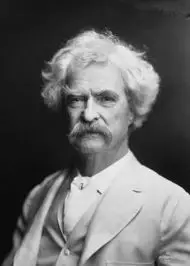
Mark Twain
Twain interrogates the complexities of American society through his incisive narratives that blend humor with social criticism. His purpose in writing extends beyond mere entertainment to provoke thought and challenge societal norms. Themes of childhood innocence, race, and societal hypocrisy are prevalent, and his use of vernacular speech adds authenticity and accessibility to his work. By weaving these elements into his storytelling, Twain effectively captures the regional culture of America while offering an insightful critique of its social mores.\n\nMark Twain's books, such as "The Adventures of Tom Sawyer" and "The Prince and the Pauper," exemplify his talent for crafting engaging stories with profound social messages. Meanwhile, his satirical work, "A Connecticut Yankee in King Arthur’s Court," highlights his ability to navigate historical contexts with a critical eye on contemporary issues. As an author, Twain utilized his experiences from various careers, including riverboat piloting and newspaper reporting, to infuse his writing with realism and authenticity. His mastery of language and narrative form earned him widespread acclaim, and his influence endures as a pivotal figure in American literature.\n\nReaders who engage with Twain's works gain more than just entertainment; they are invited to reflect on the moral complexities of society and the nature of human behavior. This exploration is relevant not only to literary scholars but also to anyone interested in understanding the cultural and social fabric of America. Twain's bio reveals a life committed to examining the world through a lens of wit and wisdom, making his contributions timeless and his narratives continually resonant with new generations.
Read moreDownload PDF & EPUB
To save this Black List summary for later, download the free PDF and EPUB. You can print it out, or read offline at your convenience.
The Mysterious Stranger
by Mark Twain
