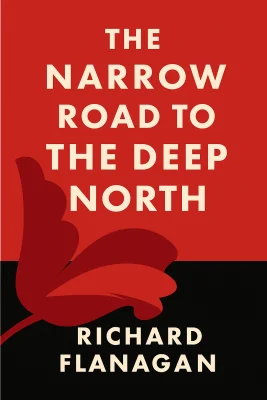
The Narrow Road to the Deep North
Categories
Fiction, Audiobook, Historical Fiction, Literature, Book Club, Historical, World War II, War, Literary Fiction, Australia
Content Type
Book
Binding
Paperback
Year
2013
Publisher
Vintage Australia
Language
English
File Download
PDF | EPUB
The Narrow Road to the Deep North Plot Summary
Introduction
# The Narrow Road to the Deep North: Love and Memory in War's Shadow In a dusty Adelaide bookshop in 1938, dust motes dance through shafts of golden light as two souls collide in a moment that will echo across decades. Dorrigo Evans, a young medical student, encounters Amy—his uncle's wife—and feels the earth shift beneath his feet. Their forbidden love burns bright and brief before war tears them apart, sending Dorrigo into the green hell of the Thai-Burma Death Railway as a prisoner of war. What follows is a story that spans continents and decades, weaving together intimate tragedy with epic horror. As Dorrigo struggles to keep his fellow prisoners alive under the brutal Japanese regime, building an impossible railway through jungle and mountain, the memory of Amy becomes both salvation and torment. Years later, as a celebrated surgeon haunted by survivor's guilt, he discovers that some wounds never heal, and some loves transcend even death itself.
Chapter 1: Stolen Light: The Forbidden Love of Dorrigo and Amy
The bookshop on Rundle Street smelled of dust and forgotten dreams when Dorrigo Evans first saw her. Amy stood in a shaft of afternoon light, particles dancing around her like tiny stars, a red camellia tucked behind her ear. She moved with liquid grace, her beauty composed of small imperfections that somehow created something devastating. She was his Uncle Keith's wife. Forbidden territory. Yet something in that moment felt inevitable as fate itself. "Your eyes," she said simply, studying his face with unsettling directness. "So black." When she asked him to read poetry, he found himself reciting Catullus: "Let us live and love, and not care tuppence for old men who sermonise and disapprove." The words hung between them like a challenge. Their affair began with stolen glances and grew into something that consumed them both. In the King of Cornwall hotel by the sea, they found their sanctuary. The room with its peeling French doors became their universe, where time stopped and the world outside ceased to exist. Amy would trace lines of poetry on his chest while he memorized every curve of her body, every breath she took. He bought her a pearl necklace, a single luminous sphere on a silver chain that reminded him of moonlight on water. She protested the extravagance but wore it always, a secret symbol of their impossible love. Keith Mulvaney suspected nothing, or perhaps chose to see nothing. He was a good man, decent and kind, which only made their betrayal cut deeper. When war came calling, Dorrigo knew their time was ending. He promised Amy he would return, swore that nothing could keep them apart. She gave him a book of poetry, inscribing it with words that would haunt him for decades. As his train pulled away from Adelaide, taking him toward an unknown fate, he watched her figure disappear into the distance, not knowing it would be twenty-five years before he saw her again.
Chapter 2: Into the Green Hell: Capture and the Death Railway
The surrender in Java came with humiliation that cut deeper than any blade. Dorrigo Evans, now a major and medical officer, watched his men lay down their arms to an enemy they had been told to underestimate. The Japanese soldiers were not the bumbling caricatures of Allied propaganda but disciplined warriors who had outfought them at every turn. The journey north began in steel cattle cars without food or water. Five days of suffocating heat, men dying in their own filth, the sweet stench of death mixing with vomit and human waste. Those who survived the transport were loaded onto trucks and driven deep into the Thai jungle, where surveyor's pegs marked an impossible dream: a railway through four hundred kilometers of mountains and green hell. Major Nakamura, their commanding officer, explained through his interpreter that they would redeem their honor by dying for the Emperor. The railway would connect Thailand to Burma using hand tools, rope, and the bodies of slaves. What machinery could not accomplish, human suffering would. Dorrigo found himself thrust into an impossible position as senior medical officer for a thousand Australian prisoners. Each morning brought brutal negotiations with Nakamura over how many men could work and how many were too sick to survive another day on the line. He learned to play cards with the commandant, using charm and cunning to secure extra rations or medical supplies. The jungle itself seemed alive with malevolence. Cholera swept through the camps like wildfire. Tropical ulcers ate men alive from the inside out. The monsoon rains turned everything to mud and misery, while the dry season brought heat that could kill simply by existing. In those early days, before the madness of the Speedo work quotas, there was still hope. The men built their own camp from bamboo and palm leaves, staged concerts and played cards, clinging to rituals of civilization. But Dorrigo could see the future in that line of wooden pegs stretching into the darkness. This was their narrow road to the deep north, and most would never return.
Chapter 3: A Doctor's Burden: Impossible Choices in the Camps
The monsoon came like a green wall of water, and with it the Speedo—the Japanese command's frantic acceleration of work quotas. What had been merely brutal became insane. The prisoners worked day and night shifts, naked in the rain, breaking rock with hammers and chisels, hauling earth in wicker baskets, dying like flies. In his makeshift hospital, little more than a leaking bamboo shelter, Dorrigo Evans performed miracles with rusty knives and stolen supplies. His operating table was bamboo, his anesthesia homemade, his instruments fashioned from scrap metal. Yet somehow, impossibly, he kept saving lives. Jack Rainbow came to him three times, each amputation higher up the leg as gangrene claimed more flesh. The final operation was a desperate gamble, cutting at the hip with nothing but bent spoons to control bleeding. Dorrigo worked by candlelight, his hands steady even as his heart broke, knowing this good man who dreamed of Pall Mall cigarettes would probably die anyway. The cholera compound was a special kind of hell. Men died in hours, their bodies emptying themselves of life in violent spasms. Dorrigo walked among them like a priest among the damned, offering what comfort he could. Some died calling for their mothers. Others simply stared at bamboo ceilings with eyes that had already seen too much. Each death felt like personal failure. Each man he couldn't save haunted his dreams. The mathematics of survival offered no comfort—save one, lose three, watch them all slowly starve. Yet somehow, impossibly, most of his men survived. They called him the Big Fella, looked to him for strength when they had none left. He became their anchor in a world gone mad, even as he felt himself drowning in the weight of their expectations. Every small victory felt like betrayal of those he couldn't save. Every compromise with evil felt like pieces of his soul being carved away with each dawn parade.
Chapter 4: The Breaking of Good Men: Witnessing Brutality and Loss
Darky Gardiner was a wiry Tasmanian wharfie with a gift for finding hope in hopeless situations. He worked as offsider to Tiny Middleton, a magnificent bull of a man whose Christian faith and physical strength had made him the camp's unofficial strongman. Together they drilled holes in the rock face—Darky holding the steel bar, Tiny swinging the sledgehammer with metronomic precision. But the jungle was eating them alive. The magnificent Tiny began to crumble, his strength failing just when the work grew most desperate. One night in the cutting, lit by bamboo torches and dancing shadows, Tiny finally broke. He collapsed sobbing, clawing at his chest and crying "Me! Me!" as though his body had betrayed him. From that moment, roles reversed. Darky took the heavy hammer while Tiny held the bar, whispering "Turn'er, mate" with each blow like a prayer. But something had died in Tiny that night—the belief that his body could save him. Lice swarmed over him, ringworm bloomed on his skin, and his magnificent frame began its inexorable collapse toward death. When Darky's work gang went missing, he was caught in the inevitable punishment parade. Major Nakamura, his mind addled by methamphetamines and the pressure of impossible deadlines, demanded answers about escaped prisoners. Darky, delirious with fever, was dragged from the hospital to face retribution for crimes he hadn't committed. The beating began with slaps and escalated to bamboo poles and pick handles. For hours the punishment continued, methodical and brutal. The guards took turns while three hundred prisoners were forced to watch, forbidden to intervene. Darky's body, already wasted by disease and starvation, absorbed blow after blow until his face swelled beyond recognition. That night, trying to reach the latrine, Darky fell into the communal toilet and drowned in the filth. Jimmy Bigelow volunteered to retrieve the body, lowering himself into the sewage to bring their mate home one last time. As they cleaned the corpse and prepared it for burial, each man knew it could have been him, should have been him, might yet be him.
Chapter 5: Ghosts in Peacetime: The Hollow Victory of Survival
The war ended not with victory but with exhaustion. Atomic bombs fell on distant cities, the Emperor spoke of surrender, and suddenly the guards were gone. The prisoners found themselves free in a jungle that had become their entire world, unsure how to exist without the daily struggle for survival. Dorrigo Evans returned to Australia a hero, though he felt like anything but. The marriage he had left behind waited for him, dutiful and unchanged. Ella had kept faith through long years of silence, building a life around his memory. Now she had to learn to live with the stranger who wore her husband's face. The other survivors scattered across the continent, carrying their ghosts with them. Some thrived, building families and careers on the foundation of their survival. Others crumbled, unable to reconcile the men they had been with the men they had become. Jimmy Bigelow played his bugle at Anzac Day services, each note a memory of friends who would never come home. Dorrigo threw himself into his medical career, becoming a celebrated surgeon and public figure. But success felt hollow, achievement meaningless. He had saved lives and condemned men to death with equal measure, and the mathematics of survival offered no comfort in peacetime. He had affairs, seeking in other women's arms some echo of what he had lost with Amy. Each betrayal of Ella was also a betrayal of himself, yet he could not stop. The nightmares came without warning—the smell of rotting flesh in an operating theater, the sound of rain on bamboo, the weight of impossible choices made in impossible circumstances. They met occasionally at RSL clubs and memorial services, aging men with young eyes that had seen too much. They spoke of Darky Gardiner and Jack Rainbow, of Tiny Middleton and all the others who had died in that green hell. But words felt inadequate, unable to capture the bonds forged in suffering or the guilt of surviving when better men had not.
Chapter 6: Crossing the Bridge: A Final Encounter with the Past
Sydney Harbor sparkled in the afternoon sun as Dorrigo Evans walked across the bridge, seeking solace in movement and solitude. At seventy-seven, he had become Australia's most famous war hero, his face on coins and memorial stamps, his story the subject of documentaries and books. But fame felt like another prison, trapping him in a version of himself he didn't recognize. She appeared in the crowd like a ghost made flesh. Amy, older now but unmistakably herself, walking with two young women who could only be her daughters. For a moment time collapsed, and he was back in that dusty bookshop, seeing her for the first time through dancing motes of light. Twenty-five years had passed since he last saw her. Twenty-five years of believing her dead, killed in the hotel fire that had consumed their sanctuary by the sea. Now she walked toward him in fashionable sunglasses and a dark blue dress, alive and real and impossibly present. His heart hammered against his ribs as they drew closer. Should he call out? Should he stop her? What words could possibly bridge the chasm of years and loss and separate lives? He saw the pearl necklace at her throat, the one he had bought her in their stolen time together, and felt the weight of all their unfinished conversations. They passed each other without a word. He kept walking, paralyzed by the magnitude of the moment, unable to turn back or call her name. By the time he found courage to look over his shoulder, she had vanished into the crowd like smoke dispersing in wind. For Amy, dying of cancer with months to live, the encounter was equally devastating. She had thought him dead for years, only learning of his survival through newspaper articles about his growing fame. She had considered contacting him countless times but always held back, wounded by his apparent abandonment, his failure to seek her out after the war as he had promised. Now she watched him disappear into the crowd and felt the final door close on what might have been. They had loved each other with passion that transcended reason, yet they remained strangers, separated by pride and circumstance and the cruel mathematics of chance.
Chapter 7: Circles of Memory: Love, Loss, and the Weight of Survival
Decades passed like pages turning in a book no one was reading. The survivors of the Death Railway grew old and died, taking their stories with them into silence. Jimmy Bigelow played his last Last Post and was buried with military honors. The jungle reclaimed the railway, vines growing through rusted rails and flowers blooming from mass graves. Dorrigo became a legend in his own lifetime, celebrated for wartime heroism and medical achievements. But fame felt like another prison, trapping him in a version of himself he barely recognized. He gave speeches about courage and sacrifice while feeling like a fraud, a man who had survived when better men had died. The affairs continued, a desperate search for something he could never name or find. Each woman was a ghost of Amy, each encounter a pale echo of what he had lost. Ella endured it all with quiet dignity, loving him in spite of everything, perhaps because of everything. In his final moments, dying in a Sydney hospital after a car crash, Dorrigo's mind returned to that jungle camp and the men who had looked to him for salvation. He saw Darky Gardiner's face in the rain, heard Jimmy Bigelow's bugle calling across the years. The poetry he had memorized as a young man came flooding back, lines about following knowledge like a sinking star beyond the utmost bound of human thought. Amy had died eighteen months earlier, buried with the pearl necklace he had given her so long ago. Neither knew of the other's passing. Their love story had no ending, only an eternal ellipsis, a question mark hanging in the space between what was and what might have been. The railway still runs through the Thai jungle, carrying tourists and freight where once it carried dreams of empire and bones of the dead. But the men who built it are mostly gone now, their stories fading like smoke from funeral pyres, their sacrifice remembered in monuments that can never capture the weight of what they endured.
Summary
The narrow road to the deep north led through jungles of memory and forests of regret, where love and death walked hand in hand through the ruins of empire. Dorrigo Evans had stolen light from the sun and fallen to earth, carrying the weight of impossible choices and ghosts of better men who had died in his place. He had loved completely, even briefly, saved some lives while losing others, carried the stories of the dead forward into a world that preferred to forget. In the end, perhaps that was enough. The railway crumbled back into jungle, but the bonds forged in suffering proved stronger than steel, connecting hearts across decades and continents in an unbroken chain of memory and loss. Love, like poetry, transcends the merely mortal, echoing through time long after the last voice falls silent and the final page is turned. Some wounds never heal, some loves never die, and some roads lead not to destinations but to understanding of what it means to be human in an inhuman world.
Best Quote
“A good book ... leaves you wanting to reread the book. A great book compels you to reread your own soul.” ― Richard Flanagan, The Narrow Road to the Deep North
About Author

Richard Flanagan
Flanagan explores the depths of human experience through historically rich narratives, capturing Tasmania's colonial past and its resonances in contemporary life. His work often draws upon the intricate interplay of personal and collective histories, as seen in novels like "Death of a River Guide" and "Gould's Book of Fish." These books not only illuminate the landscapes and histories of Tasmania but also delve into universal themes of identity and survival. Flanagan's storytelling is marked by a meticulous attention to detail and a dedication to craft, evident in his repeated revisions to achieve narrative excellence.\n\nReaders of Flanagan's work are introduced to a world where the past and present coexist, offering insights into both individual and societal transformations. His approach to fiction, which often includes reimagined historical events and figures, allows for a reflection on personal relationships amid broader conflicts. His acclaimed "The Narrow Road to the Deep North" exemplifies this, blending personal history with the brutal realities of wartime experiences. Beyond fiction, Flanagan's contributions as an author extend to journalism, enriching his bio with diverse insights into both the Australian and global human condition. His writing has been recognized internationally, as demonstrated by awards like the Man Booker Prize, underscoring his impact as a major literary figure.
Read moreDownload PDF & EPUB
To save this Black List summary for later, download the free PDF and EPUB. You can print it out, or read offline at your convenience.
The Narrow Road to the Deep North
by Richard Flanagan
