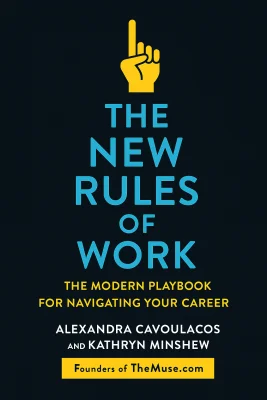
The New Rules of Work
The Modern Playbook for Navigating Your Career
Categories
Business, Nonfiction, Self Help, Education, Productivity, Management, Personal Development
Content Type
Book
Binding
Hardcover
Year
2017
Publisher
Currency
Language
English
ASIN
0451495675
ISBN
0451495675
ISBN13
9780451495679
File Download
PDF | EPUB
The New Rules of Work Plot Summary
Introduction
Career navigation in today's fast-paced work environment requires more than just technical skills or an impressive resume. It demands a deliberate approach to understanding your core values, identifying promising opportunities, and strategically positioning yourself for success. Many professionals find themselves at a crossroads, feeling uncertain about their next steps or struggling to stand out in a competitive landscape. The days of linear career paths have faded into the past. Today's workplace is characterized by constant change, emerging technologies, and evolving expectations. This reality brings both challenges and unprecedented opportunities for those willing to take control of their professional journeys. Throughout the following chapters, you'll discover practical strategies to clarify your career direction, amplify your personal brand, build meaningful connections, and communicate with impact—all essential elements for thriving in today's dynamic work environment.
Chapter 1: Discover Your True Career Values
Understanding your core career values forms the foundation of meaningful professional decisions. Career values aren't simply about salary expectations or job titles—they represent the deeply held principles and priorities that guide your satisfaction and engagement at work. When your career aligns with these values, work becomes more than just employment; it transforms into a source of fulfillment and purpose. Alexandra Cavoulacos, co-founder of The Muse, experienced this values clarification firsthand early in her career. Growing up in France, she was forced to choose an academic direction at fifteen, selecting sciences and eventually specializing in genetics. She moved to the United States for college and declared molecular biology as her major. However, after spending long hours in the lab during her freshman year, Alexandra realized that while she loved learning about genetics, she didn't enjoy the day-to-day laboratory work that would be central to a career in this field. This pivotal moment forced her to question her assumptions and embark on a journey of exploration that eventually led her to consulting, where she met her future business partner. Similarly, Kathryn Minshew, the other co-founder of The Muse, had always dreamed of working in foreign service or becoming a diplomat. Her interest in travel, love of languages, and natural problem-solving abilities seemed perfectly aligned with this career path. Yet a few weeks into what appeared to be a dream position at the US embassy in Cyprus, Kathryn felt her interest waning. The diplomatic work involved making progress in small increments over years, requiring tremendous patience. When colleagues noticed her eagerness to roll up her sleeves and make immediate impact, they suggested she consider a different field where she could see results more quickly. Both founders discovered that what we think we want in our heads can be very different from what we learn through actual lived experience. This realization highlights the importance of identifying what truly motivates you. To discover your own career values, start by reflecting on what provides meaning and purpose in your work. Is it creativity, problem-solving, helping others, leadership opportunities, or perhaps work-life balance? Consider past experiences where you felt most engaged or fulfilled and analyze the common elements. Next, try assigning numerical values to different aspects of work—from mission impact to social interaction, routine preferences, and types of rewards. This exercise helps clarify which values are merely "nice to have" versus those that are absolutely essential for your satisfaction. Remember that values often shift throughout your career as your life circumstances change, so revisit this assessment periodically. With a clearer understanding of your values, you can evaluate potential career paths more effectively. The goal isn't to find the "perfect" job but rather to identify opportunities that align with what matters most to you right now. This alignment creates the foundation for career decisions that will bring genuine satisfaction rather than just checking boxes on a conventional path to success.
Chapter 2: Research and Identify Promising Opportunities
Identifying promising career opportunities in today's landscape requires strategic investigation rather than random searching. The modern workplace offers an expanding menu of roles across industries, with technology creating specialized positions that didn't exist even a decade ago. This explosion of options means that finding the right fit requires a methodical approach to research and exploration. The Muse Method provides a structured framework for navigating this process, beginning with the creation of a "Muse Grid." This tool helps organize your exploration by examining the intersection of functions (what you do) and industries (where you do it). One Muse community member named Chloe used this method when feeling uncertain about her next career move. She began by listing potential functions and industries that interested her, ranging from journalism and public relations to technology and travel. Across the top of her grid, she placed her top three values: flexibility, compensation, and creativity. Through online research and conversations with professionals, Chloe systematically filled in her grid to evaluate how each potential path aligned with her values. She discovered that journalism, while creative, scored low on flexibility and compensation. The tech industry, meanwhile, offered strong compensation and opportunities for creativity. This structured approach helped her see patterns and possibilities she might have otherwise overlooked. The research phase involves two essential tools: online immersion and mining the field. Online immersion means diving deep into company websites, industry publications, and platforms like LinkedIn to gather information about different functions and industries. Chloe used this approach to learn about consultative sales, a field she hadn't previously considered but discovered through a LinkedIn connection with a former classmate. Mining the field takes research a step further through informational interviews with people working in your target areas. These conversations provide insider perspectives on day-to-day realities, company cultures, and career trajectories. Chloe was thrilled to connect with someone working in tech PR, allowing her to explore both fields simultaneously. The key to successful informational interviews is making them easy for the other person—being clear about what you're hoping to learn, respecting their time, and expressing genuine appreciation for their insights. As you conduct your research, pay attention to both the content of the work and the context—company culture, work environment, growth opportunities, and how these elements align with your values. Remember that this process takes time; don't rush through it. Most people need about two months to thoroughly research their options, though those with clearer starting points might complete the process more quickly. The final step is narrowing your options to a manageable number—ideally three paths—that you can pursue more deeply. For Chloe, journalism was easy to eliminate once she saw how poorly it aligned with her values of flexibility and compensation. By identifying the most promising opportunities based on your research and values alignment, you create a focused path forward rather than scattering your energy across too many possibilities.
Chapter 3: Craft Your Personal Brand Story
Your personal brand is the impression you create and the reputation you build in the professional world. In today's interconnected environment, it's no longer optional but essential to consciously shape how you're perceived. Your personal brand tells people who you are, what you stand for, and why they should want to work with you—making it a critical element in career advancement. When Jennifer, a project manager, explored her personal brand, she asked colleagues how they would describe her. Their responses included "super nice," "easygoing," "reliable," "friendly," and "works hard for others." While these were positive traits, Jennifer needed to translate them into professional strengths that would appeal to employers. Rather than describing herself as "affable, agreeable, and gets along well with others," she reframed these qualities as "relationship builder with strong follow-through and motivated to collaborate"—showcasing the same attributes but in language that highlighted their workplace value. Another professional, Zach, received feedback describing him as "smart and occasionally irreverent," "determined and hard-charging," and "passionate and occasionally stubborn." While these traits could be perceived negatively in some contexts, Zach positioned himself as an "ambitious leader and confident go-getter who will go the extra mile to achieve a goal." This reframing maintained authenticity while emphasizing the professional benefits of his personality. Developing your personal brand involves five key steps. First, identify your brand attributes by gathering feedback from colleagues, friends, and mentors about how they perceive you. Look for patterns in their responses and select three to five descriptors that accurately represent you and would appeal to potential employers. Second, craft a branding statement—one or two sentences that capture your professional identity based on these attributes. The third step involves refining your online profiles to reflect this brand statement, particularly on LinkedIn where professional connections are formed. Your LinkedIn summary should showcase your personal brand through one of several effective structures: mission-based, personality-driven, short and sweet, blended, or accomplishments-focused. Whichever approach you choose, ensure it communicates your unique value proposition and incorporates keywords relevant to your target roles. Creating a personal website represents the fourth step in brand building. While often associated with creative professionals, websites benefit anyone seeking to stand out in their field. They provide complete control over how you present yourself and your work, making you more discoverable to recruiters and potential connections. User-friendly platforms like Wix, WordPress, and Squarespace make this accessible even to those without technical skills. Finally, activating your brand means strategically promoting it through content creation, participation in industry conversations, and networking. Join relevant LinkedIn groups, follow industry influencers, consider starting a blog or newsletter, and look for opportunities to help others in your field. This ongoing process of engagement establishes you as a thoughtful contributor and raises your visibility among potential employers and collaborators. Remember that personal branding isn't about creating a polished facade but about authentically communicating your strengths and values in a way that resonates with your target audience. By thoughtfully developing and consistently reinforcing your personal brand, you create a compelling professional identity that opens doors to new opportunities.
Chapter 4: Network Strategically to Open Doors
Strategic networking transforms your career trajectory by creating opportunities that would never appear through traditional job applications alone. In the modern workplace, your network often determines which doors open for you—making relationship-building an essential professional skill rather than an optional activity. Kathryn Minshew experienced the power of strategic networking firsthand during the early days of building The Muse. To establish connections in the tech industry, where she initially knew no one, she attended five or six networking events weekly. Though exhausting, this aggressive approach helped her rapidly build relationships with potential team members, partners, and influencers in the tech, media, and HR spaces. While this level of networking intensity isn't necessary for everyone, her experience demonstrates how deliberate relationship-building can yield tremendous professional returns. Effective networking begins with reframing how you think about the process. Rather than viewing it as a transactional activity where you seek immediate job leads or favors, approach networking as building authentic relationships that develop over time. These connections become valuable through mutual support, shared interests, and genuine engagement—not through desperate attempts to extract value from every interaction. A successful networking strategy requires both preparation and genuine curiosity. Before attending events, prepare an elevator pitch—a concise introduction of yourself, your background, and what you're currently working on or seeking. This preparation helps you articulate your value confidently without rambling. Additionally, set specific goals for each networking opportunity, whether that's meeting three new people from target companies, learning something new in your field, or establishing a meaningful connection that could lead to an informational interview. Starting conversations often causes anxiety, but simple approaches work best. A straightforward introduction followed by an open-ended question about the event, the person's work, or a relevant industry development can launch a productive dialogue. The key is showing genuine interest in the other person rather than immediately steering the conversation toward your own needs. As Alex learned from attending countless networking events, people respond much more positively to those who listen actively than to those focused solely on promoting themselves. Beyond formal networking events, consider diverse relationship-building strategies. Create smaller gatherings with like-minded professionals, participate in online forums and social media discussions, volunteer for industry organizations, or join committees within your company. These varied approaches allow you to build connections in ways that feel authentic to your personality and communication style. Maintaining momentum in networking requires consistent follow-up. After meeting someone, send a friendly email within 48 hours that references your conversation and expresses interest in staying connected. Share relevant articles or resources that might interest them, celebrate their professional accomplishments, and periodically check in without asking for anything in return. This ongoing engagement transforms initial encounters into meaningful professional relationships. Remember that quality matters more than quantity in networking. Focus on building a diverse network that includes people at different levels and in various roles—from peers in similar positions to senior leaders who can provide mentorship and guidance. By approaching networking as a continuous practice of building mutually beneficial relationships rather than a desperate hunt for job leads, you'll create a strong professional community that supports your long-term career growth.
Chapter 5: Communicate with Impact in Any Context
Communication sits at the heart of professional success, regardless of your role or industry. While technical skills may vary in importance across positions, the ability to communicate clearly and effectively remains universally valued. Mastering this fundamental skill helps you collaborate more effectively, resolve conflicts efficiently, and advance your ideas and career with greater ease. Adrian Granzella Larssen, editor in chief at The Muse, learned this lesson early in her career while working at a public relations agency. During client presentations, she noticed that junior team members often struggled to articulate their ideas clearly, causing clients to question the value of their work. Meanwhile, senior consultants with strong communication skills could present the same information in a way that impressed clients and built trust. Adrian realized that communication wasn't just about transmitting information—it was about packaging that information in a way that resonated with the audience and achieved specific objectives. This observation led Adrian to focus on developing her own communication skills. She began analyzing successful presenters, noting how they structured their messages, engaged their audiences, and adapted their communication style to different contexts. By consciously improving these skills, she accelerated her professional advancement, earning promotions faster than peers with similar technical abilities but weaker communication skills. Effective communication begins with understanding four fundamental principles. First, know your purpose—be clear about what you're trying to achieve before speaking or writing. Second, know your audience—tailor your message to the specific preferences, needs, and communication styles of those you're addressing. Third, maintain respect in all interactions, even during disagreements or high-pressure situations. Finally, listen as much as you speak, demonstrating genuine engagement with others' perspectives. These principles apply across all communication contexts, from one-on-one conversations to group meetings and formal presentations. In meetings, preparation creates the foundation for impact. Setting a clear agenda, facilitating focused discussion, and capturing action items ensures productive outcomes. When leading meetings, be prepared to redirect conversations that veer off-topic, acknowledge contributions from quieter participants, and summarize key points and next steps. Public speaking represents another essential communication skill, despite being a common source of anxiety. Preparation again proves crucial—organizing your thoughts in a clear structure, practicing delivery, and simplifying complex ideas into accessible language. Physical techniques like maintaining eye contact, speaking slowly, and using confident body language help project authority even when feeling nervous internally. Email communication presents unique challenges in the digital workplace. With inboxes overflowing, effective emails must be concise, clear about action items, and formatted for easy scanning. Subject lines should clearly indicate content, while message bodies should begin with the most important information. When requesting responses, be explicit about what you need and any relevant deadlines. Choosing the appropriate communication method for each situation also demonstrates professional judgment. In-person conversations work best for sensitive matters, brainstorming sessions, and relationship building. Email suits quick questions, information sharing, and situations requiring documentation. Phone calls help resolve urgent matters, provide extended explanations, or gather candid feedback when immediate dialogue is necessary. By developing versatile communication skills that adapt to different contexts and audiences, you position yourself as someone who can navigate complex workplace dynamics effectively. This reputation for clear, thoughtful communication often becomes a key differentiator as you pursue leadership opportunities and advance in your career.
Chapter 6: Master the Art of Self-Promotion
Self-promotion, when done effectively, transforms from an uncomfortable necessity into a powerful career advancement tool. Many professionals struggle with highlighting their accomplishments, fearing they'll appear arrogant or inauthentic. However, learning to advocate for yourself appropriately is essential for ensuring your contributions are recognized and rewarded in today's workplace. Elliott Bell exemplifies successful self-promotion through the approach he took when reaching out to Kathryn Minshew after seeing her speak at a conference. Rather than simply asking for a job, he crafted a thoughtful message that demonstrated his understanding of The Muse's needs and articulated exactly how his skills could help the company grow. His email opened with genuine appreciation for Kathryn's presentation and the company's mission, then highlighted his relevant experience at Seamless.com and his passion for marketing to the same audiences The Muse was targeting. This approach showcased his value while maintaining authenticity—and ultimately led to his being hired and spending four successful years building the company's marketing team. The key distinction between effective self-promotion and off-putting bragging lies in how you frame your achievements. Instead of simply stating your accomplishments, connect them to the value you've created for others. For example, rather than saying "I'm an amazing salesperson who always exceeds targets," you might say "I've consistently helped our clients find solutions that address their challenges, resulting in exceeding our quarterly goals by 15% last year." This approach shifts the focus from self-aggrandizement to the positive impact of your work. Timing and context also influence how self-promotion is received. Regular performance reviews and one-on-one meetings with your manager provide natural opportunities to discuss your achievements. Before these conversations, prepare by documenting specific accomplishments and their measurable impact. For instance, instead of vaguely mentioning that you improved customer satisfaction, note that "the customer retention initiative I led increased our renewal rate from 72% to 86% over six months, resulting in an additional $250,000 in recurring revenue." Digital platforms offer additional channels for strategic self-promotion. Your LinkedIn profile, professional social media accounts, and personal website can showcase your expertise through sharing thoughtful industry insights, publishing relevant content, and highlighting project results. The key is consistency—regularly updating these platforms with high-quality, valuable information establishes you as a knowledgeable professional without requiring explicit self-praise. Building a network of advocates represents another effective approach to self-promotion. When others speak highly of your work, their endorsements carry more weight than your own statements. Cultivate these relationships by consistently delivering excellent work, supporting colleagues with their projects, and expressing genuine appreciation when others help you. These advocates can provide testimonials for your website, recommend you for opportunities, and speak up about your contributions in meetings where you're not present. Remember that effective self-promotion isn't about exaggerating your achievements or claiming credit for others' work—it's about ensuring your genuine contributions are visible to those who make decisions about your career advancement. By approaching self-promotion with authenticity, focusing on the value you create, and building a network of supporters, you can ensure your work receives the recognition it deserves while maintaining professional relationships and personal integrity.
Chapter 7: Take Charge of Your Professional Development
Professional development has undergone a fundamental shift in recent years. Previously, companies invested heavily in employee growth through structured training programs and clear promotion paths. Today, with shorter job tenures becoming the norm, many organizations have scaled back these investments—placing the responsibility for professional growth squarely on individual employees. This shift requires a proactive approach to developing the skills and experiences that will advance your career. Rick, a member of The Muse community, experienced this firsthand when he realized his career path needed adjustment. Initially pursuing scientific research, he accepted a position with a pharmaceutical research organization while many of his peers headed to medical school. After two years, Rick discovered that he disliked spending his days at a desk and yearned for more hands-on patient interaction. Making a significant pivot, he quit his job, moved back with his parents, and spent a year shadowing doctors, volunteering at a hospital, studying for the MCAT, and applying to medical school. This transition wasn't easy. Rick sometimes felt disheartened watching former classmates advance in their careers while he seemed to be starting over. However, his investment paid off when he eventually became an emergency medicine resident—a role that aligned much better with his values than his research position had. Rick's story illustrates how taking charge of your professional development often requires courage, strategic planning, and sometimes temporary steps backward to enable long-term fulfillment. The first step in directing your own professional growth is identifying the skills you need to acquire. This process involves analyzing job descriptions for positions you aspire to hold, examining the LinkedIn profiles of professionals in those roles, and noting the qualifications and experiences they share. Create a prioritized list of skills to develop, categorizing them based on how soon you'll need them and how long they'll take to acquire. Next, develop a learning strategy tailored to each skill. Options include formal education through traditional universities or specialized programs like General Assembly's coding bootcamps; online courses through platforms like Coursera, Udemy, or LinkedIn Learning; attending industry conferences and workshops; joining professional organizations; or seeking hands-on experience through projects at your current workplace. The key is matching the learning approach to the specific skill and your personal learning style. Beyond skill acquisition, positioning yourself for advancement requires adopting a leadership mindset regardless of your current role. This means thinking beyond your individual responsibilities to consider how your work contributes to broader team and organizational goals. Practical steps include volunteering for challenging projects that stretch your capabilities, proactively solving problems rather than just identifying them, seeking opportunities to lead or mentor others, and building relationships across different departments within your organization. Regular communication with your manager about your career aspirations and progress is essential. Schedule periodic conversations to discuss your development goals, seek feedback on areas for improvement, and ensure alignment between your growth plans and organizational needs. During these discussions, highlight your accomplishments with specific metrics and examples that demonstrate your value to the team and company. When you're ready to pursue advancement—whether through promotion, a raise, or expanded responsibilities—timing your request strategically improves your chances of success. Consider company performance, recent growth or restructuring, and your own track record of achievement when deciding when to initiate the conversation. Prepare a clear case for why you deserve the advancement, focusing on the value you've created and will continue to provide. Taking charge of your professional development isn't just about advancing to the next level—it's about creating a fulfilling career that evolves with your changing interests, skills, and life circumstances. By approaching your development with intentionality and maintaining a commitment to lifelong learning, you position yourself to thrive through the inevitable changes in both your career and the broader workplace.
Summary
Throughout these chapters, we've explored the essential strategies for navigating today's dynamic workplace—from discovering your true values to building meaningful connections and continuously developing your skills. The modern career journey isn't a straight line but rather a series of deliberate choices guided by self-awareness and strategic action. As Kathryn Minshew and Alexandra Cavoulacos emphasize, "Your career is in your hands. You are not a puppet on someone else's string. You have the power, the know-how, and the drive to create the life you want." The single most impactful step you can take today is to schedule time for intentional reflection on your current career trajectory. Set aside one hour this week to assess how your work aligns with your core values, identify one skill you need to develop for future advancement, and draft your personal brand statement. This small investment in yourself initiates the ongoing process of career mastery that will yield returns throughout your professional life. Remember that in today's workplace, those who thrive aren't necessarily the most technically skilled, but rather those who consciously direct their career path with purpose, authenticity, and strategic vision.
Best Quote
“It’s the first sign that you are committed to taking charge of your career and your future. It’s a sign that, like most Musers, you are a go-getter, a participator, a person who wants to be a maker—not simply a bystander, watching the world whiz by. You want work to be a meaningful part of your life. You want to enjoy what you do. You want to feel empowered by your job. You want to make a difference.” ― Kathryn Minshew, The New Rules of Work: The Muse Playbook for Navigating the Modern Workplace
Review Summary
Strengths: The book is detailed and provides a step-by-step guide for finding prestigious and well-paying jobs.\nWeaknesses: The book appears to be targeted towards individuals with higher education and better opportunities, which may alienate those from everyday job backgrounds. The reviewer felt out of their depth and perceived the authors as possibly inexperienced. The review is based on a Blinkist summary, not the full book.\nOverall Sentiment: Critical\nKey Takeaway: The book may be beneficial for those seeking high-status careers but is not suitable for individuals looking for basic jobs to meet financial needs. The reviewer felt disconnected from the book's content and target audience.
About Author

Alexandra Cavoulacos
Cavoulacos reframes the modern professional landscape through a fusion of career development and technological innovation. As a Yale alumna and co-founder of The Muse, her contributions are marked by a commitment to empowering individuals, especially women, in navigating their career paths. Her work emphasizes the intersection of technology with professional growth, providing actionable advice for job searching and networking. In her book, "The New Rules of Work," co-authored with Kathryn Minshew, she offers a playbook for those aiming to thrive in contemporary workplaces. \n\nHer approach is deeply rooted in practicality and accessibility, delivering insights through personal anecdotes and research-based strategies. As a self-taught coder and advocate for increased representation of women in tech, she extends her influence beyond writing. Meanwhile, her advisory roles with initiatives like Hackbright Academy highlight her dedication to fostering diversity in tech fields. This focus on diversity and innovation not only aids individual career development but also enhances workplace environments, benefiting employers and employees alike.\n\nRecognized by Forbes' "30 Under 30" in Media and Business Insider's list of important women in tech, Cavoulacos’s impact is both profound and expansive. Her bio reflects a career filled with strategic leadership and thought-provoking contributions that continue to shape how technology and career advancement intertwine. Her insights are particularly beneficial for those in tech and career development fields, offering tools and frameworks that support both personal and organizational growth.
Read moreDownload PDF & EPUB
To save this Black List summary for later, download the free PDF and EPUB. You can print it out, or read offline at your convenience.
The New Rules of Work
by Alexandra Cavoulacos
