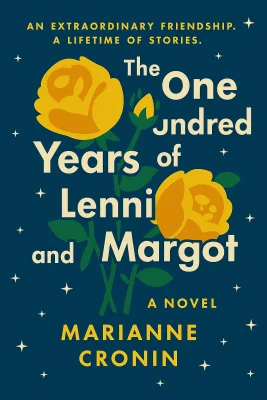
The One Hundred Years of Lenni and Margot
Categories
Fiction, Audiobook, Romance, Young Adult, Adult, Book Club, Contemporary, LGBT, Adult Fiction, Friendship
Content Type
Book
Binding
Paperback
Year
2021
Publisher
Harper Perennial
Language
English
ASIN
0063017504
ISBN
0063017504
ISBN13
9780063017504
File Download
PDF | EPUB
The One Hundred Years of Lenni and Margot Plot Summary
Introduction
In the sterile corridors of Glasgow Princess Royal Hospital, death arrives with clinical precision. But seventeen-year-old Lenni Pettersson refuses to accept the terminal diagnosis that confines her to the May Ward. When she discovers the hospital's new art therapy room, she meets Margot Macrae, an eighty-three-year-old woman facing her own mortality. Together, they embark on an extraordinary project: painting one hundred canvases to capture their combined century of life. What begins as an escape from hospital routine transforms into something far more profound. Through brushstrokes and shared stories, Lenni and Margot weave together their disparate lives—the Swedish teenager who never had time to grow up, and the Scottish woman who has loved and lost across decades of war, passion, and heartbreak. Their friendship becomes a rebellion against time itself, proving that even in the shadow of death, life can blaze with unexpected color and meaning.
Chapter 1: Sanctuary in Sterility: A Terminal Teen Finds Her Voice
The word "terminal" makes Lenni think of airports—bright check-in areas where travelers clutch boarding passes to distant destinations. She imagines herself floating across polished floors, wheeling a suitcase toward departure gates that promise adventure. But her terminal is different. It's the May Ward, where teenagers arrive but rarely leave. Lenni has mastered the art of hospital rebellion. When nurses try to contain her with gentle words about "life-limiting conditions," she slips away to explore forbidden corridors. Her first target is the hospital chapel, where she encounters Father Arthur, a lonely priest whose congregation consists mainly of empty pews. Their theological debates become a daily ritual—Lenni questioning everything from God's existence to the meaning of suffering, while Arthur struggles to provide answers that won't crumble under her fierce intelligence. The chapel becomes her sanctuary from the clinical sterility of the ward. Here, she can challenge authority without being sedated, can laugh without being patronized. Arthur, despite his clerical collar, proves to be refreshingly human. He admits his doubts, shares his loneliness, and treats her not as a dying child but as an equal adversary in their philosophical sparring matches. When Arthur mentions his retirement, Lenni feels the walls closing in again. Another connection severed, another source of meaning removed. But before she can fully process this loss, a chance encounter in the hospital corridors changes everything. A nervous young woman crashes into her—an art therapy coordinator who has just lost her job but gained something else: the determination to create beauty in the darkest places.
Chapter 2: The Century Project: Two Lives, One Hundred Years
The Rose Room sparkles with possibility. Floor-to-ceiling windows flood the space with natural light, while shelves overflow with paints, brushes, and blank canvases. Pippa, the displaced art coordinator, has transformed two storage rooms into a haven where patients can escape their diagnoses and become artists. But when Lenni attends her first official class, she discovers a cruel truth: her teenage peers see her as a curiosity, a living reminder of mortality they'd rather ignore. The shiny-haired girls and broken-boned boys cluster together, sharing inside jokes and Netflix spoilers while Lenni sits alone, her urgent need for connection met with polite indifference. They have time—endless, assumable time—while she burns with the desperation of someone counting days instead of years. The gulf between their experiences feels unbridgeable until Pippa, recognizing the mismatch, suggests something unprecedented: moving Lenni to the senior citizen art class. Among the octogenarians, Lenni finds her tribe. These weathered artists have lived full lives but face the same uncertain future. They don't coddle her or whisper in hushed, pitying tones. Instead, they treat her with the matter-of-fact acceptance of fellow travelers approaching the same destination from different directions. It's here she encounters Margot Macrae, a sharp-eyed woman in purple whose paintings capture memories with startling precision. When Margot sketches a baby's face with such tender accuracy that tears gather in her eyes, Lenni feels something click into place. Here is someone who understands loss, who has lived enough to know that pain and beauty often wear the same face. Their first conversation sparks an idea that will consume their remaining days: together, they are one hundred years old. Why not paint one hundred pictures, one for each year they've collectively survived?
Chapter 3: Stories Painted in Time: Exchanging Memories and Truths
The project begins with Lenni's chaotic family breakfast table in Sweden, where her mother's midnight cooking sessions created elaborate spreads that nobody wanted to eat. Through watercolors and oils, she captures the desperation in her father's eyes as he navigated her mother's depression, the careful way he chose food from the untouched feast to set an example for his daughter. Each brushstroke carries the weight of a family slowly fragmenting under the pressure of mental illness. Margot responds with scenes from wartime Glasgow—her least favorite grandmother urinating in an Anderson shelter while air raid sirens wailed overhead, the mortifying intimacy of shared terror during the Blitz. Her paintings reveal a young woman shaped by loss and duty, married too young to a man who fled when their baby died of a heart defect at six months old. The canvases accumulate like artifacts from parallel universes. Lenni paints her first kiss in a moonlit science classroom, all awkward fumbling and wet lips that tasted of disappointment. Margot creates delicate portraits of Meena, the wild blonde activist who taught her to paint flowers on her face and liberate laboratory animals in the dead of night. Through art, they excavate buried selves: the girl who named her beanbag pig Benni, the woman who lived secretly in love with her radical flatmate for seven transformative years. Each painting session becomes an act of archaeological excavation. Margot's careful brushwork reveals the stargazing astronomer who taught her that love could be as infinite as the universe itself, while Lenni's bold strokes capture the day her father kept his promise to disappear from her bedside, leaving only a photograph and a note written in green highlighter: "I will love you forever, pickle." The stories bleed into each other across decades and continents, creating a tapestry of human experience that transcends their individual mortality. They are no longer just a dying teenager and an elderly woman killing time—they are custodians of a century's worth of love, loss, and stubborn hope.
Chapter 4: Found Family: Creating Connection in the Face of Mortality
As their canvas collection grows, so does their circle of unlikely allies. Father Arthur, newly retired and desperately lonely, finds purpose in their project. He visits daily, sharing tales of the silverfish he protects in his bathroom and the empty chapel he once tended. His friendship with Lenni, built on mutual irreverence and theological sparring, provides both of them with something neither expected: a grandfather-granddaughter bond forged in honesty rather than obligation. New Nurse, with her cherry-red hair and cupcake socks, becomes Lenni's fiercest advocate. She sneaks extra art supplies into the ward, challenges the head nurse's bureaucratic cruelties, and sits on Lenni's bed sharing raisins and dreams of traveling to Russia. Her youth and inexperience make her brave in ways the veteran staff cannot afford to be—she still believes in miracles, still fights for her patients' dignity when others have learned to accept the inevitable. Even Walter and Else, the geriatric gardener and the mysterious woman with the monogrammed dressing gown, become part of their extended family. Their courtship unfolds in the Rose Room through shared paintbrushes and stolen glances, proving that love can bloom even in the sterile soil of hospital routine. When Walter gives Else a single white rose tied with a black ribbon, Lenni and Margot exchange knowing looks—they are not the only ones creating beauty in the face of ending. The project transforms from personal catharsis into community celebration. Pippa arranges their paintings on the walls like a gallery exhibition, creating a visual timeline that spans from Lenni's birth in Sweden to Margot's recent arrival at the hospital. Visitors to the Rose Room find themselves drawn into the story, studying canvases that capture everything from first communions to final goodbyes, from wartime shelters to midnight stargazing sessions. This makeshift family provides what neither Lenni nor Margot could find in their biological relationships: unconditional acceptance and the freedom to be completely themselves in whatever time remains.
Chapter 5: Final Brushstrokes: Racing Against Fading Light
The paintings reveal truths that words cannot capture. Lenni's deterioration becomes visible in the tremor of her brushstrokes, the way her once-bold colors fade to tentative whispers. Her latest self-portrait shows hollow eyes and sharp cheekbones, the face of someone being gradually erased by her own body's rebellion. Yet her spirit remains defiant, pouring itself onto canvas with desperate intensity. Margot, meanwhile, finds her artistic voice growing stronger as her physical strength wanes. Her paintings of Vietnam glow with tropical heat and emotional honesty—she and Meena finally confessing their love in a Ho Chi Minh City apartment while Jeremy, now a young man, watches his mother rediscover happiness after decades of separation. These late works pulse with the wisdom of someone who has learned that love delayed is not love denied. The hospital becomes their universe in miniature. They escape at night to view stars from the parking lot, Margot sharing astronomical knowledge inherited from her beloved Humphrey while Lenni marvels at light that has traveled millions of miles to reach them. Both understand they are seeing illumination from sources that may no longer exist—a metaphor too perfect to ignore. When Lenni's breathing begins to fail, when machines multiply around her bed like mechanical vultures, she continues painting. Her final canvases abandon representation entirely, becoming pure expressions of color and motion. Orange explosions that taste of fever dreams. Purple swirls that echo the octopus friend who visited her during surgery. Abstract compositions that capture the ineffable experience of consciousness preparing to depart its failing vessel. Margot watches helplessly as her young partner races against time itself, determined to complete their century project before her body surrenders. Each painting becomes both celebration and goodbye, proof that their brief friendship has transformed both women in ways that will outlast their physical presence in the world.
Chapter 6: Legacy in Color: The Exhibition of a Shared Life
Their hundredth painting is a masterpiece of collaboration. Margot sketches their two figures standing beneath a star-filled sky, then guides Lenni's weakening hand to add color and light. The result captures something essential about their friendship—the way they found each other across the vast distances of age and experience, creating illumination in the darkness of their shared mortality. The Rose Room transforms into an impromptu gallery as their complete century unfolds across every available wall. Visitors find themselves walking through a visual autobiography that spans from 1930s Glasgow to present-day Sweden, from wartime blackouts to midnight hospital escapes. The paintings tell two complete stories while weaving them into a single narrative about the human capacity for connection and creativity in the face of ending. Father Arthur organizes a celebration for their achievement, smuggling in a LED candle that flickers like real flame on their commemorative cake. New Nurse arranges chairs in a circle while Walter and Else provide flowers from the hospital gift shop. Even Jacky, the stern head nurse who once denied Lenni access to the chapel, softens enough to allow the gathering in the ward after hours. The party becomes both birthday celebration and wake—a recognition that their shared century has reached its completion. They have created something that will outlast both of their bodies: proof that two very different lives can intersect to create meaning greater than either could achieve alone. The paintings will go to a city gallery, Pippa announces, where visitors can walk through their hundred years and understand something essential about the courage required to love in the shadow of loss. As they cut the cake by candlelight, surrounded by their makeshift family and their visual legacy, both women understand they have achieved something extraordinary. They have refused to let terminal diagnoses define them, instead choosing to paint their own story on their own terms, in colors bright enough to be seen long after they are gone.
Chapter 7: Beyond the Canvas: Margot's Journey Continues
Lenni's final hours arrive with the gentleness of falling snow. No alarms, no dramatic interventions—just the gradual dimming of her fierce light while Arthur holds one hand and Margot the other. Her last words are questions about heaven, about whether she'll find peace in whatever comes next. Arthur, abandoning theological complexity, promises her that God will welcome rebels with open arms. His final gift to her is permission to "give 'em hell" in the afterlife. After Lenni's death, Margot faces her own mortality with new courage. The paintings surround her like guardian spirits, each canvas a reminder that love creates its own form of immortality. She writes the end of their story in a notebook Lenni left behind, documenting every brushstroke and shared memory for future generations to discover. The act of completion becomes its own form of prayer. The gallery exhibition opens to crowds who walk reverently through their century of experience. Strangers find themselves moved to tears by paintings they don't fully understand but somehow recognize—the universal language of loss transformed into beauty. The Rose Room receives donations that ensure future patients will have access to art supplies and quiet spaces where they too can refuse to let illness define their final chapters. Most remarkably, Margot discovers that her own story isn't finished. A letter arrives from Vietnam, from Meena, now in her eighties but still wild enough to propose marriage by international mail. The prospect of one final adventure—flying across the world to say yes to a love that has survived decades of separation—gives Margot reason to fight for whatever time remains.
Summary
*Immortal Canvas* reveals how art can transform the clinical brutality of terminal illness into something transcendent. Through their unlikely friendship, Lenni and Margot prove that connection knows no boundaries of age or circumstance—that two people facing death can choose to celebrate life instead of surrendering to despair. Their hundred paintings become both memorial and manifesto, declaring that love creates its own form of eternity. The novel's deeper magic lies in its understanding that stories never truly end—they simply find new vessels to carry them forward. Lenni's rebellious spirit lives on in the teenagers who discover the Rose Room after her death, while Margot's journey toward final love reminds us that it's never too late to choose courage over comfort. Their painted century stands as testament to the human refusal to be diminished by mortality, proof that even the dying can create works of staggering beauty when they paint with the urgency of those who know that every brushstroke might be their last.
Best Quote
“Somewhere, out in the world, are the people who touched us, or loved us, or ran from us. In that way we will live on. If you go to the places we have been, you might meet someone who passed us once in a corridor but forgot us before we were even gone. We are in the back of hundreds of people's photographs - moving, talking, blurring into the background of a picture two strangers have framed on their living room mantelpiece. And in that way, we will live on too. But it isn't enough. It isn't enough to have been a particle in the great extant of existence. I want, we want, more. We want for people to know us, to know our story, to know who we are and who we will be. And after we've gone, to know who we were.” ― Marianne Cronin, The One Hundred Years of Lenni and Margot
Review Summary
Strengths: The review highlights the emotional depth and life-affirming nature of "The One Hundred Years of Lenni and Margot," emphasizing the poignant friendship between the two protagonists. The narrative's ability to blend Lenni's youthful perspective with Margot's rich life experiences is praised, as well as the character development, particularly Lenni's maturity and her interactions with Father Arthur. Weaknesses: The review does not explicitly mention weaknesses, but the ending of the review suggests some disappointment as the book did not fully meet the reader's expectations regarding the intergenerational friendship. Overall: The reader expresses a strong emotional connection to the story, appreciating its celebration of life and human connections despite its bittersweet nature. The book is recommended for its touching portrayal of friendship and life's fleeting moments.
About Author

Marianne Cronin
Cronin reframes the complexities of human relationships through narratives that delve into intergenerational friendship, love, and loss. Her writing purpose centers on creating emotionally resonant stories that foster empathy and connection. In her debut book, "The One Hundred Years of Lenni and Margot", Cronin explores these themes by following the lives of two characters whose friendship transcends age barriers. This novel, notable for its warm and relatable characters, was published in 30 languages and is currently being adapted into a feature film by a major Hollywood studio. The impact of her storytelling is underscored by its critical acclaim, earning accolades such as the Alex Award and inclusion in the Richard & Judy Book Club list.\n\nBeyond her literary pursuits, Cronin's methods are enriched by her background in academia and improv comedy, which contribute to her ability to craft authentic dialogues and characters. Her second novel, "Eddie Winston is Looking for Love", scheduled for release in 2024, promises to continue this exploration of human connections and the pursuit of happiness. Marianne's work captivates readers who seek stories that blend poignancy with humor, offering a reprieve from everyday life through the lens of relatable, lovable characters. This bio encapsulates her ability to engage a diverse audience, making her a significant voice in contemporary fiction.
Read moreDownload PDF & EPUB
To save this Black List summary for later, download the free PDF and EPUB. You can print it out, or read offline at your convenience.
The One Hundred Years of Lenni and Margot
by Marianne Cronin
