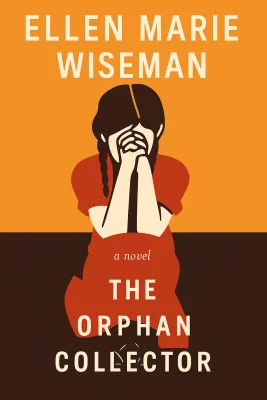
The Orphan Collector
Categories
Fiction, Audiobook, Mystery, Historical Fiction, Adult, Family, Book Club, Historical, Coming Of Age, Adult Fiction
Content Type
Book
Binding
Paperback
Year
2020
Publisher
Kensington Publishing Corp.
Language
English
ISBN13
9781496715869
File Download
PDF | EPUB
The Orphan Collector Plot Summary
Introduction
# Echoes of the Missing: A Tale of Pandemic Loss and Redemption Philadelphia, September 1918. The Liberty Loan parade stretched through the city like a river of patriotic fervor, two hundred thousand souls pressed together in celebration. Among them, thirteen-year-old Pia Lange felt something wrong in the air—a heaviness that made her skin crawl when strangers brushed against her. She had always been different, sensing illness through touch, feeling pain that wasn't her own. But nothing had prepared her for what was coming. Within days, the Spanish flu would transform the city into a charnel house, and Pia would face an impossible choice that would haunt her forever. Her mother lay dying, her twin brothers needed care, and she was just a child herself. What followed was a desperate gamble that would separate a family and set in motion a chain of events testing the very limits of love, guilt, and redemption. In the shadow of pandemic death, two women's paths would intertwine—one a sister searching for her lost brothers, the other a grieving mother who had stolen them to fill the void in her own shattered heart.
Chapter 1: The Liberty Parade: When Death Walked Philadelphia's Streets
The crowd surged around Pia like a living thing, pressing her against strangers whose touch sent sharp pains through her chest. She begged her mother not to bring her to the parade, but Mutti insisted they needed to prove their loyalty as German-Americans. The war had made them targets, and staying home would only fuel suspicion. As bands played and soldiers marched, Pia felt the familiar dread that came with large gatherings. But this was different—heavier, more menacing. When a man in a straw hat bumped into her, agony stabbed through her ribs. A small girl grabbed her hand, and Pia's lungs seemed to rattle. Each contact brought new pain, new wrongness that she couldn't explain. Her mother pushed the twins' pram through the celebrating masses, oblivious to the invisible threat spreading through breath and touch. Ollie and Max, barely eighteen months old, slept peacefully beneath their blankets while death danced around them. Pia tried to shield herself, to avoid the reaching hands and jostling bodies, but in a crowd of two hundred thousand, there was nowhere to hide. Three days later, the first bodies appeared on doorsteps. Within a week, every hospital bed in Philadelphia was full. The Spanish influenza had arrived, and the city began its descent into hell. Pia watched from her window as neighbors wrapped their dead in sheets, as horse-drawn wagons collected corpses like garbage. The pain she had felt at the parade now made terrible sense—she had been touching the dying, feeling their sickness before they even knew they carried it.
Chapter 2: The Desperate Choice: Pia's Impossible Decision in the Cubby
Mutti fell ill on a Tuesday, complaining of dizziness and fatigue. By Wednesday evening, she was burning with fever. Pia tried everything—onion syrup, whiskey, the sugar cubes soaked in kerosene that Mrs. Schmidt had recommended. Nothing worked. Her mother's breathing grew labored, her skin hot and clammy. The twins cried constantly, sensing something wrong but too young to understand. On Thursday morning, Pia found her mother dead. Blood had poured from her eyes, nose, and mouth, staining the pillow dark. Her face was purple-black, her hands frozen in claws at her throat. The smell of death filled the small apartment, sweet and nauseating. Pia fell to her knees beside the bed, her world shattering like glass. But grief was a luxury she couldn't afford. Ollie and Max needed her. At thirteen, she became their sole guardian in a city where children were dying by the hundreds. She mixed what little food remained with water, changed countless diapers, and sang lullabies while her mother's corpse rotted in the next room. The smell grew worse each day, but she couldn't bring herself to put Mutti on the street with the other bodies. By the eighth day, they had nothing left. The twins were weak from hunger, their cries barely whispers. Pia knew she had to find food or watch them starve. The bedroom cubby seemed like the only option—small and dark, but safe. She lined it with pillows and blankets, left bottles of water, and placed their wooden rattles beside them. The moment she closed the cubby door and heard one of them starting to fuss, her heart broke. But if she turned back now, they would all die together.
Chapter 3: Vanished: Bernice's Crime and Pia's Awakening
Bernice Groves had been watching the Lange family from her window across the alley. Her own baby, Wallis, had died from the flu just days after the parade, and the pain of losing her only child was unbearable. When she saw young Pia leave the building alone, her maternal instincts stirred. Something was wrong. Mrs. Lange hadn't been seen in days, and now her daughter was wandering the dangerous streets. Bernice crossed the alley and climbed to the Langes' apartment, finding the door unlocked and the smell of death heavy in the air. The twins' cries led her to the bedroom cubby. When she opened that small door and saw Ollie and Max inside—dirty, hungry, and terrified—rage filled her heart. How could anyone abandon babies like this? They were barely alive, their small bodies shaking with hunger and fear. As she nursed the twins, Bernice made her decision. These boys needed a mother, and she needed children to love. Their sister had abandoned them, their mother was dead, and their father might never return from the war. She could give them a good home, raise them as proper Americans, free from their German heritage. She left a note that would torment their sister forever: "May God forgive you for what you've done." Meanwhile, Pia collapsed on Lombard Street, three blocks from home. The undertakers found her there and assumed she was dead. Only her moaning as they loaded her onto their cart saved her from burial in a mass grave. She spent eight days fighting for her life at St. Peter's Church while her brothers remained in Bernice's care, their fate sealed by a grieving woman's desperate need to fill the void in her shattered heart.
Chapter 4: The Gift Emerges: Finding Family Among the Hudsons
When Pia finally returned home, she found strangers living in her family's apartment. The Hungarian family looked at her with pity and confusion as she frantically searched the bedroom cubby. It was empty except for a broken rattle and that cruel note. The twins were gone, and with them, any hope Pia had of redemption. She had abandoned them when they needed her most, and now she would spend the rest of her life wondering if they were alive or dead. The police dragged her to St. Vincent's Orphan Asylum, where broken children were warehoused like damaged goods. Mother Joe ruled with an iron fist, and Sister Ernestine took particular pleasure in punishing the "difficult" children. Pia's constant questions about her brothers marked her as trouble. She was beaten for asking, beaten for crying, beaten for existing. But her strange gift—the ability to sense illness through touch—began to manifest more strongly. When Sister Agnes touched her wounds to clean them, Pia felt the nun's pain as if it were her own—a deep ache in her chest, a heart that struggled to beat properly. The sensation was so vivid that Pia gasped and pulled away, leaving Sister Agnes staring at her with wonder and fear. Dr. Hudson's house stood like a beacon of warmth when Pia was delivered to their door. The doctor and his wife desperately needed help caring for their children while the flu continued to rage through the city. Mrs. Hudson welcomed her with genuine kindness, providing clean clothes, hot baths, and more food than Pia had seen in months. For the first time since her mother's death, she felt something approaching safety, though guilt gnawed at her constantly. How could she enjoy such comfort when Ollie and Max were somewhere unknown, possibly suffering or dead?
Chapter 5: Unmasking the Nurse: Truth Behind the Stolen Children
The first sign of trouble came when baby Leo wouldn't stop crying. Pia held him during his feeding and immediately felt weakness in his small body—a shakiness that spoke of something wrong. When she told Mrs. Hudson her concerns, the woman dismissed them. Dr. Hudson examined Leo and found nothing amiss. But that night, Mrs. Hudson's screams echoed through the house. Leo lay lifeless in his mother's arms, his tiny face pale as moonlight. The nurse who brought Leo's replacement arrived like an answer to prayer. She called herself Nurse Wallis, carrying a baby boy she claimed was orphaned. Mrs. Hudson, drowning in grief, took the child in and named him Cooper. But something about Nurse Wallis disturbed Pia. The woman's pale eyes held a coldness that didn't match her caring words. When Pia mentioned her missing brothers, the nurse's reaction was strange—a flicker of recognition, quickly hidden. The truth began to unravel when Pia discovered money changing hands. Mrs. Hudson was paying Nurse Wallis a "finder's fee" for Cooper, and the nurse demanded more money or she'd take the baby back. It wasn't charity—it was business. Nurse Wallis was selling children. When a mysterious package arrived containing one of Max's wooden rattles, Pia knew with certainty that this woman had taken her brothers. Years passed before Finn appeared at the Hudson's door—her childhood friend from the tenement, now grown into a man. He'd been taken from St. Vincent's and shipped west on an orphan train by the same woman who'd stolen Ollie and Max. "Bernice Groves," he said when Pia described Nurse Wallis. "That's her real name. She lived in our neighborhood. She hated immigrants, called us dirty and worthless." The pieces clicked into place. Bernice had known Pia's family, had watched them, had waited for the perfect moment to strike.
Chapter 6: The Search Intensifies: Following Whispers Through Time
Together, Pia and Finn returned to St. Vincent's, but Mother Joe refused to help. She insisted Bernice was a saint who'd found homes for countless orphans. The old nun's blindness to the truth was maddening, but it confirmed what Pia suspected—Bernice had been operating under everyone's noses for years, stealing immigrant children while convincing the authorities she was performing charity work. Their breakthrough came from Rebecca, a young woman who'd briefly worked for the Hudsons. She revealed that Cooper was her son—stolen by Bernice and sold to the highest bidder. More importantly, Rebecca knew where Bernice lived. The apartment building stood in a respectable neighborhood, paid for with blood money from stolen children. Rebecca had seen Bernice there with two little boys, twins who looked about the right age. Pia's heart hammered as they climbed the stairs. After six years of searching, she was about to face the woman who'd destroyed her family. The weight of all those years—the guilt, the wondering, the sleepless nights—pressed down on her shoulders like a stone. She thought of the cubby, of that terrible choice, of the note that had haunted her dreams. Soon she would have answers, even if those answers destroyed her. The hallway smelled of cabbage and despair. Behind each door lived families struggling to survive, unaware that a predator had walked among them for years. Bernice had hidden in plain sight, using her stolen nurse's uniform and sympathetic demeanor to gain access to the city's most vulnerable families. How many children had she taken? How many families had she torn apart in the name of her twisted vision of American purity?
Chapter 7: Confrontation and Loss: Bernice's Final Cruelty
Bernice answered the door in her nightgown, her face going white when she saw Pia. She tried to slam the door, but Finn forced it open. They pushed inside, Pia's eyes frantically searching for any sign of Ollie and Max. The apartment was clean and orderly, but empty of children. No toys, no small clothes, no evidence that boys had ever lived there. "Where are they?" Pia demanded, cornering the older woman in the kitchen. "What did you do with my brothers?" Bernice's mask finally slipped. Her face twisted with hatred as she spat out the truth—yes, she'd taken the twins from the cubby where Pia had hidden them. Yes, she'd been selling babies and shipping immigrant children west to "cleanse" the city. She was proud of her work, she said. America was for Americans. But when Pia demanded to know where Ollie and Max were now, Bernice smiled with cruel satisfaction. "You're too late," she said. "They died of tuberculosis three years ago." The words hit Pia like physical blows. She lunged for Bernice's ledger, the book that contained records of all the stolen children. But Bernice was faster, throwing the ledger into the coal stove and watching years of evidence burn to ash. As they struggled, something burst inside Bernice's head. Pia felt it happen through her gift—the sharp crack of a blood vessel rupturing, the sudden confusion as the woman's brain began to shut down. Bernice collapsed, her face twisting as a stroke stole her speech and movement. "Tell me where they are," Pia begged as Bernice lay dying. "Tell me and I'll get you help." But Bernice only smiled that cruel smile as life left her eyes, taking the truth about Ollie and Max to her grave.
Chapter 8: Brothers Reclaimed: Love's Victory Over Grief
The neighbors held the final piece of the puzzle. Ben and Louise Patterson, an elderly couple who'd lived next door to Bernice, had cared for the twins when they were small. They'd loved the boys like grandchildren, not knowing they were stolen property. When Bernice decided to get rid of the twins, the Pattersons had begged to adopt them. Bernice refused but agreed to keep the boys in Philadelphia if the couple paid her and promised never to search for them. The Pattersons had never stopped watching, never stopped caring. They knew where the twins had gone—to a young couple named Marshall and Prudence who'd adopted them through what they thought were legitimate channels. The boys were alive, healthy, and loved. A friendship had grown between the families, with the older couple becoming honorary grandparents. When they learned the truth about Bernice and Pia's search, they convinced Marshall and Prudence to meet the boys' biological sister. The doorbell rang on a November evening. Pia opened it to find the Pattersons standing with a young couple and two seven-year-old boys. Her breath caught in her throat. She would have known them anywhere—Ollie and Max, now called Owen and Mason, but unmistakably her brothers with their mother's blue eyes and their father's strong chins. They smiled up at her with gap-toothed grins, holding wooden trucks carved by their honorary grandfather. "Well, hello there," she said, kneeling to their level, her voice shaking with joy and disbelief. "What are your names?" They told her proudly, these boys who didn't remember the cubby or the fear or the hunger. They only knew love and safety and the promise of a sister who'd never stopped looking for them. Prudence, their adoptive mother, knelt beside them with tears in her eyes. "Boys," she said gently, "I'd like you to meet your big sister, Pia."
Summary
The Spanish flu pandemic of 1918 tore families apart and left thousands of children orphaned in its wake. For Pia Lange, it meant a desperate choice that haunted her for years—leaving her baby brothers hidden while she searched for food, only to collapse from illness herself and wake to find them gone. Her journey from broken child to determined young woman was marked by both tragedy and unexpected gifts. The ability to sense illness in others became both burden and blessing, saving lives but unable to heal the wound in her own heart. The truth about Bernice Groves revealed the depths of human cruelty disguised as charity. Her hatred of immigrants had driven her to tear apart families at their most vulnerable moments, selling children while convincing herself she was serving a greater good. But love proved stronger than hate, and the bonds of family transcended time and trauma. The elderly couple who'd protected the twins, the young parents who'd raised them, and the community that had sheltered them all played a part in the miracle of reunion. Sometimes the family you're born into is torn apart by forces beyond your control, but sometimes—if you're very lucky—you find that family can be rebuilt, expanded, and made stronger by the very trials that threatened to destroy it.
Best Quote
“Just do the next thing.” Whether it was getting dressed in the morning or doing chores and homework, the best way to move through a complicated situation was to decide what needed to be done next and just do it.” ― Ellen Marie Wiseman, The Orphan Collector
Review Summary
Strengths: The book is well-researched, providing a historical look at the Spanish Flu epidemic and its impact on an immigrant neighborhood in Philadelphia. The story features a memorable and resilient protagonist, Pia, whose journey is filled with suspense and mystery. The emotional depth of the characters allows readers to connect with their struggles. Weaknesses: The narrative is described as bleak and contains gruesome scenes, which may be challenging for some readers. Additionally, the story occasionally veers into melodrama, which detracts slightly from its overall impact. Overall: The reviewer finds the book emotionally engaging and well-researched, despite its bleakness and occasional melodrama. It is recommended for readers interested in historical fiction with emotional depth, though it may not be suitable for those sensitive to grim themes.
About Author

Ellen Marie Wiseman
Wiseman delves into historical injustices with a focus on underrepresented narratives, drawing connections between the past and the human condition. Her books, such as "The Orphan Collector" and "The Life She Was Given," explore themes of survival and resilience amidst societal challenges, often shedding light on forgotten aspects of history like the eugenics movement and the lives of marginalized communities. These stories, grounded in meticulous research, invite readers to confront the complexities of social inequality and the enduring impact of historical events.\n\nWhile crafting her novels, Wiseman integrates vivid character development with suspenseful storytelling, providing readers with a compelling literary experience. Her works offer a window into the lives of ordinary people facing extraordinary circumstances, encouraging reflection on the enduring consequences of prejudice and war. Readers interested in historical fiction find her narratives both enlightening and emotionally resonant, benefiting from the depth of historical insight that informs her writing. Her status as a New York Times and USA Today bestselling author reflects the widespread appeal and significance of her literary contributions.\n\nThrough a bio that highlights her journey, we see how Wiseman’s personal history and early experiences in a one-room schoolhouse in New York have shaped her storytelling. With novels translated into more than twenty languages and nearly two million copies sold, her impact is global. Her dedication to uncovering hidden stories and her ability to weave them into captivating narratives make her a significant figure in the realm of historical fiction, inviting readers to engage with the past in meaningful ways.
Read moreDownload PDF & EPUB
To save this Black List summary for later, download the free PDF and EPUB. You can print it out, or read offline at your convenience.
The Orphan Collector
by Ellen Marie Wiseman
