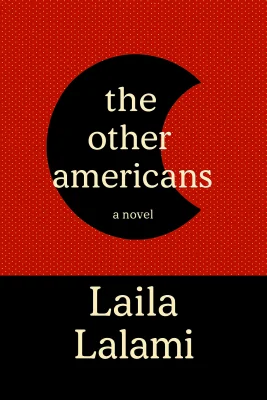
The Other Americans
Categories
Fiction, Audiobook, Mystery, Adult, Book Club, Contemporary, Novels, Literary Fiction, Mystery Thriller, Morocco
Content Type
Book
Binding
Hardcover
Year
2019
Publisher
Pantheon
Language
English
ISBN13
9781524747145
File Download
PDF | EPUB
The Other Americans Plot Summary
Introduction
# The Desert's Reckoning: A Story of Justice and Loss The silver Crown Victoria accelerated through the desert intersection, its engine roaring as the driver pressed harder on the gas pedal. In the crosswalk, Mohammed Driss Guerraoui looked up from his evening walk to see death bearing down on him at forty-five miles per hour. The impact sent his body rolling across the hood and onto the cracked asphalt of Highway 62, where he lay motionless as the sedan's taillights disappeared into the Mojave darkness. A hundred feet away, Efraín Aceves crouched beside his broken bicycle chain, watching in horror as the car vanished down Chemehuevi Way, its red rear window sticker catching the moonlight for just an instant. What Efraín had witnessed was not merely an accident but the violent culmination of years of simmering hatred in a small desert town where the color of your skin and the sound of your name could determine whether you lived or died. The collision would shatter more than bones, exposing the fault lines of a community where immigrants struggled to belong, where old grievances festered beneath the surface, and where justice wore different faces depending on your heritage. In the aftermath, multiple lives would converge around this single devastating moment, each carrying their own burden of guilt, fear, and the desperate hunger for truth in a landscape that had always been unforgiving to outsiders.
Chapter 1: Death on Highway 62: The Hit-and-Run That Shattered a Family
Detective Denise Coleman arrived at the intersection at 10:47 PM, her headlights cutting through the desert darkness to illuminate a scene that would haunt her for months. Mohammed Driss Guerraoui lay twisted on the asphalt, his arms bent at impossible angles, his body broken by the force of impact. The sixty-four-year-old restaurant owner had been walking home from his Pantry diner when death found him in the crosswalk. Coleman knelt beside the body, her flashlight revealing silver paint chips scattered across the pavement like metallic confetti. No skid marks scarred the asphalt. The driver had never hit the brakes, either blind to what lay ahead or willfully ignoring it. Deputy Jeremy Gorecki arrived minutes later, his patrol car adding to the constellation of emergency lights that transformed the quiet intersection into a crime scene. The desert wind picked up, threatening to scatter the evidence across the highway. Coleman worked quickly, photographing the paint chips and measuring the distance from impact to where the body had come to rest. The physics told a brutal story of acceleration rather than accident, of a vehicle that had sped up rather than slowed down. By dawn, the body was gone but the questions remained. In a town where everyone knew everyone else's business, how had a killer simply vanished into the night? Coleman stood at the intersection as the sun rose over the Joshua trees, watching early commuters drive past the spot where a man had died. None of them slowed down. The desert had already begun to reclaim the scene, sand drifting across the bloodstains that marked where Driss Guerraoui had drawn his final breath. The investigation would prove that some secrets run deeper than desert roots, and some hatreds burn hotter than the Mojave sun.
Chapter 2: Returning Home: Nora's Journey Back to Face the Past
The phone call reached Nora Guerraoui in Oakland, where she had been celebrating her roommate's music commission with champagne and dreams of her own artistic future. Her father was dead, killed by a hit-and-run driver on a desert highway she had traveled countless times as a child. The words seemed to belong to someone else's nightmare, impossible to reconcile with the man who had walked her to piano lessons and attended every school performance. The drive to the Mojave took her through California's Central Valley, each mile carrying her further from her carefully constructed life as a composer and deeper into a past she had spent years trying to escape. Her mother Maryam waited at the family home in widow's white, her grief so profound it seemed to have aged her a decade overnight. The house held traces of Driss everywhere. His crossword puzzles lay half-finished on the kitchen table, his reading glasses perched on a stack of restaurant receipts, a half-empty pack of Marlboros on the windowsill like a promise he would never keep. Death had frozen time, leaving behind the archaeology of an interrupted life. Detective Coleman arrived with manila folders and careful questions, her dark eyes taking in the family photographs that lined the mantelpiece. The investigation seemed perfunctory, a few interviews and measurements that would likely lead nowhere. But as Coleman spoke of paint chips and tire marks, of witness canvasses that yielded nothing, Nora began to understand that her father's death was not the random tragedy it appeared to be. At the funeral, she watched the faces in the crowd, noting who had come to pay their respects and who had stayed away. Anderson Baker, who owned the bowling alley next to the Pantry, was conspicuous in his absence. The two businesses had feuded for years over parking spaces and noise complaints, their conflict a microcosm of the larger tensions that divided the desert community between old-timers and newcomers, between those who belonged and those who would always be seen as intruders.
Chapter 3: Silent Witnesses: Fear, Memory, and the Weight of Truth
Efraín Aceves carried his terrible secret through sleepless nights and haunted days, the image of the silver sedan striking Mohammed Guerraoui burned into his memory like a brand. As an undocumented worker at a local motel, he knew that coming forward meant risking deportation, leaving behind his wife Marisela and their two young children for the uncertain mercy of a system that had never shown his kind any kindness. The ghost of the dead man seemed to follow him everywhere. At work, changing sheets and cleaning rooms, he would catch glimpses of silver cars in the parking lot and feel his heart race. At home, trying to help his daughter Elena with her homework, he would lose focus and stare out the window, remembering the sound of impact and the way the body had rolled across the hood like a discarded mannequin. Marisela knew something was destroying her husband from the inside. He would sit on the edge of their bed at three in the morning, staring at his hands as if they were stained with blood. When she found the newspaper article about the hit-and-run, complete with a photograph of the victim and a plea for witnesses, her patience finally broke. "You have to call," she said, pointing to the police hotline number. "Look at him. He was somebody's father, somebody's husband." But Efraín had seen too much of American justice to trust it. The same system that promised protection often delivered deportation. He thought of his children, both American citizens who would be orphaned if their father was taken away. The moral weight pressed down on him like a physical force. At the grocery store, he stumbled and fell, scattering limes and lemons across the floor as other shoppers stared at him with the wary eyes reserved for madmen. Twenty-five thousand dollars in reward money could change his family's life, but claiming it would require stepping into the light, exposing himself to scrutiny that might destroy everything he had built in America.
Chapter 4: Buried Secrets: Uncovering a Father's Hidden Life
The phone call from Maurice at the jewelry store shattered Nora's fragile peace like a rock through glass. The man spoke with a European accent about an engagement ring, custom-ordered and inscribed, waiting for pickup by a customer who would never come. The words seemed to belong to a foreign language, impossible to reconcile with the father she thought she knew. Maurice, a small man with gold rings on his fingers, showed her the receipt with clinical precision. Princess cut diamond. Three thousand two hundred and fifty dollars. Engraved with words of love for a woman whose name he didn't know. The man who had ordered it had been very particular, rejecting everything in the display cases as insufficient for his beloved. Nora fled the jewelry store without paying the balance, her father's image crumbling like sand in her hands. The cabin in Joshua Tree, which she had thought was his retreat from the world, had been his love nest. She stripped the bed with violent efficiency, replacing the mattress and linens as if she could purge the evidence of his betrayal. Every memory now carried the poison of doubt. Had he been thinking of his lover when he smiled at family gatherings? Had he been planning his escape when he listened to her practice piano? The man who had been her refuge from her mother's disappointment had been living a double life, and the discovery felt like a second death. The affair cast new shadows over his murder. Perhaps the hit-and-run hadn't been random after all. Perhaps someone had discovered his secret and decided that the immigrant who had dared to love outside his marriage deserved to die. In a town where belonging was always conditional, infidelity might have been the final transgression that sealed his fate. Jeremy Gorecki found her at the cabin, tears streaming down her face as she burned her father's love letters in the fireplace. The deputy had known her in high school, had carried a torch for the talented pianist who would surely escape to bigger things. Now grief had stripped away her urban sophistication, leaving something raw and vulnerable that called to his own buried pain.
Chapter 5: The Investigation: Following Evidence to an Unlikely Suspect
Detective Coleman's breakthrough came through her son's math homework and a mother's sharp eyes. While helping Miles with algebra at the library, she noticed the security cameras mounted on the building's eaves. The intersection where Driss died was just blocks away, and any driver taking the shortcut down Martinez Trail would have been captured on film. Twenty-eight cars had passed the cameras between nine-thirty and ten-thirty that night. Three were silver Fords. The trail led to Anderson Baker, seventy-eight years old, owner of Desert Bowling Arcade, and Driss Guerraoui's longtime neighbor and antagonist. When Coleman arrived at his house on Sunnyslope Drive, she found a man who seemed genuinely shocked to be questioned about a hit-and-run. Baker's wife Helen answered the door with trembling hands, her Parkinson's disease making her appear even more fragile than her years suggested. In the garage sat the silver Crown Victoria with a three-foot dent in the front bumper and paint scraped away to reveal bare metal beneath. The damage was consistent with striking a human being, not the coyote Baker claimed to have hit. But something didn't fit. Baker's story was too neat, his demeanor too calm for a man who had just learned he might have killed someone. As Coleman pressed harder, asking about his relationship with Guerraoui, the years of simmering tension between their businesses, a different truth began to emerge. The real driver had been Baker's son A.J., whose license had been suspended for DUI. A.J. Baker, the former high school wrestling star who had never learned to control his temper or his prejudices, who had once scrawled "raghead" on Nora's locker. The confrontation over a Land Rover during Presidents' Day weekend had been the final trigger, Baker's public humiliation in front of a crowded restaurant igniting a rage that had been building for years. When Coleman finally arrested A.J. during a routine traffic stop, he broke down and confessed. But by then, his father had already taken responsibility for the crime, willing to sacrifice his remaining years to protect his son from the consequences of his hatred.
Chapter 6: Justice Imperfect: The Trial and Its Aftermath
The courtroom divided along invisible lines when A.J. Baker was finally charged with voluntary manslaughter. His family filled the front rows, a wall of support for the young man whose moment of rage had destroyed two families. Behind them sat employees and friends, people who had known the Bakers for decades and couldn't reconcile the boy they remembered with the killer he had become. Nora and her mother sat alone in the back, isolated in their grief while Baker's attorney painted his client as a victim of circumstance. The defense argued that A.J. had been drinking, that his vision was impaired, that what happened was a tragic accident rather than a deliberate act of violence. The prosecutor, overwhelmed and underprepared, barely challenged the narrative. The key witness was Efraín Aceves, who had finally found the courage to come forward after seeing the reward poster. His testimony was devastating. He had seen the car accelerate before impact, heard the engine roar as A.J. pressed harder on the gas pedal. This was not an accident but murder, committed in broad view of a man too frightened to speak until his conscience finally overcame his fear. Jeremy's traffic stop had provided the thread that unraveled the conspiracy. A.J.'s suspended license, his father's willingness to take the blame, the family's long history of racial animosity toward their Arab neighbors all came together in a portrait of hate that the defense couldn't explain away. The jury deliberated for three days before returning their verdict. Voluntary manslaughter rather than murder, accepting the argument that A.J. had acted in a moment of rage rather than with premeditation. Five years in prison for a life cut short. It seemed inadequate, but it was more than many families in similar circumstances ever received.
Chapter 7: Desert Redemption: Finding Peace in a Harsh Land
Nora was pregnant with her first child when A.J. Baker was finally sentenced. She had returned to the desert permanently, taking over her father's restaurant and marrying Jeremy despite everything that had happened between them. The Pantry thrived under her management, becoming a gathering place for the town's growing community of artists and musicians drawn to the stark beauty of the Mojave. Jeremy learned to live with his war wounds, finding in Nora's love a kind of redemption he had never thought possible. The violence that had once defined him gradually gave way to something gentler, though the scars remained. He would wake some nights from dreams of Iraq, but Nora was there to hold him until the trembling stopped. Efraín Aceves found his own form of peace. The reward money allowed him to bring his family out of the shadows, to apply for legal residency and build a legitimate life in America. His courage in testifying had made justice possible, proving that even the most frightened witness could find the strength to speak truth to power. The desert kept its secrets, but sometimes the wind shifted and revealed what lay buried beneath the sand. Mohammed Driss Guerraoui's death had been the inevitable result of years of accumulated hatred, the kind of casual racism that festers in small towns where difference is seen as a threat rather than a gift. But his daughter's quest for justice had become something larger, a reckoning with the forces that divide communities and the love that can heal them. Anderson Baker died in prison two years into his sentence, taking with him the full truth of what had driven his son to murder. A.J. would serve his time and eventually be released, but the desert would remember what he had done. Some stains never wash clean, no matter how hard the wind blows or how deep the sand drifts.
Summary
In the end, Nora found what she had been searching for all her life: a place where she belonged, not despite her heritage but because of it. The restaurant her father built became a bridge between worlds, serving both the locals who had lived in the desert for generations and the newcomers drawn by its austere beauty. The music she composed there carried the rhythms of two cultures, the melodies of loss and redemption that could only be born from such profound grief. The Mojave Desert stretches endlessly under an indifferent sky, its vastness swallowing the dreams and sorrows of all who venture into its embrace. Some find redemption in its harsh beauty, while others discover only the limits of human compassion. For those who remain, the desert offers its own form of justice, patient and implacable as the stones that mark its boundaries. Love, like water in an arid land, can sustain life even in the harshest conditions, but it requires the courage to dig deep and the wisdom to know that some wounds, like some truths, take generations to heal.
Best Quote
“Perhaps memory is not merely the preservation of a moment in the mind, but the process of repeatedly returning to it, carefully breaking it up in parts and assembling them again until we can make sense of what we remember.” ― Laila Lalami, The Other Americans
Review Summary
Strengths: The review highlights the novel's impeccable writing and richly layered narrative. It praises the depth of character development, particularly for Nora and Jeremy, and appreciates the multi-perspective storytelling that enhances the unfolding mystery. The book is recommended for its exploration of family drama and the immigrant experience, with a specific mention of its beautiful prose. Overall: The reviewer expresses a highly positive sentiment, describing the novel as remarkable and timely. It is highly recommended for readers interested in literary fiction, family dramas, and immigrant stories. The reviewer enjoyed the book so much that they intend to explore more works by the author.
About Author

Laila Lalami
Lalami explores complex themes of immigration, identity, and displacement through her engaging narratives. Her work often centers on the experiences of individuals caught between cultures, examining how these characters navigate the challenges of belonging in a society that may not fully accept them. Through her nuanced portrayal of Arab American and immigrant experiences, she invites readers to reconsider preconceived notions of race, class, and identity. This thematic focus is evident in her acclaimed books such as "The Moor's Account," which reimagines the story of Estevanico, the first Black explorer of America, and "The Other Americans," which delves into the mystery surrounding the death of a Moroccan immigrant in a small California town.\n\nLalami’s method of intertwining historical and contemporary narratives allows readers to draw parallels between past and present issues of marginalization. Her innovative storytelling structure, as seen in "Hope and Other Dangerous Pursuits," reflects the fragmented yet interconnected journeys of her characters, thereby highlighting the complexities of their struggles and triumphs. Readers interested in nuanced perspectives on immigration and identity will find her work both enlightening and deeply resonant. As a Moroccan-American author, Lalami has gained significant recognition, earning prestigious awards such as the American Book Award and the Joyce Carol Oates Prize. Her writing has not only enriched contemporary literature but also broadened the conversation around what it means to belong in America today.
Read moreDownload PDF & EPUB
To save this Black List summary for later, download the free PDF and EPUB. You can print it out, or read offline at your convenience.
The Other Americans
by Laila Lalami
