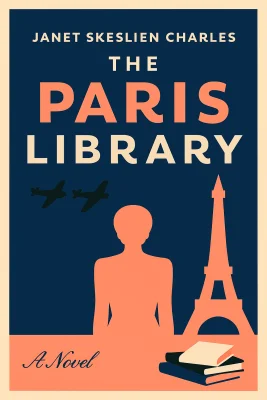
The Paris Library
Categories
Fiction, Audiobook, Historical Fiction, Adult, Book Club, Historical, France, World War II, Books About Books, War
Content Type
Book
Binding
Hardcover
Year
2021
Publisher
Atria Books
Language
English
ISBN13
9781982134198
File Download
PDF | EPUB
The Paris Library Plot Summary
Introduction
# The Weight of Words: A Story of Books, Betrayal, and Redemption Paris, 1939. Twenty-year-old Odile Souchet clutches her interview notes outside the American Library, her heart hammering against her ribs. Inside those hallowed walls, Miss Reeder asks about her favorite author. "Dostoevsky," Odile blurts, "because I understand Raskolnikov wanting to hit someone over the head." The silence stretches like a held breath before Miss Reeder smiles and quotes Crime and Punishment. The job is hers. But as Nazi boots soon echo through Parisian streets, this sanctuary of books becomes something far more dangerous—a place where librarians turn into resistance fighters and words become weapons of war. Decades later in frozen Montana, seventeen-year-old Lily discovers her elderly French neighbor harbors secrets darker than prairie winters. What begins as innocent language lessons unravels into a story of wartime choices that destroyed friendships and forced a young woman to flee her homeland forever. Between the stacks of banned books and the ashes of denunciation letters, two women separated by generations learn that some betrayals echo across decades, and some stories demand to be told before forgiveness can bloom.
Chapter 1: Sanctuary Among the Stacks: The American Library in Paris
The morning light streams through tall windows as Odile enters her new world. The American Library pulses with quiet energy—subscribers whispering in the reading room, children gathering for story hour, the gentle thud of books being stamped and shelved. Miss Dorothy Reeder commands this literary kingdom with crisp efficiency, her silver hair perfectly arranged, her voice carrying the authority of someone who has built something magnificent from nothing. Boris Netchaeff, the Russian head librarian, becomes Odile's guide through this maze of knowledge. His cigarette perpetually dangles from his lips as he explains the sacred mysteries of cataloging, his gentle wisdom making even the most mundane tasks feel important. "Books are medicine for broken hearts," he tells her, and Odile believes him completely. The subscribers become familiar faces in her daily routine. Professor Cohen arrives each morning in her purple shawl, peacock feathers adorning her hat, her arms always full of returns and new requests. Margaret Saint James glides through the stacks with aristocratic grace, her pearls catching the light as she volunteers her time to the cause of literature. These people are more than patrons—they are pilgrims in a temple of words. Odile's twin brother Rémy visits during his law studies, his quick wit charming everyone he meets. When he brings his girlfriend Bitsi to tour the Library, Odile watches the shy young woman's face transform among the books. Another soul has found its sanctuary. The rhythm feels eternal, unbreakable, as if literature itself could shield them from the darkness gathering beyond these walls. But Europe fractures around them. Hitler's armies devour Austria and Czechoslovakia while the Library's international community holds its collective breath. When Britain and France declare war in September, some American subscribers flee immediately. Miss Reeder refuses to abandon her post. The books need guardians, she declares, and guardians they shall have.
Chapter 2: When Darkness Falls: Nazi Occupation and New Rules
German boots march down the Champs-Élysées on June 14, 1940, transforming Paris into something unrecognizable. Swastika banners drape from monuments while Wehrmacht soldiers photograph the Eiffel Tower like tourists. The occupation brings new rules that chill Odile's blood—curfews, rationing, and most ominously, restrictions on who may enter the Library. Dr. Hermann Fuchs arrives wearing the crisp uniform of the Bibliotheksschutz—the Nazi "Library Protector." Odile expects a brutish book-burner but finds instead a soft-spoken scholar with gold-rimmed glasses who speaks fondly of international conferences. He knows Miss Reeder from academic gatherings, their reunion carrying the surreal politeness of colleagues meeting under impossible circumstances. The regulations strike like hammer blows. Certain books can no longer circulate—works by Jewish authors, anti-German texts, anything deemed subversive. Jewish subscribers are banned entirely. Odile watches Professor Cohen receive the devastating news with dignified silence. The elderly scholar's personal collection has been seized by Nazi raiders who treat literature like contraband. Miss Reeder gathers her staff after Dr. Fuchs departs. Her voice carries quiet steel as she announces their response to these cruelties. If certain people can no longer come to the books, then books will go to them. They will become a secret delivery service, carrying literature to those the Nazis seek to isolate. It is dangerous work that could result in arrest or worse. Every librarian volunteers without hesitation. They strap volumes to bicycles, hide novels in shopping baskets, climb narrow staircases to deliver hope in cloth-bound packages. The Library transforms from sanctuary to resistance cell, its guardians now smuggling more than stories—they smuggle the very idea that human dignity cannot be legislated away.
Chapter 3: Secret Deliveries: Resistance Through Literature
Odile's bicycle wheels spin through puddles as she navigates checkpoints sprouting like mushrooms throughout Paris. Each book in her satchel represents a small rebellion, every delivery a victory against forces trying to silence voices and erase cultures. The Nazi soldiers barely glance at her cargo—what threat could novels pose to the Third Reich? Professor Cohen's apartment has become a shrine to lost knowledge. Empty shelves stand like tombstones marking the death of a life's collection. But slowly, book by book, friends rebuild what the Nazis destroyed. Odile brings volumes from her own collection, watching the professor's face illuminate as familiar authors return to their places. "They took my diaries," the professor confides, fingers tracing a replacement copy of Beowulf. "Forty years of private thoughts, stolen and burned." Yet she continues writing, her typewriter keys clicking out defiance in the form of a novel about wartime Paris, about small cruelties blooming in the shadow of larger horrors. The resistance takes many forms. Boris hides banned books in the Library's basement. Margaret uses diplomatic connections to smuggle messages. Each act seems insignificant alone, but together they form a network of hope the occupiers cannot break. They are librarians turned into freedom fighters, wielding literature like weapons against tyranny. Odile discovers her father's office overflowing with denunciation letters—anonymous accusations that neighbors are Jewish, Communist, or otherwise undesirable. These "crow letters" arrive by hundreds from ordinary citizens eager to settle scores or curry favor. She begins stealing handfuls, burning them in the Library's fireplace to save innocent lives. Each rescued letter feels like a small victory against the machinery of hatred. The weight of so much malice presses down like a physical burden. She can only destroy a fraction of the poison flooding police stations, but every saved life matters. The war has made everyone complicit in ways large and small, and she chooses her complicity carefully.
Chapter 4: The Poison of Jealousy: A Friendship Destroyed
Romance blooms amid the chaos as Odile falls in love with Paul, a handsome policeman whose blue eyes hold depths of shame. His job has become humiliation—repairing Nazi propaganda posters, directing traffic for occupiers, wearing white gloves like a servant. The war steals more than food and freedom; it devours souls. They find stolen moments in abandoned apartments whose Jewish owners have fled or been arrested. Making love among the possessions of the disappeared troubles Odile, but war has made everyone complicit in impossible ways. Paul's hands tremble as he touches her, both virgins navigating the geography of desire on borrowed time. Her friendship with Margaret grows complicated when she discovers the English volunteer involved with a German officer. Not from ideology but from loneliness, the human need for companionship in dark times. Margaret's lover provides food packages that help feed Odile's imprisoned brother Rémy, creating webs of moral compromise binding them all together. Jealousy eats at Odile like acid. Margaret seems to glide through occupation unscathed—beautiful, connected, protected by her lover's influence while others suffer. The resentment builds until one terrible evening when Paul mentions seeing Margaret with her German officer. The words spill from Odile's lips before she can stop them, revealing her friend's secret in a moment of spite. The consequences unfold with horrifying swiftness. Margaret is beaten, her head shaved, branded as a collaborator by neighbors who have waited for any excuse to unleash their frustrations. Her husband takes their daughter and flees to England, leaving her alone and disgraced. The guilt of that betrayal will haunt Odile forever, driving her to abandon everything she loves and flee to America with a wounded soldier named Buck.
Chapter 5: Exile and Reinvention: Building a New Life in Montana
Decades later in Froid, Montana, Odile Gustafson has become someone else entirely. The elegant French widow next door to the Jacobsen family carries herself with quiet dignity, her past carefully buried beneath layers of prairie snow and accumulated silence. She works at the local library, tends her garden, and maintains the perfect facade of a war bride who found happiness in America. Seventeen-year-old Lily Jacobsen struggles with her own family tensions. Her mother died when she was twelve, leaving her with a banker father who remarried a young woman named Eleanor. The household revolves around Eleanor's two baby boys, and Lily often feels like an unwelcome reminder of the first wife who had been perfect in ways Eleanor can never match. Odile becomes Lily's refuge from suffocation and resentment. Their French lessons evolve into something deeper—a mentorship filling the void left by maternal death. Odile's elegant accent and worldly knowledge make her seem like a character from novels, someone who has lived through great adventures and emerged with hard-won wisdom. But Lily's curiosity about her teacher's past grows into obsession. She senses hidden depths in Odile's careful silences about France, the way conversations shift when family is mentioned, the sadness that sometimes clouds her eyes. The elegant widow seems to carry secrets like stones in her pockets, and Lily burns to know what they are. When Odile leaves for a month-long visit to Chicago, Lily cannot resist exploring her mentor's house. In the bedroom closet, among carefully preserved clothes and mementos, she discovers a box of yellowed letters written in French. Her limited language skills allow her to decipher enough to understand their horrifying contents—denunciations of Jewish neighbors, accusations that could have meant deportation and death. The discovery shatters Lily's image of Odile as a wartime heroine and replaces it with the terrible suspicion that her beloved mentor had been a collaborator.
Chapter 6: Secrets in the Snow: A Student's Discovery
When Odile returns from Chicago to find Lily in her bedroom surrounded by torn letters, the confrontation erupts with the force of forty years' suppressed guilt and shame. Lily's accusation—"Who are you?"—strikes like a physical blow, and Odile sees her carefully constructed new life crumbling around her. The girl she has come to love like a daughter believes her capable of the most heinous betrayal imaginable. The truth, when it finally emerges, proves more complex than simple heroism or collaboration. Odile had indeed stolen the denunciation letters, but to burn them and save lives, not enable persecution. She had worked with Library staff to deliver books to banned Jewish subscribers, risking arrest with every clandestine visit. Her father had been the one investigating accusations, trapped in a system demanding compliance or replacement by someone potentially worse. But Odile's real crime lay not in collaboration with Nazis, but in a moment of jealous rage that destroyed her dearest friendship. Her revelation of Margaret's affair to Paul had triggered brutal assault that left the English woman beaten, shorn, and branded as a collaborator. Margaret's husband had taken their daughter and fled to England, leaving her alone and disgraced in occupied Paris. The parallel between Odile's wartime betrayal and Lily's own moment of temptation becomes impossible to ignore. At a school dance, consumed with jealousy over her best friend's romance, Lily had almost revealed a damaging secret that would have destroyed the relationship. Only Odile's sharp warning about "crows circling" had stopped her from repeating the pattern of jealous destruction. As Odile recounts her story through tears and trembling hands, Lily begins to understand the weight her mentor has carried for nearly half a century. The elegant French widow is not a war heroine or Nazi collaborator, but something more human and tragic—a young woman who made a terrible mistake in a moment of weakness and spent the rest of her life trying to atone.
Chapter 7: Confessions Across Generations: The Truth Unveiled
Odile's confession serves as both explanation and warning—jealousy is poison that can destroy everything precious in a person's life. She had lost her homeland, family, career, and dearest friend because she could not control her resentment of Margaret's apparent advantages. The comfortable life she built in Montana with Buck could never fully compensate for the relationships and identity she abandoned in France. Lily begins seeing her own family dynamics differently through the lens of Odile's story. Her stepmother Eleanor is not a usurper but another woman trying to build life in the shadow of someone else's memory. Her father's protectiveness comes from love, not control. The small-town life that feels so confining is also a sanctuary where people can reinvent themselves and find redemption, as Odile has done for forty years. The discovery of a newspaper clipping about Margaret's successful jewelry business in post-war Paris offers a glimmer of hope that the story might not be entirely tragic. Perhaps Margaret rebuilt her life and even reconciled with her daughter. Perhaps forgiveness is possible, even across decades and oceans. Lily urges Odile to write to her old friend, to attempt the reconciliation that might finally heal the wound shaping both their lives. But Odile's courage has been worn thin by decades of guilt and self-imposed exile. She cannot bring herself to reach across the chasm her jealousy created, cannot risk discovering that Margaret's hatred has only deepened with time. The letters remain unwritten, the phone calls unmade, the wound left to fester in silence. As winter deepens into spring, their friendship becomes a testament to the power of connection across generations, cultures, and languages. The lessons passed between them transcend language instruction to become something more profound—an understanding that everyone carries capacity for both great kindness and terrible cruelty, and that the difference often lies in a single moment of choice.
Chapter 8: The Possibility of Forgiveness: Words That Heal
As Lily prepares to leave Froid for college in New York, she carries with her not just Odile's language lessons but the deeper wisdom of her mentor's painful experience. The gift of a plane ticket to Paris represents more than a graduation present—it is an invitation to complete the circle that Odile herself has never been brave enough to close. The accompanying postcard of the American Library suggests that some stories can only find their proper ending where they began. Odile's decision to remain in Montana while sending Lily to France reflects her understanding that redemption sometimes requires letting others carry forward what we cannot complete ourselves. She has spent decades as a guardian of books and stories in her small-town library work, but the greatest story of her life remains unfinished. Perhaps a young woman with courage and hope can accomplish what an old woman burdened by guilt cannot. The plane ticket carries with it an unspoken mission—to find Margaret if she still lives, to deliver the apology that Odile cannot speak herself, to perhaps heal wounds that have festered for nearly half a century. It is a leap of faith across time and space, a belief that love and forgiveness can triumph over the cruelest chapters of human history. In their final French lesson, Odile teaches Lily that "courage" and "coeur" share the same root—bravery is literally a matter of the heart. The words hang in the air between them like a blessing and a challenge. Some friendships are too important to let end in silence and separation, some stories too powerful to remain unfinished. As Lily boards the plane for Paris, she carries with her the weight of two women's stories—her own journey from small-town teenager to young woman ready to face the world, and Odile's unfinished tale of love and betrayal that began in a library and might yet find its resolution in forgiveness. The American Library in Paris awaits, its stacks still holding the promise that words can heal what words have wounded.
Summary
The American Library in Paris revealed the terrible and wonderful power of words—how they could preserve civilization in the form of books, destroy lives in the form of denunciations, and heal wounds in the form of confessions shared across generations. Odile's journey from eager young librarian to keeper of dangerous secrets proved that ordinary people become heroes through small acts of courage, and that even the gravest mistakes need not define an entire life if one has the strength to learn, grow, and love again. Lily's transformation from grieving daughter to young woman ready to face the world carried forward the lessons learned in Odile's Montana kitchen—that friendship is precious and fragile, that jealousy is poison destroying the one who harbors it, and that redemption is always possible for those brave enough to seek it. The plane ticket to Paris represented not just a gift but a sacred trust: to complete the story Odile had begun, to perhaps heal wounds that had festered for nearly half a century, and to prove that some connections transcend time, language, and the cruelest chapters of human history. In the end, both women discovered that the most important stories are the ones we tell each other, the ones that help us make sense of love and loss, and the ones that remind us we are never truly alone.
Best Quote
“Books and ideas are like blood; they need to circulate, and they keep us alive.” ― Janet Skeslien Charles, The Paris Library
Review Summary
Strengths: The review highlights the engaging narrative of "The Paris Library," emphasizing the dual timelines that are equally compelling. The historical context of the American Library in Paris during WWII is praised for its authenticity, with real-life figures depicted as resistance fighters. The character development of Odile, both in her youth and later years, is noted as a strong point, providing depth and emotional resonance. Overall: The review conveys a positive sentiment, recommending the book for its historical accuracy and emotional storytelling. The interwoven timelines and character dynamics are particularly appreciated, making it a worthwhile read for those interested in historical fiction.
About Author

Janet Skeslien Charles
Charles explores historical narratives through a lens that highlights the power of overlooked individuals and communities, often setting her tales in periods of conflict and resilience. Her dedication to unearthing these stories is evident in her meticulous research, such as the decade-long study of librarian Jessie Carson that inspired her book "Miss Morgan's Book Brigade." This novel, also known as "The Librarians of Rue de Picardie" in the UK, celebrates the impact of strong women and underscores the importance of libraries during wartime. Her unique approach intertwines human tenacity with literary heritage, ensuring that these forgotten stories leave a lasting mark on readers.\n\nHer novels, including "The Paris Library" and "Moonlight in Odessa," illustrate the connection between place and identity, as they delve into the lives shaped by historical upheavals. For instance, "The Paris Library" focuses on the courage of librarians during World War II, reinforcing the theme of books as symbols of resistance and hope. By examining these nuanced interactions, Charles invites readers to appreciate the intersection of personal and communal histories, thereby enriching their understanding of human endurance.\n\nA recognized New York Times bestselling author, Charles's work has reached audiences worldwide, having been translated into 40 languages. Her bio highlights a career shaped by her experiences in Eastern Europe and France, where she initially taught English. This international perspective informs her storytelling, offering readers not just historical insight but also a profound appreciation for the resilience found in the shared human experience. Her stories resonate with those who value the transformative power of literature and the enduring strength of community bonds.
Read moreDownload PDF & EPUB
To save this Black List summary for later, download the free PDF and EPUB. You can print it out, or read offline at your convenience.

The Paris Library
by Janet Skeslien Charles
