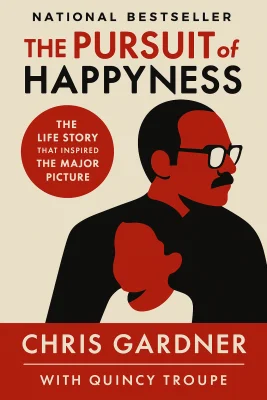
The Pursuit of Happyness
Categories
Business, Nonfiction, Biography, Memoir, Audiobook, Autobiography, Biography Memoir, Book Club, Inspirational, Media Tie In
Content Type
Book
Binding
Paperback
Year
2006
Publisher
Amistad
Language
English
ASIN
0060744871
ISBN
0060744871
ISBN13
9780060744878
File Download
PDF | EPUB
The Pursuit of Happyness Plot Summary
Introduction
# The Pursuit of Happiness: Chris Gardner's Journey from Homelessness to Wall Street Success In the heart of San Francisco's financial district, a man clutching a briefcase and pushing a shopping cart navigated the streets with his young son in tow. By day, he was learning the intricacies of stock trading at one of Wall Street's most prestigious firms. By night, he was searching for shelter in subway bathrooms and homeless shelters. This extraordinary contradiction defined Chris Gardner's life during one of the most challenging yet transformative periods of his journey from destitution to remarkable success. Gardner's story unfolds against the backdrop of 1980s America, when economic mobility seemed reserved for the privileged few. Yet his transformation from an abandoned child in Milwaukee to a multimillionaire entrepreneur reveals profound truths about human resilience and the power of unwavering determination. Through his remarkable journey, readers will discover how childhood trauma can forge unbreakable strength, how a father's love can fuel superhuman persistence, and how the relentless pursuit of one's dreams can overcome seemingly impossible obstacles. His life demonstrates that success is not about where you start, but about your willingness to endure hardship while maintaining an unshakeable belief in your ability to create a better future.
Chapter 1: Foundations of Resilience: Childhood Trauma and Early Survival
Chris Gardner's earliest memories were painted with the harsh colors of abandonment, violence, and uncertainty. Born in Milwaukee in 1954, he entered a world where his biological father was nothing more than a whispered name, and his mother Bettye Jean flickered in and out of his life like a beautiful but distant star. The absence of stability became the defining characteristic of his childhood, as he and his siblings were shuffled between foster homes, relatives' houses, and brief reunions with their mother during her escapes from an abusive marriage. The specter of Freddie Triplett, his violent stepfather, cast a long shadow over Gardner's formative years. This man wielded terror like a weapon, creating an atmosphere where the sound of footsteps on stairs could trigger panic, and where young Chris learned that survival required constant vigilance. The sight of his mother's bruised face and the midnight escapes from their own home taught Gardner his first crucial lesson: he would have to become his own protector, his own source of strength. Yet within this chaos, Gardner discovered anchors of hope that would sustain him through decades of hardship. His mother's unwavering belief in his potential became a lifeline, her repeated assurance that he could become anything he wanted serving as a counterweight to the violence surrounding them. She would tell him that the public library was the most dangerous place in the world because "you could go in there and figure out how to do anything if you could read." These words planted seeds of ambition that would later bloom into an unshakeable faith in the transformative power of knowledge and determination. The absence of his biological father created a wound that would both haunt and motivate Gardner throughout his life. Growing up with what he called the "no-daddy blues," he made a solemn promise that would guide every major decision of his adult life: his own children would never wonder where their father was, never question his love, never doubt his commitment to their wellbeing. This promise, born from profound pain, would become the driving force behind his most heroic acts of sacrifice and determination. Through periods of foster care and temporary separations, Gardner learned that stability had to come from within. He discovered that books could transport him beyond his circumstances, that knowledge was a form of power that no one could take away, and that survival required both mental toughness and emotional resilience. These early experiences of powerlessness would later transform into an unshakeable resolve to control his own destiny, no matter what obstacles stood in his way.
Chapter 2: Military Service and Medical Aspirations: Finding Direction and Purpose
Gardner's decision to join the Navy at eighteen represented his first conscious step toward breaking free from the cycle of poverty and instability that had defined his youth. The recruiting poster's promise to "Join the Navy, See the World" spoke directly to his hunger for adventure and his desire to escape the familiar boundaries of Milwaukee's troubled neighborhoods. Military service offered something he had never experienced: structure without violence, discipline without cruelty, and the possibility of earning respect through competence rather than surviving through cunning. Boot camp in Orlando proved to be a transformative crucible that tested every aspect of his character. The physical demands were grueling, but Gardner discovered that his childhood experiences had already taught him how to endure discomfort and maintain composure under extreme pressure. When a senior officer observed his remarkable self-discipline during formation, Gardner realized that his difficult past had actually prepared him for challenges that broke other recruits. The transformation from a free-spirited young man with an afro and tie-dyed shirts to a disciplined sailor marked the beginning of his journey toward self-mastery. His assignment to the Navy Regional Medical Center at Camp Lejeune opened doors to a world he had never imagined. Working under Lieutenant Commander Charlotte Gannon, Gardner threw himself into learning every aspect of medical care with the same intensity he had once applied to surviving his childhood. His natural curiosity and ability to ask the right questions quickly distinguished him from his peers, earning him the respect of doctors and the trust of patients who often specifically requested "Doc Gardner" for their care. The medical field revealed Gardner's exceptional capacity for learning complex systems and mastering technical skills under pressure. Whether performing surgery on wounded Marines, managing post-operative care, or handling the delicate procedures required in specialized medical units, he approached each task with meticulous attention to detail. His reputation grew to the point where his expertise was valued over that of more credentialed practitioners, teaching him that competence could overcome credentialing and that excellence was recognized regardless of one's educational background. These Navy years provided Gardner with more than medical training; they gave him confidence in his ability to succeed in demanding professional environments. The respect he earned from colleagues and patients alike proved that his intelligence and work ethic could open doors that his background might otherwise have kept closed. This experience would prove crucial when he later entered the equally challenging world of high finance, where his ability to learn quickly and perform under pressure would distinguish him from competitors with more traditional qualifications.
Chapter 3: The Shopping Cart and Briefcase: Homelessness Meets Wall Street Dreams
The image of Chris Gardner pushing a shopping cart through Oakland's streets while carrying a briefcase perfectly captured the surreal duality of his existence during the most challenging period of his life. This powerful contradiction—the symbols of poverty and professional aspiration side by side—embodied his refusal to let circumstances define his future. The shopping cart, which his young son Christopher affectionately called their "car," contained their meager possessions, while the briefcase held his dreams and the tools of his emerging career as a stockbroker. Gardner's entry into the world of finance began with a chance encounter in a hospital parking lot, where he met a successful broker driving a red Ferrari. When Gardner asked the simple questions "What do you do?" and "How do you do it?" the man's answer opened a door to possibilities he had never imagined. The revelation that someone could earn substantial income by talking to people about investment opportunities sparked an obsession that would consume Gardner's every waking moment and drive him to pursue this career despite having no relevant experience, education, or connections. The path to Wall Street proved more treacherous than Gardner had anticipated. Rejection followed rejection as firm after firm turned him down, citing his lack of college education and absence of social connections. When he finally secured a position in Dean Witter's unpaid training program, competing against nineteen other candidates for a single permanent position, his personal life imploded. A domestic dispute led to his arrest, and he emerged from jail to discover that his partner had disappeared with their son and all their possessions, leaving him homeless and desperate. The months that followed tested every aspect of Gardner's character as he navigated the complex challenge of maintaining his professional appearance while living on the streets with his young son. His ability to compartmentalize became his greatest survival skill—arriving at work early and staying late to demonstrate his commitment while his colleagues never suspected that he sometimes slept under his desk or that his intensity was driven by desperation rather than mere ambition. Gardner transformed what could have been a source of shame into an adventure for his son, turning their walks through the city into explorations and their visits to soup kitchens into opportunities for gratitude. His ability to maintain Christopher's sense of security and wonder despite their circumstances revealed the depth of his love and creativity as a father. The briefcase he carried became a symbol of his unwavering faith in his future success, containing not just his work materials but his determination to create a better life for his son, no matter what sacrifices were required.
Chapter 4: Breaking Through Barriers: From Intern to Institutional Success
Gardner's transformation from homeless intern to successful stockbroker required him to master not only the technical aspects of securities trading but also the subtle social dynamics of Wall Street culture. His fellow interns, mostly young white men from privileged backgrounds, initially viewed him with skepticism and condescension, unable to imagine the circumstances of his daily life or the motivation that drove his relentless pursuit of success. While they worried about impressing supervisors and networking at company social events, Gardner focused solely on mastering the skills necessary to excel in his new profession. The discipline and focus that had sustained Gardner through months of homelessness served him well in the high-pressure environment of institutional sales. His willingness to work longer hours, make more calls, and pursue clients that others considered too difficult or unprofitable gradually built him a reputation as someone who could deliver results regardless of circumstances. His approach to client relationships was shaped by his understanding of powerlessness—he genuinely cared about helping clients achieve their financial goals because he knew what it felt like to have no control over one's economic destiny. Gardner's success at Dean Witter led to opportunities at Bear Stearns, where he specialized in institutional sales to pension funds and large investment accounts. His ability to understand complex financial instruments and explain them clearly to clients made him increasingly valuable to his employers. The mathematical precision required for trading appealed to his analytical mind, while his genuine empathy for clients' concerns set him apart from competitors who focused solely on transactions rather than relationships. The irony of learning about wealth management while personally experiencing poverty was not lost on Gardner. He studied the portfolios of millionaire clients while counting quarters for bus fare, analyzed investment strategies while wondering where he and Christopher would sleep that night. This juxtaposition of extreme circumstances gave him a unique perspective on money and security that would later inform his approach to building lasting wealth rather than simply accumulating assets. The commissions from major trades began to provide the financial security Gardner had dreamed of since childhood, but more importantly, his success validated his belief that competence and character could overcome any perceived disadvantages of background or education. His ability to compete at the highest levels of the financial services industry proved that excellence was its own form of power, and that respect had to be earned through consistent performance rather than demanded through position or privilege.
Chapter 5: Building an Empire: Gardner Rich & Company and Conscious Capitalism
The decision to leave the security of Bear Stearns to start Gardner Rich & Company represented the culmination of everything Gardner had learned about risk, opportunity, and the power of believing in oneself. His vision extended beyond personal success to creating a company that would serve underrepresented markets and demonstrate the principles of what he called "conscious capitalism"—the belief that business success carried with it the responsibility to address social problems and create opportunities for those excluded from traditional economic systems. The establishment of his firm in Chicago marked a homecoming of sorts, bringing Gardner back to the Midwest while positioning him to serve clients across the country. His strategic focus on managing money for African American institutions, labor unions, and educational organizations reflected both his personal values and his recognition of an underserved market. This positioning allowed him to build relationships based on shared values and mutual understanding rather than simply competing on price or performance alone. Gardner's approach to building his business emphasized long-term relationships over short-term transactions. Having learned from mentors that sustainable success came from understanding what clients wanted to buy rather than pushing products they didn't need, Gardner built his firm's reputation on integrity and client service. His commitment to what he called "writing honest tickets" that would generate future business rather than quick commissions became a cornerstone of his company's culture and a key differentiator in a industry often focused on short-term profits. The growth of Gardner Rich & Company validated Gardner's belief that minority-owned firms could compete at the highest levels of the financial services industry. His firm's success in managing billions of dollars in assets for major institutional clients proved that excellence could overcome any barriers created by prejudice or limited access to traditional networks. The company became living proof that there was significant demand for investment services tailored to the needs of organizations that had been underserved by traditional Wall Street firms. Through his company, Gardner was able to give back to the communities that had supported him during his darkest hours. His philanthropic work and support for educational initiatives reflected his understanding that success carried with it the responsibility to help others achieve their own dreams. Gardner Rich & Company became not just a business but a platform for promoting economic empowerment and demonstrating that capitalism could be a force for positive social change when guided by conscience and commitment to the greater good.
Chapter 6: Fatherhood First: Breaking Generational Cycles Through Love and Presence
Gardner's relationship with his children Christopher and Jacintha represented his greatest triumph over the circumstances of his own childhood and his most important legacy. Having grown up without knowing his father, Gardner was determined to break the cycle of abandonment that had affected his family for generations. His commitment to being present in his children's lives became the organizing principle around which all other decisions were made, including his willingness to endure homelessness rather than give up custody of his son. The early years of single fatherhood taught Gardner that parenting required the same dedication and strategic thinking that he applied to his professional life. Balancing the demands of building a career while providing emotional security for his children meant making countless sacrifices and developing systems that allowed him to excel in both roles. His ability to maintain his children's sense of stability even during periods of extreme uncertainty demonstrated his skill at protecting them from the chaos that had marked his own childhood. Gardner's parenting philosophy emphasized the importance of being present, setting high expectations, and providing unconditional support. He understood that children needed to feel secure in their father's love while also being challenged to reach their full potential. His own mother's belief in his capabilities had been crucial to his success, and he was determined to provide that same foundation of confidence for Christopher and Jacintha, ensuring they would never doubt their worth or their ability to achieve their dreams. The decision to bring his children with him to Chicago when he established his own firm reflected Gardner's commitment to keeping the family together despite the demands of his career. Rather than viewing his children as obstacles to his professional success, he saw them as his primary motivation and greatest source of strength. Their presence in his life provided the emotional anchor that kept him grounded even as his business achievements brought him international recognition and financial rewards beyond his childhood imagination. Through his relationship with his children, Gardner discovered that true wealth was not measured in dollars but in the quality of relationships and the legacy one leaves for future generations. His success in raising two accomplished young adults while building a multimillion-dollar business proved that it was possible to excel as both a father and an entrepreneur. Most importantly, he demonstrated that the cycle of abandonment and neglect could be broken through conscious choice, unwavering commitment, and the transformative power of a parent's love and presence in a child's life.
Summary
Chris Gardner's extraordinary journey from abandoned child to Wall Street success demonstrates that while we cannot control the circumstances into which we are born, we retain the power to shape our destiny through determination, integrity, and an unwavering commitment to our deepest values. His life story reveals that the human spirit's capacity for resilience and transformation knows no bounds, and that our greatest struggles often prepare us for our most significant contributions to the world. The most profound lesson from Gardner's experience is that true success is measured not by the wealth we accumulate but by our ability to break cycles of dysfunction and create better lives for the next generation. His transformation from homeless single father to successful entrepreneur offers hope to anyone facing seemingly insurmountable challenges while providing a blueprint for achievement based on education, hard work, and the courage to pursue opportunities despite the risk of failure. Gardner's story serves as a powerful reminder that the pursuit of happiness requires not just dreaming but taking concrete action every day toward one's goals, and that with enough persistence and courage, anyone can write their own story of triumph over adversity.
Best Quote
“The future was uncertain, absolutely, and there were many hurdles, twists, and turns to come, but as long as I kept moving forward, one foot in front of the other, the voices of fear and shame, the messages from those who wanted me to believe that I wasn't good enough, would be stilled.” ― Chris Gardner, The Pursuit of Happyness
Review Summary
Strengths: The review highlights the inspiring nature of Chris Gardner's autobiography, noting its vivid depiction of overcoming formidable life hurdles. It is praised for being as impactful as its movie adaptation, which is rare. The book is described as motivational, encouraging readers to pursue their dreams despite obstacles. Weaknesses: Some readers found the book less engaging, describing it as boring and difficult to connect with. Additionally, the language in the book is criticized for being crass and offensive, which detracted from its inspirational message for some. Overall: The general sentiment is mixed. While the book is considered inspiring and motivational by some, others found it less engaging and preferred the movie adaptation for its inspirational impact. The recommendation level varies, with some strongly endorsing both the book and the movie, while others suggest the movie alone.
About Author

Chris Gardner
Gardner reframes the concept of adversity into a powerful catalyst for personal and professional growth, embedding his life experiences into motivational narratives that inspire change. His approach weaves together themes of resilience, empowerment, and the transformative power of determination, as illustrated in his influential book, "The Pursuit of Happyness." Through candid storytelling, Gardner highlights how one's challenging beginnings need not define their future, a lesson rooted in his own journey from homelessness to success as a stockbroker and CEO. This philosophy is further expanded in his work "Start Where You Are," offering readers practical insights into pursuing ambitions regardless of their starting point.\n\nFor readers seeking guidance on overcoming obstacles, Gardner's writings provide both inspiration and actionable strategies. By sharing his personal bio and experiences, he underscores the power of choice and perseverance. His books are not only autobiographical but also serve as self-help guides for those navigating life's hurdles. As a motivational speaker and philanthropist, Gardner actively champions causes related to homelessness and child welfare, further solidifying his commitment to societal betterment. Recognized with numerous awards, his work continues to impact diverse audiences, encouraging individuals to redefine their destinies and embrace new challenges.
Read moreDownload PDF & EPUB
To save this Black List summary for later, download the free PDF and EPUB. You can print it out, or read offline at your convenience.
The Pursuit of Happyness
by Chris Gardner
