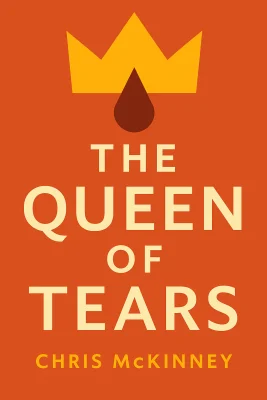
The Queen of Tears
Categories
Fiction
Content Type
Book
Binding
Paperback
Year
2007
Publisher
Soho Press
Language
English
ISBN13
9781569474518
File Download
PDF | EPUB
The Queen of Tears Plot Summary
Introduction
The plane shuddered through turbulence as Soong Nan Lee gripped her armrest, staring through scratched plexiglass at the nothingness that shook her. She had survived a hundred-mile barefoot walk across war-torn Korea, risen from peasant orphan to celebrated actress, and buried two husbands. Now, at sixty, she was flying to Hawaii for her son's wedding, carrying the weight of three generations on her bird-like frame. In the suffocating humidity of Honolulu Airport, her family waited like scattered pieces of a broken constellation. There was Won Ju, her eldest daughter, quietly drowning in a failing marriage while raising fifteen-year-old Brandon. Donny, her perpetually failing son, about to marry Crystal, a twenty-something stripper from the wrong side of paradise. And Darian, her American-born daughter, searching for meaning in coffee shops and literature. None of them knew that within months, their carefully constructed lives would collapse like a house of cards in a hurricane, leaving behind only the question of whether any family can survive the weight of its own accumulated trauma.
Chapter 1: The Silver Knife: Heritage and Protection
Fourteen-year-old Cho Kwang Ja walked barefoot across a hundred miles of Korean wasteland in 1952, her feet developing calluses thick as leather. She wasn't political or religious, just hungry for something different than the dry mountains of Communist North Korea. When a black car struck her in Seoul's crowded streets, she played dead with the skill of a born actress, still clutching six stolen grapes in her fist. The car's owner, film producer Park Dong Jin, saw through her performance immediately. He brought her to his magnificent house with its impossible garden, where purple grapes hung heavy on wooden poles and koi swam in crystal streams. The bent-backed servant who greeted them spoke of transformation: "Only that you become a lady." For a year, Kwang Ja shed her peasant skin like a snake. Her calluses were scrubbed away, her northern accent polished smooth, her name changed to Park Soong Nan. When Dong Jin finally appeared to her, he carried a lacquered box containing an ancient silver knife. "In the old days," he explained, "it was given to young women as both decoration and protection." The knife felt surprisingly light in her hands, its silver blade catching sunlight like captured lightning. Dong Jin spoke of arming her for survival, but Soong Nan understood the deeper truth. She was no longer the helpless girl from the streets. She was becoming something else entirely, something that would need protection not just from strangers, but from the very family she would create.
Chapter 2: Queens and Kingdoms: From Korean Stardom to American Exile
By nineteen, Soong Nan had become Korea's Queen of Tears, her angular face gracing movie posters across Seoul. Marriage to her producer brought wealth and two children, but when Dong Jin collapsed at an awards ceremony, clutching his chest as success turned to ash, she found herself alone with infant Won Ju and baby Chung Yun. The offers came swiftly from powerful men who collected actresses like trophies. Moon Chung Han, head of the ruling party, became her protector and lover, funding her films while she worked seventeen-hour days. Her children were raised by rotating nannies, growing up strangers in their own home while their mother chased the ghost of financial security. Everything shattered when American Captain Henry Lee walked into her world with his terrible Korean and five-dollar Timex watch. Their secret marriage triggered Chung Han's rage, and within days, newspapers revealed her peasant origins and Japanese ancestry. The scandal destroyed her career, but worse followed when her children came home beaten and bloodied, twelve-year-old Won Ju nearly raped by schoolmates who called her Japanese trash. That night, Soong pressed the silver knife into Won Ju's trembling hands. "I will never let them try again," she promised. "We are all going to America where they cannot touch you." Three days later, they boarded Henry's military transport, fleeing toward what they hoped would be sanctuary. None of them suspected that America would prove just as capable of breaking their family apart.
Chapter 3: Fractured Reflections: The Legacy of Family Trauma
In the neon wasteland of 1970s Las Vegas, nineteen-year-old Won Ju worked the graveyard shift at the California Hotel Casino, serving drinks to cowboys and perverts while her brother Donny navigated high school with stolen pride and black eyes. They had escaped to Sin City together, abandoning their stepfather and baby half-sister Darian in the grape vineyards of Fresno, speaking only English to each other like immigrants desperately scrubbing away their accents. Won Ju's uniform was designed for male fantasy: fishnet stockings, a bathing suit bottom, and a tuxedo shirt that invited wandering hands. She endured the groping and racial slurs with silent fury, smoking stolen marijuana to numb the constant humiliation. When bartender Andy Martinez offered friendship, she grasped at it like a drowning woman reaching for driftwood. The date began with candlelight and wine, but Andy's charming mask slipped when he slipped LSD under her tongue at a pounding disco. As the world melted into nightmare hallucinations, Won Ju found herself trapped in his apartment, fighting for her life as Four Tops songs played at half-speed like dying animals. She jammed her thumb into his eye and ran, but he caught her, beat her unconscious, and took what he wanted. Days later, Won Ju lay catatonic in a psychiatric ward, grinding her teeth and staring at white walls while Soong flew back from Korea. The silver knife had failed to protect her daughter, but it would serve a different purpose. At dawn, as purple sky bled into day, Soong sat on Andy's porch steps and waited. When he stumbled home drunk, she smiled and waved him close. Human flesh, she discovered, offered less resistance than rotten fruit.
Chapter 4: Forbidden Territories: When Boundaries Collapse
Twenty years later in Hawaii, Won Ju had built what looked like a stable life with real estate agent Kenny Akana and their son Brandon. She ran a boutique in Waikiki while Kenny paddled outrigger canoes and day-traded stocks, their condo overlooking a city that sold paradise to tourists while hiding its own poverty behind resort walls. The family's careful equilibrium shattered when Donny married Crystal, a platinum-blonde stripper from Waianae whose surgically enhanced body and tragic past made her both magnetic and dangerous. Crystal moved in temporarily after fighting with Donny, sleeping in the living room where fifteen-year-old Brandon lay on the couch, his adolescent hormones raging as he watched her through the darkness. What began as forbidden glances escalated into something neither could control. Crystal, damaged by years of abuse and seeking purity in innocence, found herself drawn to the boy's untouched soul. Brandon, drowning in suburban ennui and confused by desires he couldn't name, discovered that love and lust could be the same devastating force. When Soong arrived unannounced to check on her grandson, she found them together, Crystal dancing naked while Brandon watched with the hungry eyes of first awakening. The Queen of Tears had witnessed war, poverty, and murder, but nothing had prepared her for this moment when the sins of one generation infected the next, proving that some boundaries, once crossed, can never be restored.
Chapter 5: The Weight of Water: Drowning in Consequences
The revelation exploded through the family like shrapnel from a moral bomb. Won Ju confronted the impossible: her fifteen-year-old son had been seduced by her brother's wife, and now Crystal was carrying Brandon's child. The boy sat at the kitchen table, mechanically answering questions with the hollow voice of someone already drowning in consequences too vast for his young mind to process. Kenny's reaction revealed the rot beneath his perfect exterior. Instead of outrage, Won Ju glimpsed something that made her sick: pride that his son had bedded a woman other men fantasized about. That night, she found Kenny groping the sleeping Crystal, then lying about it with the practiced ease of a serial predator. Her marriage died in that moment, its corpse floating to the surface like the poisoned fish she killed with bleach. Won Ju fled with Brandon to the west side of Oahu, seeking refuge in the weathered house where Crystal's brother Kaipo lived with ghosts and stolen goods. Kaipo, an ex-con whose massive frame housed a surprisingly gentle soul, welcomed them without judgment, understanding that sometimes survival meant accepting refugees from other people's wars. Meanwhile, Crystal vanished back into the neon underworld of strip clubs and assumed names, carrying her secret like a time bomb in her womb. She had loved the boy's innocence, but now that innocence was gone, consumed in the fire of adult desires and consequences. The Queen of Tears searched for her among the desperate women who sold their bodies under black lights, but some people, once they choose to disappear, leave no trail to follow.
Chapter 6: Learning to Fly: The Price of Freedom
Brandon stopped talking about computers, stopped eating, stopped being the sullen but manageable teenager he had been. The weight of impending fatherhood at fifteen compressed him into something dense and fragile, like coal that might become diamond or explode into dust. Only with Kaipo did he find momentary peace, listening to stories of ancient Hawaiian kings while learning that some jumps end in flight, others in destruction. At the Pali Lookout, where trade winds howled through the mountain gap with supernatural force, Brandon felt something calling to him. The wind was so strong it held raindrops suspended in mid-air, creating a ceiling of mist above their heads. Tour buses fled as families with children retreated from nature's raw power, but Brandon and Kaipo pushed forward to the cliff's edge. "Flying or sinking," Brandon said, climbing onto the safety railing as Kaipo grabbed for his leg. The boy smiled with sudden clarity, as if he had finally understood something the adults never could. For one impossible moment, the wind caught him and held him aloft like a paper angel, suspended between earth and sky with the sun blazing behind him like a halo. Then gravity remembered its job. Brandon fell toward the canopy below, leaving Kaipo alone at the railing with empty hands and the terrible knowledge that sometimes love means letting go, even when letting go means watching someone you care about disappear forever into the green darkness beneath the cliff.
Chapter 7: The Return Journey: Searching for Redemption
The funeral was small and devastating. Won Ju moved through the service like a sleepwalker, her grief so complete it had rendered her nearly invisible. Kenny raged and blamed, hiring lawyers to prove that Kaipo had murdered their son, even though the gentle giant had been the one to call the police, had been the one to climb down into the canopy to retrieve the broken body. Donny worked alone at the restaurant, cooking and serving with mechanical precision, as if steady labor could hold back the tsunami of family destruction. He had finally found something that made sense to him, the simple rhythm of chopping vegetables and grilling meat, the honest transaction of food for money. Customers came and went, unaware they were being served by a man whose family was dissolving like salt in rain. Darian fled back to California, her romance with damaged authenticity shattered by real tragedy. The textbook suffering she had found so attractive in Kaipo revealed its true face, and she discovered she preferred her pain literary rather than lived. She left Kaipo to fight murder charges alone, his only crime being present when a boy chose to fly. Crystal remained vanished, taking with her the unborn child who would have been Soong's great-grandchild. Private investigators found no trace, as if she had learned from her mother-in-law the ancient art of shedding names and identities like unwanted skin. Somewhere in America, she would give birth to a baby carrying the blood of queens and peasants, strippers and soldiers, but never knowing the weight of that inheritance.
Summary
At Honolulu Airport, Soong Nan Lee boarded Korean Air Flight 42 with a one-way ticket to Seoul, carrying with her the silver knife and the remnants of a family that had finally consumed itself. She had survived Japanese occupation, Communist revolution, and American exile, had transformed from barefoot peasant to movie queen to matriarch, but could not protect her children from inheriting her own capacity for both survival and destruction. The plane lifted into turbulent skies as Soong vomited into a paper bag, her body finally rebelling against the weight it had carried for sixty years. Below, Hawaii's lights grew small and distant, paradise becoming memory. She understood now that families, like nations, rise and fall in cycles of violence and hope, each generation believing it can break the pattern while inevitably repeating it. The silver knife lay heavy in her purse, its blade still sharp but useless against the wounds that matter most. Some battles cannot be fought with weapons forged by human hands; they require a different kind of courage, the kind that learns to let go even when holding on feels like the only choice left.
Best Quote
Review Summary
Strengths: The book is praised for its captivating writing style and strong character development, particularly the portrayal of women in the story. The narrative is described as gripping, with relatable and complex characters that keep readers engaged. Weaknesses: Several reviewers found the ending unsatisfactory, describing it as abrupt and lacking coherence. Some readers noted difficulty in following the plot, with characters occasionally acting out of character. The book is also compared unfavorably to McKinney's previous works, such as "The Tattoo," with criticisms of excessive telling rather than showing. Overall: The book receives mixed reviews, with some readers appreciating the character depth and storytelling, while others are disappointed by the plot execution and ending. It is recommended for those interested in multi-generational family sagas, though expectations should be tempered regarding narrative coherence.
About Author

Chris McKinney
McKinney explores the intersections of identity, culture, and environment in his writing, often reflecting on the socioeconomic disparities that shaped his upbringing in Hawai'i. This focus emerges prominently in his Water City trilogy, where he combines speculative and mystery elements to delve into complex societal themes. For instance, "Midnight, Water City" was acclaimed as a Best Mystery of 2021 by Publisher's Weekly and a Best Speculative Mystery by CrimeReads, demonstrating his ability to engage readers with thought-provoking narratives. These accolades underscore his commitment to creating literature that resonates with a broad audience, connecting personal and cultural narratives with broader societal issues.\n\nIn his wider body of work, McKinney employs a blend of realism and speculative fiction to address themes such as economic inequality and the human connection to the natural world, particularly the ocean. His early book, "The Tattoo," set the stage for his exploration of these themes, marking him as a significant voice in contemporary Hawaiian literature. Meanwhile, other novels like "The Queen of Tears" and "Yakudoshi: Age of Calamity" further showcase his narrative style, which intertwines character-driven stories with social commentary. McKinney's books invite readers to reflect on the complexities of life in Hawai'i, offering insights into the challenges and beauty of island living.\n\nBeyond his literary achievements, McKinney's recognition includes being named "Author of the Year" by Honolulu Magazine in 2024 for the Water City trilogy. He has also contributed to the literary community as a Visiting Distinguished Writer at the University of Hawai'i at Mānoa. This recognition and his awards, including the Elliott Cades Award and multiple Kapalapala Po'okela Awards, highlight his impact on both literature and the cultural life of Hawai'i. For readers seeking narratives that blend rich cultural contexts with engaging storytelling, McKinney's work offers a compelling and thought-provoking experience.
Read moreDownload PDF & EPUB
To save this Black List summary for later, download the free PDF and EPUB. You can print it out, or read offline at your convenience.
The Queen of Tears
by Chris McKinney
