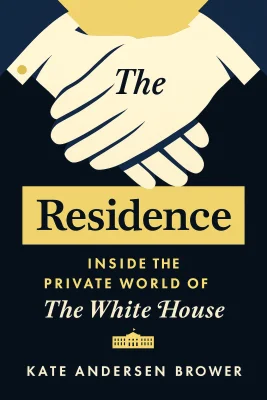
The Residence
Inside the Private World of the White House
Categories
Nonfiction, Biography, History, Memoir, Politics, Audiobook, Book Club, Historical, Presidents, American History
Content Type
Book
Binding
Hardcover
Year
2015
Publisher
Harper
Language
English
ASIN
0062305190
ISBN
0062305190
ISBN13
9780062305190
File Download
PDF | EPUB
The Residence Plot Summary
Introduction
# Invisible Servants: The Untold History of White House Staff On a cold November day in 1963, Preston Bruce sat in his Washington kitchen listening to the radio when an urgent announcement shattered the afternoon calm: the president has been shot. Without hesitation, this White House doorman abandoned his lunch and raced through downtown traffic, his heart pounding with the knowledge that President Kennedy wasn't just the leader of the free world—he was his friend, his boss, and someone who had entrusted him with the most intimate moments of presidential life. This scene captures the extraordinary devotion that defines America's most invisible public servants: the butlers, maids, chefs, ushers, and craftsmen who have served every first family for over two centuries. These men and women possess unparalleled access to presidential power, witnessing moments of triumph and tragedy that never make the history books. They have comforted grieving widows, celebrated historic victories, and maintained absolute discretion through scandals that could topple governments. Their stories reveal not just the human side of American presidents, but the complex dynamics of race, class, and loyalty that have shaped our nation's most famous household. Through their eyes, we glimpse the true cost of power and the quiet dignity of those who serve it.
Chapter 1: The Foundation: Building America's Most Exclusive Service Culture
The White House operates as both symbol and home, requiring a delicate balance between public grandeur and private intimacy. Behind its imposing facade, approximately one hundred residence staff members work tirelessly to maintain this dual identity. From the basement workshops where carpenters craft custom furniture to the third-floor quarters where maids ensure every detail meets presidential standards, these workers form the backbone of American democracy's most visible institution. The hierarchy of White House service reflects both tradition and necessity. At its apex stands the Chief Usher, essentially the general manager of America's most exclusive hotel with just one guest family. Below this position, a carefully orchestrated team of specialists maintains every aspect of presidential life: executive chefs who must satisfy both diplomatic protocol and family preferences, florists who create arrangements worthy of world leaders, and butlers whose discretion rivals that of intelligence operatives. These positions carry extraordinary responsibility. When President Lyndon Johnson demanded shower water pressure equivalent to a fire hose, plumbers worked around the clock to satisfy his needs. When Nancy Reagan required her twenty-five Limoges boxes returned to their exact positions after cleaning, housekeepers photographed each arrangement to ensure perfection. Such attention to detail extends beyond mere service—it represents a commitment to preserving the dignity of the presidency itself. The residence staff's invisibility is both their greatest asset and their defining characteristic. They have perfected the art of being present yet unseen, essential yet unacknowledged. This paradox shapes every aspect of their work, from ducking under television cameras during official events to maintaining conversations that never pause when they enter a room. Their success is measured not by recognition, but by the seamless operation of America's most scrutinized household. The foundation of this service culture was built on an understanding that the White House belonged not to any individual president, but to the American people themselves. This perspective elevated the work from mere domestic service to a form of patriotic duty, creating a sense of mission that would sustain generations of workers through the most challenging circumstances.
Chapter 2: Transitions of Power: Managing Presidential Changes Across Centuries
Every four or eight years, the White House undergoes one of the most complex logistical operations in American government: the complete transformation from one first family to another in just six hours. While the nation watches inaugural ceremonies at the Capitol, residence staff execute a choreographed masterpiece that would challenge any professional moving company, with the added complexity of absolute security requirements and priceless historical artifacts. The morning of Inauguration Day begins before dawn, with workers arriving to prepare for what many consider their most crucial test. By the time the outgoing president hosts a farewell coffee for the incoming family, staff members have already begun the delicate process of packing personal belongings while simultaneously preparing to receive truckloads of new furniture, clothing, and family treasures. No outside movers are permitted; every box, every piece of furniture, every family photograph must be handled by vetted residence employees. The emotional toll of these transitions often surprises newcomers to the White House staff. Many workers spend decades serving the same family, watching children grow up and witnessing the most intimate moments of presidential life. When the Clintons departed in 2001, President Clinton looked each staff member in the eye and simply said "Thank you," leaving the entire room in tears. These farewells represent more than job changes—they mark the end of relationships that transcend typical employer-employee boundaries. Each incoming family brings not only new possessions but entirely different rhythms of life. The Kennedys' youthful energy replaced the Eisenhowers' military precision. The Obamas' Chicago informality contrasted sharply with the Bushes' Texas hospitality. Staff members must rapidly adapt to new preferences, schedules, and expectations while maintaining the same level of excellence that has defined White House service for generations. The continuity provided by residence staff serves as a stabilizing force during these transitions, offering institutional memory and practical guidance to new administrations. Their presence ensures that the White House continues to function smoothly regardless of political changes, embodying the principle that democratic institutions transcend individual leaders. This role as guardians of continuity has made them indispensable to the peaceful transfer of power that defines American democracy.
Chapter 3: Sacred Trust: The Evolution of Discretion and Loyalty
The residence staff operates under an unwritten code more binding than any legal contract: absolute discretion about the private lives of America's first families. This commitment to silence extends far beyond professional courtesy—it represents a sacred trust that makes normal family life possible within the world's most public residence. Without this guarantee of privacy, the psychological burden of the presidency would become unbearable. Staff members witness moments of extraordinary vulnerability: presidents weeping over difficult decisions, first ladies struggling with public criticism, children rebelling against the constraints of their unique circumstances. Butler Wilson Jerman perfectly captured this philosophy when he explained his approach: "You see, you never see. You hear, you never hear. And you don't know nothing." This selective blindness and deafness becomes second nature to those who serve in the residence. The challenge of maintaining discretion while providing excellent service requires remarkable emotional intelligence. When Hillary Clinton needed solitude during the Monica Lewinsky scandal, Usher Worthington White cleared the pool area of all personnel, allowing the first lady precious hours of privacy. When President Reagan shared classified information about bombing Libya with kitchen staff, they responded with professional calm rather than excitement about breaking news. This discretion extends beyond the walls of the White House into the personal lives of staff members. Many avoid mentioning their workplace in casual conversation, deflecting questions about their extraordinary access to power. They understand that their credibility depends on maintaining this silence, and that a single breach of trust could end not only their career but their colleagues' as well. The evolution of this trust relationship reflects broader changes in American society and media culture. As the presidency became increasingly scrutinized and the twenty-four-hour news cycle intensified, the staff's role as protectors of presidential privacy became even more crucial. Their loyalty has shielded not just individual families but the institution of the presidency itself, preserving the dignity necessary for effective leadership in an age of unprecedented public exposure.
Chapter 4: Breaking Barriers: From Segregation to Obama's Historic Presidency
The election of Barack Obama as America's first African American president represented a profound historical moment for the White House residence staff, many of whom are African American descendants of those who built and maintained the executive mansion during slavery and segregation. The symbolism was not lost on anyone: black butlers and maids who had served white presidents for generations were now serving a first family that looked like their own children and grandchildren. The history of race at the White House reflects America's broader struggle with equality and justice. From the enslaved workers who helped construct the building to the segregated dining rooms that persisted into the twentieth century, the residence has been both a symbol of American ideals and a reminder of the nation's failures to live up to them. African American staff members like doorman Preston Bruce and butler Eugene Allen served with dignity through decades when they faced discrimination both inside and outside the White House gates. The civil rights era brought gradual change to the residence, though not without struggle. In the late 1960s, storeroom manager Bill Hamilton led a group of African American housemen in demanding equal pay with their white counterparts. Their successful protest came at a time when Washington burned with riots following Martin Luther King Jr.'s assassination, and their courage helped eliminate one of the last vestiges of institutional racism within the White House itself. When the Obamas arrived in 2009, the emotional impact on longtime African American staff members was profound. Social Secretary Desirée Rogers observed the pride in the butlers' faces as they prepared for the first African American president's arrival, noting how they reminded her of her own grandfather. For many staff members, Obama's presidency validated a lifetime of service and sacrifice, proving that the American dream could indeed reach the highest levels of power and prestige. The transformation from a segregated workplace to one that celebrated diversity represented more than just policy changes—it embodied the fulfillment of America's founding promise that all people are created equal. The residence staff who witnessed this evolution understood that they had not merely served individual presidents, but had participated in the long arc of American progress toward justice and equality.
Chapter 5: Crisis and Character: Serving Presidents Through Scandal and Triumph
Presidential service often requires staff members to accommodate demands that would seem unreasonable in any other context, yet the residence workers approach even the most eccentric requests with professionalism and creativity. President Lyndon Johnson's obsession with shower water pressure led to a five-year engineering project involving multiple pumps and custom nozzles, while Nancy Reagan's perfectionism required pastry chef Roland Mesnier to create and recreate desserts until they met her exacting standards. The unpredictable nature of presidential life means that staff members must be prepared for anything at any time. When President Carter worked through the Iran hostage crisis, kitchen staff set out sandwiches and cookies in the Oval Office at all hours to sustain exhausted foreign policy teams. When President Obama wanted to celebrate the passage of healthcare legislation, residence workers organized a party for one hundred people with just four hours' notice, demonstrating the flexibility that defines their service. Crisis situations reveal the true character of both presidents and their staff. During the Watergate scandal, residence workers watched President Nixon deteriorate day by day, yet they maintained their professional demeanor and personal loyalty. The atmosphere within the White House became increasingly toxic and paranoid as mounting evidence created a siege mentality that permeated every aspect of operations. Staff members found themselves caught between loyalty to their positions and growing awareness of serious wrongdoing at the highest levels of government. When President Reagan was shot, Nancy Reagan broke several ribs while trying to retrieve her husband's favorite photograph to bring to the hospital, yet she never publicly revealed her injury, embodying the same discretion she expected from her staff. These moments of crisis tested not only the presidents' character but also the staff's commitment to their roles as servants rather than witnesses to history. The residence staff's ability to maintain their professionalism during scandals and crises has protected the institution of the presidency even when individual presidents have failed. Their steady presence and continued excellence in service have provided stability during the most turbulent periods, demonstrating that the office itself transcends the flaws of its temporary occupants.
Chapter 6: Personal Cost: The Hidden Sacrifices of Public Service
The privilege of serving America's first families comes at a significant personal cost for residence staff members, whose dedication often strains marriages, separates them from their children, and consumes their lives in ways that outsiders rarely understand. The unpredictable hours, constant pressure, and absolute commitment required by the position create unique challenges that test even the strongest family bonds. Usher Nelson Pierce's wife Caroline kept a calendar by their telephone so she would know when her husband was working, as his schedule changed so frequently that his presence at home felt strange. Their children grew up with the White House as a constant presence in their lives, often missing family activities because their father was needed at the residence. This sacrifice was repeated in households across the Washington area, where White House staff members struggled to balance their extraordinary professional responsibilities with their roles as parents and spouses. The physical and emotional toll of White House service can be devastating. Doorman Frederick Mayfield died of a heart attack at fifty-eight after repeatedly postponing necessary surgery because he felt the president needed him. Executive Pastry Chef Roland Mesnier worked sixteen-hour days for years, often canceling family dinners and missing birthdays to ensure that White House events met the first family's expectations. These sacrifices represent more than professional dedication—they reflect a deep sense of patriotic duty. Yet the bonds formed among staff members create a support system that helps sustain them through these challenges. When colleagues face personal crises, their fellow workers contribute money and emotional support, creating a family atmosphere that extends far beyond the workplace. The shared experience of serving at the highest levels of American government creates relationships that last lifetimes, providing meaning and purpose that transcends the personal costs of their service. The staff's willingness to make these sacrifices reflects their understanding that they are participating in something larger than themselves. Their service contributes to the smooth functioning of American democracy, and this sense of historical purpose helps justify the personal costs they bear in pursuit of excellence.
Chapter 7: Cultural Legacy: How Staff Shaped American Presidential History
The residence staff's influence on American history extends far beyond their official duties, as their quiet presence and steady service have shaped presidential decisions and family dynamics in ways that rarely receive public recognition. Their cultural impact reflects not only their professional competence but their role as witnesses to and participants in the most significant moments of American political life. The staff's commitment to excellence has elevated the White House's reputation as a center of American culture and diplomacy. French chef René Verdon's sophisticated cuisine during the Kennedy administration helped establish the White House as a rival to European palaces, while florists like Ronn Payne created arrangements that impressed world leaders and set standards for official entertaining. These contributions enhanced America's soft power and cultural influence on the global stage. The residence workers' discretion has protected not only individual presidents but the institution of the presidency itself. Their silence about Franklin Roosevelt's paralysis, John Kennedy's health problems, and countless other sensitive matters has preserved the dignity and effectiveness of presidential leadership. This protective instinct represents a form of patriotic service that goes beyond personal loyalty to individual families. Perhaps most importantly, the staff's evolution from a segregated workforce to one that reflects America's diversity tells the story of the nation's progress toward equality and justice. The journey from enslaved workers building the White House to African American Chief Usher Stephen Rochon overseeing its operations represents the fulfillment of American ideals. Their service demonstrates that excellence and dignity know no racial or class boundaries, and that true patriotism is measured not by position but by dedication to the common good. The cultural legacy of White House staff extends into the broader American understanding of service and citizenship. Their example demonstrates that meaningful contribution to the nation can take many forms, and that the quiet work of maintaining institutions and supporting leaders is as valuable as the more visible acts of political leadership. This lesson remains relevant as each generation seeks to understand its own role in preserving and strengthening American democracy.
Summary
The stories of White House residence staff reveal the enduring tension between public service and personal sacrifice that defines American democracy at its highest levels. These men and women have navigated the complex dynamics of power, race, and loyalty while maintaining the dignity and effectiveness of the presidency through triumph and scandal, war and peace, social transformation and political upheaval. Their experiences illuminate the human cost of democratic leadership and the quiet heroism required to sustain it. The residence staff's legacy offers profound lessons for contemporary America about the nature of service, excellence, and national unity. Their commitment to discretion demonstrates the importance of institutional trust in democratic governance. Their professional pride shows how dignity and purpose can be found in any honest work. Most importantly, their evolution from a segregated workforce to one that reflects America's diversity proves that progress is possible when individuals commit themselves to something larger than their own interests. These lessons remain as relevant today as they were when the first servants walked through the White House doors over two centuries ago.
Best Quote
“The Elms was the Johnsons’ Washington, D.C., mansion and it was equipped with a shower like nothing the staff had ever seen: water charging out of multiple nozzles in every direction with needlelike intensity and a hugely powerful force. One nozzle was pointed directly at the president’s penis, which he nicknamed “Jumbo.” Another shot right up his rear.” ― Kate Andersen Brower, The Residence: Inside the Private World of the White House
Review Summary
Strengths: The book effectively humanizes First Families, portraying them as genuine individuals. It provides an intimate narrative through the perspective of the White House domestic staff, offering historical insights over the last 80 years. The author skillfully avoids turning the book into tabloid journalism, instead presenting it as a powerful historical piece. Weaknesses: The review criticizes the author for repeatedly emphasizing the nobility and discretion of the White House staff, which some readers may find excessive and annoying. Additionally, there is a perceived bias against the Clinton family. Overall: The reader finds the book to be a quick and engaging read, appreciating its historical depth and the unique perspective it offers. Despite some repetitive elements, the book is recommended for its insightful portrayal of life within the White House.
About Author

Kate Andersen Brower
Brower illuminates the interplay between personal lives and political power in the corridors of the White House and beyond. Her exploration of the human aspects behind public personas offers readers a nuanced perspective on political history, enriching public discourse. Notably, her bestselling book, "The Residence: Inside the Private World of the White House," offers a behind-the-scenes look at the lives of those who serve the Executive Mansion, reaching the pinnacle of The New York Times bestseller list. Meanwhile, in "First Women: The Grace & Power of America's Modern First Ladies," she delves into the evolving roles of First Ladies, providing an incisive examination of their influence.\n\nHer approach blends meticulous research with vivid storytelling, making complex political narratives accessible. Her biography "Elizabeth Taylor: The Grit and Glamour of an Icon" marks her expansion into profiling cultural figures, showcasing her versatility as an author. As a contributor to esteemed publications like The New York Times and Vanity Fair, Brower uses her incisive analyses to engage a broad audience interested in the intersections of personal and political realms. Her work not only provides historical insight but also fosters a deeper understanding of the dynamics that shape American leadership.\n\nReaders who engage with Brower's work can expect to gain a comprehensive view of American political life, informed by exclusive interviews and firsthand accounts. Her ability to humanize historical figures makes her books appealing to those interested in the nuanced dynamics of political power and its personal dimensions. Her bio presents a compelling narrative that bridges the gap between the public and private lives of America's political elite, offering both entertainment and education to her audience.
Read moreDownload PDF & EPUB
To save this Black List summary for later, download the free PDF and EPUB. You can print it out, or read offline at your convenience.
The Residence
by Kate Andersen Brower
