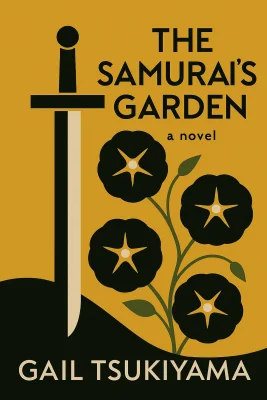
The Samurai's Garden
Categories
Fiction, Historical Fiction, China, Asia, Japan, Book Club, Historical, Novels, Asian Literature, Japanese Literature
Content Type
Book
Binding
Paperback
Year
1995
Publisher
St. Martin's Griffin
Language
English
ASIN
0312144075
ISBN
0312144075
ISBN13
9780312144074
File Download
PDF | EPUB
The Samurai's Garden Plot Summary
Introduction
A young Chinese man stands alone by a gate, the sun already warm against his back. His name is Stephen Chan, exiled to Tarumi, Japan to recover from tuberculosis. It's 1937, and the world teeters on the edge of war. Soon Japanese soldiers will march across China, but here in this seaside village, time seems suspended. The house belongs to his grandfather, maintained by a silent gardener named Matsu—a man whose weathered face conceals unimaginable depths. Stephen's temporary banishment from Hong Kong becomes something unexpected as he discovers three souls bound by secrets: Matsu, the stoic gardener; Sachi, a woman hidden away in the mountains; and Kenzo, whose cheerful teahouse masks profound sorrow. Against the backdrop of gathering conflict, Stephen finds himself caught in a private war between beauty and destruction, love and isolation, as gardens become sanctuaries against the world's brutality. His journey through illness becomes a passage into the landscape of human resilience, where even the most wounded souls cultivate beauty from devastation.
Chapter 1: The Arrival: A Young Man's Exile to Tarumi
Stephen Chan clutched his suitcase as the train pulled into Tarumi station. The summer heat pressed down on him, his clothes damp against his back. This small Japanese seaside village would be his prison for however long it took to recover from the tuberculosis that ravaged his lungs. At twenty, he should have been completing his studies at Lingnan University in Canton, not being shipped away from his family in Hong Kong. The platform was nearly empty when he stepped off the train. A heavyset man with close-cropped gray hair approached cautiously. "Pao-Lin Chan's grandson?" the man asked in a gruff voice. Stephen nodded. This was Matsu, the caretaker of his grandfather's beach house. Without another word, Matsu took his suitcase and began walking, leaving Stephen to follow through the heat. The road to the beach house was powdered with white sand. Stephen struggled to keep pace with Matsu, who moved with surprising agility for his age. His lungs burned with each step, but he refused to show weakness. The salty air filled his nostrils, a sharp contrast to the thick, sticky air of Hong Kong. They passed bamboo-fenced houses, and in the distance, he could hear the steady surge of waves. When they finally reached the gate, Matsu set down the suitcase and unlocked it. Stephen stepped through into a garden that took his breath away. A silk tree, heavy with summer blossoms, stood beside two large black pines. An oval-shaped pond dominated one side, with flashes of orange and silver fish beneath its surface. A wooden bridge arched across its width, and stone paths wound through beds of moss. Inside the house, Matsu prepared a traditional Japanese bath. The hot cedar-scented water embraced Stephen's frail body, washing away the dust of travel. In this quiet sanctuary, far from his mother's anxious eyes and his sister Pie's curious questions, Stephen felt his tight chest loosen for the first time in months. That night, as he lay on the futon Matsu had prepared, listening to classical music drifting from the kitchen, Stephen realized this exile might offer something unexpected: the chance to breathe again, both in body and spirit.
Chapter 2: Matsu's Garden: Finding Strength in Quiet Contemplation
Dawn spilled across the garden, casting long shadows from the black pines. Stephen's hand hovered over the blank canvas. After weeks in Tarumi, his strength had begun to return, and with it, a desire to paint. He had pushed aside his grandfather's desk in the study and set up his easel facing the garden. The garden captivated him – not with showy displays, but with its subtle balance of strength and grace. "What are you doing?" Matsu appeared suddenly, his voice sharp with concern. "I wanted to paint the garden," Stephen answered, suddenly aware he hadn't asked permission. "I hope it's all right—" Matsu stood silent, his weathered face unreadable. Then, "Do as you wish," he said, disappearing around the side of the house. For hours, Stephen painted, trying to capture the garden's essence on canvas. The smell of oil paints filled the room as he worked. Later, Matsu returned with a tray of lunch – noodles sprinkled with green onions and fish. Beside the cup of tea lay a long, slim, black-lacquered box. Inside were three expensive sable paintbrushes. "These are beautiful brushes," Stephen said when he found Matsu in the back garden carefully planting a small black pine. "I thought you might like them," Matsu replied without looking up. "They belonged to your oj-san." "They're new. Didn't my grandfather ever paint with them?" "Your oj-san had more brushes than he knew what to do with. He would sit half a day looking through art books and catalogs. He liked to buy beautiful things simply to have them. I found those in his desk many years ago. I thought you might make better use of them." During the weeks that followed, Stephen observed Matsu in the garden. The man worked with meticulous care, pruning, planting, and raking the moss beds. His large hands, rough from years of labor, moved with unexpected delicacy when handling a tender shoot or bloom. In the garden, Matsu transformed from servant to artist, creating a living masterpiece. One day, walking along the beach, Stephen encountered two young Japanese girls. The taller one, about his age, caught his eye before they both ran away. Later, he discovered they had thrown flower petals over the garden wall. When he mentioned this to Matsu, the old gardener merely smiled knowingly and said, "It's part of the game. You'll see." The garden became Stephen's sanctuary, a place where time slowed and his body could heal. Each day as he sat painting, he noticed more: how the bridge cast reflections on the pond's surface, how the moss grew in subtle variations of green, how the stone lanterns glowed at dusk. Matsu's garden whispered rather than shouted; it revealed itself gradually, inviting him deeper with each passing day.
Chapter 3: Yamaguchi: The Village of Lepers and Hidden Beauty
"I'm going to visit a friend who lives in a small mountain village near here," Matsu said one autumn morning. "I wondered if you would like to come with me?" Stephen followed Matsu up a narrow, rocky path through pine forests. As they climbed higher, Matsu spoke of Yamaguchi, also known as the Village of Lepers. "When some of those who had the disease were no longer wanted by others in town, they took what few belongings they had and went up into the mountains, hoping to die peacefully. Away from the cruelties of the healthy." "Aren't you afraid to go there?" Stephen asked hesitantly. "The first time I went, I wasn't sure what to expect. After all, lepers from all over Japan found their way to Yamaguchi, simply hoping to be accepted, to be swallowed up by the mountain." They reached a clearing where small wooden houses clustered together. As they walked through the village, Stephen tried not to stare at the disfigured faces and mangled limbs of the villagers. The smell of eucalyptus and medicine hung in the air. Matsu led him to a small house almost hidden among the trees. "Sachi-san, it's me," Matsu called softly at the door. A woman stepped out, her face partially hidden by a black veil. One side of her face remained obscured as she bowed. "Matsu? Who is this?" she asked, eyeing Stephen. "This is Stephen-san. He's a friend," Matsu replied. Inside Sachi's house, Stephen was struck by its simplicity and cleanliness. The air smelled of pine and tea. Sachi served them with grace, her movements careful to keep the left side of her face hidden. When she leaned forward to pour tea, her scarf slipped slightly, revealing white, scaly scars—the mark of leprosy that had eaten away her flesh. As they ate, Stephen watched the interaction between Matsu and Sachi. Their relationship carried an intimacy born of long acquaintance, yet maintained a formal distance. Afterward, Sachi took him to see her garden—utterly unlike Matsu's. Where his was lush with plants, hers was a dry landscape of stones, rocks, and raked gravel. "It's called kare sansui," Matsu explained. Stephen was transfixed by the illusion of mountains formed by arranged rocks, surrounded by gravel and stones flowing like a rocky stream leading to a sea of smooth pebbles. The stark beauty of it stunned him. "I could not have done it without Matsu's help," Sachi told him later. "Many years ago, when I first came to Yamaguchi, the possibility of having a life had all but vanished. Matsu was the one who insisted I have a garden." On their walk back down the mountain, Stephen asked, "Why does Kenzo still have such strong ties to Sachi?" He had noticed the messages that passed between Matsu and the teahouse owner in the village. Matsu was quiet before answering. "They were once engaged to be married. Sachi was the only girl Kenzo ever loved. I was his best friend and his go-between when the disease came." Walking back to Tarumi in the twilight, Stephen realized that what he had witnessed in Yamaguchi wasn't just suffering, but incredible strength—beauty wrested from devastation. The village of outcasts had created a community where most would have found only despair. And at its heart was a woman who had transformed her prison into a garden.
Chapter 4: Triangles of Love and Loss: Matsu, Sachi, and Kenzo's Story
Winter settled over Tarumi, cold and gray. One night, Sachi appeared unexpectedly at Stephen's bedside after he had been injured in a storm. He had never seen her outside Yamaguchi before. When he recovered, she began visiting regularly to help restore Matsu's storm-damaged garden. The three formed an unlikely family, bound by something Stephen couldn't quite name. One afternoon, Kenzo arrived unexpectedly at the house while Sachi was there. His face flushed with anger when he saw her. "What other lies have you been telling me?" he shouted at Matsu. "We never lied to you, Kenzo," Matsu answered calmly. In a sudden move, Kenzo lunged forward and tore the scarf from Sachi's face. "You really are a monster!" he roared, laughing hysterically at the sight of her scarred features. Matsu's voice dropped dangerously low. "You are the monster," he said, shoving Kenzo out the door. After the incident, Sachi retreated to Yamaguchi, refusing to return to Tarumi. The peace they had created shattered in an instant. Days later, Stephen climbed alone to Yamaguchi to see Sachi. He found her in her stone garden, raking patterns into the gravel. "I wanted to make sure you don't have to hide from us," Stephen told her. "The scars make no difference to me, and I know they never did to Matsu." Sachi removed her scarf completely, turning the damaged side of her face toward him. The disease had eaten away part of her nose and left a white web of scars from her chin to her eye. "Does Matsu need this?" she whispered. Stephen never wavered. "Yes," he answered. Later, as they sat in her house sipping tea, Sachi began to tell her story. "I was seventeen when the disease chose me," she said. "I was engaged to Kenzo. He was a good man, but he never had the inner strength to deal with such a tragedy." She described how she had fled to the mountains rather than bring shame to her family. "It was Matsu who found me in my deepest shame," she said. "When I became afflicted with the disease, I panicked, and there was no one else I could turn to." "But why Matsu? You hardly knew him," Stephen asked. "He was the only one who wasn't afraid to speak to me about Tomoko," she replied, referring to Matsu's younger sister who had taken her own life when she contracted leprosy. "From the beginning, he faced her death with a certain respect and understanding. He knew that beauty was everything to her. Without it, Tomoko's only choice was death." As Sachi continued her story, Stephen understood that Matsu had spent decades caring for her, building her house, creating her garden, visiting faithfully while maintaining the fiction to Kenzo that she remained isolated. Meanwhile, Kenzo had never found the courage to see her, sending messages and gifts through Matsu instead. "In the end, it was he and I who were so much alike," Matsu had said of Kenzo, "faithful to the same woman for all these years." This triangle of love and loss—Sachi's beauty destroyed, Kenzo's inability to accept her transformation, and Matsu's quiet, steadfast devotion—had defined their lives for forty years. Stephen realized that gardens were not the only things that required patient tending. Some wounds never healed completely, but they could be transformed into something with its own kind of beauty.
Chapter 5: Blossoms and Storms: Stephen's Awakening Amid Growing Conflict
Spring arrived with sudden violence. News of Japanese victories in China crackled through Matsu's radio. "The Imperial Japanese Army continues its brave, victorious march south," a woman's high-pitched voice announced. "It is futile for the Chinese to resist any longer." Stephen's hands tightened around his teacup. The voices from the radio described his homeland, his family, his future—all threatened by the country where he now found refuge. He thought of his mother and sister Pie in Hong Kong, his friends at Lingnan University. A letter arrived from his friend King: "Don't I envy you there on the beach, without the incessant threat of bombs exploding in the distance." While war clouds gathered, Stephen found himself drawn to Keiko, the young Japanese girl he had glimpsed on the beach. They met occasionally, walking along the shore, their conversations tentative bridges across cultures. When they sat together beneath the pines near the Tama Shrine, Stephen dozed off and dreamed of her—a dream so vivid he woke embarrassed. Keiko merely smiled. "You should never pull someone away from his dreams," she said. In Tarumi's village, preparations began for the annual O-bon Festival to honor the dead. Paper lanterns hung from poles, lighting the way for ghosts to arrive and depart. Matsu's sister Fumiko arrived from Tokyo, bringing stories of Matsu and his sister Tomoko as children. For the first time, Stephen saw Matsu laugh easily, transformed by his sister's presence. "After our parents died," Fumiko told Stephen, "I asked Matsu to come live in Tokyo, but he refused. His heart has always been in Tarumi. Even though he won't say what, there has always been something or someone holding him here, something as deeply rooted as the pines covering these mountains." Days later, at the Setsubun festival marking the beginning of spring, villagers threw beans to drive away winter demons. Afterward, Stephen and Matsu walked back through Tarumi. A crowd had gathered outside Kenzo's teahouse. When they pushed through, they found Kenzo's body hanging from a rafter. Matsu lowered his friend, whispered something in his ear, and closed his eyes. Then, without a word, he walked away. The following day, Stephen found a note on Matsu's kitchen shelf. "When you return, I'll draw in the other eye," it said. Beside it sat the daruma doll Stephen had given him for New Year's—a doll with one eye painted in, signifying a wish made but not yet fulfilled. Two days later, news came that Canton had fallen to the Japanese. Stephen's father insisted he return to Hong Kong before travel became impossible. War had finally reached into their sanctuary. As Stephen packed his belongings, a storm lashed the house. In the garden, cherry blossoms scattered in the wind, petals floating on the pond's surface. The same forces that brought forth beauty also destroyed it, he realized. Nothing lasted forever—not gardens, not friendships, not peace. That night, Sachi came down from Yamaguchi one last time. The three of them ate dinner together, their laughter masking the sadness of imminent separation. As Stephen watched Matsu and Sachi together, he understood that what they had built—a life of dignity amid suffering, of beauty wrested from devastation—was itself a kind of victory against the world's cruelty.
Chapter 6: Partings: The Painful Price of War and Circumstance
The morning of Stephen's departure dawned gray and overcast. He rose early and wandered into the garden one last time, trying to memorize every detail: the curve of the stone path, the moss bed surrounding the pond, the wooden bridge, the black pines standing sentinel. Fall had already begun to change the garden, the leaves turning to crimson and gold. Matsu appeared at the door carrying Stephen's suitcase. They walked in silence through the bamboo gate and down the white sand road toward the train station. The weight between them was too heavy for conversation. At the station, Stephen turned to Matsu. "Why don't you go back before it really begins to rain?" he suggested, his voice breaking. "The train will be here any minute." "I think you will be fine, Stephen-san," Matsu bowed. But instead of bowing back, Stephen hugged the old gardener. For a moment, Matsu stood frozen, then slowly raised his arms to return the embrace. "So we'll write. And you'll take care of Sachi?" Stephen asked. "As always," Matsu answered. The train arrived, belching steam. Stephen boarded and found a seat by the window, but when he looked out, Matsu was already gone. As the train rattled toward Kobe, Stephen noticed a brown package among his belongings. Inside were two black leather-bound books from Matsu. There was no note. He ran his hand over the soft leather covers, then opened one and began to write. In Kobe, Stephen's father met him at the station. "You're certainly in much better health now than when you left here a year ago," his father observed. They spent one night together before Stephen boarded the ship for Hong Kong. On his last day in Japan, he received a small surprise at the gate—a single pressed white blossom. Keiko had come to say goodbye in her own way. Her brother had been killed fighting in China, and she had told him weeks earlier they could no longer meet. "My brother was killed at Hsuchowfu," she had explained. "Nothing could ever come of our friendship now." As the ship pulled away from the harbor, Stephen stood at the rail watching Japan recede. The country that had healed his body had also wounded his heart. He thought of Sachi in her stone garden, of Matsu tending his moss and pines, of Keiko walking alone on the beach. They would continue their lives in Tarumi while he returned to a Hong Kong threatened by the same forces that had given him sanctuary. In his cabin, Stephen opened one of Matsu's leather books and continued writing. He wrote of the garden that whispered rather than shouted, of the woman who created beauty from devastation, of the man who found strength in silence. Most of all, he wrote of what he had learned: that healing often comes from unexpected places, that beauty can emerge from the deepest wounds, and that some gardens grow not in the ground but in the human heart.
Chapter 7: Return Journey: Carrying Gardens Within
The South China Sea stretched before the ship, gray and restless under a clouded sky. Stephen gripped the railing, his body stronger than it had been in years, yet his heart heavy with all he had left behind. Hong Kong waited ahead, his mother and sister Pie, his school friends—a life interrupted that he would now resume. But Tarumi had changed him in ways he was only beginning to understand. On the journey home, Stephen filled the leather-bound books Matsu had given him. He wrote of Sachi's courage, of Matsu's quiet strength, of gardens created from stone and pain. He wrote of the beauty he had found amid war and isolation. Most of all, he wrote to preserve what he had learned—that healing comes in many forms, that some wounds never disappear but can be transformed, that beauty often emerges from the darkest places. In his pocket, he carried Tomoko's two smooth, black lucky stones that Sachi had pressed into his hand before he left. "I would like to give you a very small gift in return, to carry back on your journey home," she had said. The stones were cool against his palm, connecting him to those he had left behind. As Hong Kong's harbor came into view, crowded with ships and sampans, Stephen thought of what awaited him. His mother's worried eyes, Pie's eager questions, King's tales of bombings and refugees. The war that had seemed distant in Tarumi would be all too real here. Japanese planes already flew reconnaissance missions over the British colony. It was only a matter of time. Yet alongside his fear ran a current of strength he hadn't possessed before. He had witnessed how Sachi and Matsu had built lives of dignity amid devastation. He had seen how they tended their gardens—both literal and figurative—with patience and grace. Whatever lay ahead, he would face it carrying their lessons within him. The ship's horn sounded as they entered the harbor. Stephen closed his journal and tucked it into his bag. Tomorrow he would embrace his mother and sister, resume his studies, become again the person they remembered. But he knew he would never be the same. Part of him would always remain in that garden by the sea, with the silent gardener and the scarred woman who had shown him the meaning of resilience. As passengers rushed to collect their belongings, Stephen remained at the rail, watching Hong Kong grow larger. One journey was ending, another beginning. Somewhere behind him, Matsu was likely in his garden, pruning a black pine or raking patterns in the moss. Sachi would be in Yamaguchi, moving stones to create new mountains and rivers. Their lives would continue, separate from his yet forever connected. Stephen touched the stones in his pocket one last time, then turned from the rail. The ship eased toward the dock. It was time to go home.
Summary
The gardens of Tarumi had worked their healing in ways Stephen could never have imagined when he first arrived, pale and coughing, at the train station. His tuberculosis had been merely the visible wound; the deeper healing came through his encounters with Matsu and Sachi, who showed him how beauty could be created from devastation. Through Matsu's lush garden and Sachi's stone landscape, Stephen learned that life's most profound lessons often emerge from its greatest suffering. Their stories—of love preserved through disfigurement, of friendship sustained across boundaries, of dignity maintained in isolation—became part of his own story, a narrative no longer defined solely by illness but by the human capacity for resilience. As war engulfed Asia, Stephen carried these lessons like seeds back to Hong Kong. The gardens of Tarumi had been his sanctuary, but their true gift was teaching him how to cultivate beauty within himself, how to find strength in stillness, how to create meaning from loss. Matsu's patient tending of plants and Sachi's transformation of pain into art showed him that healing isn't always about erasing wounds but sometimes about incorporating them into a new kind of wholeness. In a world tearing itself apart, Stephen had discovered the most revolutionary act of all: the creation of beauty from brokenness, the cultivation of life in the face of destruction. These were gardens that even war could not destroy.
Best Quote
“Sometimes you can’t let go of the past without facing it again.” ― Gail Tsukiyama, The Samurai's Garden
Review Summary
Strengths: The novel is praised for its atmospheric depiction of 1930s rural Japan, offering insights into Japanese daily life, festivals, religious ceremonies, and cuisine. The narrative effectively intertwines personal and cultural elements, exploring complex themes such as familial relationships and societal issues like leprosy. Overall: The review suggests a positive sentiment towards the novel, highlighting its rich cultural portrayal and emotional depth. The book is recommended for readers interested in historical and cultural narratives, particularly those focusing on Japan during wartime.
About Author

Gail Tsukiyama
Tsukiyama explores the nuanced interplay of cultural heritage and personal identity through her novels, focusing on the intersection of Chinese and Japanese backgrounds against various historical backdrops. Her works, such as "Women of the Silk" and "The Samurai's Garden," delve into themes of resilience and transformation, weaving intimate stories set amidst significant socio-political changes. Whereas some authors prioritize plot, Tsukiyama emphasizes character development and the subtleties of interpersonal relationships, thereby enriching the reader's understanding of her characters' internal and external conflicts.\n\nBy setting her narratives in times of historical upheaval, Tsukiyama provides readers with a lens to examine broader societal shifts through personal stories. Her book "Night of Many Dreams" continues this approach, illustrating how individuals navigate their aspirations and identities in changing worlds. Through vivid descriptions and rich character arcs, Tsukiyama's works offer readers an immersive experience that fosters empathy and a deeper appreciation for diverse cultural narratives.\n\nReaders drawn to Tsukiyama’s books often seek an exploration of heritage and personal growth within historical contexts. Her novels serve as a bridge connecting past events to contemporary themes, making them particularly resonant for those interested in cultural studies or historical fiction. This bio highlights Tsukiyama’s skill in blending personal and historical storytelling, establishing her as an influential voice in weaving narratives that resonate with both emotional depth and cultural insight.
Read moreDownload PDF & EPUB
To save this Black List summary for later, download the free PDF and EPUB. You can print it out, or read offline at your convenience.
The Samurai's Garden
by Gail Tsukiyama
